
Certificates and test reports are often what separates a reliable switchgear supplier from a random trader. This article uses real photos from the Electric-GS factory to explain switchgear factory testing and certification, so you know exactly what to ask for before you place an order.
Type Test vs Routine Test: What Is the Difference
Two different kinds of testing apply to switchgear. Type tests prove the design meets the standard, while routine tests verify that each individual unit is built correctly. The table below summarises the key differences.
| Item | Type Test | Routine Test |
|---|---|---|
| Purpose | Prove the design | Verify each unit |
| Performed | Once per design | On every panel |
| Examples | Short circuit, temperature rise, dielectric | Insulation, operation, contact resistance |
| Certificate | Test report from accredited lab | In-house report with serial number |
Independent Type Test Reports
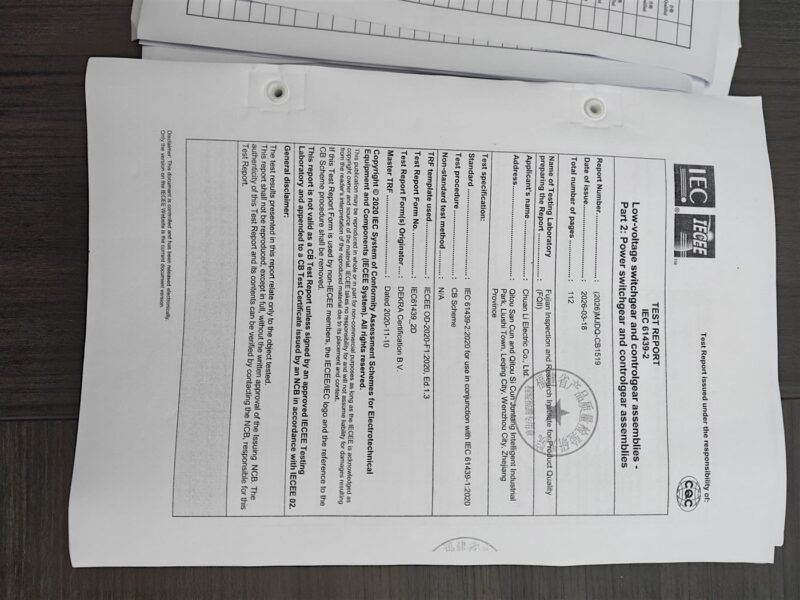
Our designs are tested to IEC and GB standards. The photo below shows an IEC test report for low voltage switchgear and controlgear assemblies, issued under the IECEE CB scheme. Independent reports like this give buyers confidence that the design has been verified by a recognised laboratory.
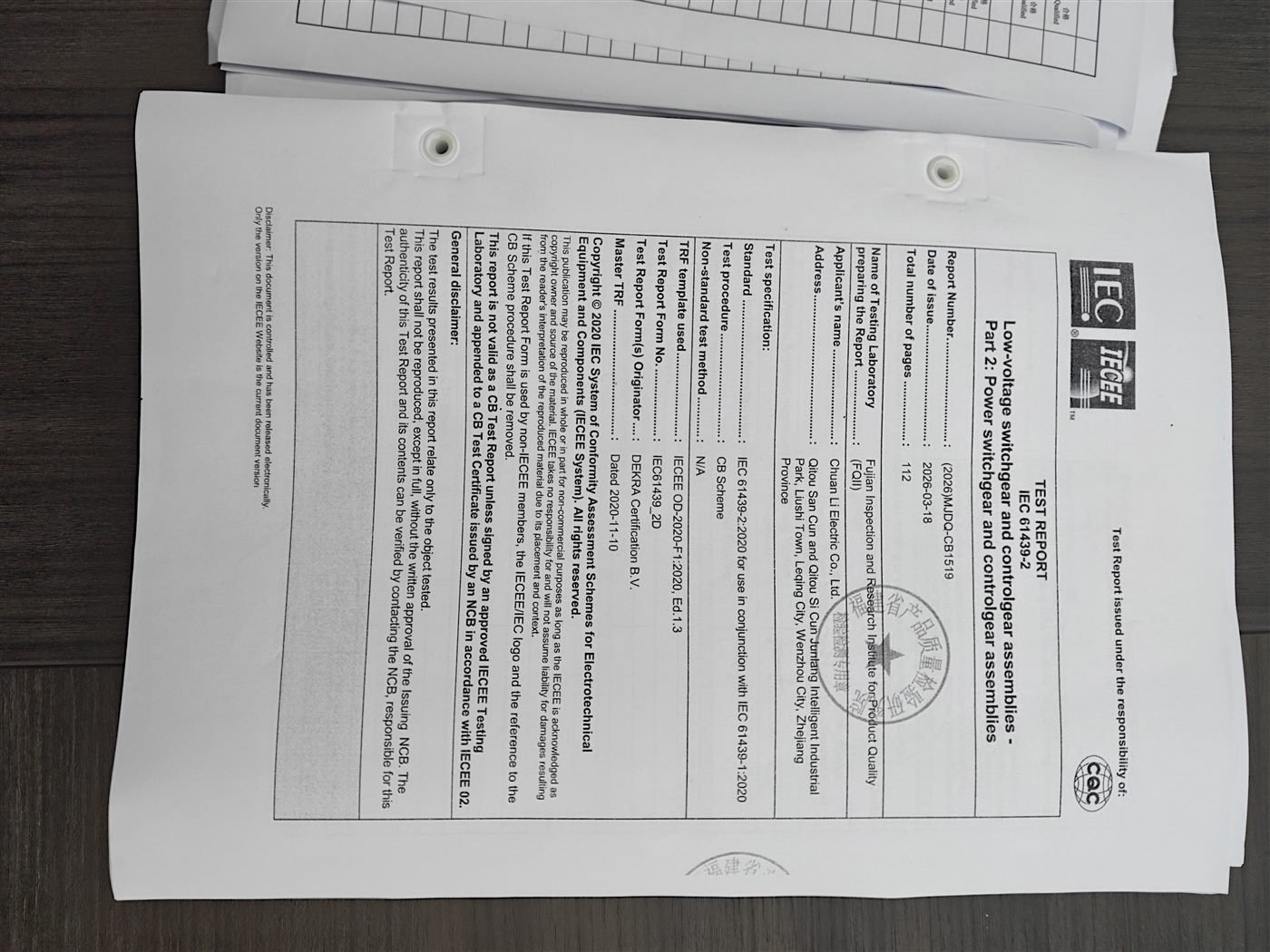
Ask your supplier for the type test certificate and the report number, then verify it with the issuing body. A supplier who cannot show a valid type test report for the exact series you are buying should be treated with caution.
Routine Testing of 33 kV GIS
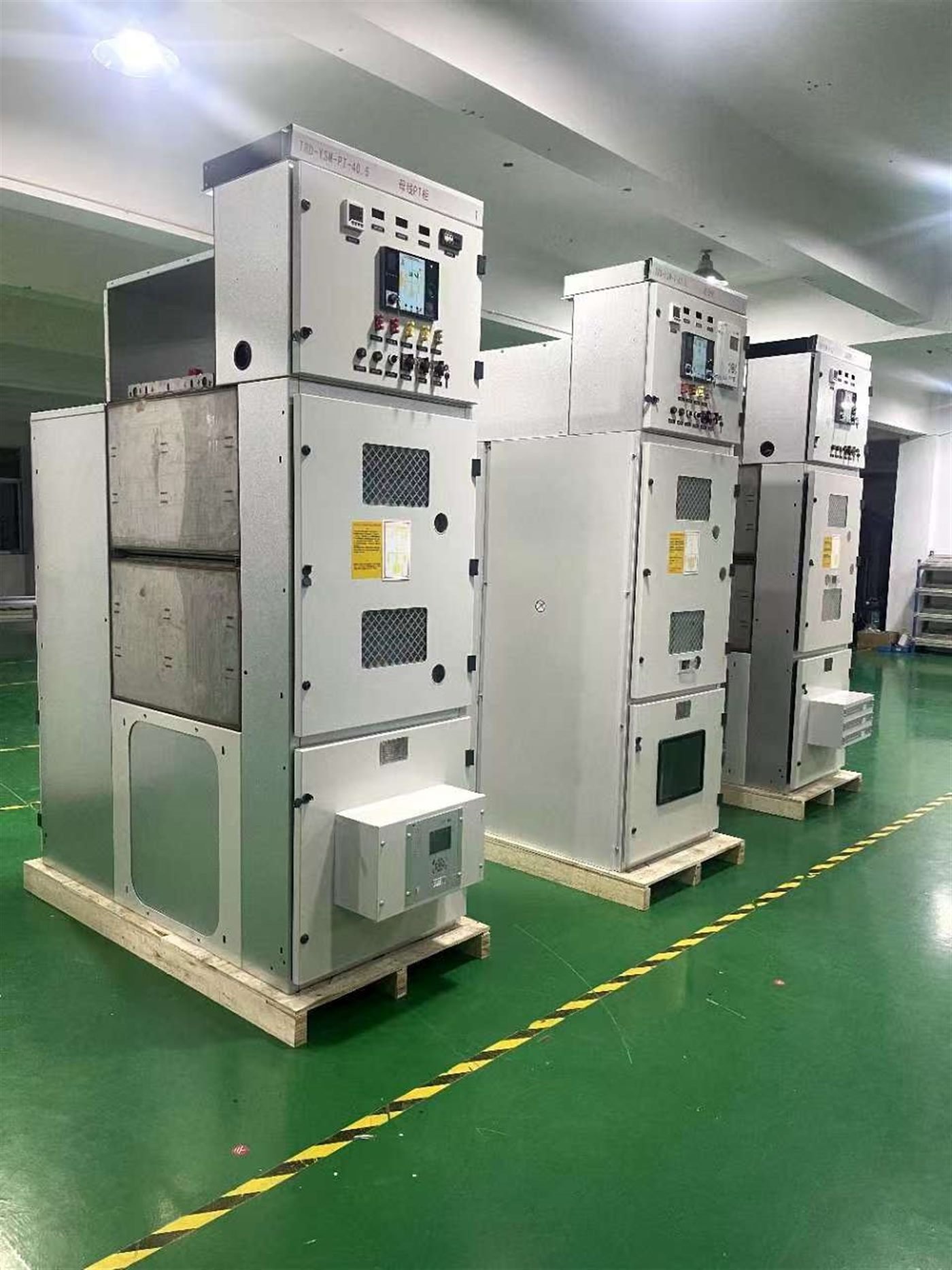
For gas insulated switchgear, routine testing includes SF6 pressure checks and leak detection in addition to electrical tests. The panels shown below are 33 kV GIS units in the test and dispatch area, complete with control panels, vents, and warning labels. Each unit is filled with SF6 and checked for leaks before packing.
For a comparison of gas and air insulated designs, read our gas insulated RMU vs air insulated RMU article.
Low Voltage Switchgear Production
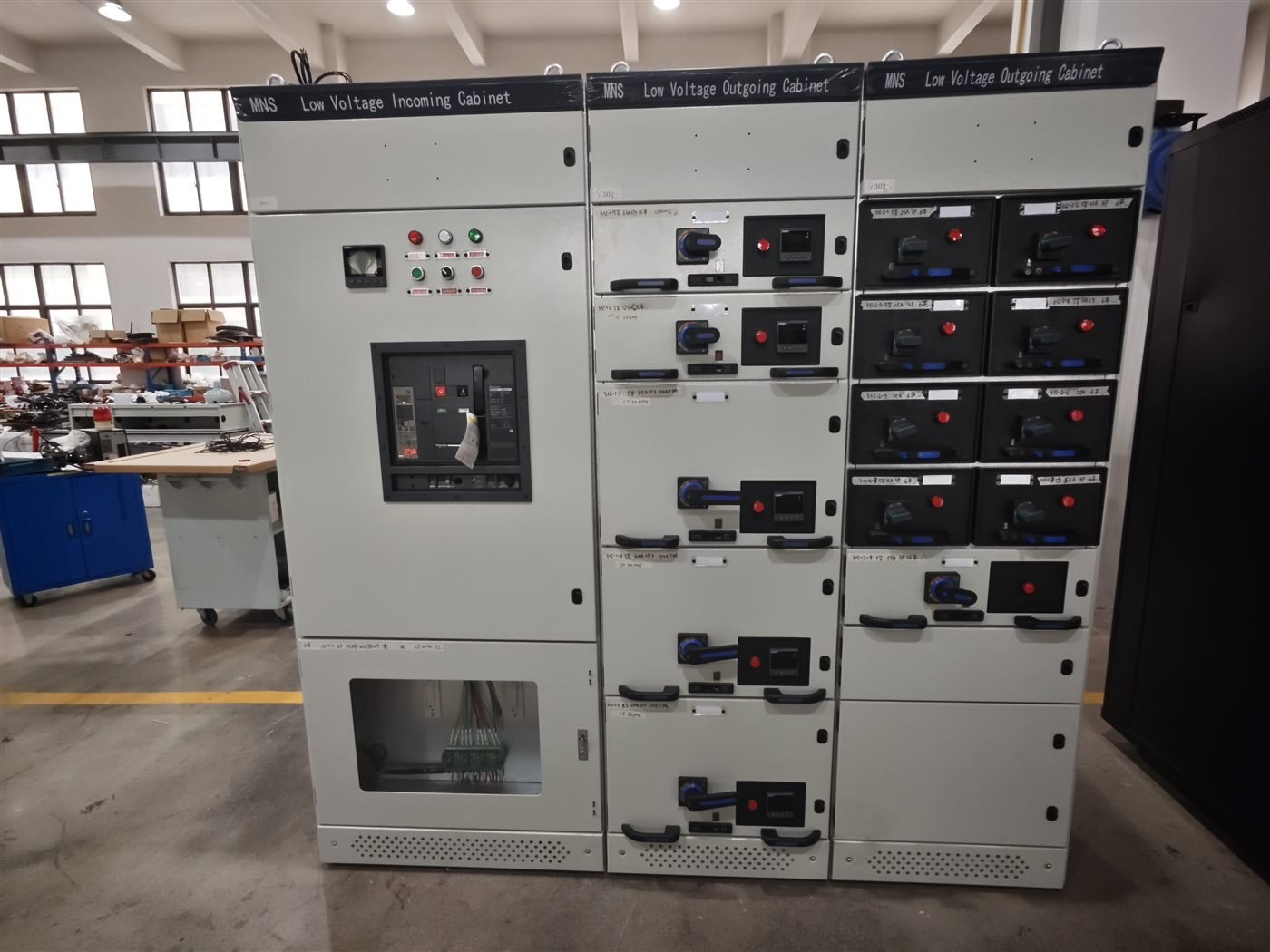
Low voltage switchgear, such as MNS type panels, follows a similar discipline. The photo below shows low voltage incoming and outgoing cabinets assembled in the workshop. Drawer units are tested individually before they are inserted into the frame, so a faulty module is caught before it reaches the complete panel test.
If you are unsure whether your project needs LV or MV equipment, our LV vs MV switchgear guide explains the difference in voltage range, components, and applications.
Key Routine Test Items Explained
Understanding the routine tests helps buyers check that the supplier has actually performed them. The most common items are listed below with a short explanation of what each test detects.
- Insulation resistance test: measures the resistance between phases and to earth to detect damaged insulation or moisture.
- Power frequency withstand test: applies a higher than normal voltage for a short time to prove the insulation can handle switching and lightning overvoltages.
- Contact resistance test: verifies that bolted and sliding contacts have low resistance, preventing hot spots at rated current.
- Mechanical operation test: operates the switching device several times to confirm the mechanism, interlocks, and indicators work correctly.
- Control circuit verification: checks every auxiliary function against the schematic, including indication, interlocking, and trip circuits.
- SF6 pressure and leak check: confirms the gas compartment holds the rated pressure without leakage.
These tests are quick to perform but they catch almost all manufacturing defects before shipment. A supplier that skips them saves time in the factory but passes the risk to the site. When you receive the routine test report, check that the serial number on the report matches the serial number on the panel nameplate, and that the test date is close to the shipping date. This simple verification takes two minutes and prevents most documentation errors.
For low voltage and medium voltage projects alike, the same principle applies: test early, document everything, and keep the records with the product. If you are planning a solar project, our solar PV grid-connected cabinet protection article shows how the same quality approach applies to solar equipment.
What Documents Should a Buyer Request
- Type test report for the specific product series.
- Routine test report for each supplied unit.
- Wiring diagram and general arrangement drawing.
- Certificate of conformity or declaration of conformity.
- Packing list and shipping documents.
All of these are provided with Electric-GS shipments. The complete acceptance procedure is described in our testing and commissioning guide.
Frequently Asked Questions
1. Are Electric-GS products type tested to IEC?
Yes. Our main product series are type tested to IEC and GB standards, and the reports are available for review.
2. Can a customer witness the routine test?
Yes. We support witness tests and third-party inspection before packing. Please arrange the visit in advance.
3. Do you provide the test report with every shipment?
Yes. Each unit has its own routine test report with serial number, and it is included in the shipment documents.
4. What is the difference between a type test and a routine test?
A type test proves the design complies with the standard, once per design. A routine test verifies that each manufactured unit is correctly built, on every panel.
5. Can you test custom control schemes?
Yes. Custom schemes are tested against the approved schematic before shipment, and the results are recorded.
6. How can I verify a test certificate is genuine?
Check the issuing laboratory, the report number, and the applicant name, and contact the issuing body if needed. We are happy to provide the full report for verification.
Certification is not a one-time event. Standards are revised, and designs evolve, so the factory reviews its type test coverage whenever a product series is modified. Keeping the certificates current is part of being a serious supplier. When you compare quotations, ask whether the type test report matches the exact series and voltage class you are buying, and whether the routine test report will cover every unit in your order. These two questions quickly separate professional manufacturers from resellers.
About Electric-GS
Electric-GS is a professional low and medium voltage electrical equipment manufacturer in Yueqing, China. We produce ring main units, switchgear, GIS, vacuum circuit breakers, transformers, and solar equipment. For quotes or to arrange a factory visit, email info@electric-gs.com or WhatsApp +86 135 8897 8050. More product information is available at electricgs.com and electric-cn.com.
8 thoughts