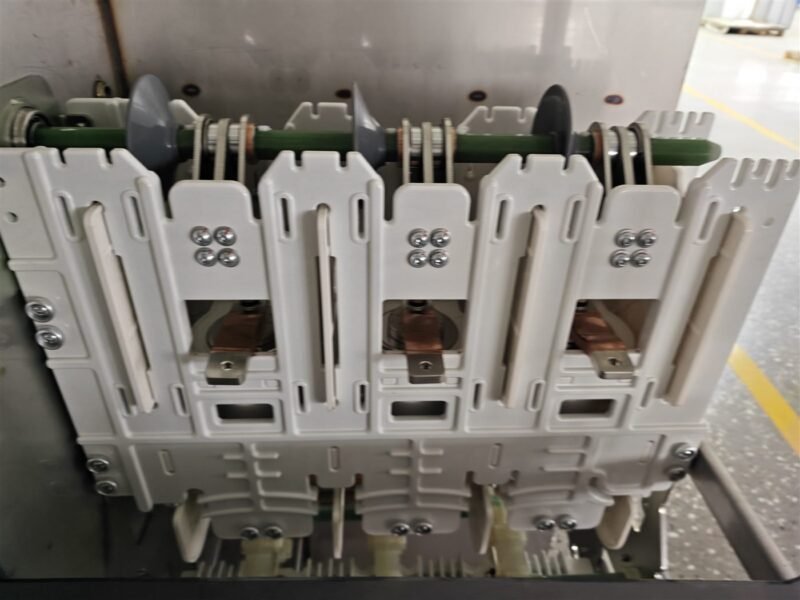
Medium voltage switchgear looks simple from the outside, but every panel hides hours of careful assembly work. This article shows real photos from the Electric-GS production floor, explaining how medium voltage switchgear assembly turns components into a finished cabinet ready for installation.
The Assembly Process at a Glance
Every medium voltage switchgear assembly order follows the same production route: enclosure preparation, main circuit assembly, mechanism fitting, secondary wiring, and final testing. The table below summarises each stage and the checks performed at that stage.
| Stage | Work Performed | Key Check |
|---|---|---|
| 1. Enclosure | Frame assembly, busbar installation | Dimensions, clearances |
| 2. Mechanism | Three-position mechanism, interlock fitting | Position indicator, interlock function |
| 3. Secondary | Control wiring, terminal blocks, relays | Continuity, numbering |
| 4. Testing | Insulation, contact resistance, function | Test report |
| 5. Packing | Protection, export packing | Packing list |
Operating Mechanism Fitting
The switching mechanism determines how safely an operator can operate the panel. Technicians install the three-position mechanism, the interlock system, and the position indicator on a dedicated bench. The mechanism must move smoothly and the interlocks must prevent incorrect operation, for example closing the earthing switch while the circuit is live.
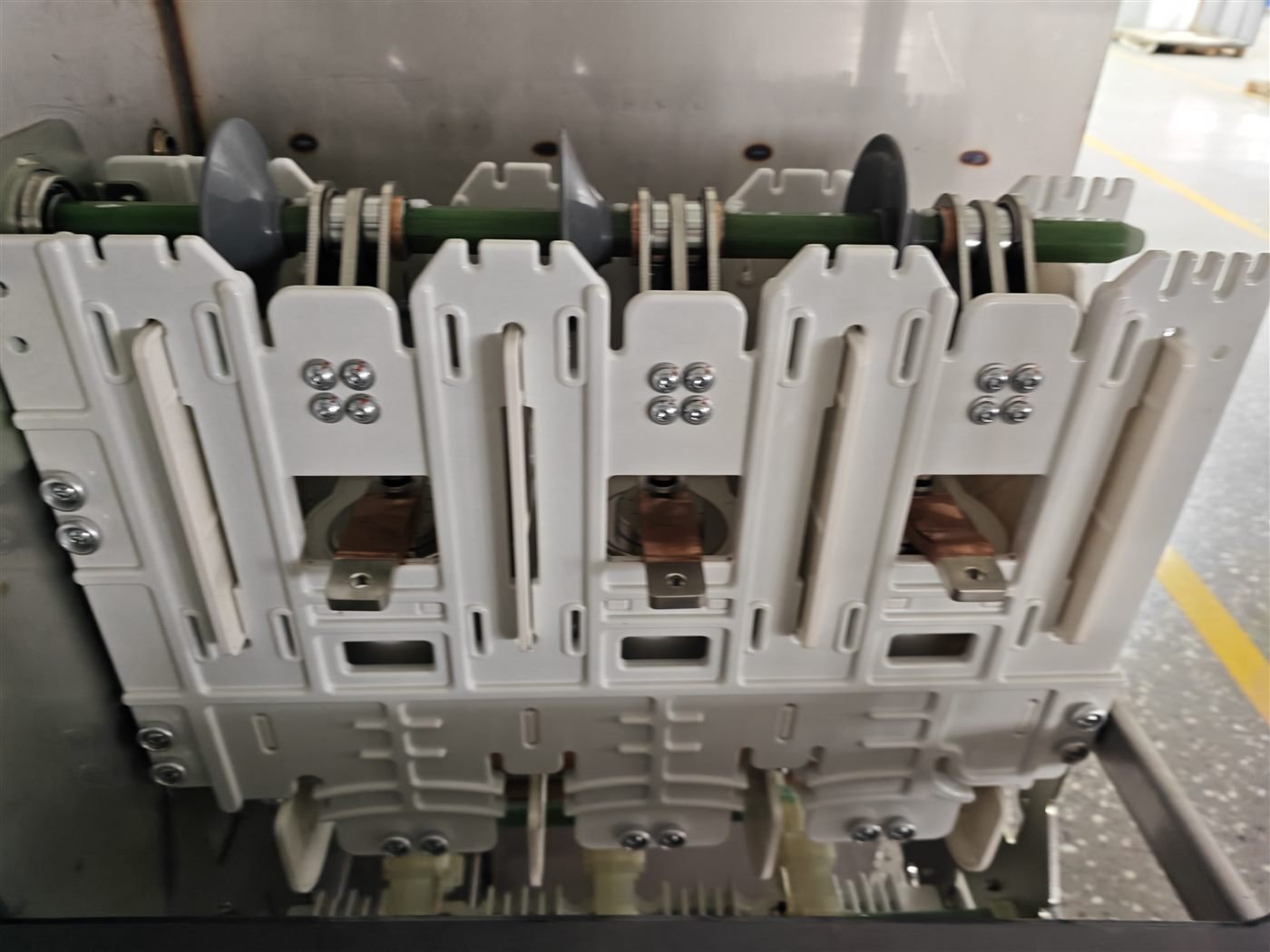
After fitting, each mechanism is operated by hand through all positions before it is installed into the panel. This simple step catches most mechanical faults at the workbench instead of on site.
Secondary Wiring and Control Circuits
Control circuits are wired on a separate bench with colour-coded conductors and numbered ferrules. Technicians connect circuit breakers, terminal blocks, relays, and meters according to the approved schematic. Neat wiring is not only about appearance: it makes commissioning faster and fault finding much easier.
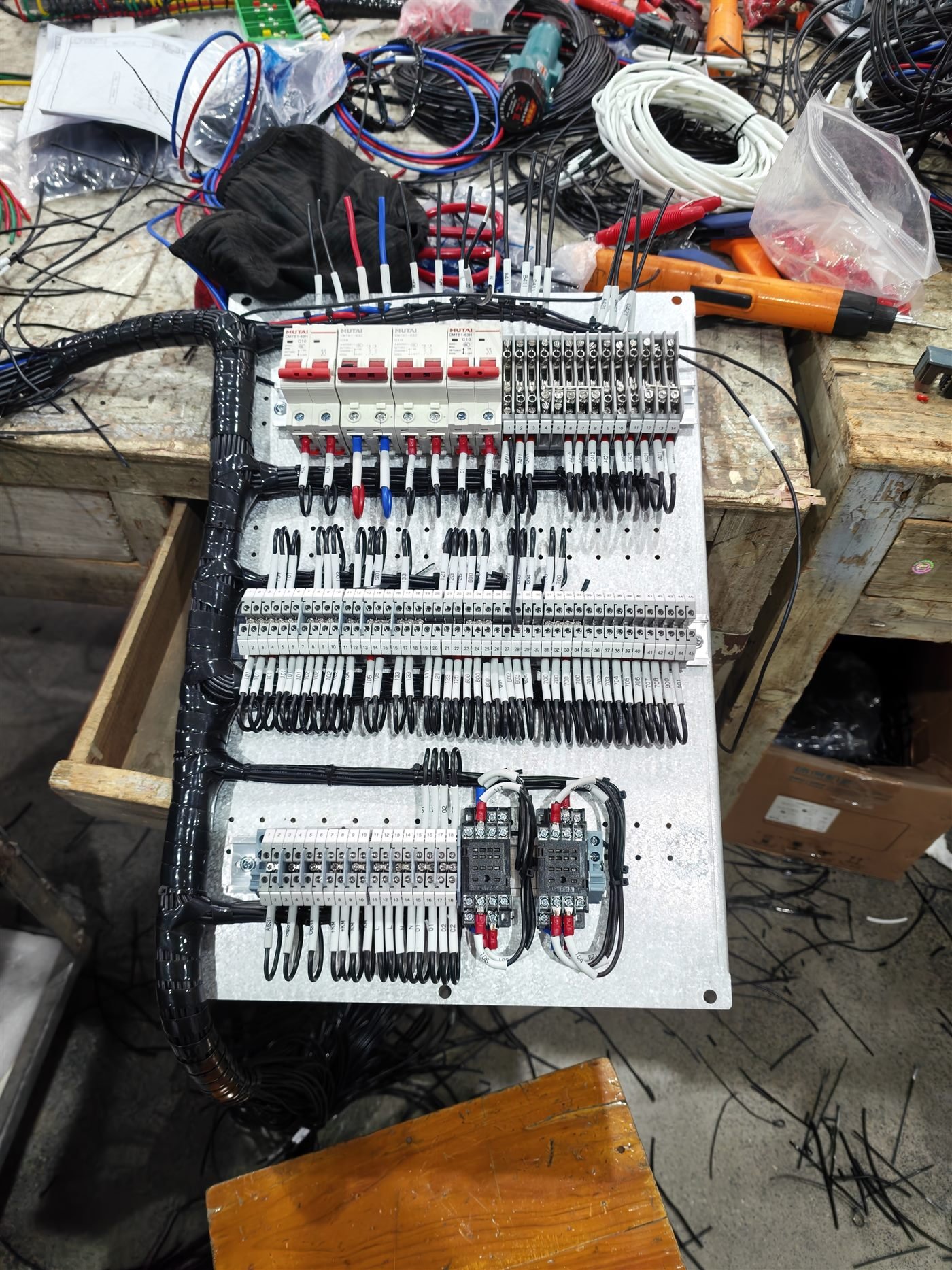
Every wire end is fitted with a ferrule carrying the terminal number from the diagram. The wiring is then checked point by point against the schematic before the panel moves to the test bench.
Final Testing and Commissioning
Before a medium voltage panel is released, it passes a complete routine test: insulation resistance, power frequency withstand, contact resistance, control circuit verification, and mechanical operation. Results are recorded on the test report and kept in the product file.
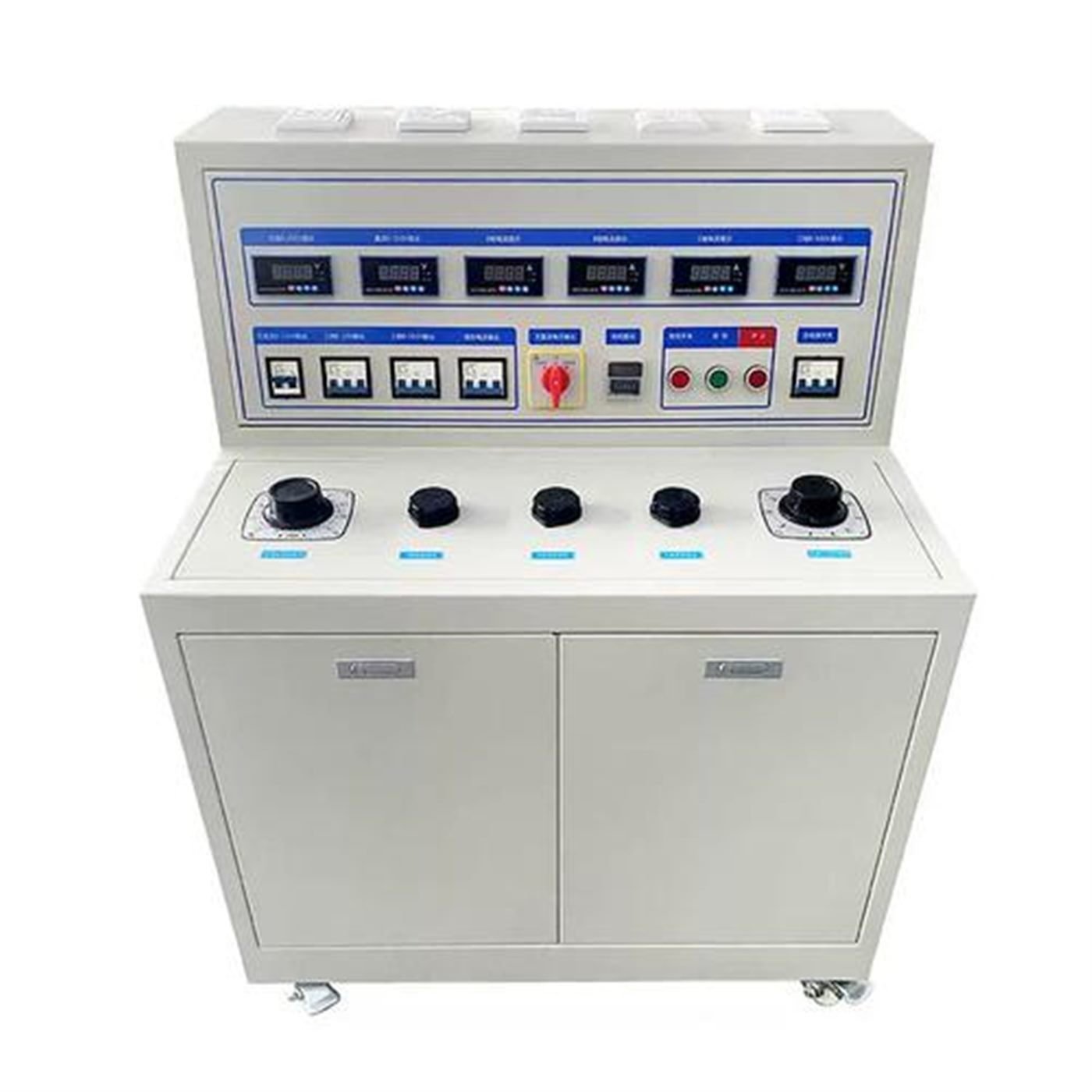
For a detailed explanation of what each test means, see our medium voltage switchgear testing and commissioning guide.
Main Circuit and Busbar Assembly
Before the mechanism is fitted, the main circuit is assembled inside the enclosure. Busbars are cut, drilled, and cleaned, then installed with the correct clearances between phases and to earth. Copper busbars are coated to prevent oxidation, and every bolted connection is torqued to the value specified in the assembly instruction. This stage also includes the installation of current transformers and the fixed contacts for the withdrawable part.
The phase sequence is checked against the single line diagram, and the busbar support insulators are inspected for cracks or damage. A medium voltage panel can carry several thousand amperes at the busbar, so small mistakes at this stage become serious faults later. That is why our switchgear manufacturing process records the torque values and the inspector signs the assembly card after the main circuit check.
After the main circuit is complete, the panel receives a visual inspection of all clearances and connections. The same disciplined procedure applies to every series we produce, from ring main units to medium voltage switchgear. If you need guidance on choosing between product families, our gas insulated RMU vs air insulated RMU comparison and 12kV RMU selection guide explain the differences in detail.
Production planning is also part of a reliable switchgear manufacturing process. Each order is assigned a production number, and the material list is checked against stock before the enclosure is opened on the line. Missing components are ordered before production starts, which keeps the schedule realistic and avoids panels waiting half-assembled for parts. For customers, this means a more predictable delivery time and fewer last-minute surprises during inspection.
Quality Checks That Matter
- Busbar connections are cleaned, coated, and torqued to specification.
- All interlock functions are verified in every operating sequence.
- Secondary wiring is checked against the approved drawing.
- Each panel carries a unique serial number for traceability.
- Test results are signed by the inspector and the production supervisor.
This disciplined approach is what customers see when they open a new panel: clean wiring, correctly fitted components, and a complete test record. If you are comparing designs before ordering, our gas insulated RMU vs air insulated RMU guide and LV vs MV switchgear article will help you choose.
Frequently Asked Questions
1. How long does medium voltage switchgear assembly take?
A standard panel typically takes several working days from enclosure to final test, depending on the number of protection devices and the complexity of the control scheme.
2. Can I see the assembly process before ordering?
Yes. We welcome factory visits and can arrange a walkthrough of the assembly and test areas. Video calls during production are also available for overseas customers.
3. What documents come with each switchgear panel?
Each shipment includes the routine test report, wiring diagram, general arrangement drawing, and operating instructions.
4. Do you assemble panels to customer drawings?
Yes. As an OEM/ODM factory we build to your drawings and component brand requirements within the applicable standards.
5. Can the control scheme be modified after ordering?
Small changes are possible during the drawing approval stage. Once production starts, changes may affect the delivery time.
6. What is the warranty period?
Standard warranty terms apply and are confirmed in the quotation. Contact us for the specific conditions for your project.
Finally, every medium voltage switchgear assembly order is reviewed by the quality department before dispatch. The review checks the test results, the wiring diagrams, and the serial number records, and confirms that the accessories listed in the quotation are all included. Only after this review is the panel released to the packing area. This final gate is the reason why our customers rarely find missing parts or wrong components when they unpack the shipment on site.
About Electric-GS
Electric-GS is a professional low and medium voltage electrical equipment manufacturer in Yueqing, China. We produce ring main units, switchgear, GIS, vacuum circuit breakers, transformers, and solar equipment. For quotes or to arrange a factory visit, email info@electric-gs.com or WhatsApp +86 135 8897 8050. More product information is available at electricgs.com and electric-cn.com.
2 thoughts