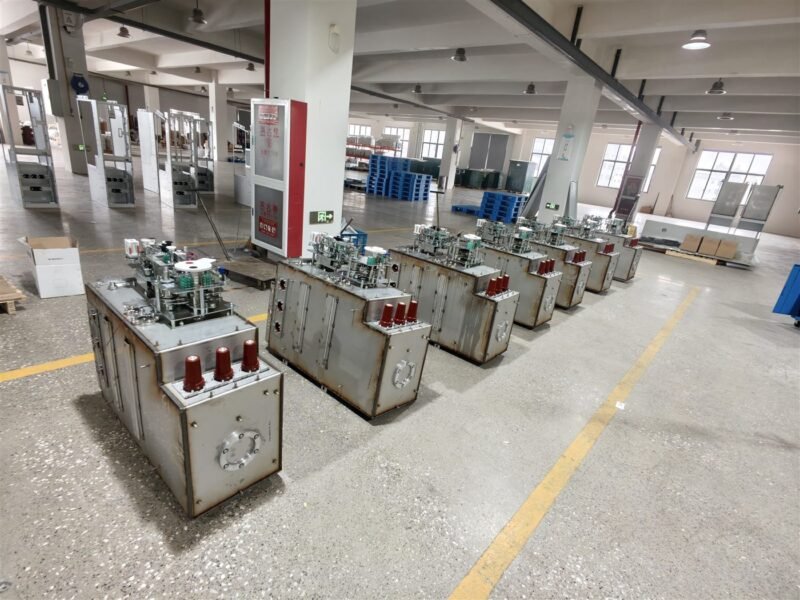
Buying switchgear from a photo and a datasheet is not the same as seeing how it is actually built. Our switchgear manufacturing process combines experienced workers, documented procedures, and modern test equipment. This article takes you inside the Electric-GS factory floor in Yueqing, China, with real production photos showing how ring main units, switchgear, and GIS panels move from assembly to final testing before shipment.
Factory Floor Overview
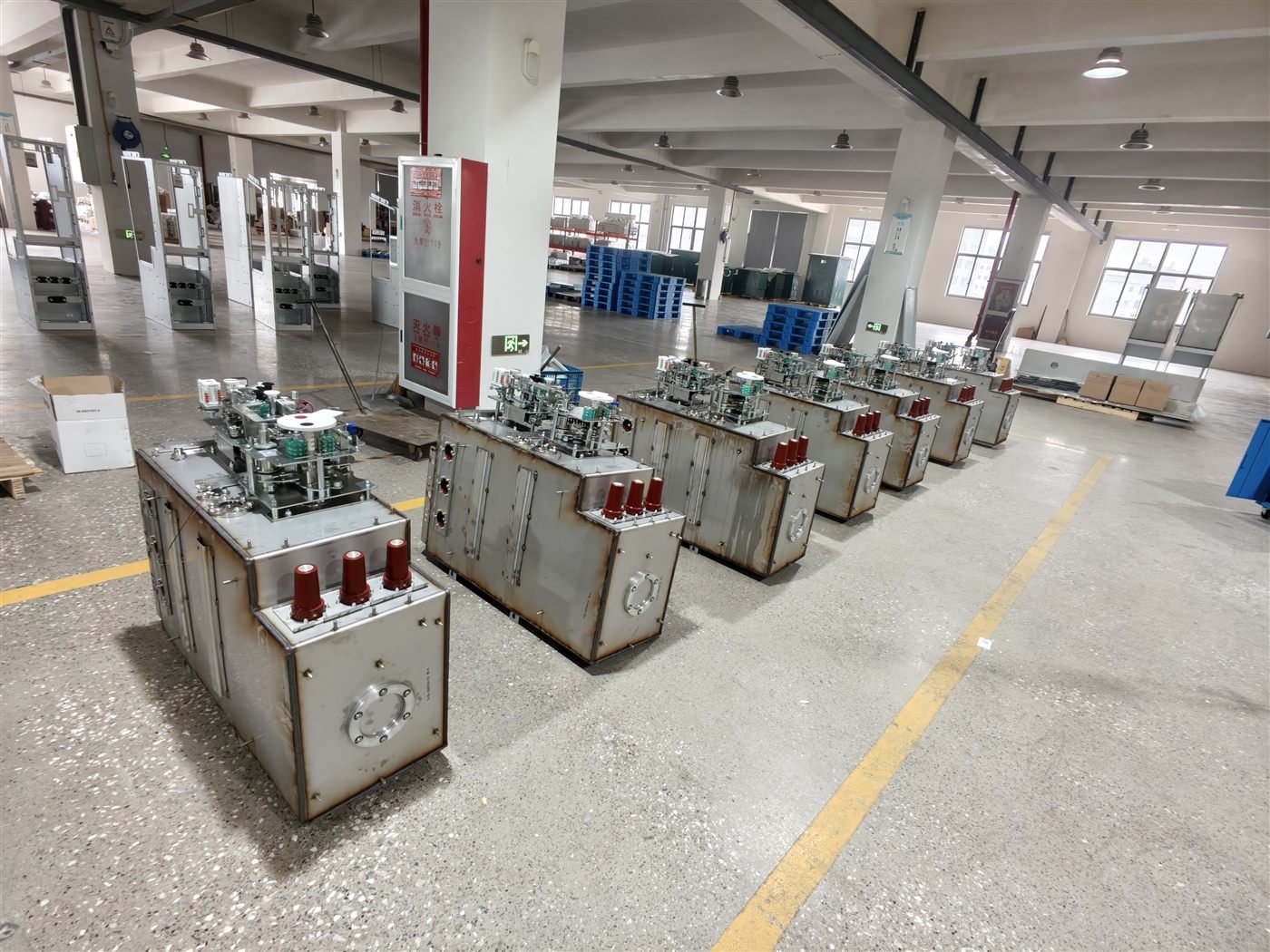
The production area is a clean, well-organised workshop with marked walkways and dedicated work zones. Each zone handles one stage of production: sheet metal processing, component assembly, secondary wiring, testing, and dispatch. The layout follows the product flow so that a cabinet never moves backwards through the process.
RMU Truck Assembly Station
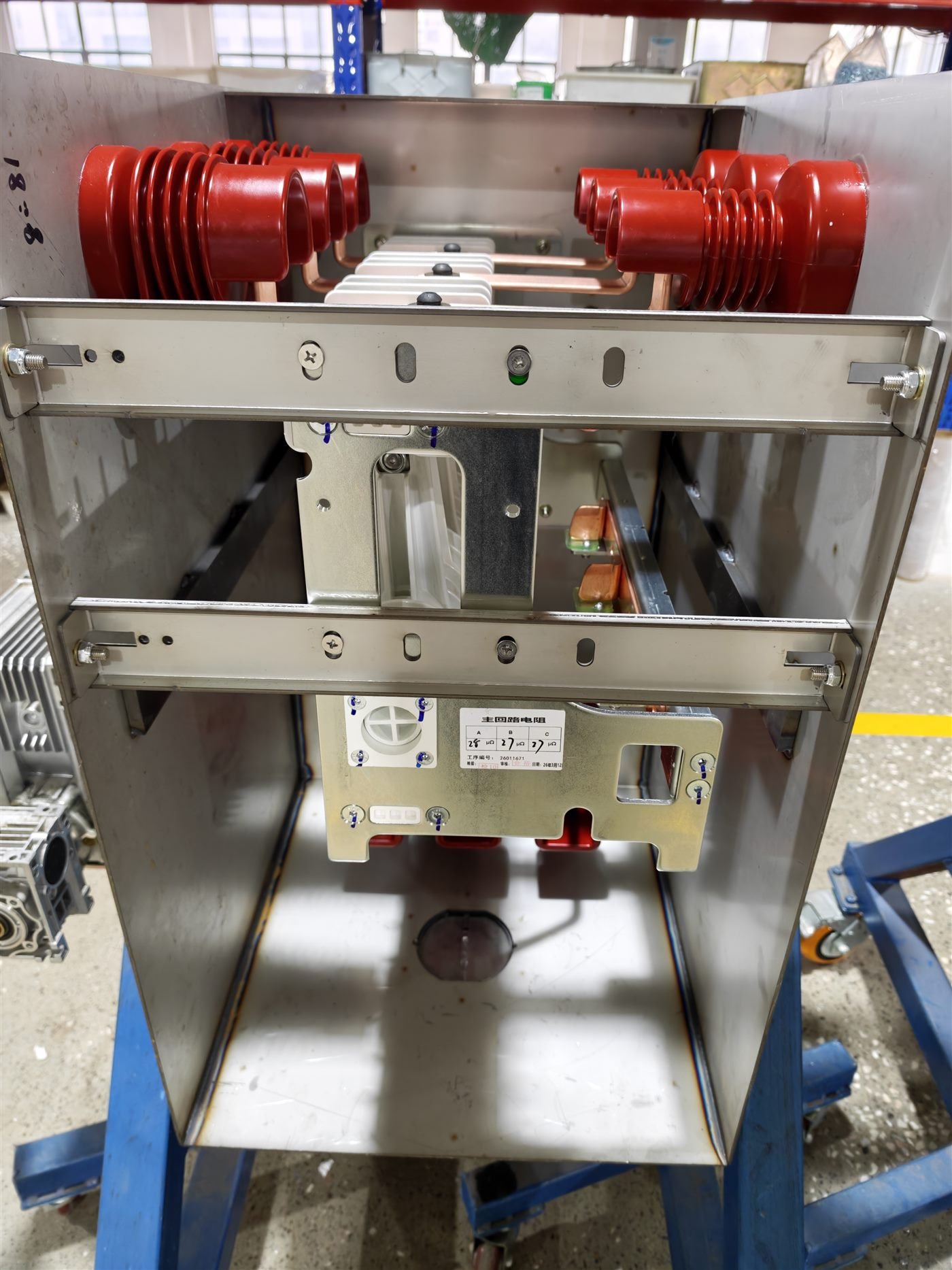
In the medium voltage assembly area, technicians assemble withdrawable truck units for ring main units and switchgear. The photo below shows a truck unit with red insulated bushings, copper busbars, and a rating plate waiting for final checks. Every bolt is torqued to the value on the assembly instruction, and the busbar connections are cleaned and coated before assembly.
Operating Mechanism Assembly
The switching mechanism is the heart of any ring main unit. Technicians fit the three-position mechanism, interlock system, and indicator cams on a dedicated bench, then check that the operating shaft moves freely and locks correctly at each position before the mechanism is installed into the enclosure.
Secondary Wiring and Control Circuits
Control cabinets and relay panels are wired on a separate bench. Technicians route conductors in colour-coded bundles, fit ferrules, and connect circuit breakers, terminal blocks, and relays. Neat, documented wiring makes commissioning faster and troubleshooting easier for the end user. Each wire is identified with a number so the control diagram can be followed quickly on site.
SF6 Gas Filling and Leak Testing
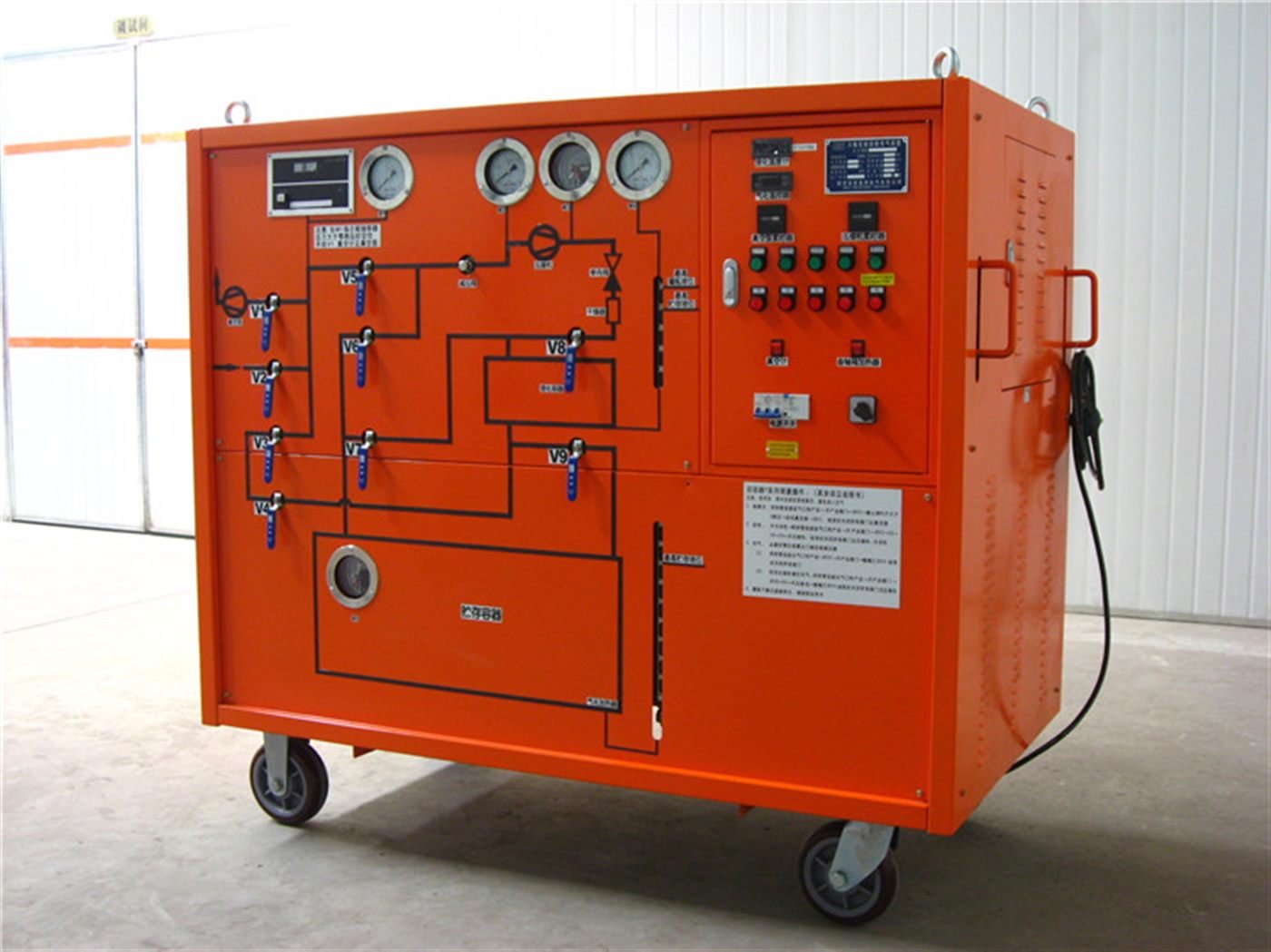
Gas insulated equipment must hold SF6 pressure for decades. Every gas-filled unit is charged on a dedicated filling and leak-test trolley equipped with pressure gauges and valve control. After filling, technicians check every seal point with a leak detector and record the pressure value on the test report.
Final Testing and Commissioning
Before any cabinet leaves the factory, it passes a full commissioning test: insulation resistance, contact resistance, control circuit verification, and functional operation tests. The results are attached to the product file and handed to the customer with the shipment. For the complete acceptance procedure, see our medium voltage switchgear testing and commissioning guide.
33 kV GIS Ready for Shipment
33 kV gas insulated switchgear panels leave the factory on wooden skids, complete with control panels, vents, and warning labels. Each unit is wrapped for transport and loaded with the correct lifting points to avoid damage in transit. The same dispatch procedure applies to our medium voltage products.
Dispatch and Finished Goods Area
Finished panels are stored on marked skids in the dispatch area before loading. Transparent viewing windows allow a quick visual check of the internal layout before wrapping. Products are shipped worldwide by sea and air, with export packing designed for long-distance transport.
Sheet Metal Processing and Enclosure Build
Every switchgear manufacturing order starts in the sheet metal workshop, where panels are cut, punched, and bent to the project drawings. Our production line handles enclosures for ring main units, switchgear, and GIS in standard sizes, with optional custom dimensions for special projects. After forming, the enclosures pass through surface treatment and powder coating to achieve a consistent finish and good corrosion resistance.
Material Traceability and Component Selection
All incoming components are checked against the approved vendor list. Circuit breakers, switch disconnectors, current transformers, relays, and busbar materials carry batch numbers that are recorded in the product file. This traceability means that if a component issue is ever found in the field, we can quickly identify which units are affected and arrange a solution.
Quality Control at Every Stage
- Incoming material inspection before assembly.
- In-process checks at each work station.
- Torque verification on all busbar and cable connections.
- SF6 pressure and leak test for gas insulated units.
- Full routine test before packing.
- Independent final inspection against the packing list.
Every step follows documented procedures, so customers receive consistent quality whether they order one unit or a container. If you want to compare gas insulated and air insulated designs before ordering, our gas insulated RMU vs air insulated RMU guide is a good starting point, and the RMU installation mistakes article helps you avoid common site problems.
Our factory also maintains a complete test equipment pool, including high voltage test sets, insulation resistance testers, and control circuit testers. Every workstation is equipped with the right tools and the working instructions for the product being assembled. This combination of skilled workers, clear documentation, and disciplined testing is what makes the difference between a random enclosure and a reliable switchgear product.
Frequently Asked Questions
1. Can I visit the factory before ordering?
Yes. We welcome customer visits and factory audits. Our team can arrange a guided tour of the production line, test area, and dispatch zone.
2. Do you offer factory inspection before shipment?
Yes. We support third-party inspection and can arrange witness tests before packing. The routine test report is provided with every shipment.
3. What is the typical lead time for switchgear?
Standard products are usually ready in 15 to 30 days. Customised panels with special protection schemes may take longer depending on the configuration.
4. How is the equipment packed for export?
Switchgear is wrapped, protected, and packed in export cartons or wooden crates, with clear lifting and handling marks. Sea and air freight are both available.
5. Can Electric-GS manufacture according to my drawings?
Yes. As an OEM/ODM factory, we build to your drawings, colour scheme, and component brand requirements, subject to the relevant standards.
6. What certifications does the factory hold?
Products are type-tested to IEC and GB standards, and the factory follows a documented quality management system. Contact us for the latest certificates.
About Electric-GS
Electric-GS is a professional low and medium voltage electrical equipment manufacturer in Yueqing, China. We produce ring main units, switchgear, GIS, vacuum circuit breakers, transformers, and solar equipment. For quotes or to arrange a factory visit, email info@electric-gs.com or WhatsApp +86 135 8897 8050. More product information is available at electricgs.com and electric-cn.com.
5 thoughts