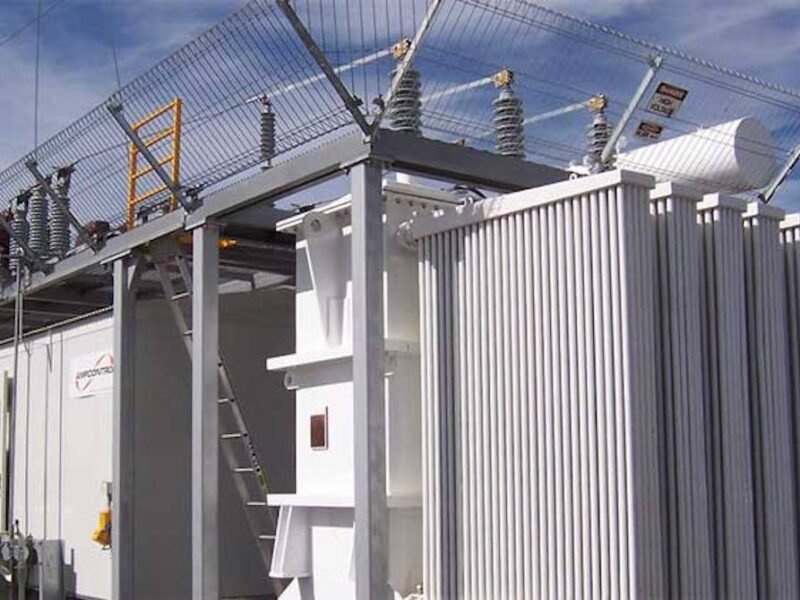
Choosing the correct distribution transformer size is one of the most important engineering decisions in any power project. An undersized transformer overheats and fails early; an oversized one wastes money and runs at poor efficiency. This distribution transformer sizing guide explains the key calculations and rules every engineer should use.
Why Transformer Sizing Matters
The transformer must handle the maximum expected load while leaving room for growth, and it must stay within its thermal limits on the hottest day. It must also supply the starting current of the largest motor without an excessive voltage drop. Getting the kVA rating right balances reliability, efficiency, and capital cost.
Step 1: Calculate the Total Connected Load
Start by listing every load that the transformer will feed: motors, lighting, HVAC, and future equipment. Sum the apparent power in kVA for each load. If you only know the power in kW, divide by the power factor:
S(kVA) = P(kW) / power factor
For mixed industrial loads, use a diversity factor to reflect that not all equipment runs at full load at the same time. A typical diversity factor for industrial plants is 0.7 to 0.9.
Step 2: Apply the Demand and Growth Factors
Multiply the connected load by the demand factor to find the maximum demand. Then add a growth allowance, normally 20% to 30% for new installations, so the transformer is not immediately overloaded when the site expands.
| Parameter | Typical Value | Note |
|---|---|---|
| Diversity factor | 0.7 – 0.9 | Industrial mixed loads |
| Demand factor | 0.6 – 0.8 | Depends on process |
| Growth allowance | 20% – 30% | Future expansion |
| Loading target | 70% – 80% | Leaves headroom |
Step 3: Select the Standard kVA Rating
Choose the next standard rating above the calculated maximum demand. Standard distribution transformer ratings include 100, 160, 250, 400, 630, 800, 1000, and 1250 kVA. For example, if your calculated demand is 420 kVA with a 30% growth factor, you need at least 546 kVA, so select a 630 kVA transformer.
Step 4: Check the Voltage Drop
Verify that the voltage drop from the transformer to the farthest load stays within acceptable limits, typically 5% for distribution circuits. Use the transformer impedance and the cable impedance to calculate the drop at full load. For large motors, also check the voltage dip during starting.
Step 5: Consider Load Type and Harmonics
Non-linear loads such as variable speed drives and UPS systems generate harmonics. These increase transformer losses and can cause overheating. For harmonic-heavy loads, use a transformer with a K-factor rating or derate the standard transformer. Data centres and industrial plants with many drives should review the harmonic content during the sizing study.
Step 6: Review Ambient Temperature and Installation
The transformer rating is based on a reference ambient temperature, typically 40°C for outdoor installations. In hotter climates, derate the transformer accordingly. Outdoor units need weather-proof enclosures, while indoor units need adequate ventilation and fire separation from other equipment.
Step 7: Choose Dry Type or Oil Immersed
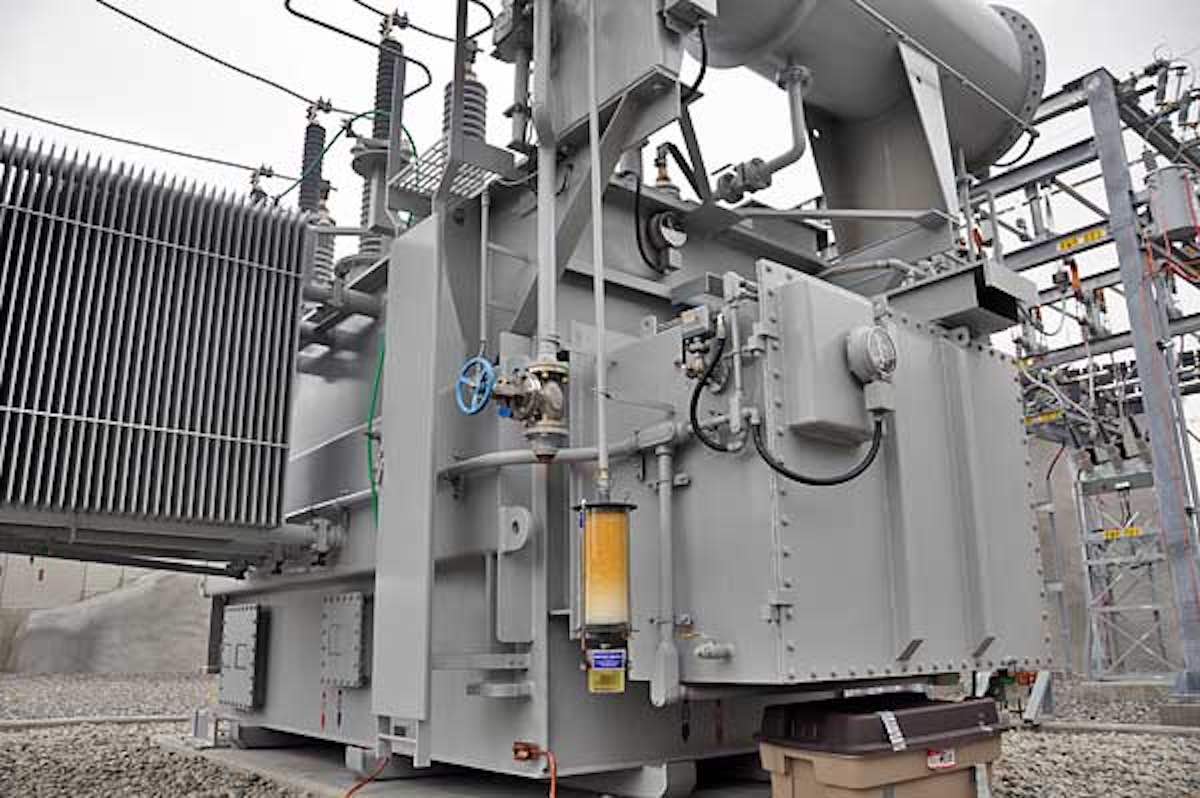
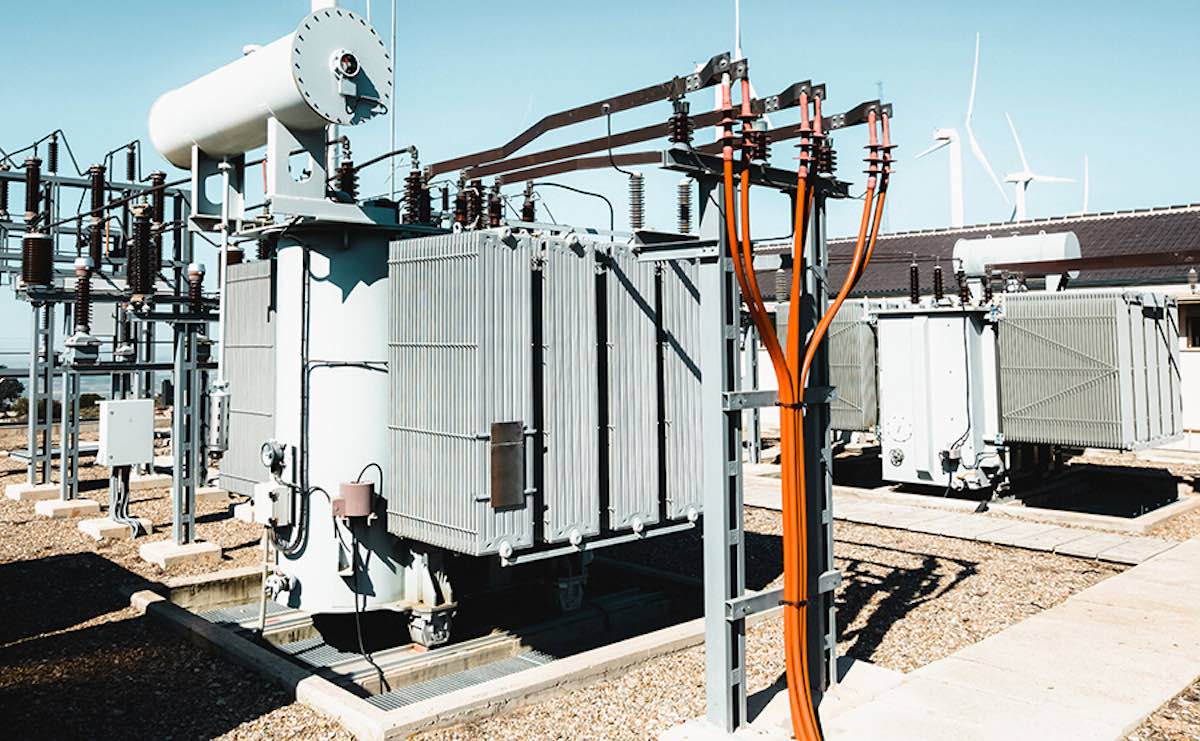
Oil immersed transformers are efficient and cost-effective for outdoor installations, while dry type transformers suit indoor and high-rise applications where fire safety is critical. Compare the total cost of ownership, maintenance, and placement constraints before deciding. Our dry type vs oil immersed transformer selection guide covers this decision in detail.
Common Sizing Mistakes
- Using nameplate motor power instead of running kVA.
- Forgetting the power factor of induction motors.
- Ignoring future expansion and seasonal peaks.
- Selecting a rating without checking the short-circuit impedance.
- Overlooking the effect of harmonics on loading.
For a deeper list of pitfalls, read the top 10 distribution transformer sizing mistakes guide.
Efficiency and Loss Evaluation
Transformers are rated for efficiency at different load points. A transformer that is too large will run at light load most of the time, where its no-load losses dominate and the efficiency is poor. The most economical transformer is usually the one that operates near its peak efficiency at the expected average load, which is typically 50% to 75% of the rated kVA. Compare the no-load loss, load loss, and total cost of ownership across candidate ratings before purchasing.
Short-Circuit Withstand Verification
The selected transformer must be able to withstand the system short-circuit current for the specified duration. Verify the percentage impedance (%Z) matches the requirements of the downstream switchgear, since the fault current level at the LV busbar depends on the transformer impedance. The protection settings of the LV switchgear must also be coordinated with the transformer damage curve.
Voltage Regulation and Tap Changer Selection
For feeders with significant voltage drop, select a transformer with an off-circuit tap changer or an on-load tap changer (OLTC). Standard distribution transformers offer +/-2 x 2.5% taps on the HV side, which is enough for most sites. Long feeders or variable grid voltage may require an OLTC to hold the LV voltage within limits.
Frequently Asked Questions
1. How do I calculate the transformer size for a building?
Sum the connected load in kVA, apply the demand factor, add the growth allowance, and select the next standard rating. For a typical commercial building, the demand factor is around 0.7 to 0.8.
2. What is the maximum loading percentage for a distribution transformer?
Most engineers design for 70% to 80% loading at normal conditions. This leaves headroom for overloads and keeps the transformer within its temperature limits.
3. Can a transformer be oversized?
Yes. An oversized transformer has higher no-load losses, lower efficiency at light load, and a higher purchase price. Sizing to the calculated demand plus a reasonable margin is the best practice.
4. What kVA sizes are standard for distribution transformers?
Common ratings are 100, 160, 250, 400, 630, 800, 1000, and 1250 kVA, with larger sizes up to 2500 kVA for special applications.
5. How often should a transformer be maintained?
Inspect the transformer annually and perform a full maintenance programme every 2 to 3 years. Our distribution transformer maintenance checklist provides a complete schedule.
6. Where can I buy quality distribution transformers?
Electric-GS manufactures distribution transformers and supplies them worldwide as an OEM/ODM partner. Contact info@electric-gs.com or WhatsApp +86 135 8897 8050.
About Electric-GS
Electric-GS is a professional manufacturer of distribution transformers, switchgear, RMUs, and solar equipment in Yueqing, China. We supply OEM/ODM products with full test documentation. Email info@electric-gs.com or visit electricgs.com and electric-cn.com for the full product range.
Related Reading
- Dry Type vs Oil Immersed Transformer
- Distribution Transformer Maintenance Checklist
- LV vs MV Switchgear

One thought