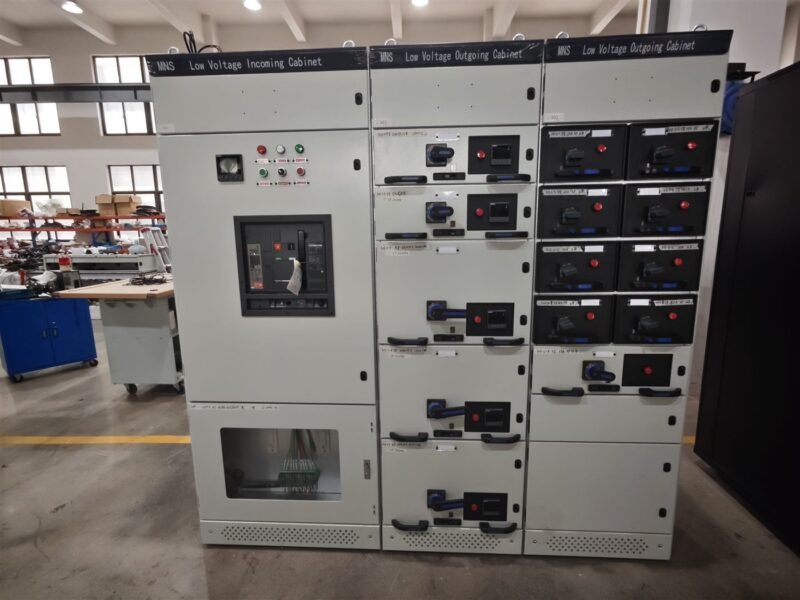
What Is a Low Voltage Switchgear?
Low voltage switchgear is the equipment that controls, protects and isolates electrical circuits below 1kV AC. It sits between the transformer and the loads. It switches power on and off. It protects cables and machines from overload and short circuit. It also gives operators a safe way to work on live systems.
A low voltage switchgear panel usually contains a main incomer, busbars, outgoing feeders, circuit breakers, contactors, meters and protection relays. It is the heart of every low voltage distribution system in factories, buildings, data centers and power plants.
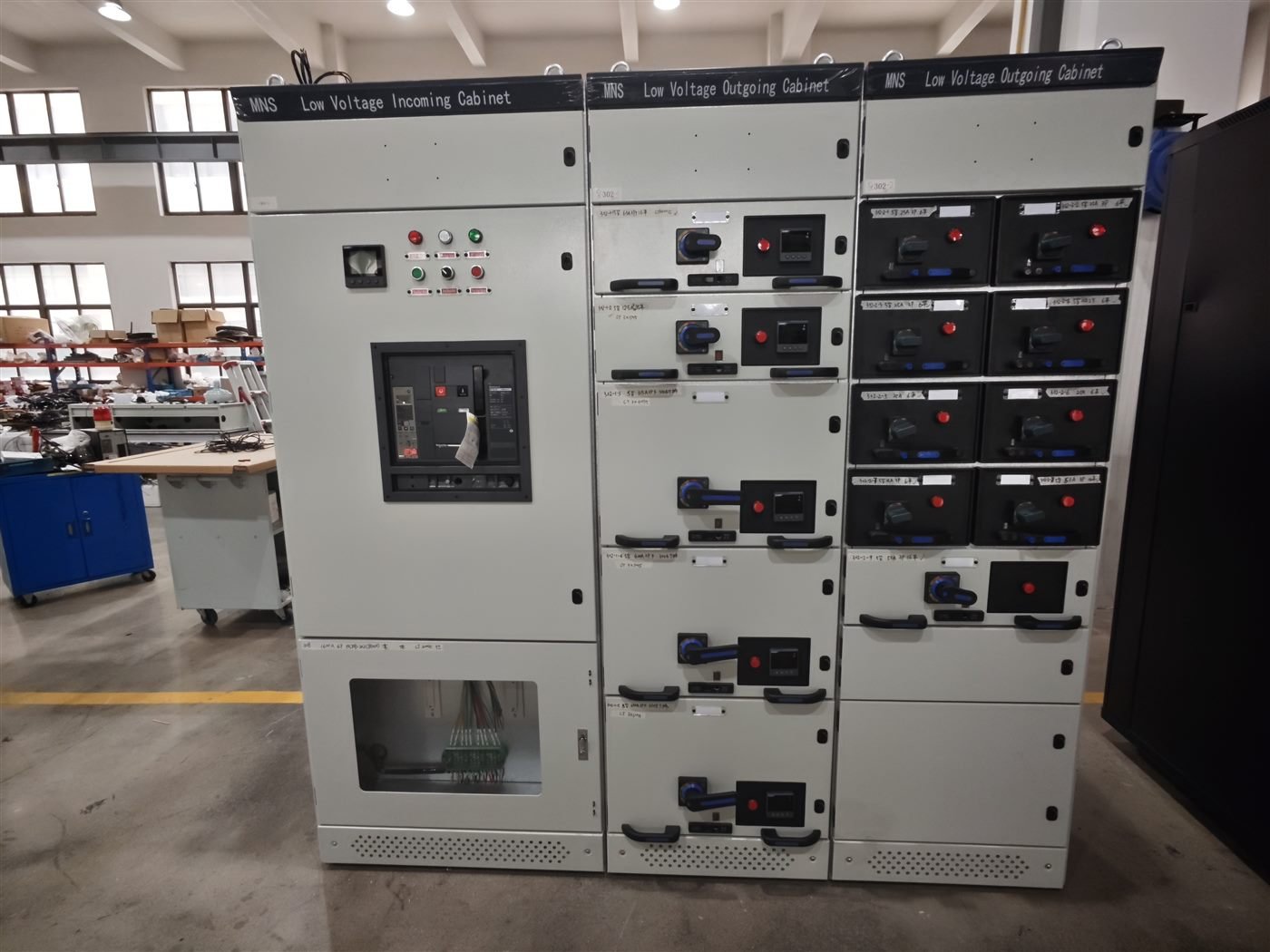
This guide covers the main low voltage switchgear types, the key components inside each panel, selection criteria, ratings, standards and 2026 price factors. It is written for project engineers, contractors and buyers who need a practical reference before ordering.
8 Main Types of Low Voltage Switchgear
Low voltage switchgear comes in several forms. The right type depends on the load, the duty and the maintenance style. Here are the eight most common types.
| Type | Structure | Typical Rating | Best Application |
|---|---|---|---|
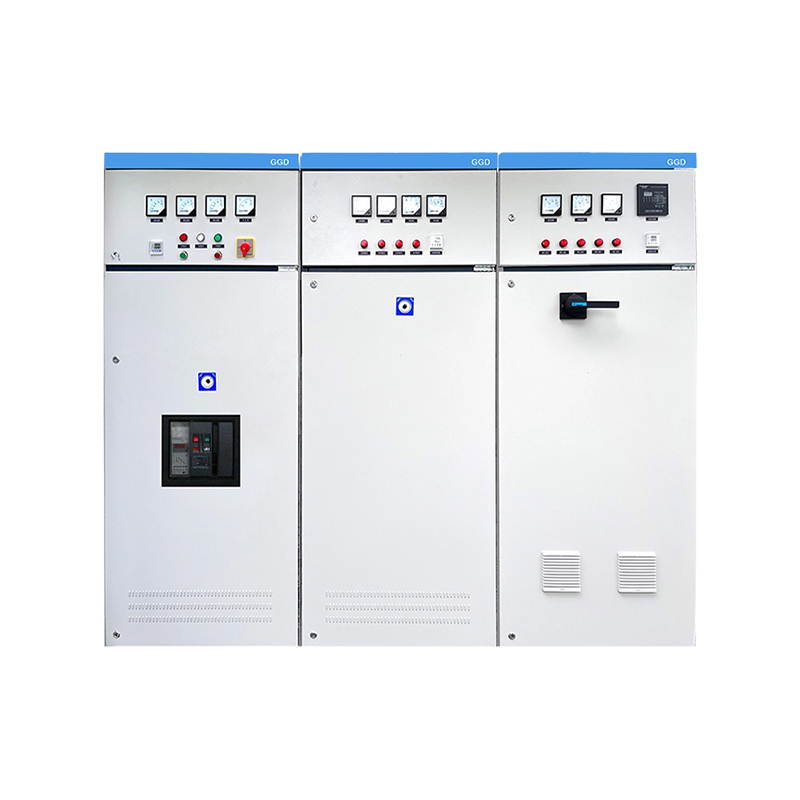
| GGD fixed type | Fixed compartments | Up to 4000A | Industrial power distribution |
| GCS withdrawable | Draw-out units | Up to 4000A | Plants with frequent maintenance |
| MNS system | Modular, flexible | Up to 6300A | Large buildings and data centers |
| GCK / GHL | Draw-out MCC | Up to 3150A | Motor control centers |
| XL-21 | Wall-mounted cabinet | Up to 630A | Small workshops and feeders |
| MCCB panel | Molded case breakers | Up to 630A | Final distribution |
| Power distribution board | Busbar chamber | Up to 1250A | Building risers and sub-panels |
| Smart / IoT switchgear | With monitoring | Varies | Remote monitoring and energy saving |

6 Key Components of a Low Voltage Switchgear Panel
Every low voltage switchgear panel contains six main component groups. Each group has a specific job.
- Incomer and outgoing breakers: molded case circuit breakers or air circuit breakers protect feeders and allow isolation.
- Busbar system: copper bars distribute power from the incomer to every outgoing circuit.
- Protection relays: overcurrent, earth fault and undervoltage relays trip breakers on abnormal conditions.
- Metering and instrumentation: ammeters, voltmeters, energy meters and CTs give live data for operation.
- Contactors and starters: switch motors, pumps and capacitor banks on and off.
- Enclosure and bushing: steel frame, doors, cable glands, IP protection and bushing insulators keep the system safe.
If your plant also uses motor feeders, a dedicated motor control center may be better than mixing motor starters inside a general distribution panel.
How to Select the Right Low Voltage Switchgear
Step 1 – Calculate the load. Add the total connected load in kW or kVA. Apply a demand factor of 0.7 to 0.9 for most industrial plants.
Step 2 – Choose the busbar rating. Pick a busbar current rating at least 20 percent above the calculated demand. This leaves room for future expansion.
Step 3 – Select the breaking capacity. The short-circuit breaking capacity must be higher than the fault current at the point of connection. Check the upstream transformer impedance.
Step 4 – Decide fixed or withdrawable. Withdrawable units cost more but reduce downtime during maintenance. Fixed units are cheaper and suit stable loads.
Step 5 – Check IP rating and environment. Indoor panels usually need IP42 or IP54. Dusty and wet sites need IP54 or higher.
Step 6 – Match the upstream system. The low voltage panel connects to the MV network. Review the MV switchgear panel rating and the main distribution board design to keep the whole chain coordinated.
Ratings and Standards for Low Voltage Switchgear
Low voltage switchgear must meet international standards. The main ones are listed below.
- IEC 61439: low voltage switchgear and controlgear assemblies.
- IEC 60947: low voltage switchgear and controlgear components.
- GB/T 7251: Chinese equivalent standard for LV assemblies.
- IP rating: protection against dust and water.
- Form separation: Form 3b or Form 4b separates busbars from devices for safe maintenance.
Ask the manufacturer for type test reports and routine test certificates before delivery. This is especially important for export projects.
Low Voltage Switchgear Price Factors in 2026
Price depends on specification, not size alone. The main cost drivers are:
- Busbar material and size: copper price drives a large share of the cost.
- Breaker brand: Schneider, ABB and Siemens cost more than reliable Chinese brands.
- Form separation: Form 4b panels cost more than Form 2 panels.
- Withdrawable vs fixed: draw-out units add cost and complexity.
- Monitoring: smart meters, IoT modules and SCADA add value and price.
For the LV panel to last, plan a regular inspection. The same discipline applies upstream; follow the medium voltage switchgear maintenance checklist to keep the whole substation healthy.
Frequently Asked Questions
Q1: What is the difference between low voltage and medium voltage switchgear?
Low voltage switchgear operates below 1kV AC. Medium voltage switchgear operates from 1kV to 35kV or 40.5kV. The components, insulation and testing are different.
Q2: What is GGD and GCS switchgear?
GGD is a fixed type LV switchgear common in China. GCS is a withdrawable type with draw-out units. GCS is easier to maintain but costs more.
Q3: What is the maximum rating of low voltage switchgear?
Standard LV switchgear is rated from 100A to 6300A at 400V or 690V. Above 4000A, the busbar and cooling design needs special attention.
Q4: Can low voltage switchgear be used outdoors?
Yes, but the enclosure must have a higher IP rating such as IP54 or IP65. Outdoor units also need sun protection and anti-corrosion coating.
Q5: How often should LV switchgear be maintained?
A visual inspection every 3 to 6 months and a full thermographic check every year is a good baseline for most industrial plants.
Q6: Can Electric-GS make customized low voltage switchgear?
Yes. Electric-GS provides OEM and ODM services. You can choose the busbar rating, breaker brand, form separation, IP rating, metering scheme and enclosure color.
About Electric-GS
Electric-GS is a professional OEM and ODM manufacturer based in Yueqing, China. We make low voltage switchgear, medium voltage switchgear, RMU, GIS, vacuum circuit breakers, transformers and solar power equipment. Every product is factory tested before delivery. Email info@electric-gs.com or WhatsApp +86 135 8897 8050 for a quotation. For high voltage needs, also see our 40.5kV high voltage switchgear guide, and for more product details visit our product range or the Chinese technical site electric-cn.com.
2 thoughts