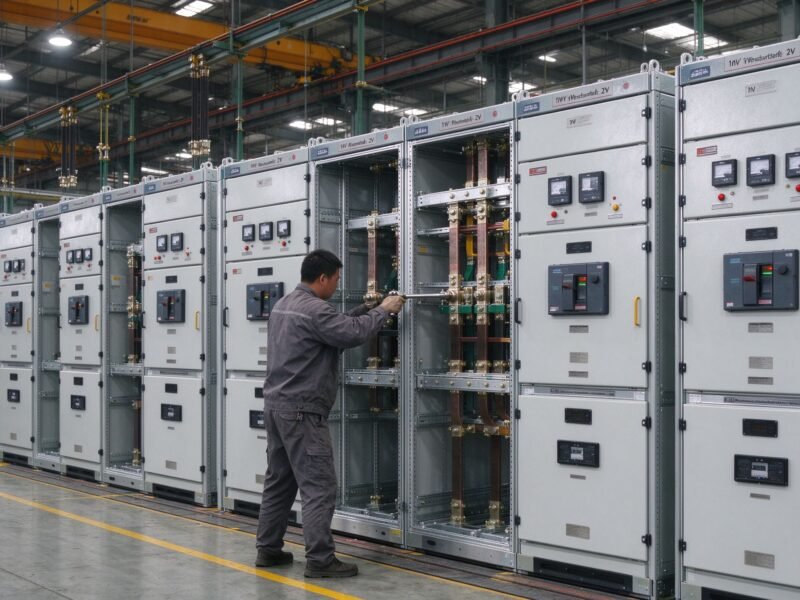
A main distribution board (MDB) is the central point where the incoming power supply is split into multiple outgoing circuits inside a building or industrial plant. It receives power from the transformer or the generator, protects every branch with circuit breakers or fuses, and distributes energy to sub distribution boards, motors, machines and lighting panels. In short, the MDB is the heart of the low voltage electrical installation.
This guide covers what an MDB is, which components sit inside it, how to design one, and how to avoid the most common faults.
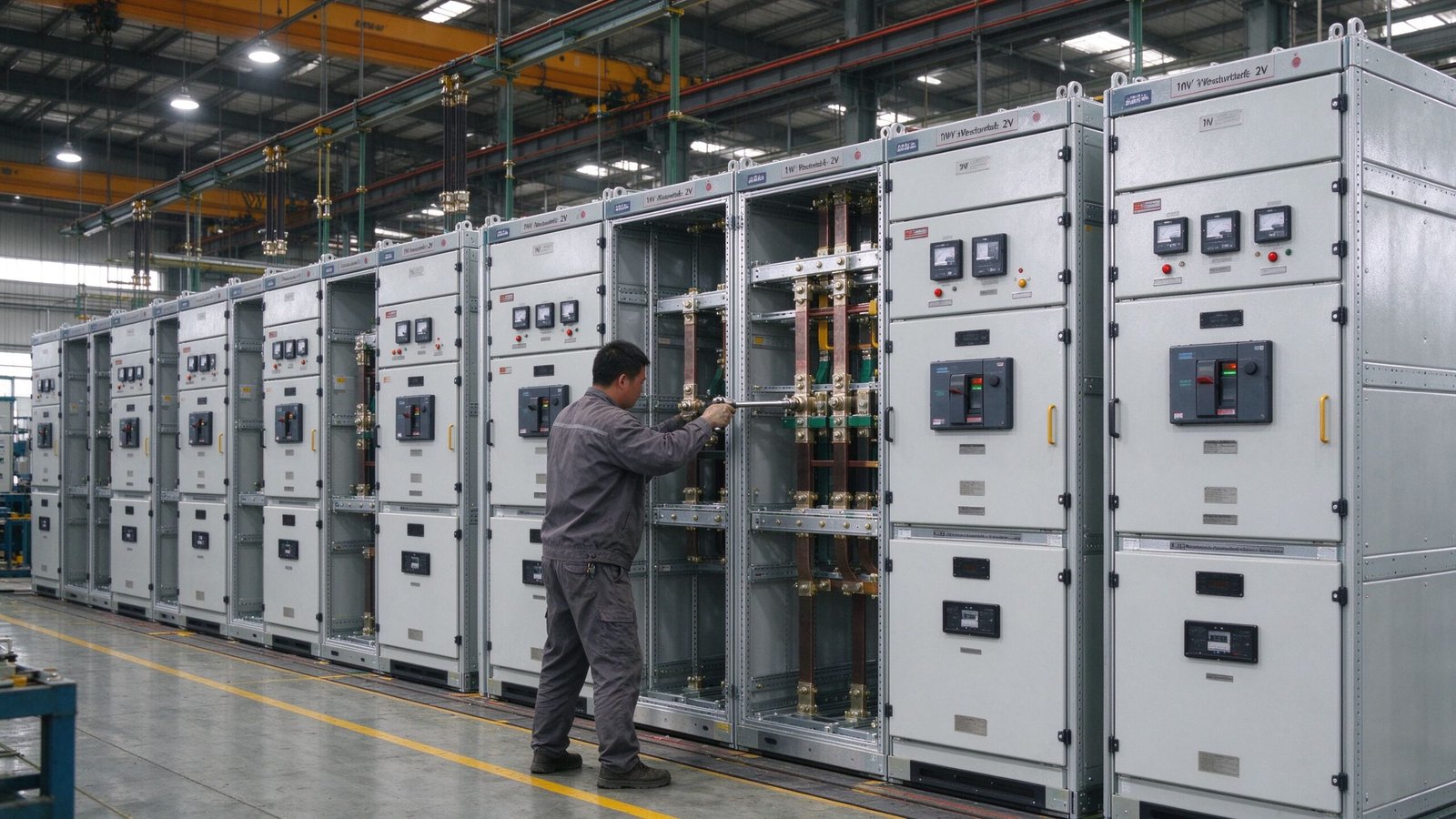
What Is a Main Distribution Board (MDB)?
The MDB is the first distribution level after the incoming supply point. It takes the main feeder cable, which is usually rated from 100A up to 6300A, and divides it into several outgoing feeders. Each feeder has its own protection device, so a fault on one circuit does not shut down the whole building.
From the MDB, power flows to sub distribution boards, which then feed final circuits such as sockets and lights. The MDB is placed close to the meter or transformer room, because the main feeder cable is expensive and voltage drop must stay small.
An MDB is different from a sub distribution board (SDB). The MDB is the first split point, while an SDB is a smaller board that serves one floor, one zone or one machine line. You can compare this architecture with the medium voltage switchgear panels that sit upstream in the network, where the same rule applies: one main switchboard feeds several smaller ones.
Key Components of an MDB
Every main distribution board contains the same basic elements. Knowing each component helps you read a single line diagram and order the right spare parts.
- Incoming switch or breaker: main protection for the whole board.
- Busbar system: copper or aluminium bars that distribute the main current.
- Outgoing breakers: MCCB or ACB for large loads.
- Fuse switch disconnectors: cost-effective protection for smaller feeders.
- Earthing and neutral bar: the reference point for safety and single phase circuits.
- Surge protection device: guards sensitive loads against surges.
- Metering: ammeters, voltmeters, kWh meters and status lamps.
- Enclosure: metal box with IP31, IP54 or IP65 protection.
Types of Main Distribution Boards
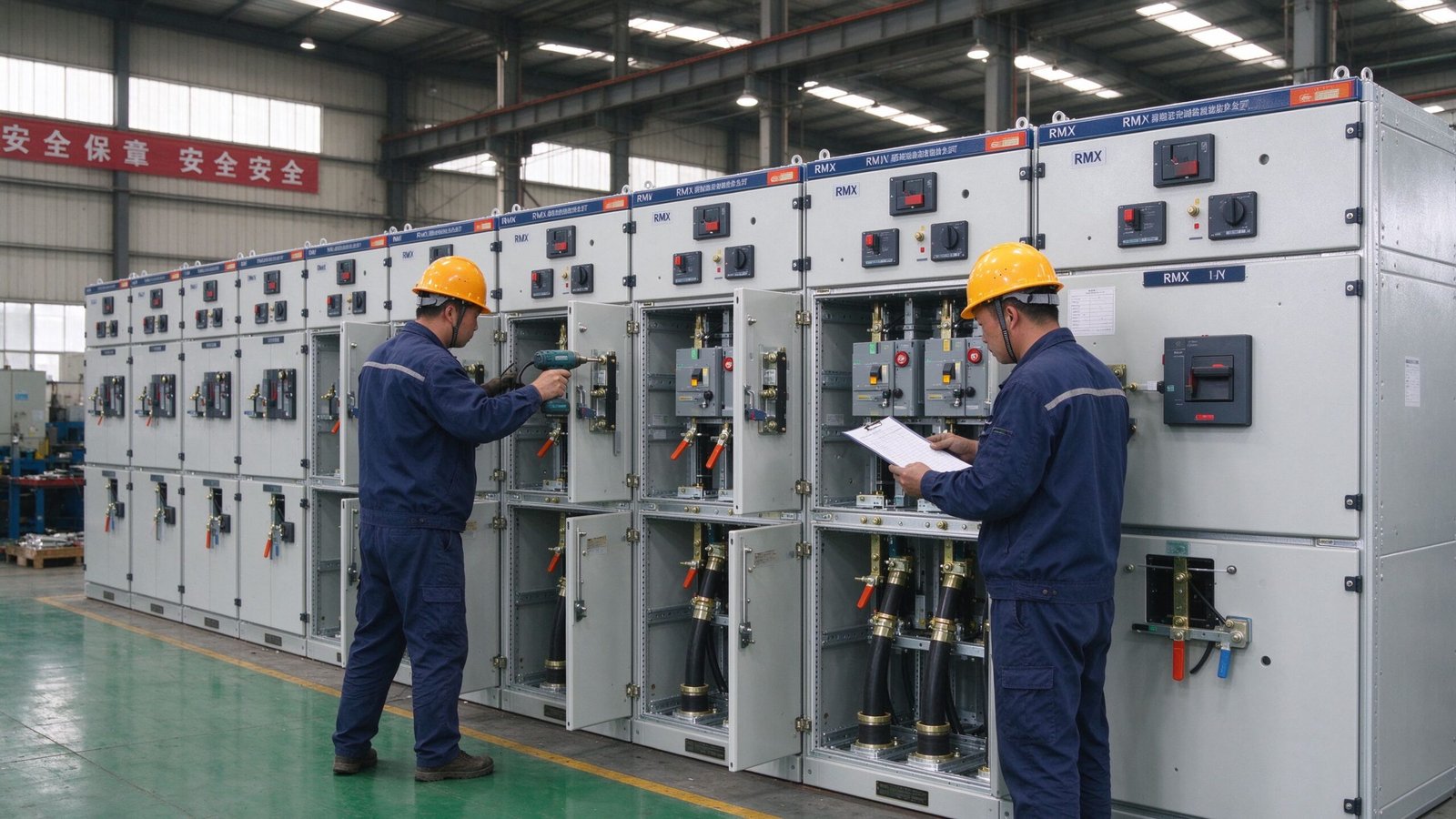
Main distribution boards are built in several forms. The right type depends on the fault level, the space and the maintenance philosophy of the owner.
- Conventional fixed-type MDB: low cost, simple wiring, standard for small buildings.
- Draw-out type MDB: breakers pull out for maintenance, common for industrial feeders.
- Main switchboard with ACB: the main breaker can be serviced without shutting down the board.
- Power distribution centre: metering, power factor correction and distribution in one line.
- Combined LV/MV room solution: mounted with the transformer, a layout many distribution transformer sizing projects adopt.
How to Design an MDB: 7 Practical Rules
Follow these rules during design. Changes after fabrication are expensive and delay the project.
| Rule | Design action | Common mistake |
|---|---|---|
| 1. Calculate the design load | Sum connected loads, apply demand factors | Sizing from the transformer nameplate only |
| 2. Check the fault level | Use the utility short circuit current | Breakers below the real breaking capacity |
| 3. Allow 20-25% spare capacity | Add spare ways and busbar margin | Zero space for future feeders |
| 4. Select the busbar size | Match bars to current and temperature rise | Undersized bars that overheat |
| 5. Plan discrimination | Coordinate breaker settings upstream and down | Tripping the whole board on a small fault |
| 6. Define IP rating and ventilation | Choose IP54 for dusty areas, add louvers | Enclosure too small for the heat load |
| 7. Prepare the earthing scheme | Size the earth bar, bond all metalwork | Floating metalwork and false earths |
Design rules also apply upstream. If the building is fed from a utility ring, the ring main unit selection criteria decide how reliable the incoming supply is before it reaches the transformer and the MDB.
Many site engineers confuse the MDB with the sub distribution board. The table below makes the difference clear.
| Feature | Main distribution board | Sub distribution board |
|---|---|---|
| Position | First split after the transformer or meter | Second or third level |
| Typical rating | 400A – 6300A | 63A – 400A |
| Main protection | ACB, MCCB or fuse switch | MCCB or MCB |
| Feeds | Other boards, big motors, machine lines | Final circuits and small equipment |
| Enclosure | Large, often floor-standing | Wall-mounted or compact |
Installation and Safety Requirements
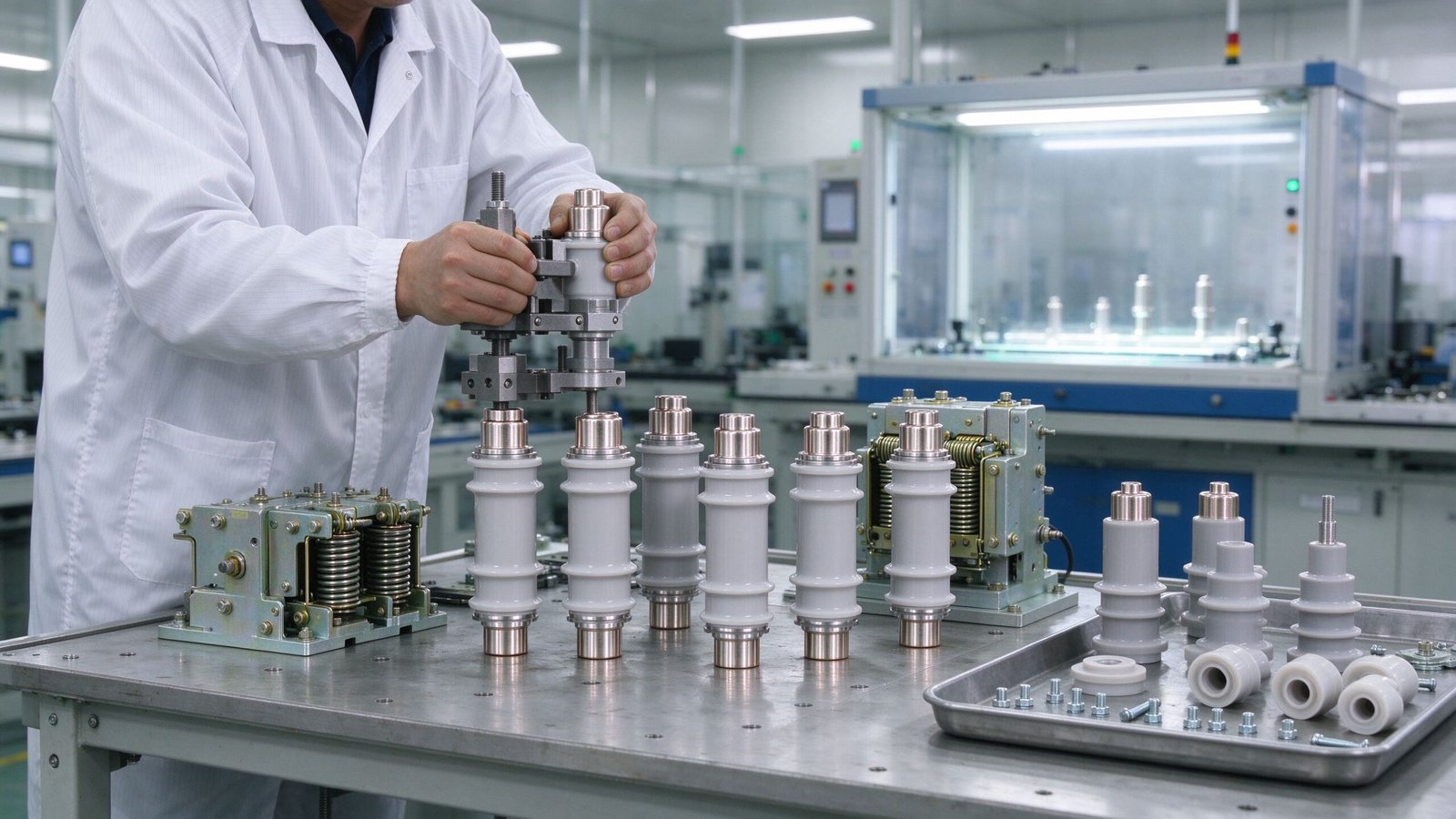
Installation quality decides the service life of the MDB. The board must be fixed on a solid frame, levelled and connected with the correct torque on every busbar joint. Cables need proper glands and support, and the phase sequence must be marked at both ends.
Safety follows IEC 61439 and the local wiring rules: a clear earth connection, a visible main isolating switch, warning labels and a working space. For critical plants, add arc fault containment, because an internal fault in an MDB can be dangerous for operators.
Common MDB Problems and Maintenance
Most MDB failures start with heat: loose busbar joints, overloaded feeders and blocked ventilation. A thermographic survey once a year finds hot spots before they become failures.
- Loose connections: retighten and measure contact resistance.
- Overheated terminals: reduce the load or increase the conductor size.
- Tripped breakers: check the actual fault and the setting curve, do not simply reset.
- Corrosion: keep the enclosure dry and check the seals regularly.
- Old SPDs: replace after a major surge event or every 5-8 years.
MDB FAQ
1. What is a main distribution board (MDB)?
The MDB is the first low voltage distribution point that receives power from the transformer or generator and splits it into protected outgoing circuits for the building or plant.
2. What is the difference between an MDB and a sub distribution board?
The MDB is the first split point and feeds other boards and large loads, while a sub distribution board serves one floor, one zone or one group of final circuits with lower ratings.
3. What components are inside a main distribution board?
An incoming breaker or switch, busbars, outgoing breakers or fuse switch disconnectors, an earth and neutral bar, an SPD, metering devices and the metal enclosure.
4. How do I size a main distribution board?
Sum the connected loads, apply the demand factor, add 20-25% spare capacity, then verify the fault level, the busbar rating and the breaker breaking capacity against the utility data.
5. What are the safety requirements for MDB installation?
Follow IEC 61439, provide a visible isolating switch, a solid earth connection, warning labels, correct working clearance and arc fault containment for critical plants.
6. Can an MDB be used outdoors?
Yes, if the enclosure has the right IP rating (usually IP54 or IP65), a weatherproof canopy, anti-condensation heating and proper cable glands for outdoor cables.
About Electric-GS
Electric-GS is a professional OEM and ODM manufacturer based in Yueqing, China, focused on ring main units, switchgear, transformers and distribution equipment. We build main distribution boards and complete low voltage solutions for projects worldwide. For a quote or a technical drawing, email info@electric-gs.com or contact us on WhatsApp at +86 135 8897 8050. Compare our medium voltage range at electricgs.com and the Chinese technical library at electric-cn.com.
One thought