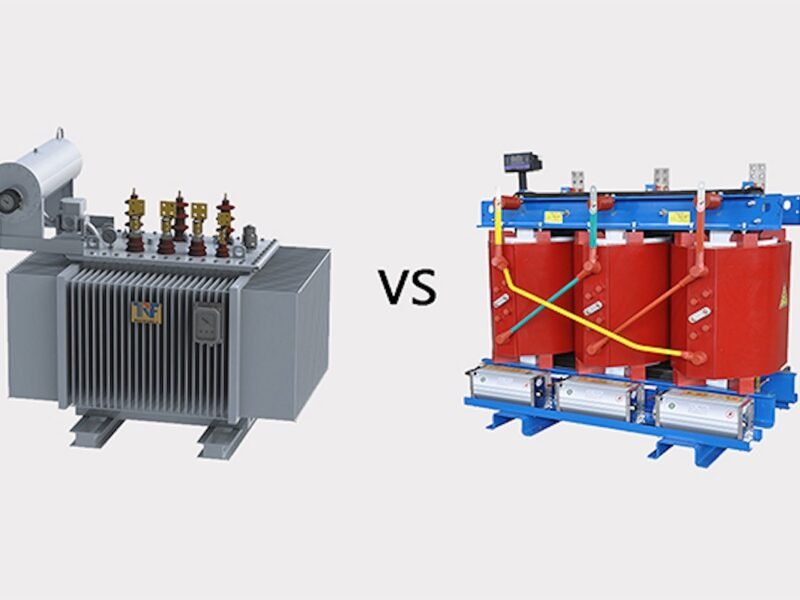
Transformer cooling method is one of the most important ratings on the nameplate. It defines how much load the transformer can carry and how long it can run in an emergency. This guide explains ONAN, ONAF, OFAF and related cooling methods in plain engineering language. For sizing help, see our distribution transformer sizing guide.
What the Cooling Code Letters Mean
Cooling method codes use four letters. The first two describe the cooling medium in contact with the windings; the last two describe the external cooling medium.
- O – Oil: mineral oil or ester liquid.
- N – Natural: natural convection, no pump or fan.
- F – Forced: forced circulation with pump or fan.
- D – Directed: directed oil flow through the windings.
- Air: external cooling by air.
- W: external cooling by water.
The Three Most Common Methods
ONAN – Oil Natural Air Natural
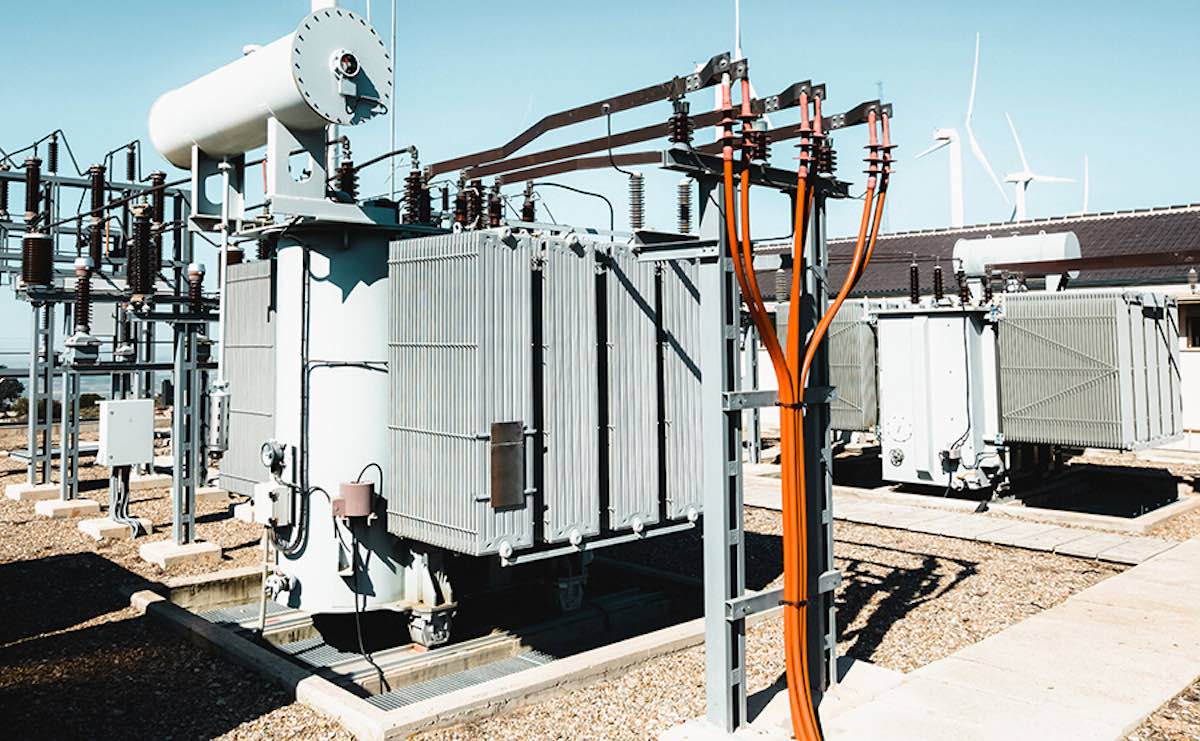
This is the simplest method. Hot oil rises by convection, cools at the tank and radiator surfaces, then sinks back. No fans, no pumps. It is standard for distribution transformers up to about 2.5 MVA.
ONAF – Oil Natural Air Forced
Fans blow air over the radiators to increase heat transfer. The oil still circulates naturally. ONAF rating is typically 115-133% of the ONAN rating for the same transformer.
OFAF – Oil Forced Air Forced
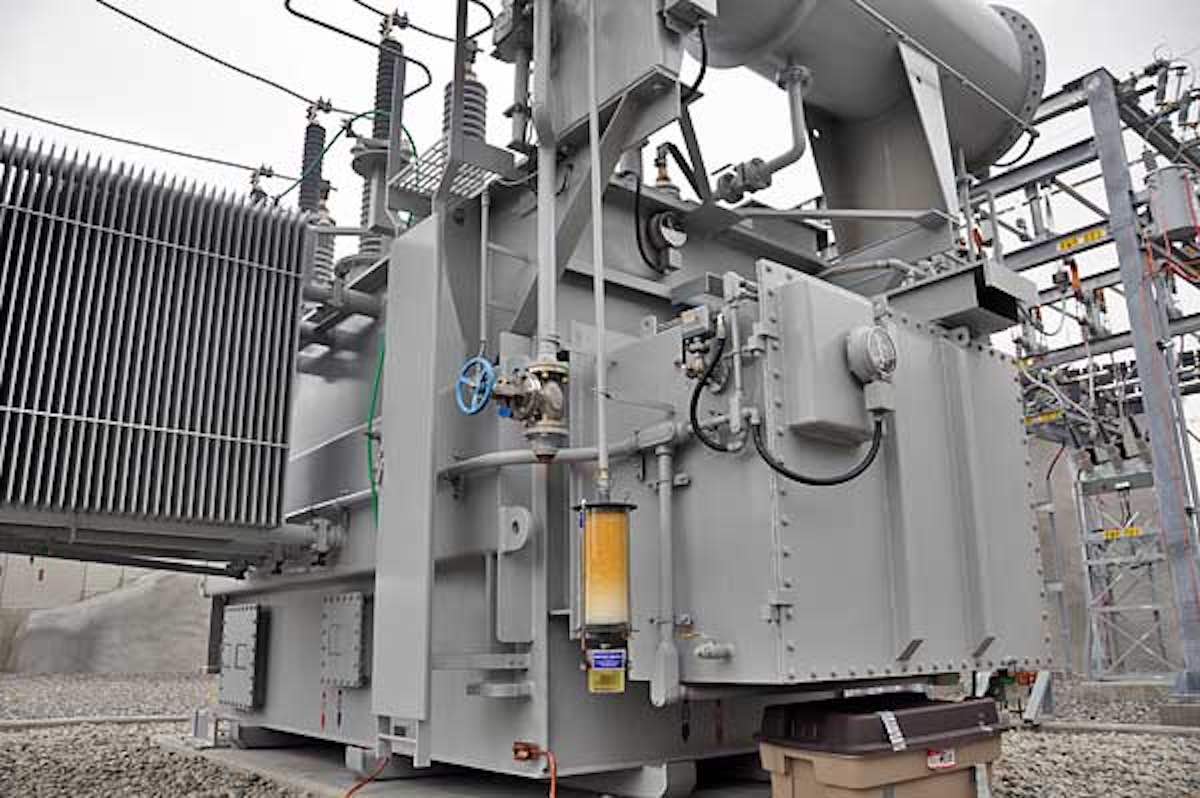
Oil pumps force oil through the radiators while fans force air over them. This method is used for large power transformers above about 20 MVA, where natural convection cannot remove enough heat.
Cooling Method Comparison Table
| Method | Oil Flow | Air Flow | Typical Rating | Relative Cost |
|---|---|---|---|---|
| ONAN | Natural | Natural | Up to ~2.5 MVA | Base |
| ONAF | Natural | Forced (fans) | 115-133% of ONAN | +10-15% |
| OFAF | Forced (pump) | Forced (fans) | Large power units | +25-40% |
| ODAF | Directed | Forced | Very large units | Highest |
Nameplate Ratings: Why There Are Two Numbers
Many transformers carry a dual rating such as 10/12.5 MVA ONAN/ONAF. The transformer runs at 10 MVA without fans. When fans start, it can carry 12.5 MVA. This dual rating is an economical way to cover peak load without buying a larger core.
Fan control rules
- Fans start when oil temperature exceeds the set point (typically 65-75°C).
- Fans stop when temperature drops below the hysteresis band.
- Forced oil pumps may run continuously in OFAF units.
How Cooling Affects Transformer Life
Insulation aging follows the Arrhenius law: for every 6-8°C rise above rated winding temperature, insulation life roughly halves. Cooling keeps hot-spot temperature within limits. If fans fail in summer, loading must be reduced or the transformer must be taken out of service. Hot-spot temperature for mineral oil transformers should stay below 98°C in normal operation.
Common Mistakes in Cooling System Selection
- Buying ONAN for high ambient temperature regions without derating.
- Ignoring altitude derating above 1000 m.
- Not planning spare fan capacity or redundancy.
- Assuming ONAF rating is continuous at all ambient conditions.
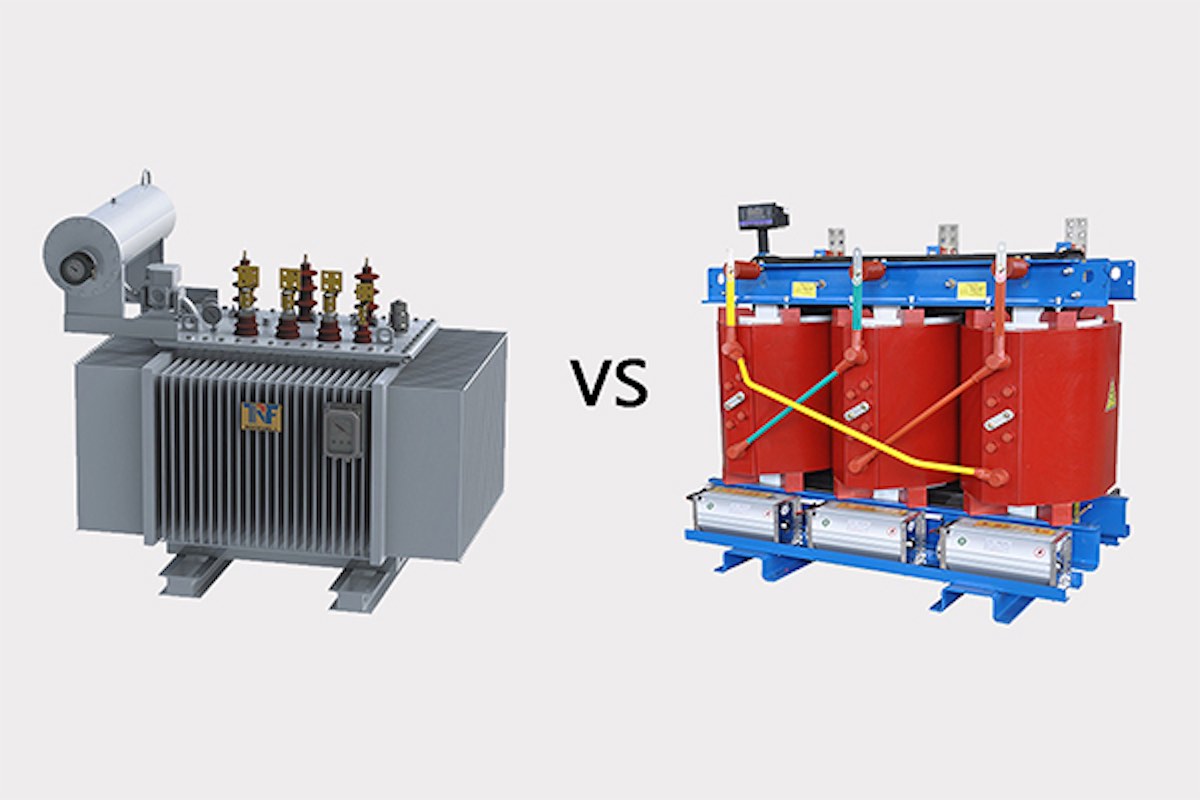
Derating rules matter in real projects. Our dry type vs oil immersed guide covers alternative insulation systems and their cooling behavior.
Cooling System Maintenance
Fans
Check bearings, vibration and airflow annually. Clean the fin surfaces so heat transfer is not blocked.
Oil pumps
Verify flow direction and pump motor current. Check for oil leaks at seals and flanges.
Radiators
Inspect for corrosion, blocked fins and oil leaks. Follow the same logic as our distribution transformer maintenance checklist.
Ambient Temperature and Altitude Derating
Transformer ratings assume a reference ambient temperature, typically 40°C for the maximum, and an average annual ambient of around 20-30°C depending on the standard. In hot regions, each degree above the design ambient reduces the acceptable load. As a rule of thumb, derate the continuous rating by about 1% for every 1°C above 40°C ambient.
Altitude effects
Above 1000 m, air density drops and cooling efficiency falls. The standard practice is to derate the transformer rating by 0.5-1% per 100 m above 1000 m. A 1500 m installation therefore loses roughly 3-5% of its nameplate capacity unless the manufacturer compensates with a larger cooling system.
Planning for both factors
Projects in high-altitude, high-temperature sites should specify the derated ONAN rating instead of assuming the standard nameplate value. This is a common cause of premature transformer aging in mountain solar plants. Check the same derating logic in our transformer sizing guide before confirming the MVA.
Cooling System Retrofit Options
An existing ONAN transformer can often be upgraded with bolt-on cooling:
- Fan kits mounted under the radiators, controlled by an oil temperature thermostat.
- Additional radiator banks where the tank has spare flanges.
- Oil pumps with external heat exchangers for the largest units.
- Digital temperature monitoring with remote alarm for unattended stations.
Every retrofit must be confirmed by the original manufacturer or a qualified engineer. The tank stiffness, gasket condition and oil conservator must handle the increased flow. A wrong retrofit can create hot spots instead of removing them. For monitoring practice, our maintenance checklist describes the temperature records to keep.
FAQ
1. What does ONAN mean in a transformer?
Oil Natural Air Natural: oil and air both circulate by natural convection, with no fans or pumps.
2. Can I run an ONAN transformer with fans added?
Yes, if the manufacturer confirms the design supports a fan rating. Retrofitting fans without verification risks overheating hot spots.
3. Why is ONAF rating higher than ONAN?
Forced air removes heat faster from the radiators, so the same transformer can dissipate more losses.
4. What is the difference between OFAF and ODAF?
OFAF forces oil through the cooling circuit; ODAF directs oil flow specifically through the windings for even higher efficiency.
5. Do dry type transformers use these codes?
No. Dry type transformers use air codes only, such as AN (air natural) and AF (air forced).
6. What happens if the cooling fans fail?
The transformer must be derated to its lower (e.g. ONAN) rating or unloaded until fans are restored.
About Electric-GS
Electric-GS is a professional medium and low voltage switchgear manufacturer based in Yueqing, China. We supply ring main units, GIS, vacuum circuit breakers, LV and MV switchgear, transformers, compact substations and solar distribution products as an OEM/ODM factory. For a quotation or technical support, email info@electric-gs.com or contact us on WhatsApp at +86 135 8897 8050. Visit our partner sites electricgs.com and electric-cn.com for more product information.
3 thoughts