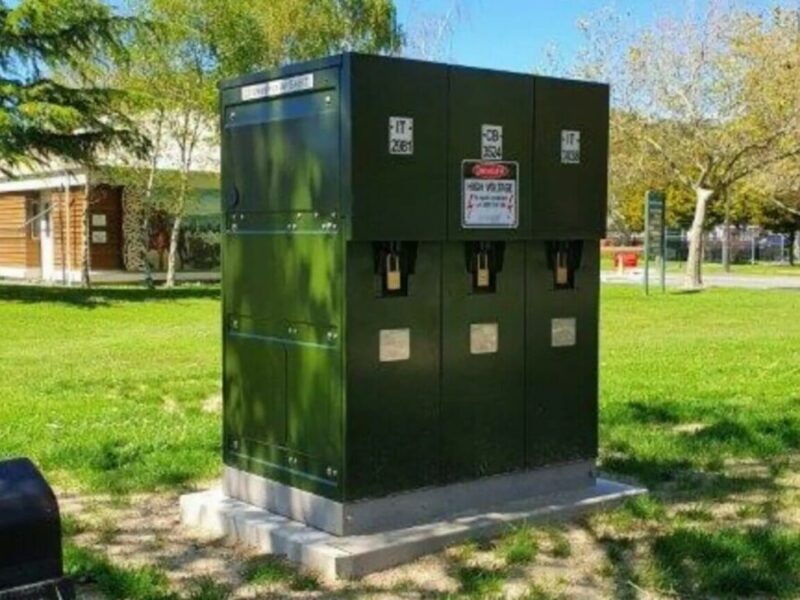
Ring main units (RMU) are designed for 25 years of service, but only if they receive proper maintenance. A sealed SF6 unit needs less attention than an air insulated one, yet both need scheduled checks. This ring main unit maintenance checklist covers the inspections, tests and lubrication steps that keep your RMU reliable and safe.
Why RMU Maintenance Matters
An RMU sits in a distribution ring, often feeding hospitals, factories and residential blocks. A failure means supply interruption to everyone downstream. Regular maintenance catches loose connections, low SF6 pressure and worn mechanisms before they become faults. See also the common errors listed in our top 10 ring main unit installation and commissioning mistakes article.
1. SF6 Gas Pressure Check
For gas insulated RMUs, the SF6 pressure is the heart of the insulation. Check the pressure gauge and the density monitor.
- Read the pressure at the same temperature reference.
- Record the value in the maintenance log.
- If pressure is low, find the leak with an SF6 detector before topping up.
2. Operating Mechanism Lubrication
The spring mechanism that charges the operating handles needs light lubrication to keep operations smooth and consistent. Use the grease specified by the manufacturer; the wrong grease can stiffen at low temperature.
3. Visual Inspection of Cable Compartments
Open the cable compartment and check for moisture, dust, and signs of partial discharge such as white powder on insulators. Check cable terminations for overheating marks and re-torque the connection bolts to the specified value.
4. Earth Switch and Interlock Function Test
Test every interlock: the earthing switch must not close when the circuit breaker is closed, and the cable compartment door must only open when the earth switch is closed. A failed interlock is a serious safety issue and must be repaired immediately.
5. Operation Counter and Mechanism Check
Record the number of operations. If the mechanism is sluggish, perform 5 open-close operations and re-check. Compare operation times with the factory values.
6. Control and Indication Circuit Checks
For RMUs with remote control and indication, verify the position indicators match the actual switch state. Test the trip and close commands from the control room.
Maintenance Frequency Table
| Item | Interval | Action |
|---|---|---|
| SF6 pressure | Every 6 months | Record and compare |
| Visual inspection | Every 6 months | Check compartments and seals |
| Mechanism operation | Annually | Test and lubricate |
| Cable termination torque | Annually | Re-torque |
| Interlock test | Annually | Full function test |
| Partial discharge survey | Every 2-3 years | Ultrasonic / TEV scan |
7. Partial Discharge Survey
Portable PD detectors with ultrasonic and TEV sensors can find insulation weakness without taking the unit offline. Schedule a survey every two to three years, or after a switching event that may have stressed the insulation.
8. Handling Abnormal Findings
- Low SF6 pressure: isolate, detect leak, repair, refill.
- Overheating marks: stop the ring section, re-torque or replace the termination.
- Failed interlock: take the unit out of service until repaired.
- Unusual noise: investigate with ultrasonic detector.
9. Safety Before Any Work
Always confirm the ring is open, the earth switch is closed, the compartment is earthed, and a permit to work is in place. Use the correct PPE and keep the maintenance log updated.
FAQ
1. How often should an RMU be maintained?
Visual checks every 6 months and a full inspection annually is the standard practice for sealed SF6 RMUs.
2. Does SF6 gas need topping up?
Only if a leak is present. If pressure drops, find and repair the leak first, then top up.
3. Can I clean an RMU with compressed air?
No. Use a vacuum cleaner with a non-conductive nozzle or a dry cloth. Compressed air can move dust into the insulation.
4. What is the service life of an RMU?
Typically 25 years with proper maintenance; sealed pressure vessels may last longer with regular monitoring.
5. Why is the interlock test important?
Interlocks prevent operators from opening compartments with live parts. A failed interlock creates a serious safety hazard.
6. What should I record in the maintenance log?
SF6 pressure, operation counts, inspection findings, test results and any repairs with dates and signatures.
Spare Parts and Maintenance Documentation
Good RMU maintenance depends on good records. Keep a maintenance log for each unit with the serial number, installation date, SF6 gas pressure readings, operation counter values and every inspection result. When the counter shows that the number of load operations approaches the manufacturer’s limit, schedule the mechanism service before the next planned outage.
Keep spare parts that are most likely to be needed: fuses of each rating used on the unit, auxiliary switch contacts, indicator lamps, control fuses and a spare gas pressure gauge. Store them in a dry, temperature-stable cabinet. Document the supplier’s contact and the RMU type designation so that replacement parts can be ordered quickly.
Interlocking and Safety Device Checks
Every RMU has mechanical interlocks that prevent opening a live compartment. Test each interlock during the annual inspection: the cable compartment door must not open unless the earth switch is closed, and the fuse compartment cover must not open under load. A worn interlock is a safety defect and must be repaired immediately, not scheduled for later.
Seasonal and Environmental Checks
RMUs installed outdoors or in harsh environments need extra attention. In coastal areas, salt pollution attacks enclosures and cable terminations; check for corrosion on painted surfaces and treat scratches promptly. In dusty industrial areas, clean the ventilation openings and check that filter media is not clogged. In areas with large temperature swings, condensation is a risk: check for moisture inside cable compartments and inside the low voltage compartment.
- Spring: inspect for condensation damage after the winter, check gland plates and gaskets.
- Summer: verify cooling paths are clear, check loading on hot days.
- Autumn: prepare for high humidity, check heaters and thermostats.
- Winter: check for ice formation around outdoor units, confirm operating mechanisms move freely.
A simple seasonal checklist like this catches most environmental failures before they cause an outage.
About Electric-GS
Electric-GS is a professional medium and low voltage switchgear manufacturer based in Yueqing, China. We supply ring main units, GIS, vacuum circuit breakers, LV and MV switchgear, transformers, compact substations and solar distribution products as an OEM/ODM factory. For a quotation or technical support, email info@electric-gs.com or contact us on WhatsApp at +86 135 8897 8050. Visit our partner sites electricgs.com and electric-cn.com for more product information.
Related Reading
- Top 10 Ring Main Unit Installation and Commissioning Mistakes
- Gas Insulated RMU vs Air Insulated RMU: Complete Comparison
- RMU vs Traditional Switchgear: Key Differences
- Switchgear Factory Testing and Certification Guide
One thought