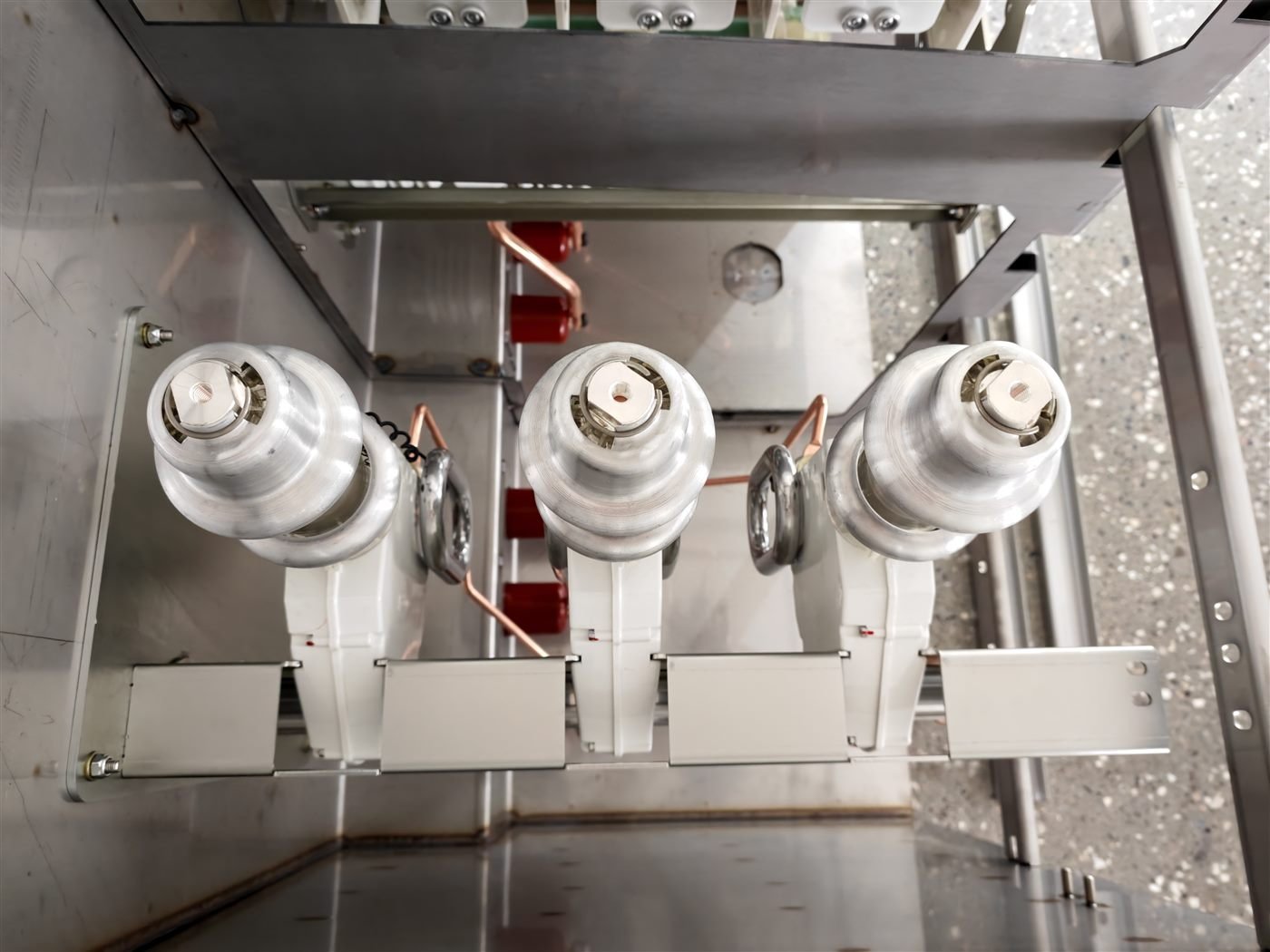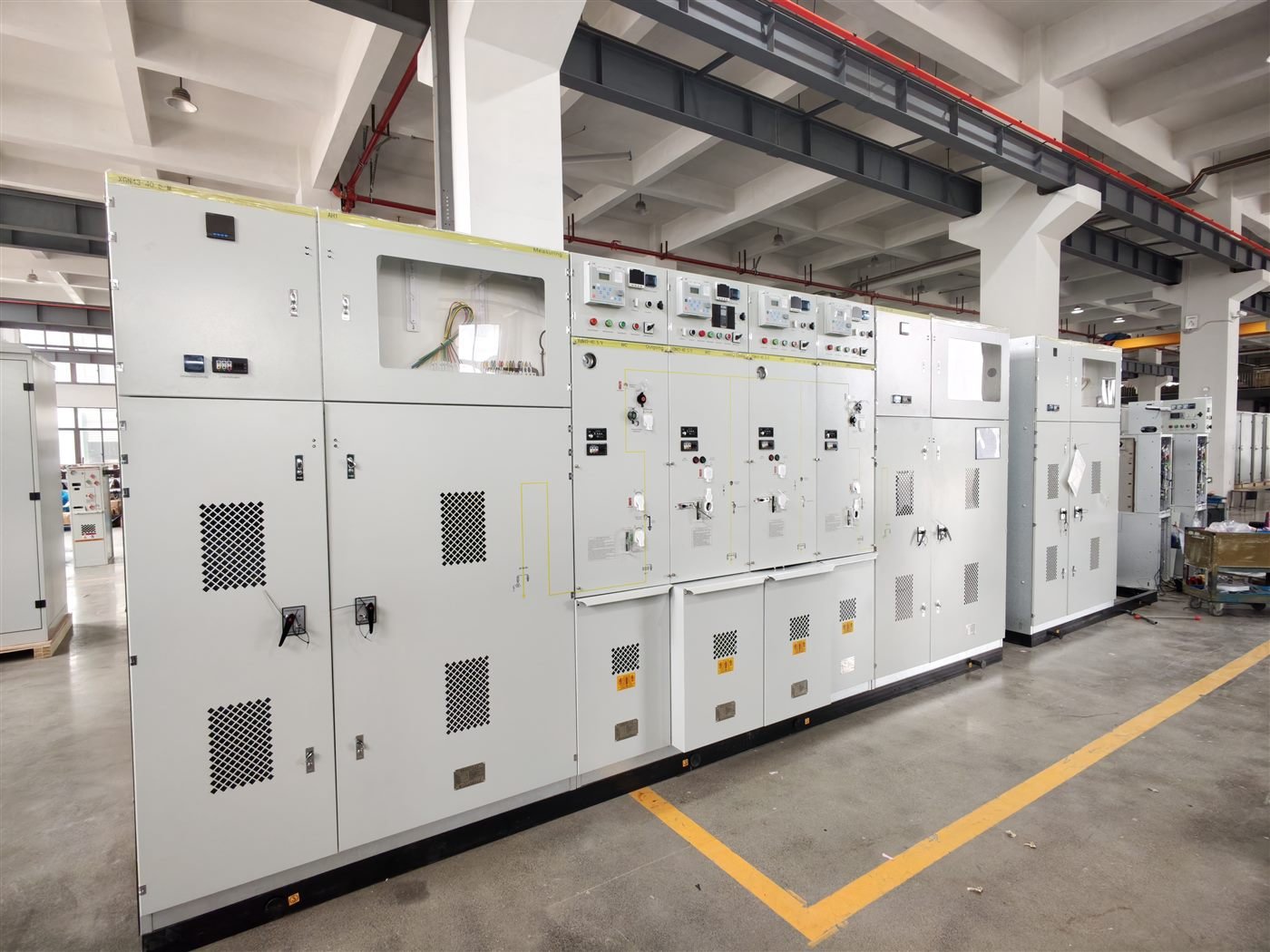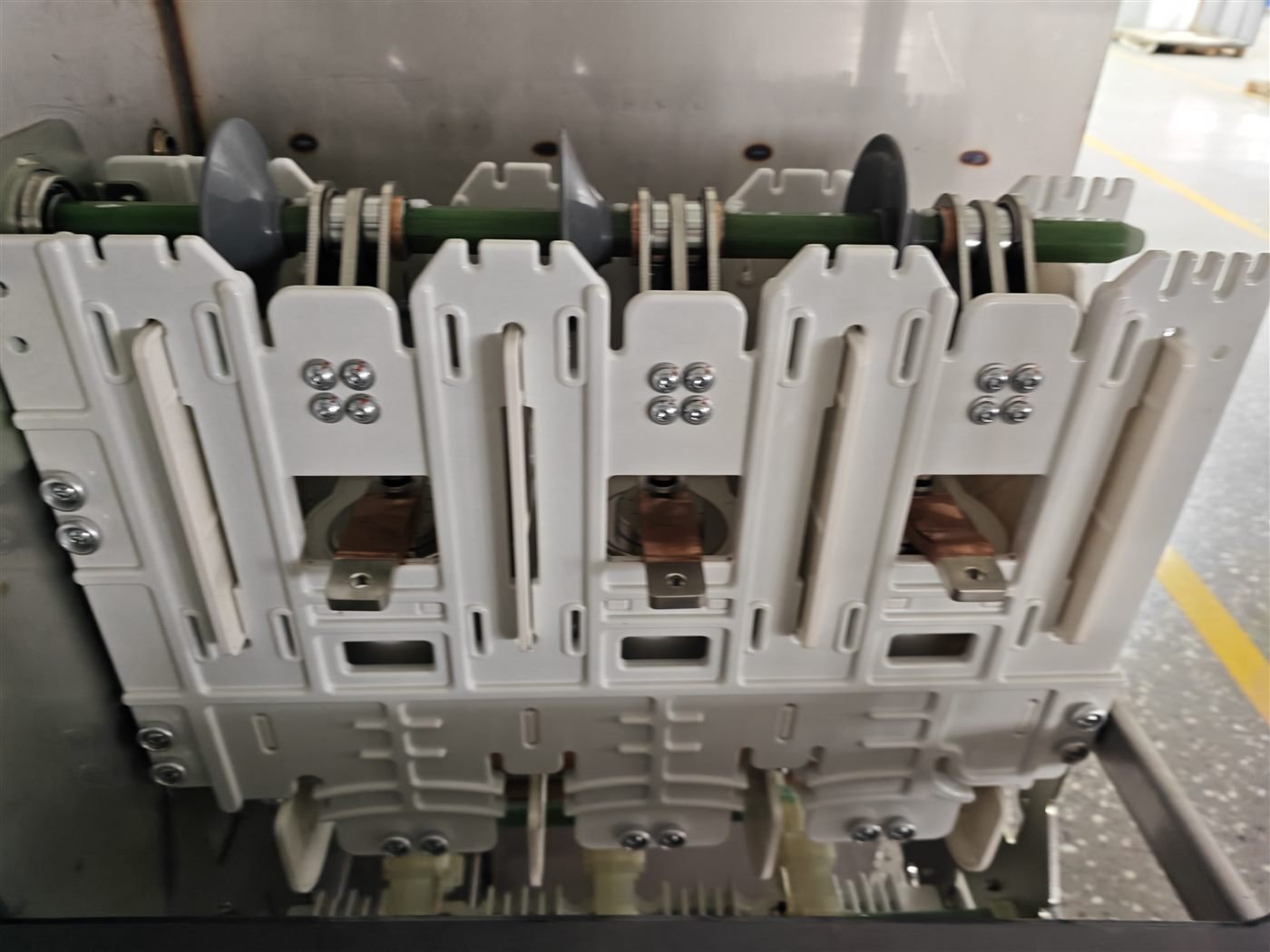
Every medium voltage switchgear panel relies on two families of components: the high voltage contacts that carry and interrupt current, and the insulation that keeps the current where it belongs. This factory tour shows how high voltage contacts and insulation are assembled at Electric-GS, and which quality checks each part must pass.
The Role of HV Contacts
HV contacts in a switchgear panel include the main contacts of the circuit breaker or load break switch, the isolating contacts, and the earthing contacts. They must carry the rated current without overheating and interrupt the arc reliably on opening.
Contact Materials and Plating
Contacts are usually made of copper or a copper-tungsten alloy for the arcing tips. The contact surface receives silver plating to reduce contact resistance and prevent oxidation. Each batch is checked for plating thickness.
- Main contacts: silver-plated copper, low resistance.
- Arcing contacts: copper-tungsten, erosion resistant.
- Isolating contacts: silver-plated with wiping action.
Insulation Components
Medium voltage insulation includes epoxy resin insulators, bushings, and the insulating barriers inside the panel. Epoxy insulators support the busbar and provide creepage distance. In our assembly line, every insulator is visually inspected and a sample batch is tested for partial discharge.
Assembly Process Step by Step
| Step | Operation | Quality Check |
|---|---|---|
| 1 | Clean contact surfaces | Visual + resistance sample |
| 2 | Fit arcing contacts | Dimension check |
| 3 | Mount insulators on frame | Torque check |
| 4 | Install busbar connections | Resistance measurement |
| 5 | Assemble operating mechanism | Operation timing test |
| 6 | High voltage test | Power frequency withstand |
Contact Resistance Testing
Every phase is tested with a micro-ohmmeter. The contact resistance must be within the factory limit, typically below 50 micro-ohms for a 630 A contact system. A high reading means a loose joint or dirty surface, and the assembly is reworked before testing proceeds.
Mechanism and Timing Checks
The operating mechanism is assembled and tested for opening and closing times. For a vacuum circuit breaker, opening time is typically below 50 ms and closing time below 80 ms. The mechanism is operated 200 times as a burn-in before final assembly.
Why Factory Assembly Quality Matters
A switchgear panel is only as good as its assembly. Poor contact alignment causes hot spots; a hairline crack in an insulator leads to partial discharge and eventual failure. This is why we follow the routine test procedures described in our switchgear factory testing and certification guide, and why we keep records for every panel.
FAQ
1. What material are HV contacts made of?
Main contacts are silver-plated copper; arcing contacts use copper-tungsten alloy for erosion resistance.
2. Why are insulators epoxy resin?
Epoxy resin provides high mechanical strength, good dielectric properties and precise molding for complex shapes.
3. What is the typical contact resistance limit?
Usually below 50 micro-ohms for a 630 A system, measured with a micro-ohmmeter across each phase.
4. How is partial discharge detected?
With PD detectors using ultrasonic and TEV sensors during routine and type testing.
5. Do contacts need maintenance?
Vacuum interrupter contacts are sealed and maintenance-free; the mechanism and secondary wiring need periodic inspection.
6. Can I visit the factory for audit?
Yes. Electric-GS welcomes customer factory audits and witness testing. Contact our sales team to arrange a visit.
Contact Resistance Testing in Practice
Contact resistance is the single most useful health indicator for HV contacts. It is measured with a micro-ohmmeter that pushes a DC current of 100 A to 200 A through the closed contact and measures the voltage drop. The result is compared with the factory value and with the limits in the maintenance manual. A rising trend is more meaningful than a single reading: if resistance increases by more than 50 percent from the as-delivered value, schedule inspection and re-torqueing.
For withdrawable circuit breakers, measure the contact resistance at the main contacts, the isolating contacts and the earthing contacts. Record the value for each phase separately and compare phase-to-phase balance. A significant difference between phases usually indicates a loose connection or a damaged contact finger.
Contact Wear and End of Life
Vacuum interrupter contacts wear in two ways: the arcing contact surface erodes with each interruption, and the mechanism stroke changes as contacts erode. The manufacturer defines the contact erosion limit, usually visible as a wear indicator on the moving contact rod. When the indicator reaches the limit, the interrupter must be replaced. Tracking the operation counter helps plan the replacement before the limit is reached.
Common Contact Faults and Their Signs
- Overheating at a bolted joint: visible discolouration of copper or silver plating, caused by insufficient torque or surface oxidation.
- High resistance in a closed circuit breaker: detected by micro-ohmmeter, caused by weak contact pressure or worn contact tips.
- Arcing damage on isolating contacts: found during visual inspection, caused by closing on load or misalignment.
- Corrosion on outdoor contacts: white or green deposits, caused by moisture ingress and pollution; clean and re-plate if needed.
- Abnormal mechanism force: grinding or high effort during operation, caused by misaligned contact alignment.
Most contact faults give early warning through temperature rise or resistance trend. A thermal camera survey during a planned outage is an efficient way to find hot joints across many panels.
Training and Competence for Maintenance Teams
Contact maintenance is only as good as the people doing it. Technicians should be trained on the specific switchgear type, know the rated parameters, and understand the safe working procedures for the voltage class. A simple competence matrix for the maintenance team prevents the most common errors: over-torquing connections, using the wrong grease, and opening compartments without proper earthing. Keep the training records with the maintenance documentation and refresh them every two years or whenever new switchgear types are added to the fleet.
About Electric-GS
Electric-GS is a professional medium and low voltage switchgear manufacturer based in Yueqing, China. We supply ring main units, GIS, vacuum circuit breakers, LV and MV switchgear, transformers, compact substations and solar distribution products as an OEM/ODM factory. For a quotation or technical support, email info@electric-gs.com or contact us on WhatsApp at +86 135 8897 8050. Visit our partner sites electricgs.com and electric-cn.com for more product information.
Related Reading
- Inside the Factory: Medium Voltage Switchgear Assembly
- Inside Electric-GS: How Switchgear Is Manufactured and Tested
- How Switchgear Enclosures Are Built
- Switchgear Factory Testing and Certification Guide