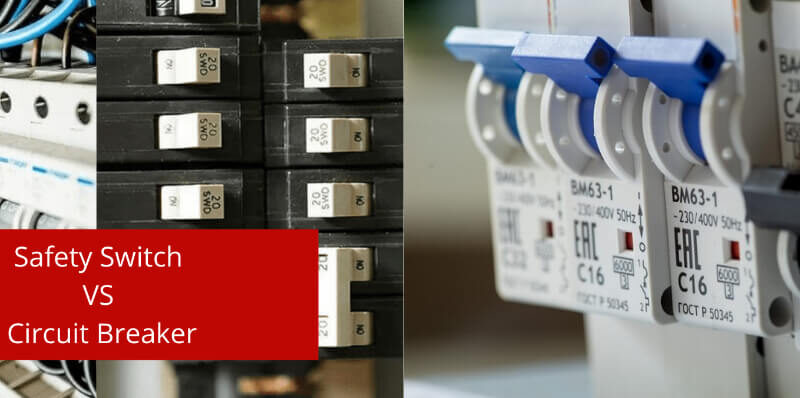
SF6 load break switches and vacuum circuit breakers are both used in medium voltage networks, but they do different jobs. Choosing the wrong device leaves you either under-protected or paying for capacity you do not need. This article compares SF6 load break switches and vacuum circuit breakers across seven key criteria so you can pick the right one for your project.
1. Breaking Capacity: The Core Difference
A load break switch (LBS) can interrupt normal load current, typically up to 630 A. It cannot break short-circuit current. A vacuum circuit breaker (VCB) can interrupt fault current up to its rated breaking capacity, commonly 25 kA or 31.5 kA. This single fact drives most selection decisions.
| Parameter | SF6 Load Break Switch | Vacuum Circuit Breaker |
|---|---|---|
| Rated current | 630 A typical | 630 A to 4000 A |
| Breaking capacity | Load current only | Short-circuit: up to 40 kA |
| Fault protection | With upstream fuse | Inherent |
| Mechanical life | ~10,000 operations | ~30,000 operations |
| Maintenance | Low, sealed unit | Moderate, inspect contacts |
| Typical application | RMU, ring networks | Substations, feeders |
2. Fault Protection Capability
An LBS alone provides no short-circuit protection. In ring main units, the LBS is paired with fuses for transformer protection (fuse-switch combination). A VCB integrates with a protection relay and clears faults by itself, which gives faster fault clearing and better selectivity.
3. Application Context
Load break switches dominate RMU and ring network applications where switching is rare and fuses protect the transformer. Vacuum circuit breakers suit busbars, large transformers, motors and feeders that need repeated interruption of fault currents. For network design help, see our SF6 load break switch applications guide.
4. Cost Comparison
An LBS is significantly cheaper than a VCB of the same voltage class. But the total cost must include the protection scheme: an LBS needs fuses or an upstream breaker, while a VCB includes its own protection via a relay. For small transformers, the fuse-LBS combination is usually the lowest cost solution.
5. Maintenance and Service Life
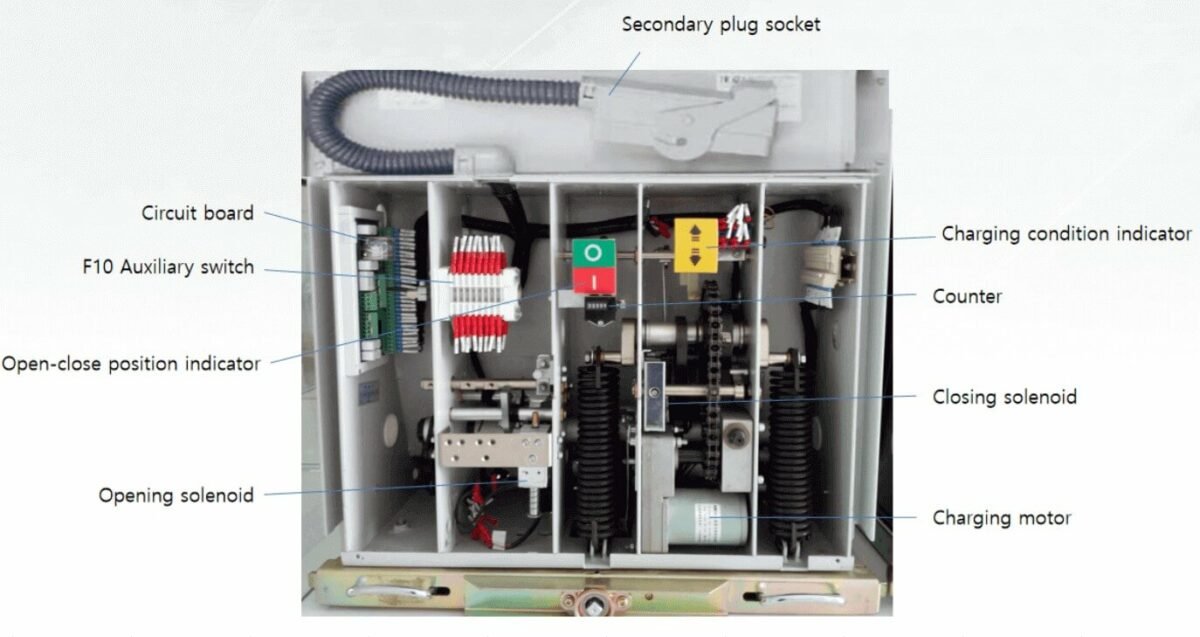
Sealed SF6 LBS units are maintenance-free for the design life, which makes them popular for pole-mounted and underground distribution. Vacuum breakers have vacuum interrupters with long electrical life, but require periodic inspection of the mechanism and control circuits.
6. Environmental Considerations
SF6 is a powerful greenhouse gas, which is why many regions are moving to SF6-free load break switches with vacuum interruption or solid insulation. If your project has sustainability requirements, ask for SF6-free alternatives or check local regulations on SF6 handling.
7. How to Choose: Decision Guide
- Choose an LBS for ring main units and transformer switching with fuse protection.
- Choose a VCB when the device must clear short-circuit faults itself.
- Choose an LBS for low-maintenance, compact, sealed installations.
- Choose a VCB for feeders with high fault levels or frequent switching.
- Consider SF6-free options for new greenfield projects.
FAQ
1. Can a load break switch replace a circuit breaker?
No. An LBS cannot interrupt short-circuit current and needs upstream protection, typically fuses.
2. What is a fuse-switch combination?
An LBS combined with fuses, used in RMUs to protect transformers against short circuits.
3. How many operations can a VCB perform?
Modern vacuum circuit breakers are rated for about 10,000 mechanical operations and up to 100 full-load interruptions at rated breaking capacity.
4. Are SF6 load break switches being phased out?
SF6-free technologies are growing, but SF6 LBS units remain widely installed and many utilities still specify them for RMUs.
5. Which is better for a 630 kVA transformer?
An LBS with fuse protection is normally sufficient and economical; a VCB is used when the protection scheme requires relay-based clearing.
6. Do load break switches need maintenance?
Sealed SF6 LBS units are maintenance-free; air insulated units need periodic inspection and lubrication.
Real-World Selection Examples
To make the LBS versus VCB decision concrete, consider three common installations. A 630 kVA pad-mounted transformer in a housing estate usually uses a fuse-switch combination: the LBS switches load current and the fuses clear transformer faults, which is the most economical protection scheme for small transformers. A large 20 kV feeder feeding a factory with multiple motors and high fault levels needs a vacuum circuit breaker with a protection relay, because the feeder must clear faults itself and support selective coordination.
An urban ring main unit, by contrast, almost always uses SF6 or SF6-free load break switches in the ring positions with fuse switches for the transformer branches. The ring switchgear never needs to break short-circuit current, so the LBS design is compact and maintenance-free. Understanding these patterns helps you specify the right device from the start.
Hybrid Solutions
Many modern panels combine both technologies: an LBS for the busbar switching function and a VCB for the outgoing feeder protection. This hybrid approach gives the economy of the LBS where fault breaking is not needed and the protection capability of the VCB where it is. When you design a new network, consider the hybrid scheme rather than forcing one technology into every position.
Future Trends in MV Switching
The industry is moving away from SF6 because of its high global warming potential. SF6-free load break switches using vacuum interruption with solid insulation or clean air are already available from major manufacturers and are being adopted in European utilities. Vacuum circuit breakers remain the standard for protection duty, and their mechanisms are becoming more reliable with reduced maintenance requirements.
- SF6-free LBS for ring main units: vacuum or solid insulated designs.
- Digital protection relays with IEC 61850 communication on VCB panels.
- Condition monitoring: operation counters, SF6 pressure sensors and PD sensors send data to the control centre.
- Compact hybrid switchgear that combines LBS and VCB functions in one panel.
When planning new projects, check the SF6 regulations in your market and prefer SF6-free options where they are approved, because retrofitting later is costly.
About Electric-GS
Electric-GS is a professional medium and low voltage switchgear manufacturer based in Yueqing, China. We supply ring main units, GIS, vacuum circuit breakers, LV and MV switchgear, transformers, compact substations and solar distribution products as an OEM/ODM factory. For a quotation or technical support, email info@electric-gs.com or contact us on WhatsApp at +86 135 8897 8050. Visit our partner sites electricgs.com and electric-cn.com for more product information.
Related Reading
- SF6 Load Break Switch Applications: Complete Guide
- Vacuum Circuit Breaker Maintenance Schedule
- Outdoor Vacuum Circuit Breaker ZW32 Application Guide
- Top 10 Ring Main Unit Installation Mistakes

One thought