What Is an SF6 Load Break Switch?
An SF6 load break switch (LBS) is a medium voltage switching device that uses sulfur hexafluoride gas as both the insulating and arc-quenching medium. It is designed to make and break load currents in distribution networks, typically up to 630A, and is widely installed inside ring main units, pad-mounted switchgear, and compact substations. Because SF6 has excellent dielectric strength and arc extinction properties, the switch is compact, reliable, and requires minimal maintenance over its service life.
SF6 load break switches are the workhorse of secondary distribution networks worldwide. They provide a cost-effective solution for switching transformer feeders, ring circuits, and backup connections where fault interruption is handled by separate fuses or upstream breakers. For more product information, visit electricgs.com or our factory website at electric-cn.com.
Key Applications of SF6 Load Break Switches
- Ring main units (RMUs): LBS units form the switching core of two-way and three-way ring main units, connecting transformers and cables in ring distribution topologies.
- Transformer protection: LBS with fuse combinations protect distribution transformers from overloads and short circuits while enabling load switching.
- Cable switching and isolation: Used to switch and isolate underground cable circuits during maintenance and fault restoration.
- Pad-mounted switchgear: Installed in outdoor pad-mounted enclosures for underground residential distribution (URD) systems.
- Compact substations: Combined with transformers and LV panels inside compact package substations for urban power supply.
- Renewable energy: Switching and protection of MV collection circuits in solar and wind power plants.
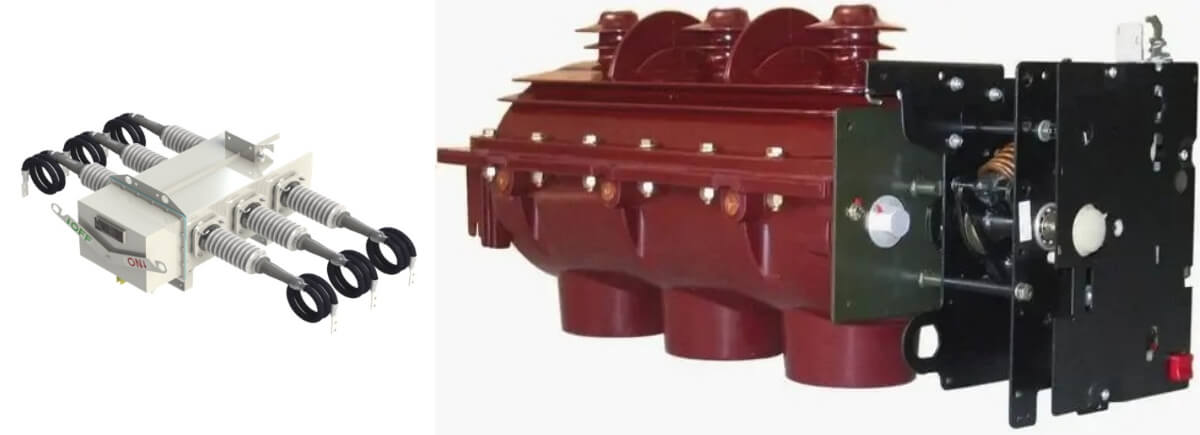
SF6 Load Break Switch Ratings Table
| Parameter | Typical Rating | Remarks |
|---|---|---|
| Rated Voltage | 12kV / 24kV / 36kV | Per system voltage class |
| Rated Normal Current | 400A / 630A / 1250A | 630A standard for RMU |
| Short-time Withstand (3s/4s) | 16kA / 20kA / 25kA | Depends on network fault level |
| Peak Withstand Current | 40kA / 50kA / 63kA | Dynamic stability |
| Load Break Capability | Up to rated current | 1000 operations typical |
| Cable Charging Current | Up to 10-25A | Capacitive switching |
| Insulation Medium | SF6 gas sealed for life | 0.04-0.05 MPa sealed |
How SF6 Load Break Switches Work
The switching principle of an SF6 load break switch relies on puffer technology. When the contacts separate, a moving puffer compresses SF6 gas through the arcing zone, where the gas stream rapidly extinguishes the arc. Because SF6 gas recombines after each operation, the switch can perform thousands of load operations without contact replacement.
The sealed gas compartment ensures that the insulating medium never degrades under normal service conditions. Modern designs include a pressure indicator and a mechanical operation counter, allowing operators to monitor the equipment condition without opening the enclosure.
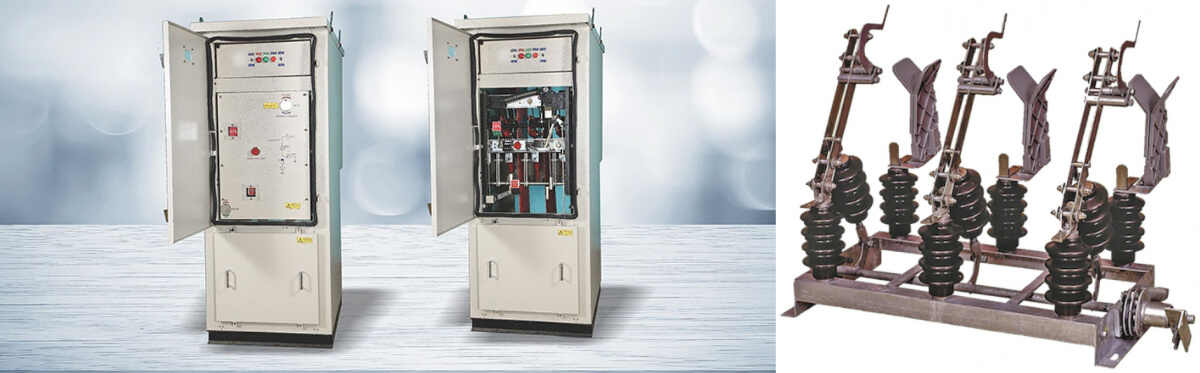
Selection Guide for SF6 Load Break Switches
- Confirm voltage class: Match the switch rated voltage with the system nominal voltage, considering insulation coordination for the installation altitude.
- Check normal current: Select 630A for standard distribution transformer feeders and 1250A for high-load industrial connections.
- Verify fault capability: Ensure the short-time withstand current covers the network’s maximum fault level for at least 3 seconds.
- Choose configuration: Select the number of ways (2-way, 3-way, 4-way) based on the network topology and future expansion needs.
- Consider operation mode: Manual operation for simple networks, motorized or remote operation for smart grid and SCADA integrated systems.
- Add accessories: Fault indicators, voltage presence indicators, and cable test facilities enhance operational safety.
Maintenance Requirements
SF6 load break switches are essentially maintenance-free during their sealed-for-life design. Recommended practices include an annual visual inspection of the enclosure, operating mechanism, and indicators, plus a functional operation test every 2-3 years. If the gas pressure indicator shows loss of pressure, the switch must be taken out of service and repaired by qualified personnel before re-energizing.
Frequently Asked Questions
Q1: Can an SF6 load break switch interrupt fault current?
No. A load break switch is designed only to make and break load current, not fault current. Fault interruption is provided by fuses in fuse-switch combinations or by upstream circuit breakers.
Q2: What is the service life of an SF6 load break switch?
Sealed-for-life designs typically provide 20-30 years of service with no gas refilling required under normal conditions, with a mechanical endurance of 1,000-2,000 operating cycles.
Q3: Are there SF6-free alternatives?
Yes. Vacuum and solid-insulated load break switches are available as SF6-free alternatives, increasingly preferred where environmental regulations restrict SF6 usage.
Q4: Can SF6 load break switches be installed outdoors?
Yes, when installed inside IP54-rated pad-mounted enclosures or weatherproof kiosks, they operate reliably outdoors in urban and rural distribution networks.
Q5: Do you supply custom SF6 load switch configurations?
Yes, as an OEM manufacturer we supply custom configurations including special busbar arrangements, customer-specified relays, and integrated fault indication systems.
About Electric-GS Manufacturer
Electric-GS is a professional electrical power equipment manufacturer based in Liushi, Yueqing, Zhejiang, China, with over 15 years of OEM/ODM experience serving global power equipment distributors and EPC contractors. We supply medium and low voltage switchgear, RMUs, circuit breakers, transformers, and solar balance of system products with full type test reports.
Contact us for quotations and custom design support: Email info@electric-gs.com, WhatsApp: +86 135 8897 8050.
2 thoughts