What is a Solar Grid-Connected Cabinet?
A solar grid-connected cabinet is the central AC distribution and protection assembly that connects a photovoltaic power plant to the utility grid. It aggregates inverter outputs, provides AC protection, metering, isolation, and grid connection switching, acting as the interface between the PV plant and the distribution network.
For complete solar grid solutions, visit electricgs.com or our factory site at electric-cn.com.
Core Functions of a Grid-Connected Cabinet
- Inverter output aggregation: Combines multiple inverter AC outputs into one or more distribution feeders.
- AC protection: Overcurrent, short circuit, and residual current protection for plant and grid safety.
- Isolation and switching: Load break switch and circuit breaker provide safe isolation for maintenance.
- Metering: Energy meters measure export and import energy for billing and feed-in tariff verification.
- Anti-islanding coordination: Interfacing with inverter anti-islanding protection and grid protection relays.
- Surge and lightning protection: AC surge protection devices protect connected equipment from transient overvoltage.
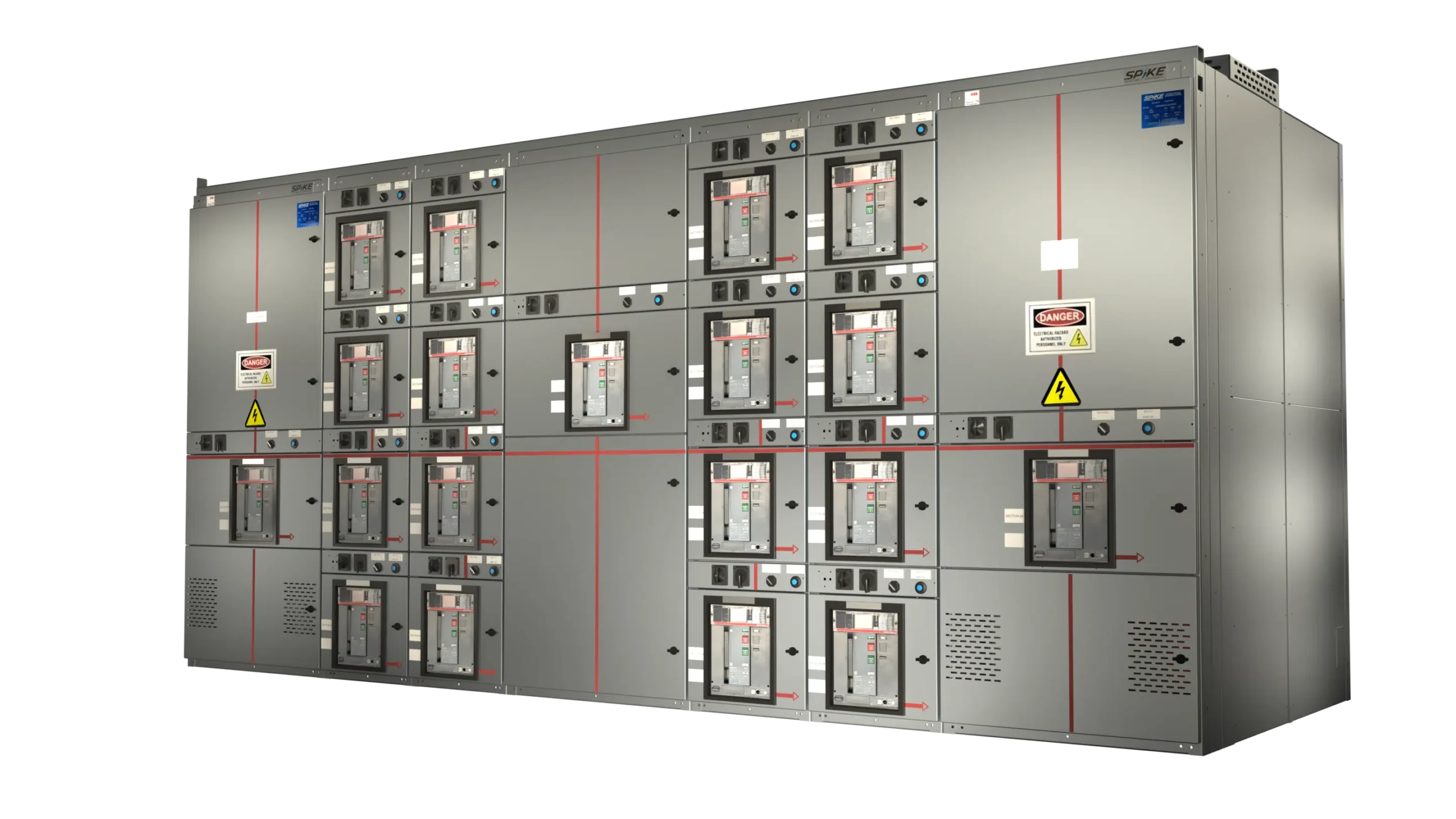
Typical Configurations and Ratings Table
| Plant Capacity | Voltage Level | Main Breaker Rating | Feeder Count | Protection Features |
|---|---|---|---|---|
| 100kW – 500kW | 400V | 630A – 1250A | 2 – 4 | ACB + SPD + Metering |
| 500kW – 2MW | 400V / 690V | 1600A – 3200A | 4 – 8 | ACB + Relays + Metering |
| 2MW – 10MW | 10kV / 35kV | 630A – 2500A (MV) | 1 – 4 (MV feeders) | VCB + Protection + SCADA |
Step-by-Step Integration Process
- Verify grid code requirements: Confirm local grid connection standards, protection settings, and metering regulations.
- Select cabinet configuration: Choose LV or MV grid cabinet based on plant capacity, inverter type, and voltage level.
- Configure protection relay: Set overcurrent, voltage, frequency, and anti-islanding protection per utility requirements.
- Integrate metering: Install bidirectional energy meters with CTs sized for maximum export current.
- Design AC cabling: Size cables for continuous current with proper voltage drop and short circuit rating.
- Commission and test: Perform insulation tests, protection relay tests, and grid synchronization verification.
Grid Code Compliance Essentials
1. Protection Settings
Overcurrent, over/under voltage, and over/under frequency relays must be set according to local grid code. Anti-islanding protection with detection time under 2 seconds is mandatory in most jurisdictions.
2. Metering Accuracy
Use accuracy class 0.5S or better CTs and meters for feed-in tariff billing, with seals and calibration certificates from accredited labs.
3. Earthing and Bonding
All cabinet metal parts must be bonded to the plant earthing system with proper earth conductor sizing for full fault current.
Frequently Asked Questions
Q1: What is the difference between a PV combiner box and a grid-connected cabinet?
A combiner box works on the DC side to combine module strings before the inverter, while a grid-connected cabinet works on the AC side after the inverter to connect the plant to the utility grid.
Q2: Can the grid cabinet be used for both solar and wind?
Yes, with relay and metering configuration adjustments, the same cabinet platform supports wind turbines, but solar-specific features like anti-islanding coordination with PV inverters are prioritized.
Q3: What is the typical lead time for a custom grid cabinet?
Standard configurations ship in 2-3 weeks, while custom engineered cabinets with utility-specific protection relays take 4-6 weeks including factory acceptance testing.
Q4: Do you provide site commissioning support?
Yes, our engineers provide remote commissioning guidance and can arrange on-site support for large projects through our global service partners.
Q5: Can the cabinet be integrated with SCADA monitoring?
Yes, we integrate Modbus RTU/TCP communication modules for remote monitoring of breaker status, energy data, and protection events.

AC Side vs DC Side Protection for PV Plants
Understanding the division of protection between the DC side and AC side is essential for correct grid cabinet configuration. On the DC side, string fuses, PV combiner boxes, and inverter DC disconnectors protect module strings and cabling from reverse currents and ground faults. On the AC side, the grid-connected cabinet provides overcurrent protection, isolation, surge protection, and metering for the inverter output and the plant distribution network. The two protection systems are complementary: DC protection is designed for the unique fault characteristics of photovoltaic sources, while AC protection follows conventional distribution protection practice with grid code coordination. A well-designed plant has a clear protection coordination study covering both sides, ensuring that a fault on any single feeder trips only the local protection device and does not take down the entire plant.
Commissioning Checklist for Grid-Connected Cabinets
Before grid connection, verify the following items: all torque connections tightened to specification, insulation resistance measured and recorded, protection relay settings confirmed against the utility-approved coordination study, earthing continuity tested, surge protection devices installed with correct voltage class, metering CTs and meters calibrated, interlock and door mechanisms operational, and all labels and drawings installed. During the grid connection test, verify phase sequence, measure voltage and frequency at the point of common coupling, and confirm the anti-islanding function trips the main breaker within the required time. Finally, record all test results in the commissioning report for the utility and the plant owner.
About Electric-GS Manufacturer
Electric-GS is a professional electrical power equipment manufacturer based in Liushi, Yueqing, Zhejiang, China, with over 15 years of OEM/ODM experience serving global power equipment distributors and EPC contractors. We supply medium and low voltage switchgear, RMUs, circuit breakers, transformers, and solar balance of system products with full type test reports.
Contact us for quotations and custom design support: Email info@electric-gs.com, WhatsApp: +86 135 8897 8050.
11 thoughts