DC vs AC Combiner Box: Which One Does Your Solar Plant Need?

Solar installers often ask whether they need a DC combiner box, an AC combiner box, or both. The answer depends on your system design. This guide explains the key differences, where each goes, and how to choose between them.

What Is a DC Combiner Box?
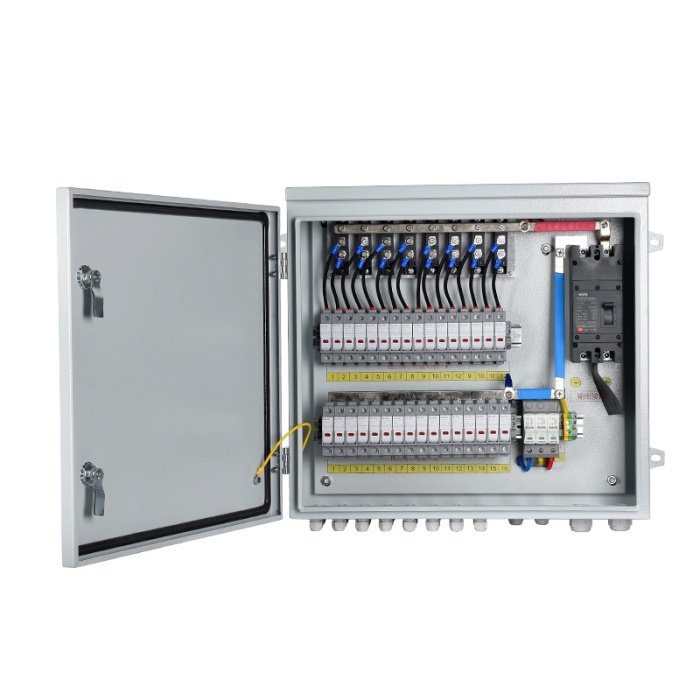
PV combiner box</a>” style=”width:100%;max-width:800px;display:block;margin:20px auto;”></p><p>A DC combiner box sits between the solar panels and the inverter. It combines multiple PV string inputs into one or two outputs. Each input has its own fuse or circuit breaker. The box also provides surge protection and a visible disconnect for safe maintenance.</p><ul><li><strong>Inputs:</strong> 4 to 24 strings of PV modules</li><li><strong>Voltage range:</strong> Up to 1500V DC (standard for utility-scale plants)</li><li><strong>Key components:</strong> string fuses, DC SPD, DC disconnect, monitoring bus</li><li><strong>Typical use:</strong> large ground-mounted solar farms, rooftop arrays with many strings</li></ul><h2>What Is an AC Combiner Box?</h2><p>An AC combiner box sits on the AC side, between inverter outputs and the main switchgear. It combines multiple inverter outputs into a single feeder. It contains AC breakers, surge protection, and sometimes metering.</p><ul><li><strong>Inputs:</strong> multiple inverter AC outputs (e.g., 4 to 12 inverters)</li><li><strong>Voltage:</strong> 400V or 480V AC, three-phase</li><li><strong>Key components:</strong> AC breakers, AC SPD, CTs for metering, main busbar</li><li><strong>Typical use:</strong> commercial solar plants with multiple inverters, battery storage systems</li></ul><h2>DC vs AC Combiner Box: Key Differences</h2><table><thead><tr><th>Factor</th><th>DC Combiner Box</th><th>AC Combiner Box</th></tr></thead><tbody><tr><td>Location</td><td>Between panels and inverter</td><td>Between inverters and grid</td></tr><tr><td>Voltage</td><td>Up to 1500V DC</td><td>400/480V AC</td></tr><tr><td>Key risk</td><td>DC arc fault, high voltage</td><td>Overcurrent, backfeed</td></tr><tr><td>Cost</td><td>Lower (per channel)</td><td>Higher (heavier breakers)</td></tr><tr><td>Maintenance</td><td>Check fuses after storms</td><td>Routine breaker testing</td></tr><tr><td>IP rating</td><td>IP65 typical (outdoor)</td><td>IP54-IP65</td></tr></tbody></table><h2>Which One Do You Need?</h2><p>Most grid-tied solar plants need <strong>both</strong>: a DC combiner on the string side and an AC combiner on the inverter side. Small rooftop systems (under 100 kW) can skip the DC combiner if each inverter has integrated string fuses. Utility-scale plants always need both.</p><p>When choosing, match the box rating to your string count, current and voltage. Always use components certified for PV applications. A wrong selection can create fire hazards or invalidate your warranty.</p><h2>Frequently Asked Questions</h2><h3>Can I use an AC combiner as a DC combiner?</h3><p>No. AC breakers do not interrupt DC current safely. DC circuits need specially rated breakers or fuses that extinguish the DC arc.</p><h3>Do off-grid systems need both boxes?</h3><p>Off-grid systems usually need a DC combiner between panels and charge controllers. An AC combiner is only needed if you have multiple inverters or multiple AC sources.</p><h3>What IP rating is required?</h3><p>Outdoor boxes should be at least IP65. Indoor boxes can be IP54. Coastal or dusty sites need higher protection.</p><h2>Conclusion</h2><p>DC and AC combiner boxes serve different purposes in a solar system. Understanding where each goes helps you design a safe, compliant and cost-effective PV plant. For project-specific advice, contact an experienced manufacturer.</p><p>Electric-GS is a professional power and electrical equipment manufacturer based in Yueqing, Zhejiang, China. The company produces DC combiner boxes, AC distribution boxes, PV <a href=grid-connected cabinets and related switchgear. OEM and ODM support is available for international projects. For a quotation, contact info@electricgs.com or WhatsApp +86 135 8897 8050.

Leave a Reply

Your email address will not be published. Required fields are marked *