Many solar installers use the terms PV combiner box and junction box loosely. They are not the same component, and mixing them up causes protection and maintenance problems later. This article explains the key differences between a PV combiner box and a solar junction box, where each one belongs in the system, and how to choose correctly. For related protection issues, see our PV combiner box troubleshooting guide.
What Is a Solar Junction Box?
A solar junction box is a simple connection point. It joins PV module cables or string cables without fusing or active protection. Typical locations include the back of a module, the end of a string row, or a wall-mounted pass-through point.
Typical contents
- Cable glands and terminal blocks.
- Diode bypass protection (in module boxes).
- No fuses, no breakers, no monitoring.
What Is a PV Combiner Box?
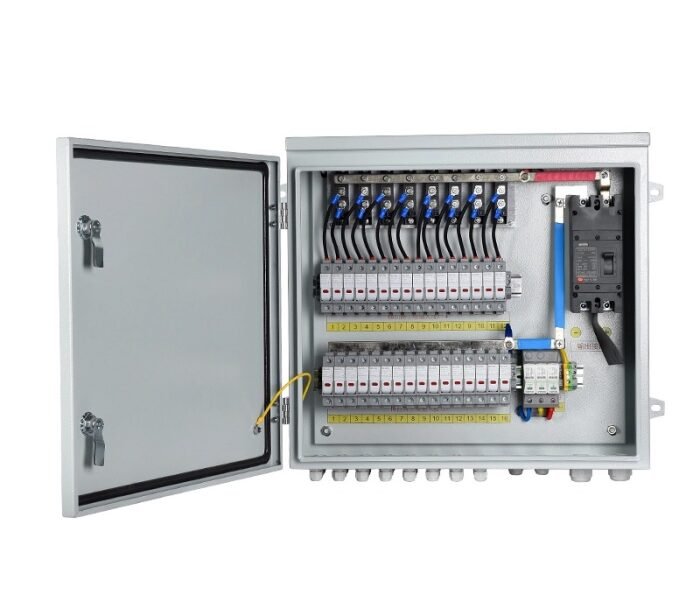
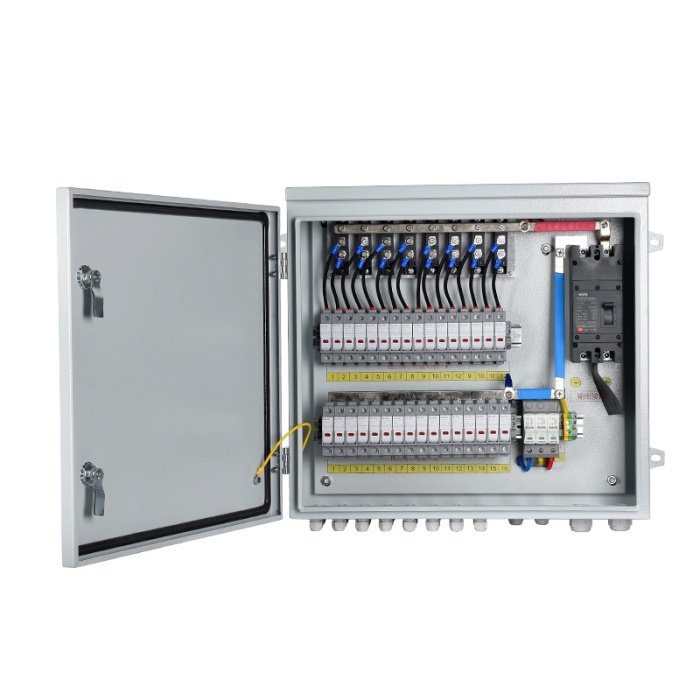
A PV combiner box combines several strings into one output and provides overcurrent protection. Each string circuit has a fuse or breaker, and the combined output goes to the inverter or DC panel. Combiner boxes are the standard protection point for commercial and utility-scale solar plants.
Typical contents
- DC fuse holders or MCB/MCCB for each string.
- SPD (surge protection device) for lightning protection.
- Main output breaker or fuse.
- Busing bar and cable terminals.
- Optional string monitoring and status LEDs.
Key Differences: Combiner Box vs Junction Box
| Feature | Solar Junction Box | PV Combiner Box |
|---|---|---|
| Primary function | Connection only | Combine + protect |
| Fusing per string | No | Yes |
| Surge protection | Usually no | Yes (SPD) |
| Monitoring | No | Optional |
| Enclosure rating | IP54-IP65 | IP65-IP66 outdoor |
| Voltage rating | Up to 1500 V DC | Up to 1500 V DC |
| Typical use | Small residential | Commercial and utility |
| Cost per string | Low | Higher, with protection value |
Where Each Box Belongs in a PV System
String design
A string is a series of modules producing DC voltage. Several strings meet at the combiner box before the inverter.
Typical system layout
Modules → junction boxes at string ends → PV combiner box → DC switchgear → inverter → grid-connected cabinet.
In small systems (under 10 kW), installers often use a simple junction box and rely on inverter fusing. In commercial systems, a proper combiner box with per-string fuses is mandatory to protect cables and modules from reverse current.
Why Fusing Matters
When one string shorts, healthy strings feed current back into the faulty string. Without fuses, this reverse current can exceed module limits and cause fire. A combiner box fuse clears the fault and isolates the bad string. This is the core reason a solar combiner box is not just a junction box with a bigger enclosure.
Correct fuse sizing follows the same rules as our PV combiner box sizing guide.
Monitoring and Troubleshooting
Combiner boxes with string monitoring report current per string to the SCADA system. A sudden drop identifies a failed module, a loose connector or a blown fuse quickly. Junction boxes give no visibility, so faults are found only during manual inspection. When problems do appear, our troubleshooting guide covers the most common causes.
How to Choose the Right Box
1. Count the strings
Choose a combiner box with enough fuse slots: 4, 8, 12 or 16 inputs are common configurations.
2. Check voltage and current ratings
Match the box to your array voltage (1000 V or 1500 V DC) and string fuse rating.
3. Select the enclosure
Outdoor plants need IP65 or higher with UV-resistant housing and good ventilation. See how we build solar distribution products in our factory.
4. Decide on monitoring
Add string monitoring when plant size or performance guarantees require fast fault localization.
DC Cable Sizing and Voltage Drop Considerations
Cable sizing between the array and the combiner box is often underestimated. Long DC runs at 1000-1500 V suffer voltage drop that reduces inverter efficiency and, at the end of a string, can push the array voltage below the inverter MPPT window. Use the current of the combined strings when sizing the output cable, and use the single string current for each input branch. A 2-3% total DC voltage drop is a common design target.
Connector and torque checks
Loose MC4-style connectors are the number one cause of hot spots in solar plants. Torque the terminals in the combiner box to the manufacturer value, typically 3-5 Nm for DC terminals, and take an infrared image during the first hot day after commissioning.
How to Inspect and Maintain a Combiner Box
- Check fuse indicators every 6 months; a blown fuse shows up as a missing string in monitoring.
- Verify SPD status windows; a red indicator means the surge protection module must be replaced.
- Re-torque all terminals once a year.
- Clean the enclosure vents and check the gaskets for UV damage.
- Record string currents and compare them with baseline values.
Combiner box maintenance is quick but important. Combined with the fault list in our troubleshooting guide, a regular inspection program prevents most plant downtime.
FAQ
1. Can I use a junction box instead of a combiner box?
Only in small systems where every string is fused at the inverter. For multiple parallel strings, use a combiner box.
2. What fuse size do I need?
Typically 1.25-1.5 times the string short-circuit current, below the module reverse current rating.
3. Are combiner boxes required by code?
Most national codes (NEC Article 690 in the US, IEC 62548) require overcurrent protection where strings are paralleled.
4. Do combiner boxes work for both AC and DC?
No. PV combiner boxes are DC only. AC combining happens in AC distribution panels or switchgear.
5. How often should combiner boxes be inspected?
Check fuse status, terminal tightness and SPD condition every 6-12 months depending on environment.
6. Can a combiner box be customized?
Yes. Electric-GS offers OEM/ODM combiner boxes with custom fuse counts, monitoring and enclosure options.
About Electric-GS
Electric-GS is a professional medium and low voltage switchgear manufacturer based in Yueqing, China. We supply ring main units, GIS, vacuum circuit breakers, LV and MV switchgear, transformers, compact substations and solar distribution products as an OEM/ODM factory. For a quotation or technical support, email info@electric-gs.com or contact us on WhatsApp at +86 135 8897 8050. Visit our partner sites electricgs.com and electric-cn.com for more product information.
5 thoughts