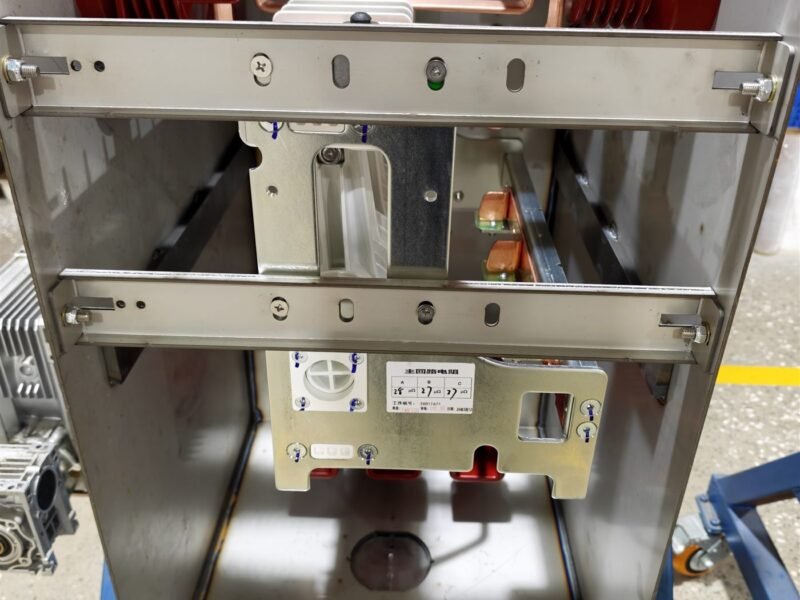
More than half of all medium voltage cable failures start at the termination. A poorly made termination on a ring main unit (RMU) cable compartment causes partial discharge, heating and eventually a cable fault that can take an entire ring out of service. This guide covers the termination procedure, the most common mistakes and the tests that prove the joint is good before energisation.
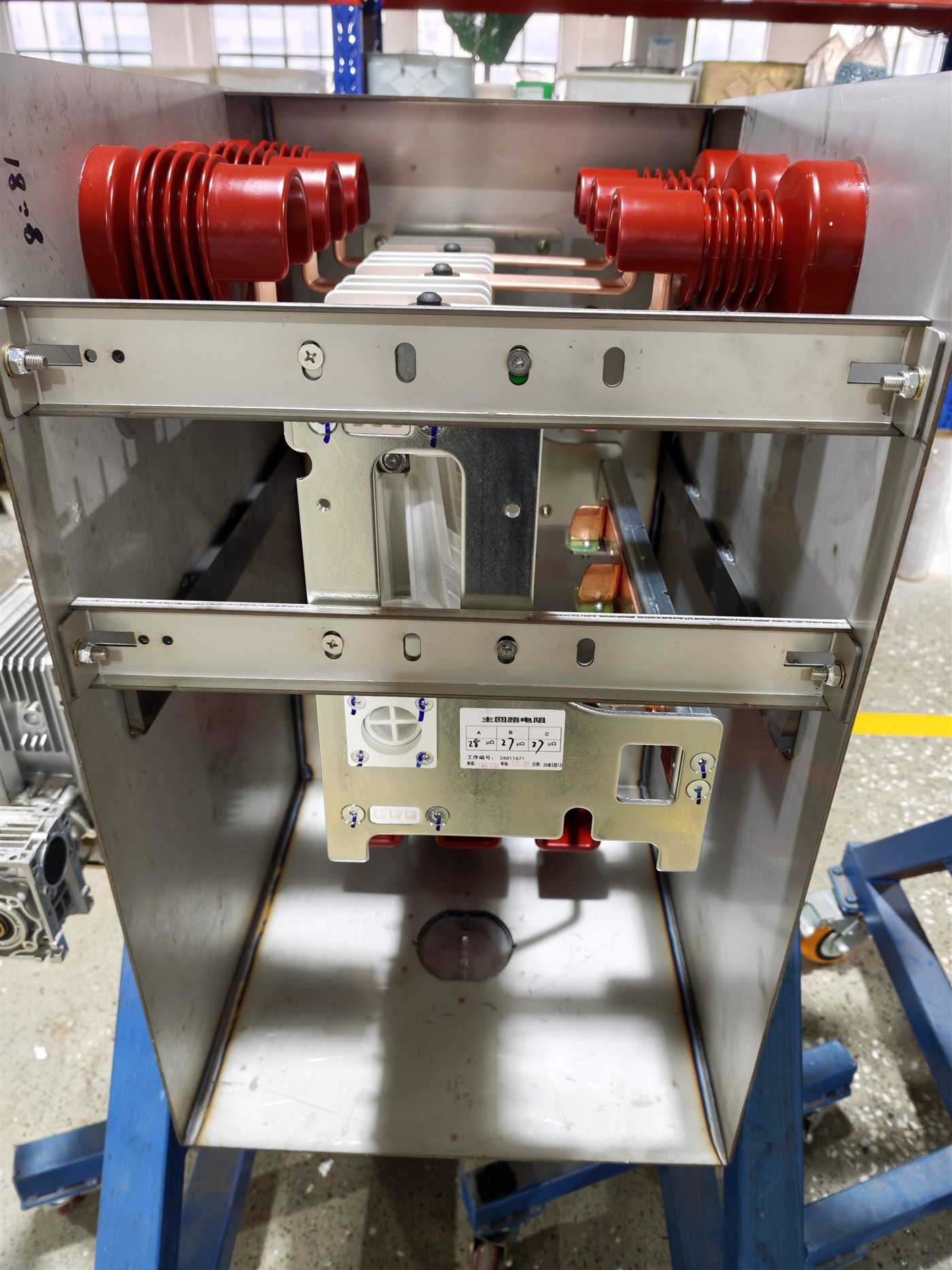


Why Cable Termination Quality Matters
The termination is the transition point between the cable and the RMU bushing, where the electric field is at its highest. Any air gap, sharp edge or contamination in this zone concentrates stress and causes partial discharge. Over time, partial discharge erodes the insulation until the cable fails. Correct stress control, clean surfaces and proper torque are therefore not optional details, they are the whole job.
Tools and Materials You Need
- Heat-shrink or cold-shrink termination kit matched to the cable type and voltage class.
- Cable stripping tools, semi-conductive and insulation cutters.
- Emery cloth and cleaning wipes with solvent.
- Torque wrench for the lug and gland connections.
- Heating gun with temperature control for heat-shrink kits.
- Megger and VLF test set for post-termination testing.
Step-by-Step Termination Procedure
- Confirm the cable is isolated and earthed on both ends, and verify with a voltage detector.
- Cut the cable to length, allowing 400 – 500 mm extra for the termination and connection.
- Strip the outer sheath carefully; do not nick the metallic screen or insulation.
- Clean the insulation with the solvent wipe, then abrade lightly with emery cloth to remove contamination.
- Apply the stress control components exactly at the marked position.
- Install the termination body, heating evenly from the bottom upward for heat-shrink kits.
- Terminate the conductor lug with the correct torque and check the crimp with a pull test.
- Connect the earth screen and the gland to the RMU earth bar with the specified cross-section.
- Fill the cable compartment, fit the bushing and secure the cover with the specified torque.
- Record the termination details, torque values and test results in the handover report.
Common Termination Faults and How to Avoid Them
| Fault | Cause | Prevention |
|---|---|---|
| Partial discharge at the cutback | Sharp edge left on the semi-conductive layer | Cut with a dedicated tool and chamfer the edge |
| Tracking across the insulation surface | Dirt or moisture left on the insulation | Wipe with solvent, keep dry and abrade lightly |
| Heating at the lug | Wrong crimp die or low torque | Use the correct die and torque wrench |
| Screen current circulating | Earth screen not bonded correctly | Bond the screen to the earth bar per drawing |
| Water ingress into the compartment | Gland not tightened or missing seal | Torque the gland and check the gasket |
| Insufficient creepage distance | Termination body installed too low | Follow the kit marking position exactly |
Testing After Termination: Hi-Pot and VLF
Every new termination must be tested before energisation. A minimum test programme includes:
- Insulation resistance with a 5 kV megger, expecting values above 1 GOhm.
- VLF withstand test at 0.1 Hz, typically 2 to 3 times the phase-to-earth voltage for 30 minutes.
- Partial discharge measurement where the specification requires it.
- Phase rotation and phasing check before connecting to the busbar.
VLF testing is preferred over DC hi-pot for MV cables because it stresses the insulation the same way AC service voltage does, and it is much better at detecting termination defects.
Safety Rules for Live Work Near RMU
- Always treat the cable as live until proven dead with a voltage detector.
- Work with the RMU in the earthed position and with earthing applied on both ends.
- Use insulated tools and wear class-rated gloves when working inside the cable compartment.
- Never rely on the cable compartment cover alone as protection; keep the door closed until the cable is terminated.
- Follow the interlock sequence: open, test, earth, then work. See our RMU operation and interlock guide for details.
In short, a ring main unit cable termination decision should always be based on voltage class, switching duty and lifecycle cost, and our engineers can help you evaluate both options before ordering.
FAQ
How long does an RMU cable termination take?
A trained technician can complete a heat-shrink termination in 60 to 90 minutes per cable end, including preparation and cleaning.
Heat-shrink or cold-shrink termination, which is better?
Both are reliable when installed correctly. Cold-shrink is faster and needs no heating gun; heat-shrink is more tolerant of slight dimensional variations in older cables.
Do I need a partial discharge test on every termination?
For critical feeders and new networks, yes. On lower voltage distribution, VLF withstand plus insulation resistance is the minimum accepted practice.
What torque should I use for the cable lug?
Use the lug manufacturer’s value, typically 40 – 80 Nm for 16 – 300 mm2 copper lugs, and always verify with a torque wrench.
Can I terminate an XLPE cable and an old PILC cable in the same RMU?
Yes, but each needs its own correct kit and gland type. Mixing different cable types in one compartment is common in urban networks.
Why is the earth screen bonded at only one end?
Bonding at one end prevents circulating currents in the screen. The other end is bonded through a voltage limiter or at the remote end, depending on the system design.
Documentation and Handover Records
A complete termination record helps operators and future maintenance crews. Every record should include the cable type and size, the termination kit model and batch number, the technician name and date, the torque values for the lug and gland, the megger reading, the VLF test voltage and duration, and any notes on deviations. Many utilities now photograph every termination before the compartment is closed, which makes later inspection much easier. Keeping the same record format for every RMU on a site allows quick comparison when a fault appears, and it supports warranty claims if a kit fails within its guarantee period.
About the Manufacturer
Electric-GS manufactures ring main units, SF6 load break switches and complete MV/LV switchgear in Yueqing, China, with OEM/ODM support for international projects. For RMU quotations, termination kits and technical drawings, contact info@electric-gs.com or WhatsApp +86 135 8897 8050. Read more in our RMU selection guide and PV combiner box comparison, or visit our product website and our Chinese website.
One thought