
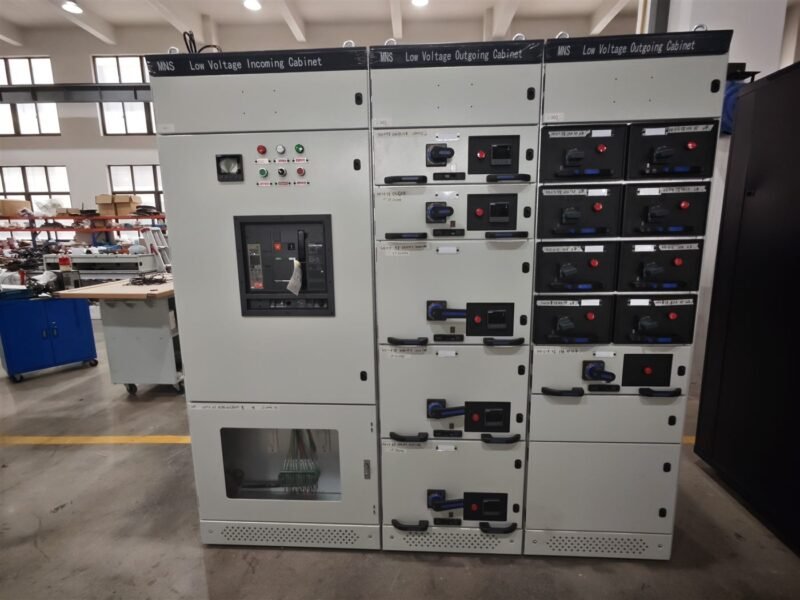
Withdrawable switchgear and fixed switchgear are the two main construction types for medium voltage panels. The choice affects maintenance speed, operator safety, panel size and first cost. This guide explains the key differences between withdrawable switchgear and fixed switchgear, and helps you select the right type for new projects and retrofits. For a wider view of panel architecture, see our medium voltage switchgear selection guide.
What Is Withdrawable Switchgear?
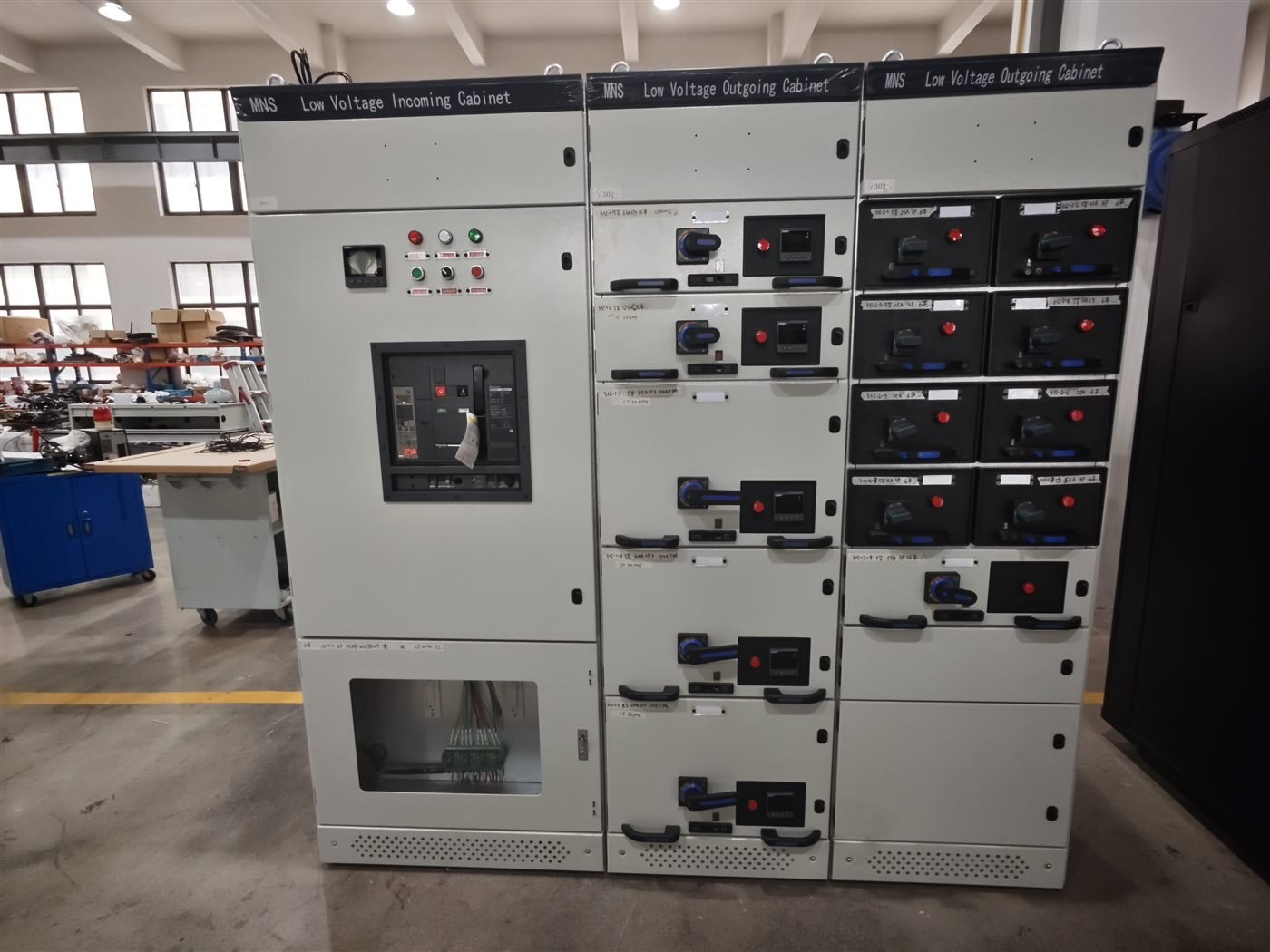
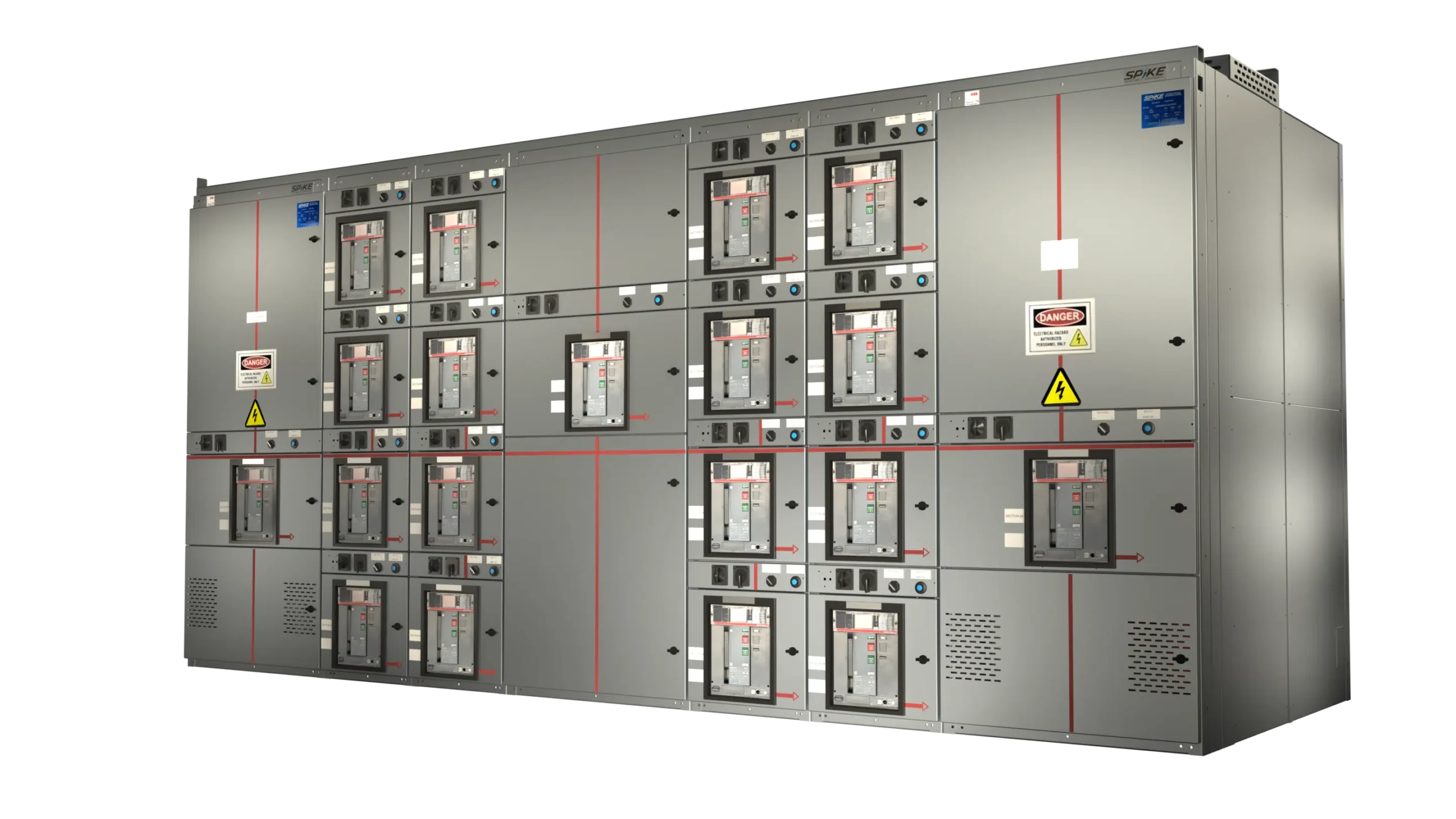
Withdrawable switchgear uses a removable breaker truck or cradle. The circuit breaker, VCB or contactor can be racked out of the panel for inspection, maintenance or replacement without opening the live busbar compartment. This design is common in metal-clad MV switchgear from 7.2 kV to 40.5 kV.
Main parts of a withdrawable unit
- Fixed busbar and current transformer compartments.
- Moving truck that carries the breaker or contactor.
- Racking mechanism with test, disconnected and service positions.
- Shutters that cover the primary contacts when the truck is out.
- Interlock system that blocks wrong operations.
What Is Fixed Switchgear?
Fixed switchgear mounts the switching device directly on the frame. All primary components stay in place. Maintenance usually requires de-energizing the whole feeder and, in many designs, access to the live parts behind a bolted panel. Fixed panels are simpler, cheaper and more compact.
Key Differences: Withdrawable vs Fixed Switchgear
| Feature | Withdrawable Switchgear | Fixed Switchgear |
|---|---|---|
| Breaker access | Rack out in minutes | Panel must be opened |
| Maintenance time | Short, feeder can stay in service | Long, feeder usually de-energized |
| Operator safety | High, shutters isolate live parts | Medium, depends on design |
| Panel width | Wider (800-1000 mm typical) | Narrower (600-800 mm typical) |
| First cost | Higher | Lower |
| Spare part policy | Swap complete breaker truck | Repair in place |
| Typical rating | 12-40.5 kV, up to 4000 A | 12-24 kV, up to 3150 A |
When to Choose Withdrawable Switchgear
1. High availability requirements
Process plants, data centers and hospitals cannot accept long outages. A faulty breaker is racked out and a spare truck is installed in under one hour.
2. Frequent breaker maintenance
Utilities with annual maintenance programs prefer withdrawable designs because inspection and testing happen in the workshop, not in the live panel.
3. Aging network with spares strategy
One spare truck serves several panels. This reduces the number of breakers you need to stock. See our MV switchgear testing guide for test procedures.
When to Choose Fixed Switchgear
1. Cost-sensitive projects
Fixed panels save 15-30% compared with equivalent withdrawable designs. They suit small substations and rural feeders where outage windows are acceptable.
2. Limited floor space
Fixed switchgear is narrower and lighter. It fits existing rooms and container substations where withdrawable panels would not.
3. Simple networks with low fault duty
Ring main units and load break switch panels are normally fixed. The same logic applies to many LV and MV switchgear combinations.
Safety and Interlocking Features
- Breaker can only be racked out in the open position.
- Earthing switch cannot close while the truck is in service position.
- Panel door opens only in test or disconnected position.
- Shutters block live contacts automatically.
These interlocks are mandatory in metal-clad switchgear per IEC 62271-200. Compare construction styles in our metal-clad vs metal-enclosed article.
Cost Comparison
For a typical 12 kV panel, withdrawable construction adds roughly 20% to the purchase price. The extra cost is recovered through faster maintenance, lower outage losses and easier breaker exchange. Fixed designs win when capital cost is the dominant factor and outages are acceptable.
Application Examples: Real Project Scenarios
Data center expansion
A data center in Southeast Asia needed to replace a faulted 12 kV breaker without a long outage. The withdrawable design allowed the operator to rack out the old truck, install a spare unit and restore power in under one hour. A fixed design would have required a full feeder shutdown and a crane-assisted breaker removal.
Utility feeder upgrade
A utility upgrading rural feeders to 24 kV chose fixed ring main units for cost reasons and withdrawable panels only at the main substations. The mixed strategy reduced capital cost by about 18% while keeping high availability where it mattered.
Industrial plant with annual maintenance
A chemical plant with a strict annual maintenance program selected withdrawable switchgear for all process feeders. Each breaker is tested in the workshop every year, and the truck exchange takes minutes instead of a whole weekend.
Retrofit, Arc Flash and Future-Proofing
When a network grows, withdrawable switchgear makes breaker upgrades easier. A higher-rated truck can replace an older unit without touching the busbar compartment. Fixed designs often require panel replacement. Arc flash mitigation is also stronger in withdrawable panels: the racking door, shutters and interlocks reduce the chance of an operator being exposed to live parts. For new projects, consider remote racking devices and arc flash relays, which work well with withdrawable construction. These features become much harder to add to an existing fixed panel. Review the interlock requirements again in our MV switchgear testing guide before finalizing the specification.
FAQ
1. Can fixed switchgear be upgraded to withdrawable?
In most cases no. The frame, busbar arrangement and enclosure size are different. A full panel replacement is normally required.
2. Is withdrawable switchgear safer?
Yes. Shutters and racking interlocks reduce arc flash risk during maintenance compared with opening a fixed panel.
3. What is the test position?
It is a truck position where primary contacts are isolated but secondary control circuits remain connected, so breaker operation can be tested.
4. Which standards apply?
IEC 62271-200 for metal-clad switchgear and IEC 62271-100 for AC circuit breakers. GB 3906 applies in China.
5. How long does breaker exchange take?
A trained operator can rack out and replace a truck in about 10-20 minutes including safety checks.
6. Does withdrawable switchgear need more room?
Yes, roughly 20-30% more floor area for the same number of feeders.
About Electric-GS
Electric-GS is a professional medium and low voltage switchgear manufacturer based in Yueqing, China. We supply ring main units, GIS, vacuum circuit breakers, LV and MV switchgear, transformers, compact substations and solar distribution products as an OEM/ODM factory. For a quotation or technical support, email info@electric-gs.com or contact us on WhatsApp at +86 135 8897 8050. Visit our partner sites electricgs.com and electric-cn.com for more product information.