Electric-GS is an experienced manufacturer of medium voltage and low voltage electrical equipment in Yueqing, Zhejiang, China. This engineering guide helps buyers, contractors and engineers make correct and safe decisions for power distribution and renewable energy projects.
A Decision That Affects Every Motor Feeder
For medium voltage motor feeders, capacitor banks and transformers, engineers must choose between a vacuum contactor with fuses and a vacuum circuit breaker (VCB). Both are excellent devices, but they serve different switching duties. Choosing wrong either wastes money or shortens equipment life.
This guide compares vacuum contactors and vacuum circuit breakers across eight practical dimensions and gives you a simple selection rule you can apply immediately.
What Is a Vacuum Contactor?
A vacuum contactor is a device designed for frequent normal load switching. It closes and opens load current thousands of times without maintenance because the contacts operate inside a sealed vacuum bottle. It is always protected by HV fuses in series, because the contactor itself cannot clear short-circuit faults.
What Is a Vacuum Circuit Breaker?
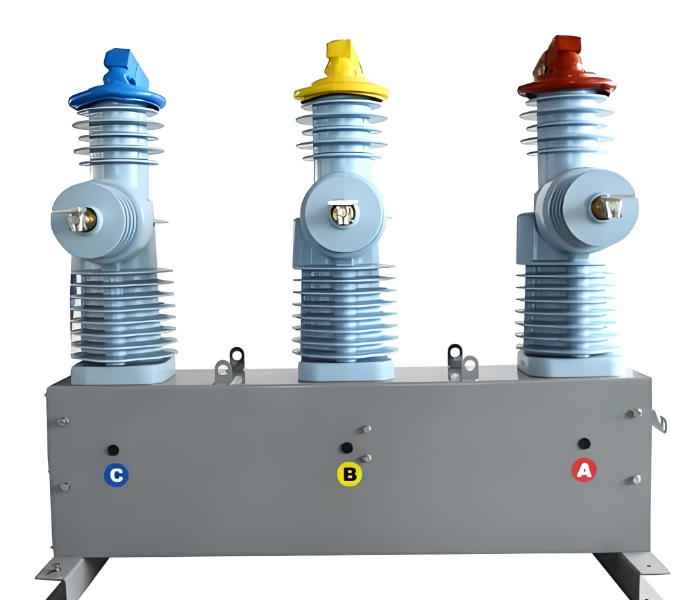
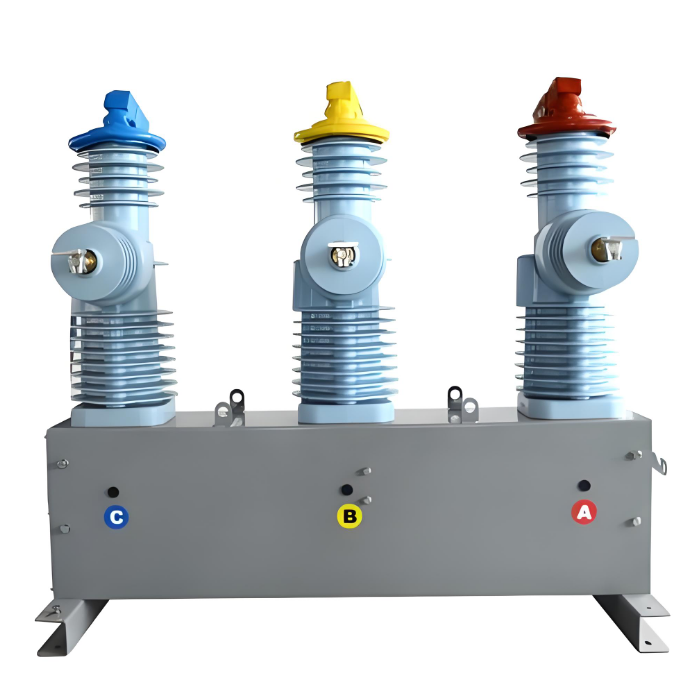
A vacuum circuit breaker (VCB) is designed to clear both normal load current and short-circuit fault current. It has a robust operating mechanism and is rated with a breaking capacity in kA. VCBs are used for protection of transformers, feeders and large motors where fault current must be cleared by the device itself.
8 Key Differences Between Vacuum Contactor and VCB
| Item | Vacuum Contactor | Vacuum Circuit Breaker |
|---|---|---|
| Switching duty | Frequent load switching | Infrequent, fault clearing |
| Fault clearing | Via series HV fuses | Self-clearing |
| Mechanical life | 250,000-1,000,000 operations | 10,000-30,000 operations |
| Breaking capacity | Not applicable | Rated kA (16-50kA) |
| Price | Lower | Higher |
| Typical use | Motors, capacitors | Transformers, feeders |
| Maintenance | Very low | Low |
| Protection coordination | Fuse curve + relay | Relay only |
Why Motor Feeders Use Contactors
Large motors start and stop frequently. A contactor’s mechanical life of hundreds of thousands of operations matches this duty perfectly. When a motor fault occurs, the HV fuses clear it quickly, and the contactor can be put back into service by replacing the fuses. This combination is standard for motor control centers worldwide.
Why Transformers and Feeders Use VCBs
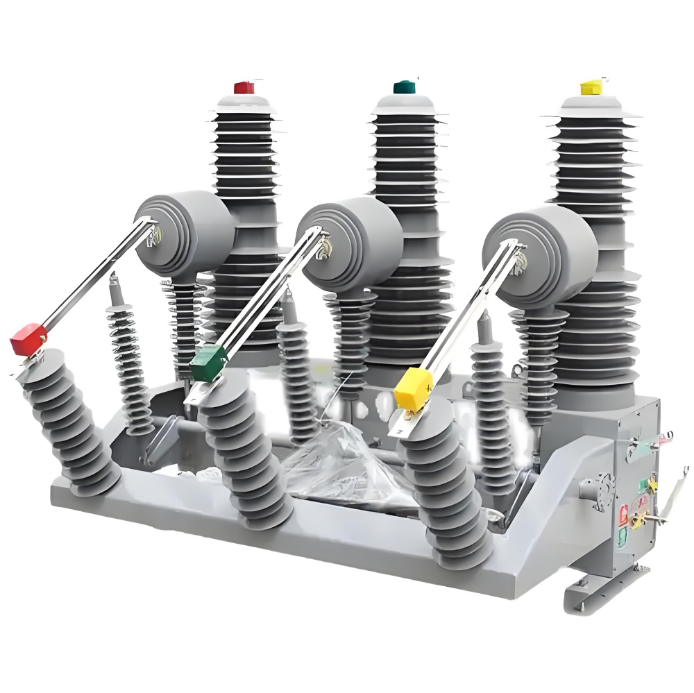
Transformer feeders and main distribution feeders need selective protection. A VCB with a protection relay trips on overcurrent, earth fault, differential or temperature signals and clears the fault itself. Fuses cannot provide the same selectivity, especially for transformers above 1250kVA, so a VCB is mandatory in these positions.
Capacitor Bank Switching: A Special Case
Capacitor banks require frequent switching and face high inrush currents. Vacuum contactors are popular here, but the application needs careful selection of the contactor’s capacitor switching rating and, often, series reactors to limit inrush. If the bank is very large or switching is rare, a VCB with synchronized control is also a valid choice.
Selection Rules You Can Apply Today
- Motor feeders up to 1500kW: vacuum contactor + fuses
- Transformer feeders above 1250kVA: VCB with protection relay
- Main incoming feeders: VCB
- Frequent capacitor switching: contactor rated for capacitors
- Feeder requiring auto-reclosing: VCB
- Where fault level exceeds fuse rating: VCB
Before deciding, always compare the fault level of your busbar with the fuse and breaker ratings. For the differences between breaker technologies, read our VCB vs SF6 breaker comparison as well.
FAQ About Vacuum Contactors and VCBs
Can a vacuum contactor clear short-circuit current?
No. A contactor switches normal load current only. Short-circuit faults are cleared by the series HV fuses.
Why are vacuum contactors used for motors?
Because motors need frequent switching, and contactors have a mechanical life of hundreds of thousands of operations, far more than a breaker.
What is the typical life of a VCB?
A VCB can perform 10,000-30,000 mechanical operations and dozens of full fault clearings before overhaul.
Do I need fuses with a VCB?
Usually not. The VCB clears faults itself. Fuses may be added in special cases but are not required.
Can Electric-GS supply both devices?
Yes, we supply vacuum contactors, ZW32-type outdoor vacuum breakers and indoor VCBs from 12kV to 40.5kV, with protection relays and panels.
How do I choose the fuse rating for a contactor?
The fuse must clear faults below the contactor’s rated making capacity and coordinate with the motor starting current. Your relay engineer or our team can calculate it.

Real Installation: Contactor + Fuses for a Cement Plant
In a cement plant we supplied, nine 800kW mill motors run almost continuously with occasional stops, while two 630kVA service transformers feed the control and lighting systems. We used vacuum contactor panels with HV fuses for the motors and a VCB panel for each transformer. After three years of operation, the motor contactors exceeded 200,000 operations with zero maintenance, while the transformer VCBs have never operated under fault.
The plant engineer keeps spare fuses for the motor feeders and spare contacts for the contactors, which is all the maintenance the system needs. Had we used VCBs for the motors, the mechanism life would have limited switching frequency and the cost would have been roughly 60% higher.
This example confirms the standard industry rule: let the switching duty choose the device. If you are designing a motor control center, also consider how the protection relay coordinates with the fuse curve, because incorrect coordination causes nuisance trips during motor starting. For technical help with your feeder design, contact info@electric-gs.com or visit electric-cn.com.
When you prepare your tender documents, specify the mechanical endurance class, the fault making capacity of the contactor-fuse combination and the relay type, so every bidder quotes an equivalent solution. This simple step avoids receiving incomparable offers and makes the final evaluation much easier for your procurement team.
For more device comparisons and application notes, see our guide on VCB vs SF6 circuit breakers and the MV switchgear maintenance checklist.
About Electric-GS
Electric-GS is a professional OEM/ODM factory in Yueqing, Zhejiang, China, specializing in ring main units, gas insulated switchgear, vacuum circuit breakers, transformers, LV/MV switchgear and solar power distribution equipment. All products are manufactured with strict quality control and IEC standard testing. For quotations, drawings or customization, contact us at info@electric-gs.com or WhatsApp +86 135 8897 8050.