
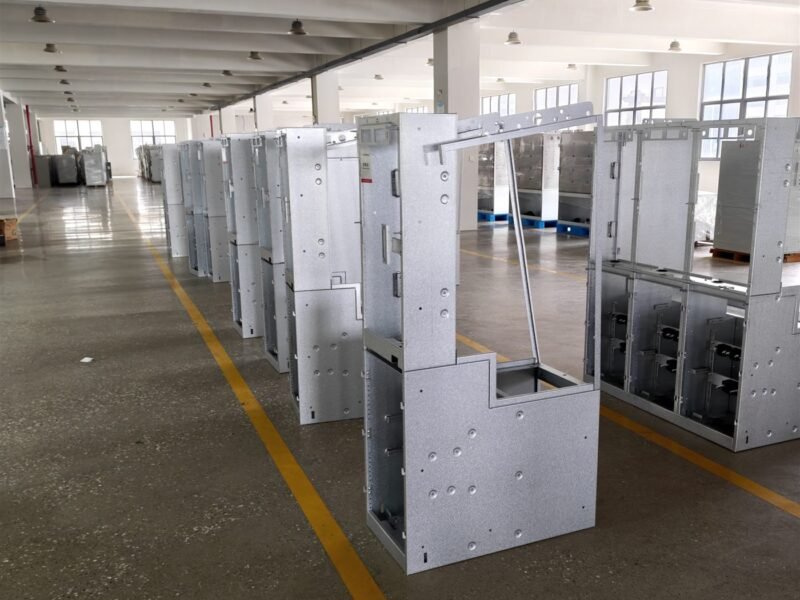
Every switchgear cabinet starts its life on the sheet metal line. The enclosure is the mechanical backbone that protects operators, supports the busbars, and keeps dust and moisture away from live parts. In this factory tour article, we walk through how switchgear enclosures are built at Electric-GS: from sheet metal cutting and bending to welding, surface treatment, assembly, and final inspection.
Why the Enclosure Matters in Switchgear Quality
The enclosure carries the mechanical integrity of the whole unit. A poorly built cabinet can sag under busbar weight, allow moisture ingress through weak seams, or fail the IP rating test. That is why enclosure manufacturing follows strict process control from the first cut to the final inspection. The same discipline applies to low voltage and medium voltage switchgear, where cabinet stiffness and protection class are part of the type test.
Step 1: Sheet Metal Cutting
Switchgear enclosures are typically made from cold-rolled steel sheet or galvanized steel. The process starts with CNC punching and laser cutting. The cutting program comes directly from the 3D design, so every knockout, cable entry, and mounting hole is positioned with millimetre accuracy.
- Material thickness ranges from 1.5 mm to 3.0 mm depending on the panel type.
- Laser cutting produces clean edges that need no secondary deburring.
- Every sheet carries a part code for traceability.
Step 2: CNC Bending and Forming
After cutting, the panels move to CNC press brakes. The bending sequence is designed so that the cabinet can be assembled without welding distortion. Key dimensions such as frame squareness and door opening size are checked against the drawing tolerance of plus or minus 0.5 mm.
Step 3: Welding and Frame Assembly
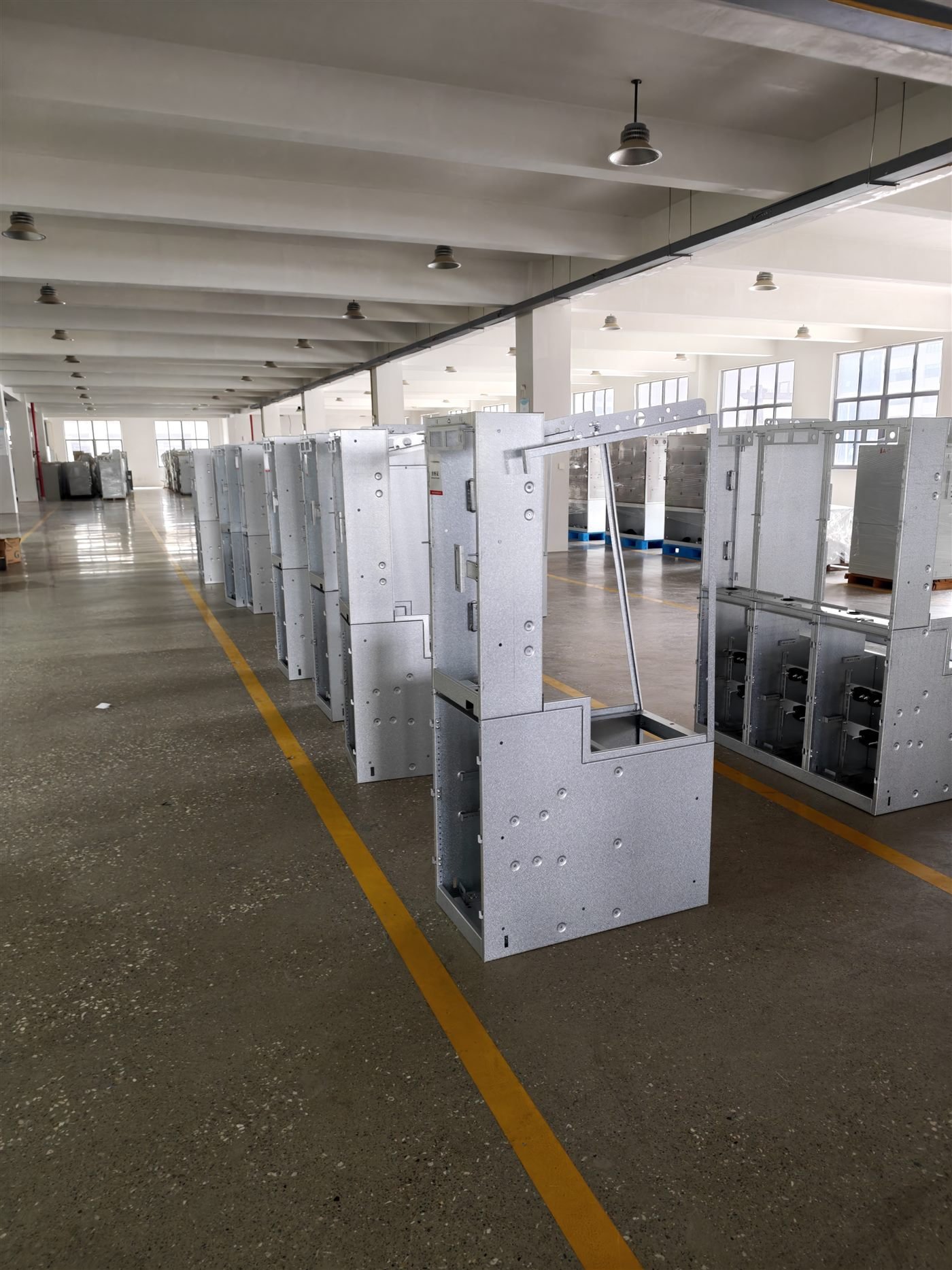
The frame parts are welded in dedicated jigs. Jigs hold every corner in position so the finished frame is square and stable. Weld quality is checked visually and by hammer testing for hidden porosity. The frame then goes through the assembly line where mounting plates, busbar supports, and cable glands are installed.
Step 4: Surface Treatment and Painting
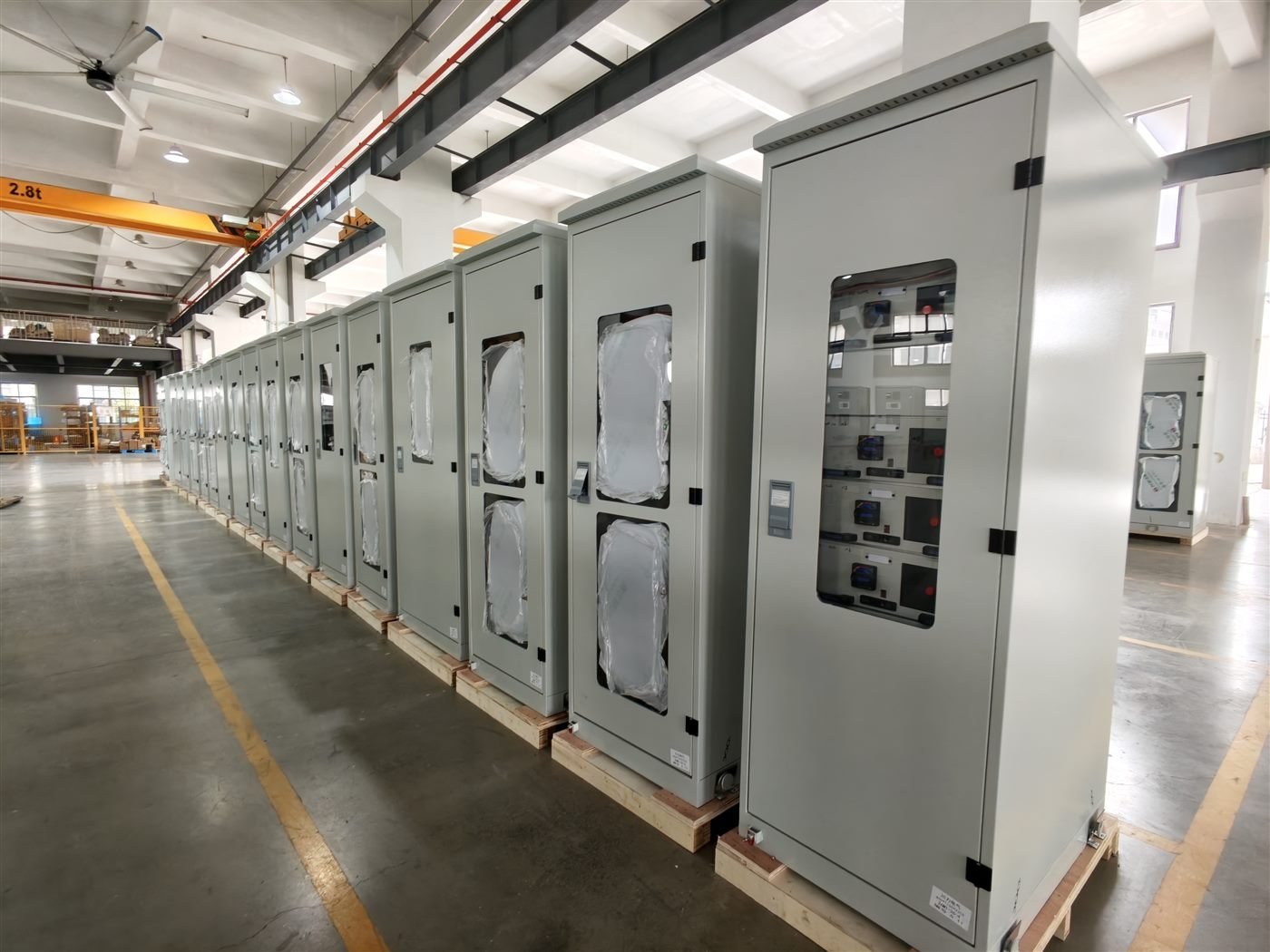
Surface preparation is critical for corrosion resistance. The process is: degreasing, phosphating, powder coating, and oven curing. The standard coating thickness is 60 to 120 microns, which gives the cabinet its scratch and salt-spray resistance. Outdoor enclosures receive a thicker, UV-stable finish.
Step 5: Assembly and Wiring
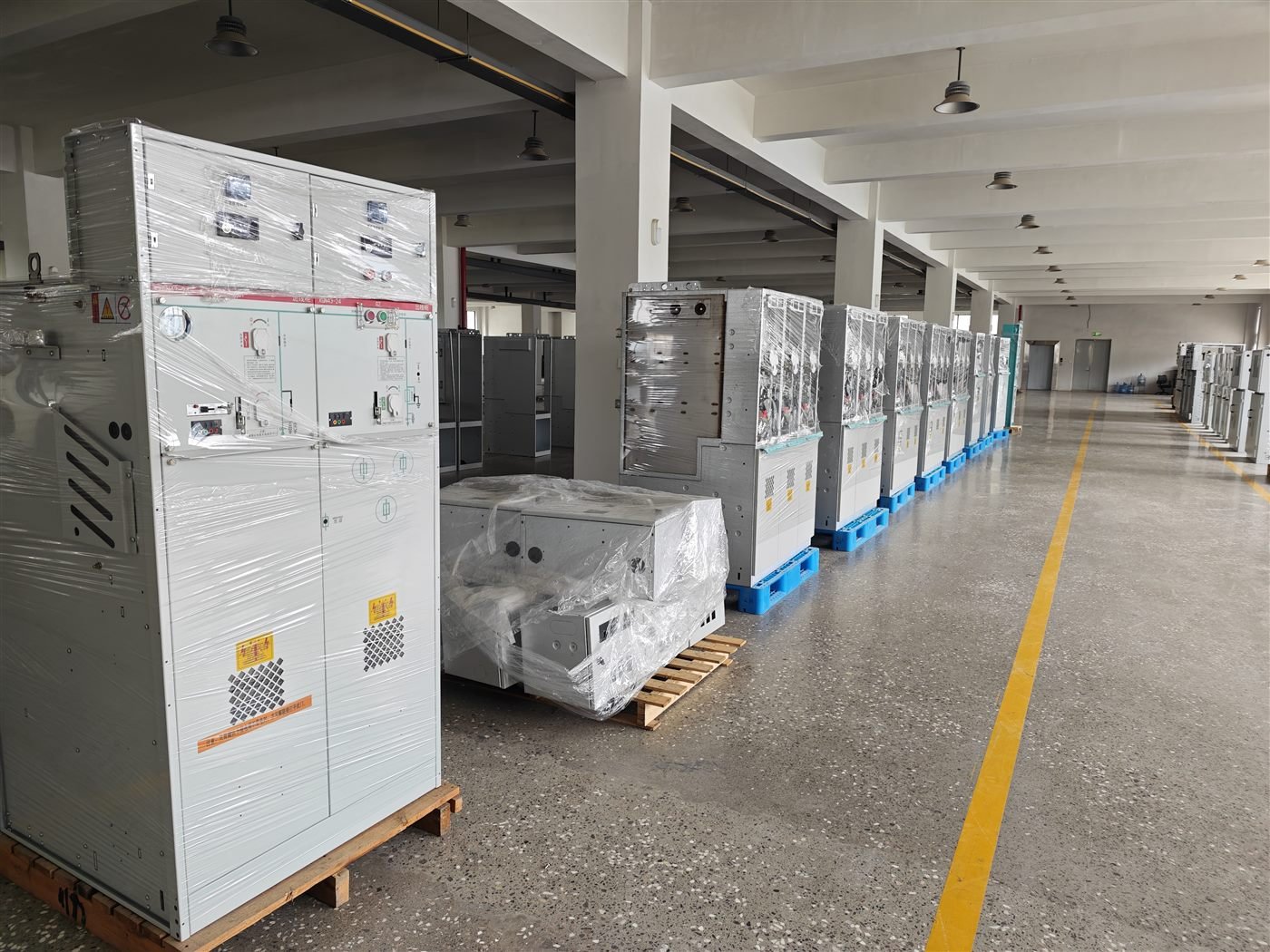
With the painted frame ready, the assembly team installs busbars, switchgear compartments, and LV panels. Secondary wiring is done by hand following the wiring diagram. Each wire is numbered at both ends, which makes later maintenance and troubleshooting much easier. The finished cabinet must match the requirements of your switchgear factory testing and certification guide.
Enclosure Material and Thickness Comparison
| Material | Typical Thickness | Best For | Corrosion Protection |
|---|---|---|---|
| Cold-rolled steel | 1.5 – 2.0 mm | Indoor LV panels | Powder coating |
| Galvanized steel | 2.0 mm | MV switchgear frames | Galvanic layer + paint |
| Stainless steel | 1.5 – 2.0 mm | Coastal / corrosive sites | Inherent |
| Aluminium | 2.0 – 3.0 mm | Lightweight outdoor units | Anodizing |
Quality Control During Enclosure Production
Quality control is not a final gate; it runs through every step. Incoming sheet metal is checked for thickness and surface defects. After bending, the first article is checked with a coordinate measuring machine. During welding, random joints are sectioned and inspected. The finished enclosure undergoes a dimensional audit before it enters the assembly line.
Frequently Asked Questions
1. What steel grade is used for switchgear enclosures?
Most indoor enclosures use cold-rolled steel (SPCC or DC01) with powder coating. Galvanized steel (SGCC) or stainless steel is specified for coastal and high-humidity environments.
2. What is the standard IP rating for switchgear enclosures?
Indoor switchgear is typically IP31 to IP54 depending on the application. Outdoor units usually require IP54 or higher, with ventilation designed to prevent condensation.
3. How thick is the powder coating?
The standard coating thickness is 60 to 120 microns. Thicker coating is used for outdoor and marine-grade enclosures.
4. Can enclosures be customized for my project?
Yes. Electric-GS supports OEM and ODM customization of dimensions, door arrangements, colour, and cable entry positions. Contact our engineering team with your drawings.
5. How do you verify frame squareness?
Each frame is checked against a 0.5 mm tolerance using calibrated jigs and measuring tools. Diagonal measurement is recorded for every cabinet.
6. Does the enclosure pass through routine testing?
Yes. Enclosure dimensions, IP rating, and paint thickness are part of the routine test reports delivered with every switchgear order.
Weld Quality and Surface Treatment
Welding quality determines how long an enclosure keeps its shape and sealing performance. Skilled welders use MIG welding on galvanized steel frames, then grind the joints smooth before painting. Each cabinet frame is checked against the assembly jig so that doors and panels align correctly. Poor welding shows up as warped doors, gaps at gaskets and premature rust at the joints.
Surface treatment is a multi-step process: degreasing, phosphating or zinc phosphating, then electro-static powder coating and oven curing. The powder coating thickness is typically 60 to 100 microns. A salt spray test on a sample panel confirms the corrosion resistance. These steps are what separate a cabinet that looks new after five years outdoors from one that rusts in two.
Why Plating and Finishing Matter
Internal parts need protection too: busbars are tinned or silver plated at the contact areas, fasteners are galvanized or stainless, and the secondary wiring is routed in channels with proper ferrules. The finish quality of a cabinet is a fast way to judge a manufacturer’s overall quality culture. If the visible surfaces are well finished, the hidden work is usually done properly too.
Assembly and Routine Testing
After the frame and panels are painted, the assembly line installs busbars, insulators, instrument transformers, breakers and secondary wiring. Each panel is then subjected to routine tests before dispatch: insulation resistance, power frequency withstand, contact resistance, mechanism operation and secondary wiring verification. Every test result is recorded and shipped with the panel.
- Insulation resistance: measured with a 1000 V or 2500 V megger between phases and to earth.
- Power frequency withstand: typically 42 kV for 12 kV class panels for one minute.
- Contact resistance: micro-ohm measurement on each phase of the breaker and isolating contacts.
- Mechanical operation: repeated open-close cycles to confirm mechanism stability.
- Wiring check: verification of every secondary circuit against the approved drawing.
Routine testing is your guarantee that the panel leaves the factory in a known-good condition. Always request the routine test reports with the shipment.
About Electric-GS
Electric-GS is a professional medium and low voltage switchgear manufacturer based in Yueqing, China. We supply RMU, GIS, vacuum circuit breakers, LV and MV switchgear, transformers, compact substations, and solar distribution products as an OEM/ODM factory. For a quotation or technical support, email info@electric-gs.com or contact us on WhatsApp at +86 135 8897 8050. Visit our partner sites electricgs.com and electric-cn.com for more product information.
Related Reading
- Switchgear Factory Testing and Certification Guide
- Inside the Electric-GS Factory: How Switchgear Is Manufactured and Tested
- How Medium Voltage Switchgear Is Assembled and Tested
- LV Switchgear vs MV Switchgear: What Is the Difference
2 thoughts