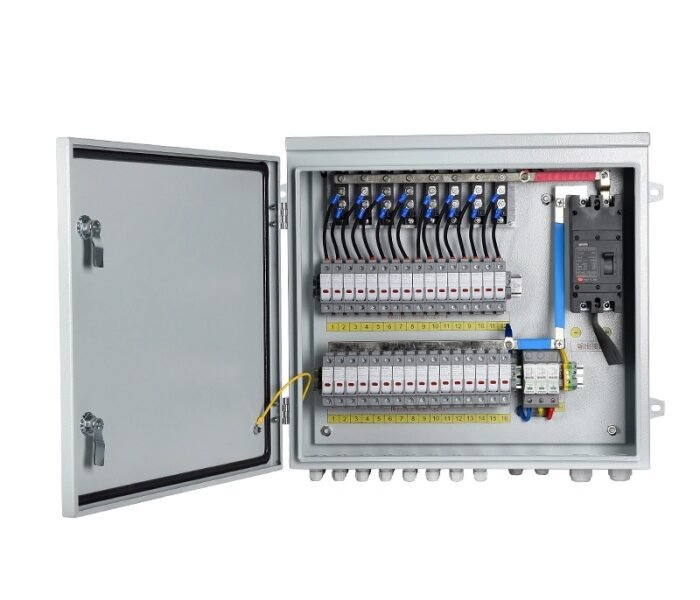
Why Solar PV Switchgear Matters
Solar farms generate direct current and push it through inverters, combiner boxes and transformers before it reaches the grid. Between these stages sits solar PV switchgear, the medium voltage switchgear that protects the plant, isolates faults and keeps power flowing. Choosing the wrong unit leads to downtime, arc faults and expensive repairs. This guide covers the key ratings and ten selection tips every solar plant engineer needs.
What Is Solar PV Switchgear
Solar PV switchgear is medium voltage switchgear used inside photovoltaic power plants. It includes vacuum circuit breakers, load break switches, disconnectors, earthing switches, busbars, current transformers and protection relays. It sits between the PV inverter station and the main step-up transformer, and it is the last line of defence before power goes to the substation.
Typical voltage classes are 12 kV, 24 kV, 33 kV and 40.5 kV, matching the plant collection voltage. Most projects use a switchgear panel that combines several functions in one compact cubicle to save space inside the PV station building.
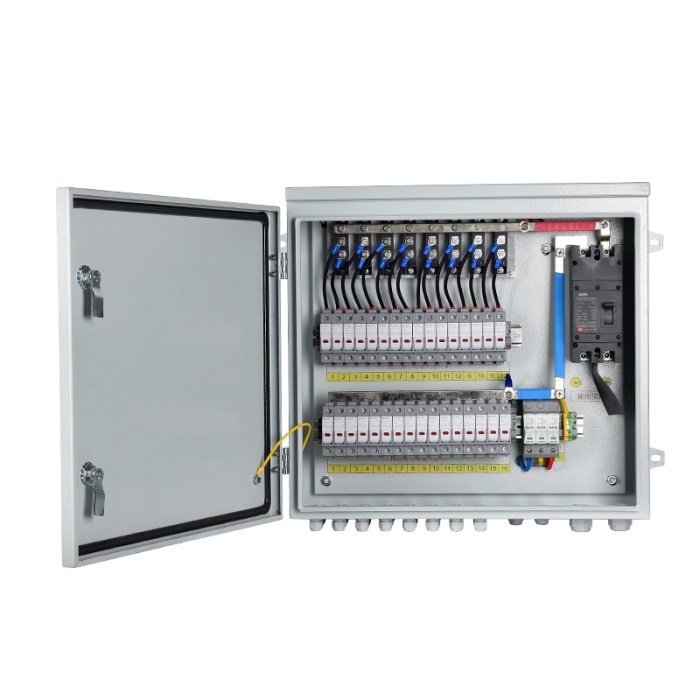
10 Key Selection Tips for Solar PV Switchgear
Tip 1: Match voltage and current ratings. Confirm the collection voltage and the maximum load current. Choose a panel rated for the system voltage plus a safety margin. For a 33 kV plant, pick switchgear with a rated voltage above 33 kV, normally 40.5 kV, to survive transient overvoltages and lightning events.
Tip 2: Check short-circuit withstand capacity. Every solar PV switchgear panel must withstand the network fault current for a defined time, usually 3 seconds. Confirm the breaking capacity of the circuit breaker and the making capacity of the earthing switch. This is the most important safety rating on the nameplate.
Tip 3: Coordinate protection relays. The protection relay must detect overcurrent, earth fault and transformer differential faults. Set the curves so that the inverter, combiner box and feeder breakers trip in the correct order. Poor coordination causes nuisance trips that shut down part of the plant.
Tip 4: Choose indoor or outdoor construction. Most PV stations mount switchgear indoors in a dedicated building. If you need outdoor installation, use a weatherproof enclosure with IP54 or higher. Compare indoor vs outdoor switchgear enclosures to match your site conditions.
Tip 5: Plan for future expansion. Solar plants often grow in phases. Select a switchgear busbar that supports future feeders, or leave spare panel positions. A modular panel saves money later when you add a new block of PV modules.
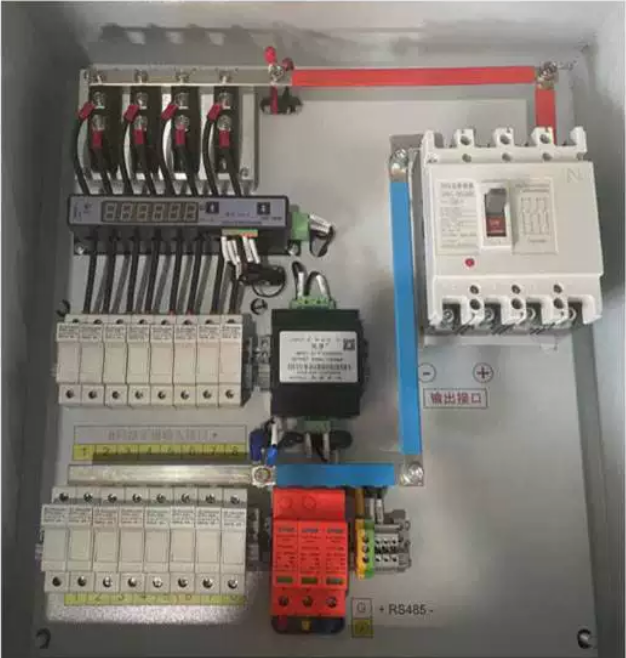
Tip 6: Select reliable arc protection. Medium voltage arcs release huge energy. Choose switchgear with internal arc withstand testing, pressure relief flaps and fast arc detection. This protects people who operate the station and reduces repair costs after a fault.
Tip 7: Verify humidity and altitude derating. Switchgear ratings drop at high altitude and high humidity. Above 1000 metres, derate the voltage and current ratings. In coastal or desert sites, specify tropicalised insulation and anti-condensation heaters inside the panel.
Tip 8: Integrate with the SCADA system. Modern PV plants need remote monitoring. Select switchgear with communication ports for Modbus or IEC 61850 so the SCADA system can read breaker position, alarms and fault records. This reduces site visits and speeds up troubleshooting.
Tip 9: Compare withdrawable and fixed panels. Withdrawable switchgear lets you pull out the breaker for fast maintenance, while fixed switchgear is cheaper and more compact. For large solar farms, withdrawable panels cut downtime.
Tip 10: Work with an OEM that understands solar. Choose a manufacturer that has delivered solar projects before. They will help with the single line diagram, protection settings and factory testing. A reliable OEM saves time during commissioning and provides support for years.
Solar PV Switchgear vs Standard MV Switchgear
| Feature | Solar PV Switchgear | Standard MV Switchgear |
|---|---|---|
| Primary role | Connects inverter stations to the grid | Distributes power in networks and industry |
| Load profile | Variable, one-way power flow from PV | Bidirectional or steady industrial load |
| Voltage class | 12 kV to 40.5 kV | 12 kV to 40.5 kV and higher |
| Protection focus | Inverter faults, earth fault, overcurrent | Overcurrent, distance, differential |
| Environment | Often outdoor, dusty or coastal | Indoor substations and plants |
| Communication | SCADA integration standard | Optional depending on project |
Both share the same core components, but solar PV switchgear is designed for one-way power flow, fast fault clearing and harsh outdoor environments.
Installation and Commissioning Checklist
Follow these steps to avoid problems on site:
- Check the foundation level and clearances before moving panels into place.
- Verify that the earthing connection meets the station design.
- Torque every busbar joint and cable termination to the specified value.
- Test cable insulation and phase sequence before energising.
- Run primary and secondary injection tests on the protection relays.
- Confirm all interlock sequences work before switching.
For the DC side, match your combiner box wiring best practices so the low voltage side stays safe.
Maintenance Best Practices
Set up a simple maintenance plan:
- Inspect panels monthly for dust, moisture and loose connections.
- Test circuit breakers and relays once a year.
- Check gas pressure and tightness for SF6 units, or maintain vacuum breakers with no gas handling.
- Replace worn contacts and heaters before failure.
- Record every test result and compare trends.
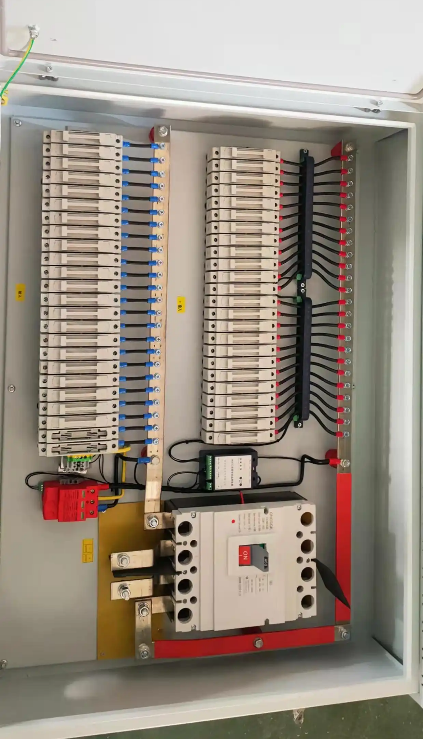
Keeping records helps you spot insulation degradation early and plan replacement before it becomes an outage.
Frequently Asked Questions
What is solar PV switchgear?
Solar PV switchgear is medium voltage switchgear used in solar power plants to connect inverter stations to the grid and protect the plant from faults.
Why do solar plants need MV switchgear?
It provides switching, fault protection and isolation for the collection network, and it meets grid code requirements for safe connection of the plant.
Should I choose indoor or outdoor PV switchgear?
Indoor panels are cheaper and easier to maintain. Use outdoor weatherproof panels only when no building is available, with IP54 or higher protection.
What is the difference between a combiner box and PV switchgear?
A combiner box works on the DC low voltage side and merges strings. PV switchgear operates on the AC medium voltage side and protects the collection network.
How do I size switchgear for a solar farm?
Base it on the collection voltage, maximum current, fault level and future expansion. Confirm the short-circuit withstand rating and breaking capacity with your engineer.
How often should PV switchgear be maintained?
Do visual inspections monthly, relay and breaker tests yearly, and a full overhaul every three to five years depending on switching frequency.
About Electric-GS
Electric-GS is an OEM and ODM manufacturer based in Yueqing, China, specialising in medium voltage switchgear, ring main units, vacuum circuit breakers and solar combiner boxes. We build solar PV switchgear panels for projects worldwide and support custom designs, factory testing and after-sales service. Contact us at info@electric-gs.com or WhatsApp +86 135 8897 8050. For our product range, visit the Electric-GS global site or the Electric-GS China site.