Most insulation failures in switchgear start with a dimension that nobody measured. The clearance is fine on the drawing, the creepage looks generous on the sketch, and the panel still tracks over at site after two wet seasons.
Clearance and creepage are two different numbers with two different jobs, and only one of them survives contact with dust, moisture and condensation. Here is what each one controls and what to verify before a drawing goes to the assembly line.
Two Numbers, Two Different Jobs
Clearance is the shortest distance through air between two conductive parts at different potential. It is a dielectric strength question: if the air gap is too small, the gap breaks down and the result is a flashover.
Creepage distance is the shortest path along the surface of an insulating solid between the same two parts. It is a tracking question. Contamination builds a conductive film on the surface, and the current creeps along it until the surface carbonises and a permanent path forms.
| Item | Clearance | Creepage distance |
|---|---|---|
| Path taken | Through air | Along the insulation surface |
| Failure mode | Flashover across the gap | Tracking and carbonisation of the surface |
| Main driver | Impulse and peak voltage | Pollution degree, humidity, condensation |
| Affected by altitude | Yes, needs correction above 1000 m | Indirectly, through condensation |
| Fixed by | Spacing and barriers | Longer surface path, ribs, sheds, coating |
Because the drivers are different, the two numbers do not scale together. A panel designed for a clean indoor room can have modest creepage and still pass. The same design moved to a coastal site with daily condensation needs a much longer surface path, and the air gap does not change.
Why Creepage Usually Decides the Layout
Clearance is easy to draw: move the parts apart until the gap is comfortable. Creepage is harder, because the surface path has to be built into the shape of the insulation, the bushings and the busbar supports.
That is why the layout usually ends up driven by creepage. Adding ribs to a support, lengthening a bushing or turning a straight barrier into a stepped one takes volume, and volume is what the cubicle does not have. The practical result is that the panel depth is often set by the surface path, not the air gap.
5 Checks Before You Release the Drawing
- Confirm the pollution degree and the site environment. Indoor clean, indoor industrial, coastal and heavily polluted sites are not the same design. Decide the degree first, then read the required creepage from the standard table instead of copying a previous project.
- Measure the surface path, not the straight line. A 40 mm gap between two parts may be a 40 mm clearance and a 60 mm creepage if the support has ribs. It may also be the reverse if a metal edge cuts the path. Trace the actual route with a string on a printed drawing.
- Check phase-to-phase and phase-to-earth separately. They carry different potentials and often different requirements. A layout that passes phase-to-earth can still be short between phases where two busbars share one support.
- Apply the altitude correction. Above 1000 m the air clearance has to be increased for the reduced dielectric strength of the air. Panels for highland projects frequently fail this check because the original drawing was made for sea level, and our IP rating checks only cover the enclosure side of the same review.
- Confirm the surfaces will stay dry and clean. Creepage is only valid on a surface that is not wet and not contaminated. Heater placement, vent route and gasket quality all belong to this check, and they are the same points covered in our notes on anti-condensation heaters.
Two more items sit next to these five and are worth a look at the same time: the partial discharge behaviour of the insulation, covered in our PD testing guide, and the internal barrier arrangement, which changes the available surface path in a separated panel and is described in the form of separation guide.
Where These Checks Fail in Practice
- Shared busbar supports. One support carrying two phases looks tidy and cuts the creepage between them in half.
- Cable terminations. The lug and the cable gland are added after the panel is designed, and the remaining surface path is often the shortest in the whole cubicle.
- Bolted joints. A joint that is not fully tightened leaves a small gap, and the surface path then runs through it. Torque control is part of the insulation check, not just a mechanical one.
- Repair work at site. A replaced bushing or a field-made support can be shorter than the original, and nobody re-measures the path.
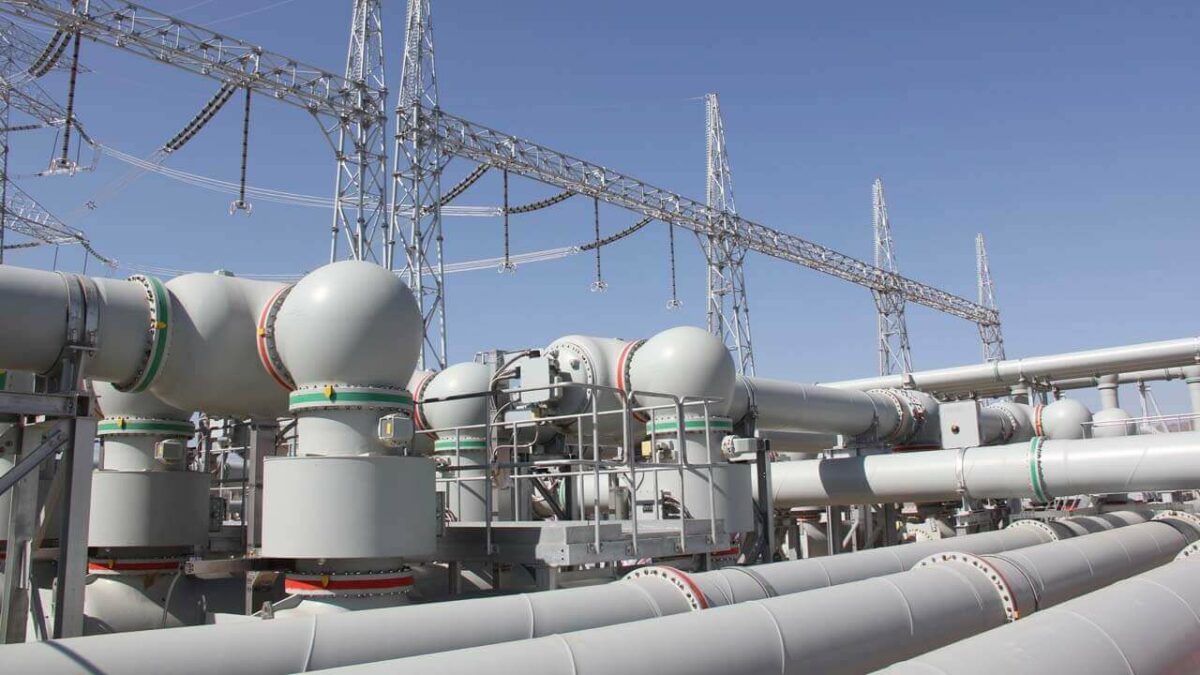
In gas-insulated designs the same logic applies inside the tank, but the margin is set by gas pressure and by the surface condition of the epoxy parts rather than by air. The principle is unchanged: the surface path must be long enough for the pollution level the part will actually see.
FAQ
Is creepage distance always longer than clearance?
No. On a plain smooth surface the two can be equal. Creepage becomes longer only when the insulation adds ribs or steps that force the path to travel further.
Which standard defines the values?
Insulation coordination standards set the clearance and creepage tables by voltage, pollution degree and material group. Switchgear product standards then reference them. Always design to the edition named in the project specification.
Does a coating replace creepage distance?
Not by itself. A conformal coating can protect a surface, but the design still needs a declared path, and the coating must be qualified for the environment.
How is creepage verified on a finished panel?
By inspection against the drawing, by checking the surface condition after the dielectric test, and by partial discharge measurement where the specification requires it.
Can I reuse a previous layout for a new site?
Only after checking pollution degree and altitude for the new site. Those two inputs are what most reuse mistakes come down to.
About Electric-GS
Electric-GS is an OEM/ODM switchgear factory in Yueqing, Zhejiang, China. We build MV and LV switchgear, PT cabinets, ring main units and packaged substations, and we verify clearance, creepage, pollution degree and altitude before the drawing is released. Send your single line diagram and site conditions to info@electric-gs.com or WhatsApp +86 135 8897 8050. English site: electricgs.com. Chinese notes: electric-cn.com.
4 thoughts