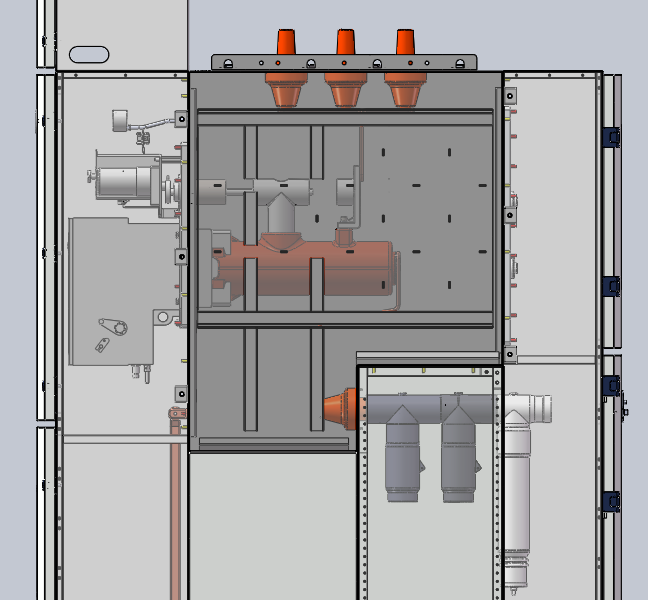
Why Partial Discharge Matters
Partial discharge is a small electrical spark that does not bridge the full gap between two electrodes. It eats insulation slowly. A joint that passes a dielectric test today can fail in two years because of a discharge that was already active at one hundred picocoulombs.
The reason it matters on medium voltage switchgear is simple. Most failures we see in the field start as a defect we could have found early: a void in cast resin, a loose contact, a sharp point on a busbar, or a dirty insulator surface. Partial discharge testing finds these before they become a flashover.
This guide explains what PD looks like in practice, compares five detection methods, and gives the on-site procedure we use before a panel is returned to service.
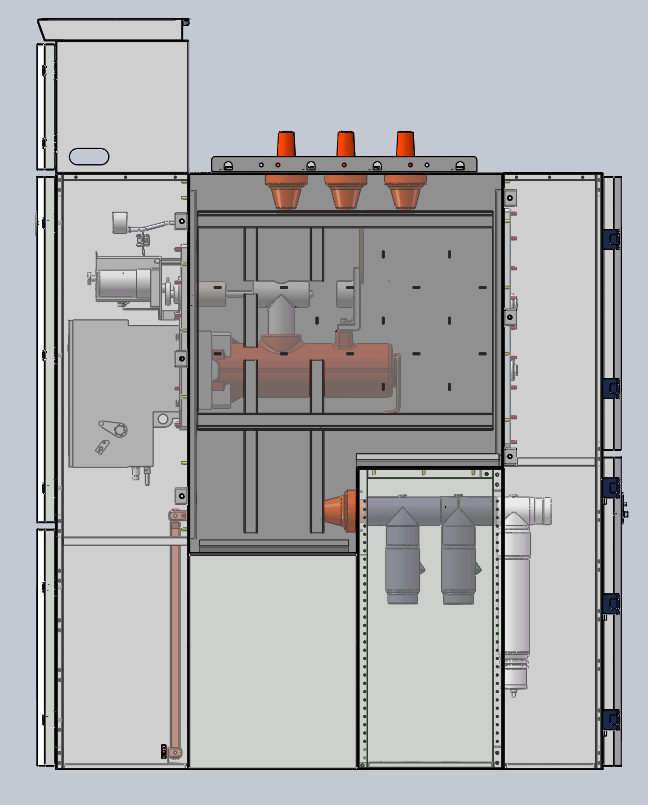
What Partial Discharge Looks and Sounds Like
On a healthy panel you hear nothing. On a panel with active PD you may hear a faint hiss, a crackle, or a buzz near a cable termination. At night, with the lights off, a strong discharge can show a small blue glow.
Other signs are easier to trust than sound:
- Ozone smell near the compartment.
- White or grey powder on insulators and bushings.
- Discoloured or pitted contact surfaces.
- Radio interference on nearby communication equipment.
- Unexplained gas pressure loss in a GIS compartment.
None of these prove PD. They tell you where to test. The instrument gives the answer.
Five Detection Methods Compared
No single method covers every defect. A good test programme uses at least two, because each method is blind to something.
| Method | What it detects | Best used for | Main limitation |
|---|---|---|---|
| Ultrasonic (airborne) | Surface discharge, tracking, loose parts | Open panels, cable terminations, insulators | Blocked by closed metal doors |
| TEV (transient earth voltage) | Internal discharge near the enclosure wall | Fast screening of metal-clad panels | No location, only a level |
| UHF (ultra high frequency) | Discharge inside GIS and sealed compartments | GIS, RMU with sealed tanks | Needs a sensor port or coupler |
| Acoustic (contact) | Internal discharge and gas leaks | GIS tank, busbar joints | Sensitive to background noise |
| Conventional PD measurement | Quantified charge in picocoulombs | Factory test, type test, acceptance | Requires a coupling capacitor and HV source |
In a factory we rely on conventional measurement because it gives a number in picocoulombs that the standard can judge. In the field we use ultrasonic and TEV first, then UHF when the compartment is sealed. The switchgear testing guide covers the full acceptance test set.
The On-Site Test Procedure
The test is done with the panel de-energized, or with the instrument rated for live work. Never open a compartment to reach a sensor on a live panel.
- Record the background noise level before touching the panel; a noisy plant room raises every reading.
- Clean the surface where the sensor will sit; dust and paint reduce coupling.
- Test each compartment at the same points, in the same order, every time.
- Compare readings against the same panel type, not against a generic threshold.
- Photograph the exact test point so the next visit repeats it.
- Repeat any high reading twice before you call it a defect.
A reading that doubles between two visits is more useful than an absolute number that sits just under a limit.
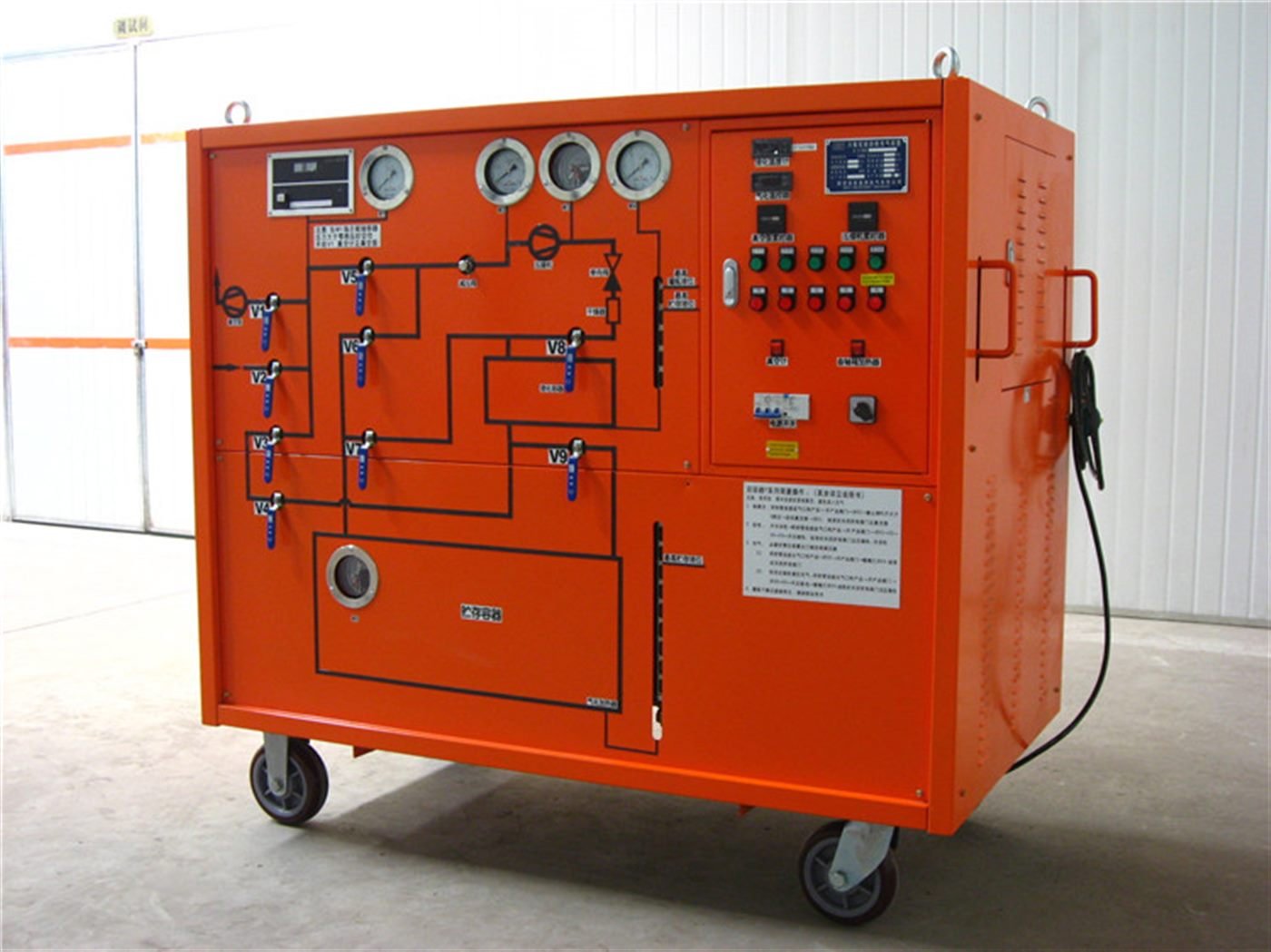
Reading the Results
Manufacturers publish limits, and standards set the factory acceptance level. Field readings are relative, so treat them as a trend, not a verdict.
A practical rule we use:
- Stable low reading across three visits: no action, keep the interval.
- Rising trend on one compartment: plan an outage and inspect that compartment.
- Sharp rise plus audible noise: isolate the panel and investigate before re-energizing.
- High reading on a new panel: reject it at acceptance, do not accept a promise to fix it later.
For GIS the risk is different because the discharge is hidden. A UHF sensor on the tank is the only practical field check. That is one reason a GIS and AIS comparison matters when you choose the topology.
Common Mistakes
- Testing only with the door open. Ultrasonic misses sealed defects, which are the dangerous ones.
- Ignoring background noise. A drive or a welder next door can mask or fake a reading.
- Chasing one number. Without a trend, a single reading tells you very little.
- Testing after a repair without a baseline. You cannot prove the repair worked.
- Skipping the joints. Cable terminations and busbar joints are where most defects sit.
- No record. An untrended measurement is wasted effort.
Add PD checks to the 10 step maintenance plan and keep the records with the panel history. On SF6 equipment, combine the electrical test with a leak check as described in the SF6 switchgear guide.
Frequently Asked Questions
Can partial discharge be tested while the panel is live?
Yes, with an instrument and sensor rated for live use. Ultrasonic and TEV are commonly used on live panels. Never open a compartment to place a sensor.
What level of PD is acceptable?
Factory acceptance limits come from the standard and the specification, often ten picocoulombs for new equipment. Field limits are set by trend and by panel type.
How often should PD be tested?
At commissioning, then annually for critical panels. Increase the frequency after any repair or after a detected rise.
Does PD always lead to failure?
No, but it shortens insulation life and it rarely improves on its own. A rising trend is the signal to act.
Is PD testing the same as a dielectric test?
No. A dielectric test proves the insulation holds at a given voltage for a given time. PD testing measures the small discharges that damage it over years.
Which method is best for RMU?
UHF through the tank sensor, plus ultrasonic at the cable terminations. TEV is useful as a quick screen on the enclosure.
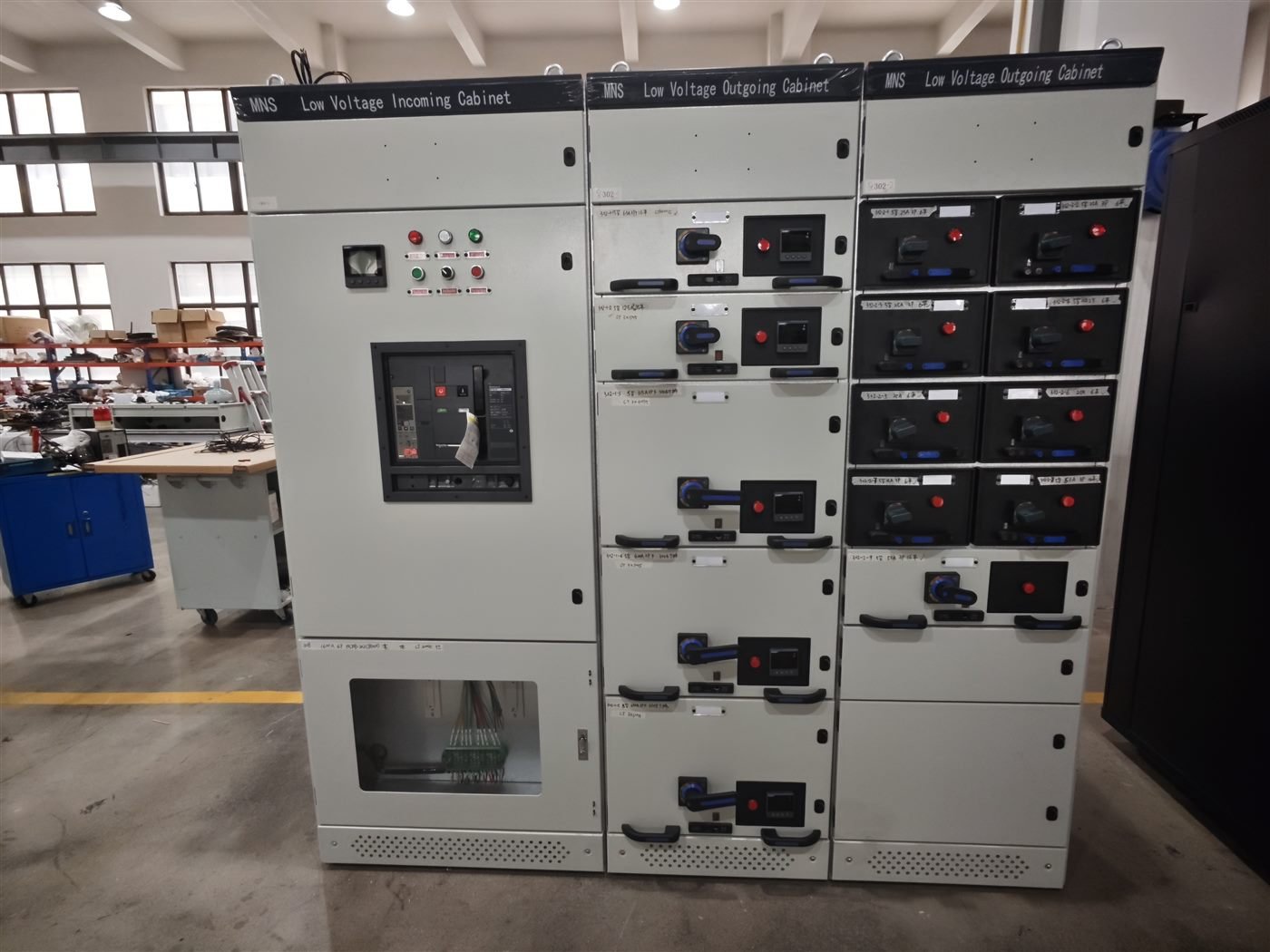
About Electric-GS
Electric-GS is an OEM and ODM manufacturer in Yueqing, China. We build medium voltage switchgear, ring main units, SF6 GIS, vacuum circuit breakers and compact substations. Every panel gets a partial discharge test before dispatch, with the result recorded against the serial number. Component options are listed in our switchgear components guide. Contact us at info@electric-gs.com or WhatsApp +86 135 8897 8050. See the Electric-GS global site and our China site for the full product range.
One thought