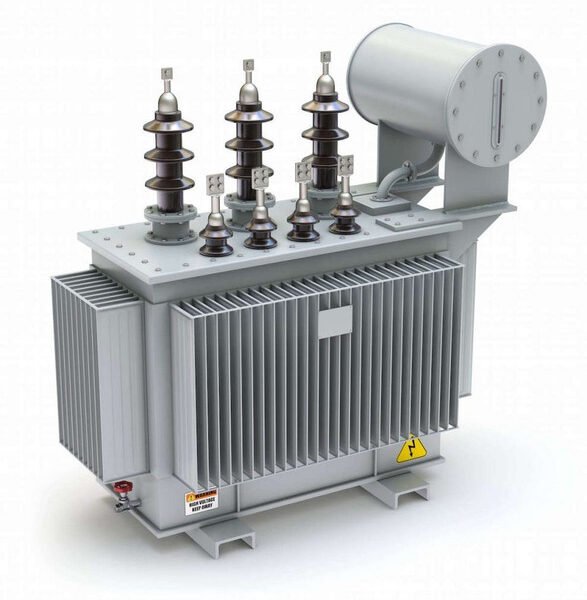
Oil does two jobs inside an oil-immersed transformer. It insulates the winding and it carries heat away from the core. Both jobs fail silently. A unit that looks clean at the factory gate can hold 80 ppm of water and still pass a visual inspection. That water lowers the breakdown voltage and starts the paper ageing clock. A transformer oil test programme catches this before the breaker is closed, not after the first trip.
This guide covers the five tests we run on every oil-filled unit before dispatch and what each number tells a buyer.
Why oil tests decide the energization date
Moisture and oxygen do not stop the transformer from working on day one. They shorten its life. Every 10 K of extra hot-spot temperature doubles the ageing rate of kraft paper, and water is the fastest route to that extra heat. Four practical reasons to test first:
- Commissioning gate. Most utilities will not energize a transformer without a valid oil report, usually less than 30 days old.
- Warranty evidence. A baseline report at delivery protects both sides if a fault appears in year two.
- Transport damage. A long sea crossing can add moisture through breathing, even with a nitrogen blanket.
Test 1 – Dielectric breakdown voltage (IEC 60156)
A sample is poured into a test cell with two spherical electrodes and the voltage is raised until a spark jumps. The test is repeated six times and the average is reported in kV.
Breakdown voltage reacts to water, fibres and particles. A reading below the acceptance limit almost always means moisture or dirt, not degraded oil chemistry. New oil from a sealed drum should reach 60 kV or more. Oil that has been in service for years can sit at 40 kV and still be acceptable, provided the moisture and DGA results are clean.
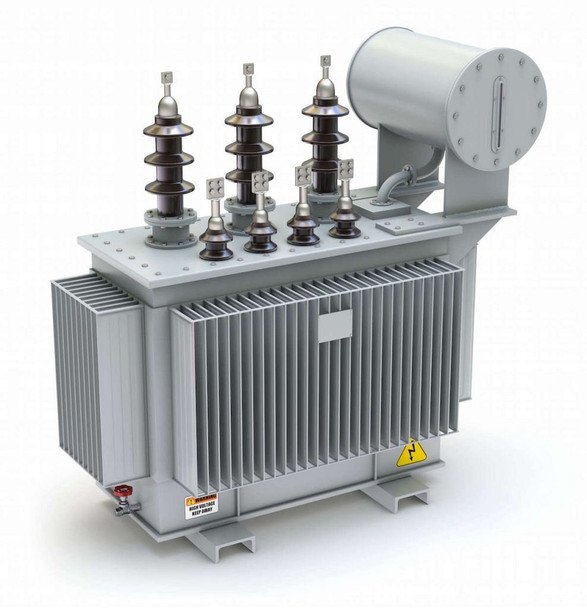
Sample from the bottom drain valve, never the top, and flush the line three times before filling. Otherwise the result describes the container, not the transformer.
Test 2 – Moisture content in ppm
Water in oil is measured by Karl Fischer titration and reported in parts per million by weight. This is the number that matters most for insulation life, because paper absorbs water from oil until the two reach equilibrium.
A 145 kV class unit at 20 degrees C might read 15 ppm in the oil while the paper holds 2 percent moisture. At 60 degrees C the same unit reads 45 ppm, and the paper is still at 2 percent. Oil reading moves with temperature, paper condition does not, so record oil temperature beside every ppm result.
Typical acceptance: 20 ppm or less for HV units, 30 ppm for distribution class, drying required above 50 ppm.
Test 3 – Dissolved gas analysis (DGA)
Dissolved gas analysis is the only test that can see a fault inside a sealed tank. Oil breaks down under electrical or thermal stress and releases specific gases. Each gas points to a different failure mode, and the pattern matters more than any single value.
- Hydrogen (H2) – partial discharge or a hot spot.
- Acetylene (C2H2) – arcing. Even 1 ppm deserves attention.
- Ethylene (C2H4) – overheating of oil above 150 degrees C.
- Carbon monoxide (CO) – paper ageing, the signal that insulation life is being consumed.
For a new unit the target is simple: every dissolved gas at or near the detection limit. A factory DGA report with 200 ppm of hydrogen is not a normal baseline, it is a question for the test engineer.
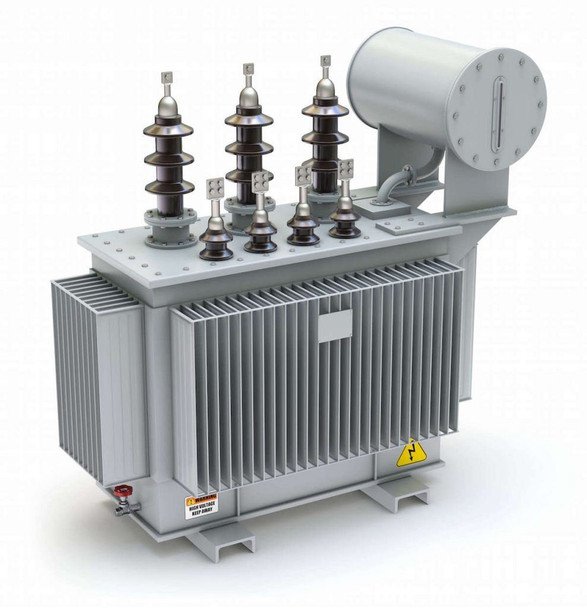
Test 4 – Acidity and interfacial tension
Acidity, reported as mg KOH per gram of oil, measures how much acid the oil has formed. Acid attacks the paper and produces sludge that blocks cooling ducts. Interfacial tension is measured in mN/m and falls as polar ageing products build up, so the two numbers are read together.
New oil should sit at 0.03 mg KOH/g or below with interfacial tension above 35 mN/m. In service, 0.1 mg KOH/g and 25 mN/m are common working limits. When acidity climbs while tension drops, the oil is chemically aged and reclamation beats replacement.
Test 5 – Tan delta and resistivity
Dissipation factor, or tan delta, measures dielectric losses at 90 degrees C. It is sensitive to moisture, ageing products and conductive particles at once, which makes it a good single number for overall oil health.
New oil should show tan delta at or below 0.005 and resistivity above 1 x 10^12 ohm-cm. Values two or three times the limit usually trace back to moisture or to residual carbon from a previous arcing fault.
Acceptance limits at a glance
The table below collects the limits we apply on the factory floor. Project specifications override it, and IEC 60296 is the reference standard for the oil itself.
| Parameter | New oil | In service limit | Test method |
|---|---|---|---|
| Breakdown voltage | ≥ 60 kV | ≥ 40 kV | IEC 60156 |
| Moisture | ≤ 20 ppm (HV) | ≤ 50 ppm | IEC 60814 |
| Acidity | ≤ 0.03 mg KOH/g | ≤ 0.1 mg KOH/g | IEC 62021 |
| Interfacial tension | ≥ 35 mN/m | ≥ 25 mN/m | ASTM D971 |
| Tan delta at 90 °C | ≤ 0.005 | ≤ 0.02 | IEC 60247 |
| Dissolved acetylene | < 1 ppm | < 2 ppm | IEC 60567 |
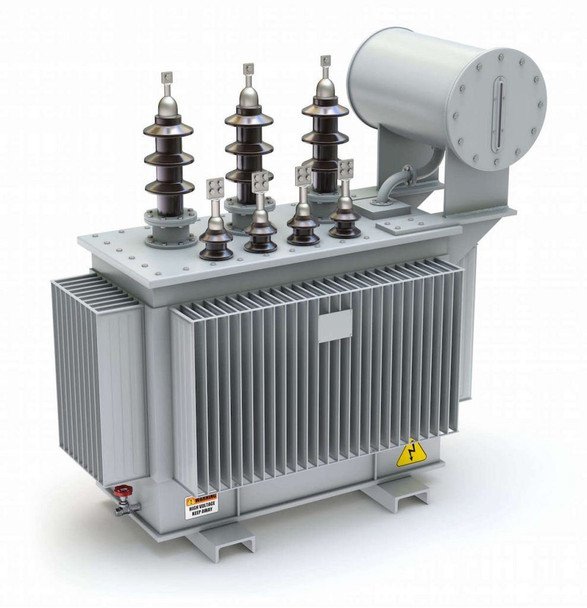
Related checks worth pairing with the oil report are the temperature rise test, which sets the hot-spot value used in ageing calculations, and the nameplate ratings review that confirms which limits actually apply to the unit. For outdoor installations, the corrosion protection checks for coastal sites matter as much as the oil result, and the earthing grid design checks close the loop on safety. Buyers comparing suppliers can also look at the wider range on ElectricGS, and the component notes on electric-cn.com.
FAQ
Q: How often should a transformer oil test be repeated in service?
Once a year for units above 10 MVA, and every two years for smaller distribution transformers. After any through-fault or alarm, test immediately.
Q: Can I energize a transformer with 40 ppm moisture?
Not recommended. Dry the oil to below 20 ppm first. Water at that level accelerates paper ageing and lowers breakdown voltage under load.
Q: Does a good breakdown voltage mean the oil is healthy?
No. Breakdown voltage reacts mainly to water and particles. Acidity, tan delta and DGA can all be poor while the kV result still looks acceptable.
Q: Which sample point should be used?
The bottom drain valve. Water and sludge settle at the lowest point. Flush the line before filling the sample container.
Q: Is a factory DGA report enough for acceptance?
It is a baseline, not a guarantee. Ask for the chromatogram and the sampling date. Repeat the test after transport, before energization.
Q: What if acetylene shows up at 2 ppm?
Stop. Acetylene means arcing inside the tank. Do not energize. Request an internal inspection and a repeat DGA from a second laboratory.
About the manufacturer. Electric-GS builds oil-immersed transformers, RMU, GIS and LV/MV switchgear in Yueqing, Zhejiang, as an OEM/ODM factory. Every unit carries a routine test report and an oil report before dispatch. Email info@electric-gs.com or WhatsApp +86 135 8897 8050 with your single-line diagram and voltage class.