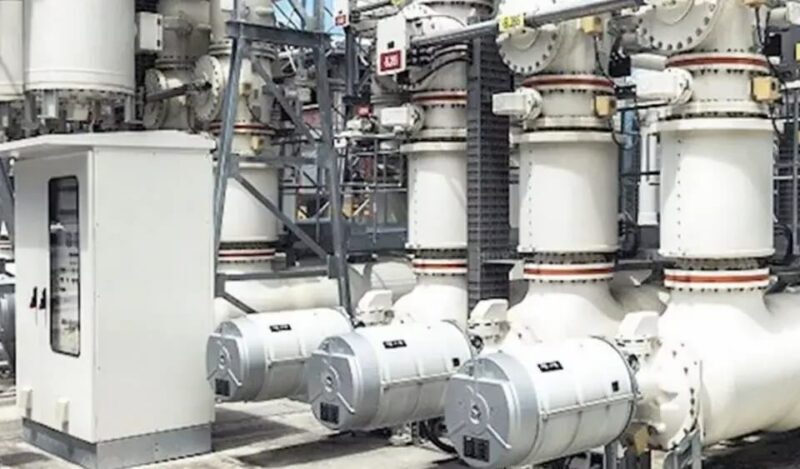
Most switchgear accidents trace back to one moment: an operator did something the panel should never have allowed. Closing a breaker onto a closed earthing switch. Racking a truck out while the circuit was live. Opening a cable compartment with the busbar still energized. Switchgear interlocking exists to make those actions mechanically impossible, not merely forbidden on a label.
This guide covers the five functions that matter on a medium voltage panel, how each is built, and how to prove at factory acceptance that it works.
Why Interlocking Is a Design Decision, Not an Accessory
A 12 kV or 24 kV panel holds enough energy to turn a small mistake into a fatality. Interlocks are the last line of defence when procedure, training and supervision all fail at once, and they are the item most often simplified out of a cheap offer because a buyer cannot see them on a datasheet.
- Closing onto an earth fault. A breaker closed with the earthing switch still in makes a dead short at full fault current.
- Racking a live truck. Withdrawing a closed breaker from its busbar contacts draws an arc across the gap.
- Opening an energized door. Compartments are not safe to open until the earthing switch is closed and the cable is proven dead.
The pattern is always two operations in the wrong order. Interlocks attack the sequence, not the operator.
The Five Interlock Functions to Specify
Factories name them differently, but these five cover what a metal-clad panel or a gas-insulated RMU must prevent. Ask for each one by name in the technical schedule.
| Function | Operation blocked | Typical mechanism | Test at FAT |
|---|---|---|---|
| 1. Earth switch / breaker | Breaker cannot close with the earthing switch closed | Cam and lever on the operating shaft | Try to close; the handle must refuse |
| 2. Earth switch / breaker | Earthing switch cannot close with the breaker closed | Same shaft, reverse stop | Try to close ES; must refuse |
| 3. Truck position | Cannot rack a closed breaker in or out | Slide plate keyed to breaker position | Rack out with breaker closed; handle locks |
| 4. Compartment door | Door cannot open while the circuit is energized | Door bolt tied to ES and truck position | Attempt to open with breaker closed |
| 5. Door / truck | Truck cannot enter service with the door open | Door-actuated blocking bar | Open door, then try to rack in |
On a gas-insulated RMU the same five functions are enforced through one sequence plate at the operating interface. Inspect that plate: if it is thin painted steel with no positive stops, the interlocking is nominal. A good plate shows permitted moves as engraved arrows and physically cuts off the forbidden ones.
Mechanical, Electrical and Key Interlocks
Three families work together; each covers a failure mode the others cannot.
Mechanical interlocks — rods, cams and bolts that stop a handle from moving. No auxiliary supply needed, so they survive loss of control power. Their weakness is wear: a bent link quietly disables the function while the panel still looks normal.
Electrical interlocks — limit switches and relay logic that block a closing coil or motor drive. Easy to add late, and just as easy to bypass with a jumper; use them for remote operations, never against local manual actions.
Key interlocks — trapped-key schemes that coordinate two panels or two sources: the key cannot leave one panel until the other is safe. The standard answer for dual incoming supplies and busbar transfer, where a mechanical link between cubicles is impractical.
Commissioning: Proving Each Function Works
Interlocks are tested at factory acceptance and again after site assembly, because transport and cable work disturb linkages. Use the same sheet both times.
- Test every function in both directions. Blocked closing and blocked opening are separate checks; many panels pass one and fail the other.
- Use the real operating handle, not a screwdriver. That is the force an operator will actually apply.
- Record the result, not the intention. Write “breaker refused to close with ES closed: PASS” and sign it.
- Repeat after any linkage adjustment. One washer can change travel enough to defeat a stop.
- Photograph the sequence plate and the linkage. It settles disputes two years later.
Allow a controlled override only where the standard and the switching procedure permit it, through a key-operated or tool-operated bypass, under a written order. An override any operator can use with bare hands is not an override; it is a removed interlock.
Where Cheap Panels Cut Corners
- The fifth function is missing: the earth switch can be opened with the truck still in service.
- Door bolts are fitted but not linked to the ES position, so the door opens onto a live cable compartment.
- Electrical interlocks rely on one limit switch with no redundancy, mounted where a cable gland can knock it out of alignment.
- The sequence plate is a sticker. Stickers do not block handles.
What to Put in the RFQ
- Name the five functions and require them on every panel, including RMUs.
- State whether IEC 62271-200 metal-clad or metal-enclosed applies, and require the interlock scope in the technical schedule.
- Require a factory test report signed off function by function, in both directions.
- Require photographs of the sequence plate and linkage for each type tested.
- Define the override policy and repeat the linkage inspection before energization.
Buyers who compare on price alone usually compare on the wrong line. A panel that blocks the wrong sequence is not cheaper; it is unfinished. Related reading: fixed versus withdrawable construction, reading single line diagrams, forms of separation in LV panels and clearance and creepage checks. Panel ranges are listed at electricgs.com, with component data at electric-cn.com.
FAQ
Is interlocking mandatory under IEC 62271-200?
The standard requires interlocks that prevent unsafe operating sequences, and the scope must be agreed and written into the technical schedule. Buyers should specify the five functions rather than assume the factory supplies them.
Can mechanical and electrical interlocks be combined?
They should be. Mechanical links protect local manual operations without auxiliary power; electrical interlocks protect remote and SCADA commands. One without the other leaves a gap.
How is an interlock different from a padlock?
An interlock acts automatically and refuses a wrong sequence. A padlock is a human lockout applied on top for maintenance. A padlock cannot replace an interlock.
How often should interlocks be tested?
At factory acceptance, after site assembly, and at every maintenance interval or linkage adjustment.
Why do some panels let the earth switch open with the truck in service?
The fifth linkage was omitted to save cost, or was defeated during alignment — a common finding in pre-energization audits of low-cost panels.
Does a gas-insulated RMU need the same five functions?
Yes. The functions are identical; the mechanism is one sequence plate inside the operating interface. Inspect that plate, not the datasheet, when you evaluate a supplier.
About the Manufacturer
Electric-GS is an OEM/ODM switchgear factory in Yueqing, Zhejiang, supplying gas-insulated RMUs, medium voltage panels, vacuum breakers and LV assemblies for export projects. Every panel is interlock-tested with a signed, photographed record before dispatch. For specifications or an FAT checklist, contact info@electric-gs.com or WhatsApp +86 135 8897 8050.
Recent Comments