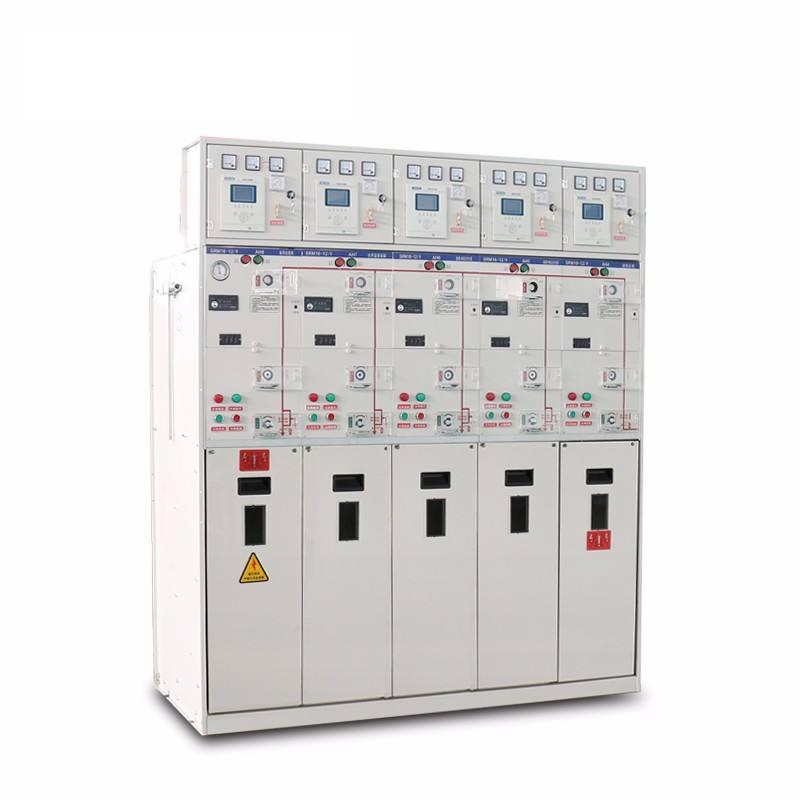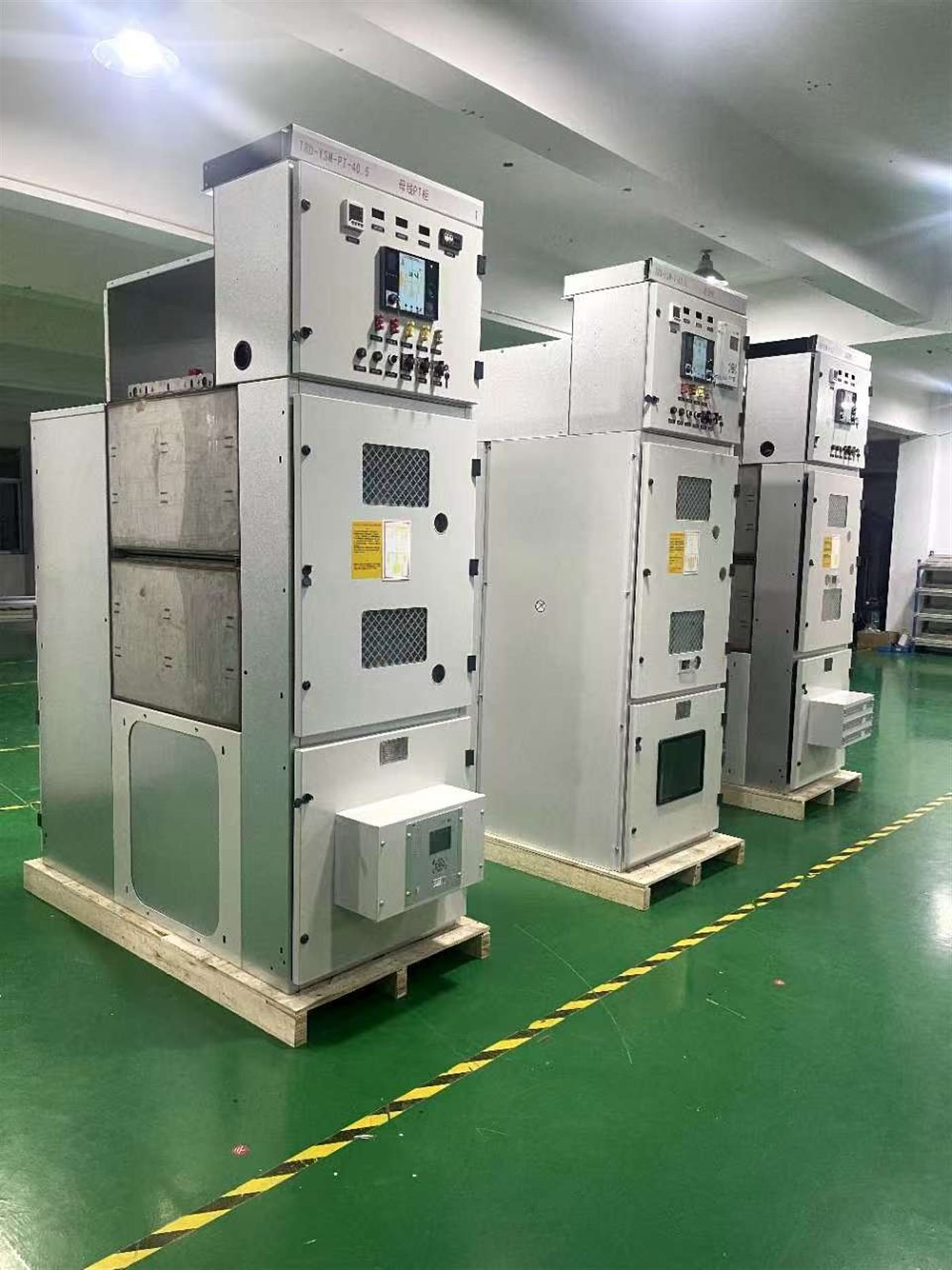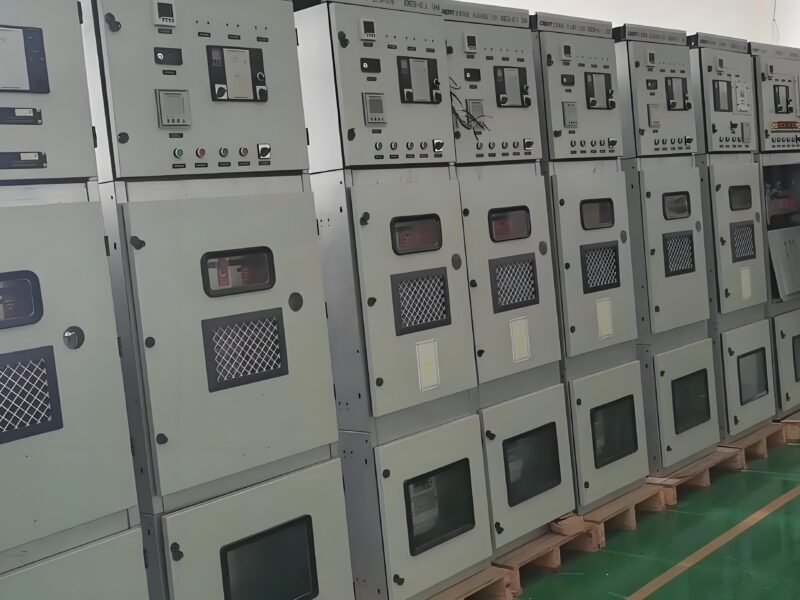
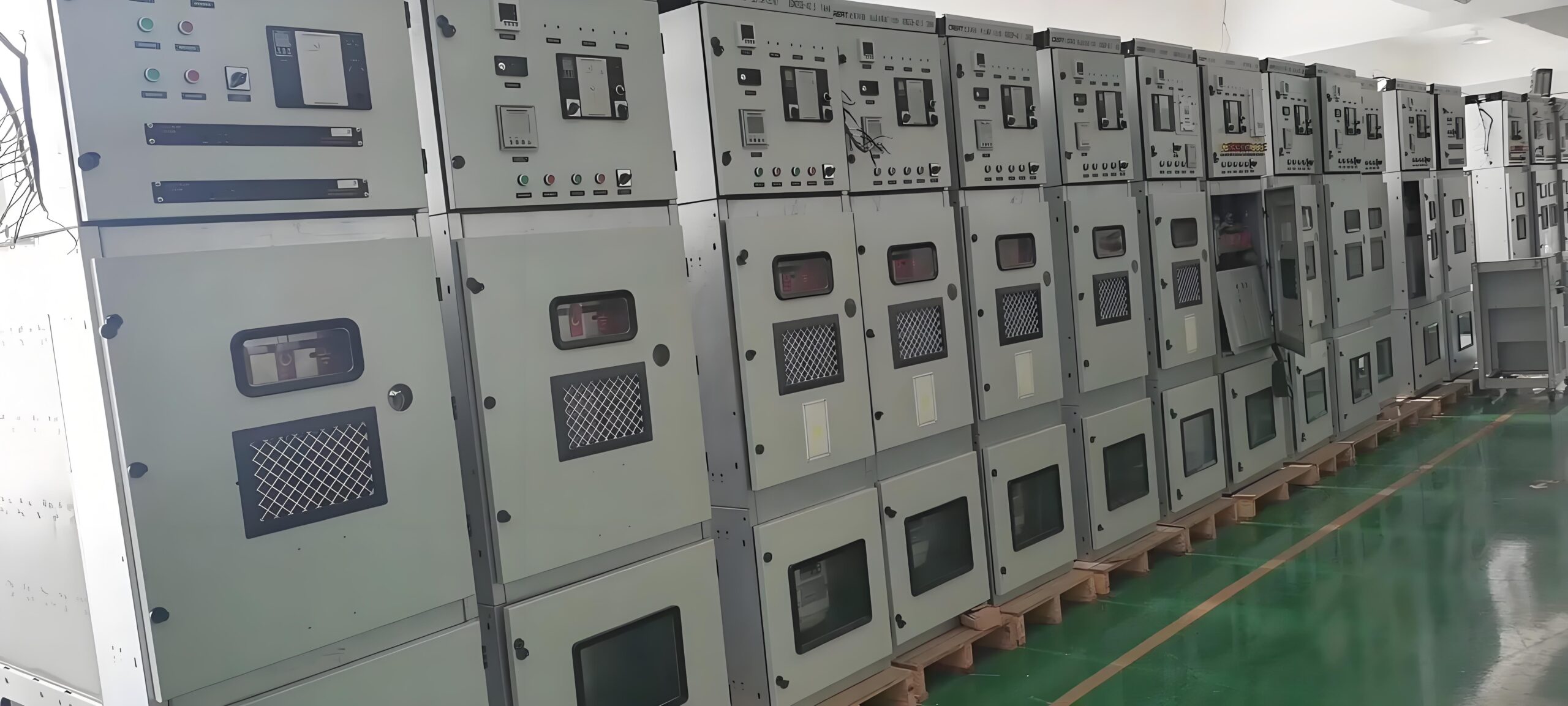
Fixed and withdrawable switchgear do the same electrical job. The difference is how you get to the breaker when something needs to be done.
That difference decides panel depth, room size, spare policy, outage time and price. Buyers who pick by price alone usually regret it during the first fault.
What the Two Designs Actually Are
In fixed switchgear the breaker is bolted to the busbar and cable connections. To test it, or to replace it, you isolate the panel and work inside the cubicle. In withdrawable switchgear the breaker sits on a truck that moves between a service position and a test position, and the busbar and cable compartments stay closed behind shutters.
Nothing about the electrical ratings changes. A 630 A fixed panel and a 630 A withdrawable panel carry the same fault current. What changes is access, footprint and how much work a maintenance team can do without shutting down the board.
How the Two Compare in Practice
| Item | Fixed type | Withdrawable type |
|---|---|---|
| Panel depth per cubicle | Typically 600–750 mm at 12 kV | Typically 800–1000 mm, more for 33 kV |
| Breaker access | Inside the cubicle, after isolation | On the truck, test position outside the live compartments |
| Outage for breaker test | Panel isolated, feeder off | Feeder off, board stays live |
| Spare policy | Spare breaker plus tools | Spare truck, swapped in minutes |
| Cost index (12 kV, 630 A) | Lower | Higher, often 20–40% more |
| Typical use | RMU, small substations, packaged units | Main boards, plants with continuous process |
| Arc exposure during work | Higher, work near live busbar | Lower, shutters and interlocks stay closed |
Six Factors That Decide the Choice
1. How often the breaker has to be tested
A board tested once a year suits fixed panels. A plant that tests quarterly and keeps spares will save more in labour than the withdrawable premium costs, because the truck comes out without touching busbar connections.
2. What an outage costs your process
This is the real driver. If a two-hour feeder outage is routine, fixed panels are fine. If stopping the line costs more than the panel, pay for withdrawable.
3. Room and panel depth you actually have
Withdrawable panels need depth for the truck travel and the test position, plus clearance in front. In a retrofit room, that extra 250 mm per row is often the difference between fitting the board and rebuilding the wall.
4. Spare strategy and lead time
A spare truck is small, stored dry and swapped in minutes. A spare fixed breaker still needs the panel opened, cable re-terminated in some designs, and the same outage. Lead times for either are 4–8 weeks, so the spare decision should be made at order, not after the first failure.
5. Interlocking and operator competence
Withdrawable designs carry more interlocks: the truck cannot be racked in with the breaker closed, and the earthing switch cannot be closed while the truck is in service. Fixed designs rely more on procedure and lockout discipline, so they suit teams with clear written switching rules. Both need the mechanical checks described in our interlocking guide.
6. Voltage class and fault level
At 33 kV the withdrawable truck gets heavy and the panel gets deep, so the cost gap widens. Below 24 kV, fixed designs are common and entirely adequate for distribution feeders. Above that, most process plants still choose withdrawable for the main incomer.
Selection Notes for Each Side
When fixed switchgear is the better buy
- Ring main units and packaged substations, where space is fixed and breakers are rarely opened.
- Distribution boards feeding residential or light commercial load with planned annual maintenance.
- Projects where the room is already built and depth is the binding constraint.
- Budgets where the saving funds better protection relays or better cable terminations.
When withdrawable earns its premium
- Continuous process plants, data centres, water treatment, cement and steel lines.
- Boards with more than six or eight feeders, where testing frequency is high.
- Installations where the operator must prove the breaker is open before earthing, every time.
- Sites that keep a spare truck and train staff to swap it under a written procedure.
The parts inside either design are largely the same: busbar, breaker, CTs, relays and cable boxes. Our MV switchgear components guide lists them, the testing guide explains which tests apply to both designs, and the maintenance plan shows how the routine differs once the panel is in service. For voltage-specific ratings, start with the 33 kV buying guide.
FAQ
Is withdrawable switchgear safer?
It is safer to work on, because the live busbar stays behind shutters while the breaker is in the test position. That does not make fixed gear unsafe; it moves the safety burden onto procedures and lockout.
Can a fixed panel be converted later?
Not practically. Depth, truck rails, shutters and interlocks are structural. Converting means replacing the cubicle, so the decision belongs at the specification stage.
Does withdrawable cost more to maintain?
The parts cost slightly more, but labour is usually lower because access is easier. The net difference over ten years is small compared with the value of shorter outages.
Which type suits a 33 kV main incomer?
Most process plants choose withdrawable, mainly for the test position and the spare truck. Fixed 33 kV panels exist and are used in compact substations where space dominates.
How many spare trucks should a plant keep?
One per frame size and breaker rating is the usual rule. Two frame sizes means two spares; sharing a truck across ratings is not possible.
Does the choice change the relay settings?
No. Protection settings follow the network and the load, not the truck design. Only the CT ratio and the trip circuit wiring differ slightly.
About Electric-GS
Electric-GS is an OEM/ODM switchgear factory in Yueqing, Zhejiang, China. We build fixed and withdrawable MV switchgear, gas-insulated ring main units and C-GIS cubicles from 11 kV to 33 kV, and we quote both designs side by side so the cost of access is visible before you choose. Send your single line diagram and ratings to info@electric-gs.com or WhatsApp +86 135 8897 8050. English site: electricgs.com. Chinese notes: electric-cn.com.