Most medium voltage cable failures blamed on the cable are failures of the termination. The cable arrives tested and intact; the joint is made on site, in a trench, at the end of a long shift, and it is the part nobody inspects until it fails. A proper MV cable termination is a process, not a skill you improvise.
Why Terminations Fail More Often Than Cables
A termination concentrates the electric field. At the point where the conductor, insulation and screen meet, the stress is many times the stress inside the cable body. Any void, any moisture, any nick in the insulation becomes a partial discharge source. That source does not fail the joint on the day of energisation; it eats the insulation for months and then fails under load, usually in wet weather.
The five steps below are the sequence that keeps that stress under control. Skipping any one of them moves the risk to the customer side of the handover.
5 Steps to a Termination That Holds
- Prepare the cable in dry conditions. Cut back the outer sheath, armour and bedding to the drawing dimensions, then remove the insulation screen to the exact length the kit requires. Work only when the cable and the air are dry; a humid day puts water into the joint before the stress cone is even fitted.
- Control the stress at the screen cut. Fit the stress cone or the pre-moulded stress control layer so the field is graded, not concentrated. A sharp or ragged screen edge is the single most common cause of discharge in a new joint.
- Crimp the lug with the specified tool and die. Use the lug the cable size calls for, and the crimping tool with the matching die. Measure the crimp depth and check the lug is square to the conductor. A loose lug heats; an over-crimped one cracks the strands.
- Seal moisture out, not just dirt. Apply the sealing compound and the heat-shrink or cold-shrink sleeve as the kit specifies, and finish with a moisture seal at the sheath. Water travels along the screen and enters from the outer end, not from the joint itself.
- Test before energising. Run an insulation resistance test and, where the specification calls for it, a partial discharge test. Record the values against the cable length so the next inspection has a baseline. A joint that passes at 20 kV but discharges at 2 kV is not a good joint.
Cable size and current rating drive everything above, from the lug to the kit; the MV cable sizing guide covers the selection side before the site team ever reaches the trench.
Termination Types Compared
Four termination families cover most MV work. The choice is usually fixed by the switchgear interface and the site conditions rather than by preference.
| Type | Best for | Site time per joint | Skill level | Watch out for |
|---|---|---|---|---|
| Heat-shrink | Outdoor and buried joints, 11 – 33 kV | 60 – 90 minutes | Medium, needs a torch and steady hands | Overheating the insulation during shrink |
| Cold-shrink / pre-moulded | Where open flame is not allowed | 45 – 70 minutes | Medium, needs clean assembly | Grit or dust trapped under the sleeve |
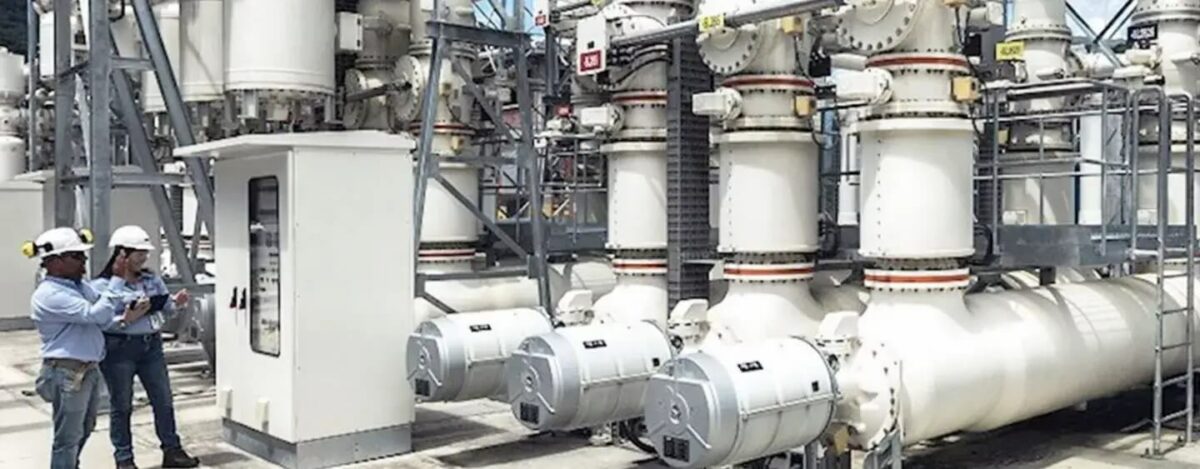
| GIS plug-in elbow | Connection into gas-insulated switchgear | 30 – 45 minutes | High, interface must match the gear | Contact alignment and torque |
| Taped hand joint | Repair work and non-standard sizes | 2 – 3 hours | High, needs an experienced jointer | Voids between tape layers |
When the joint sits in a wet or coastal location, the sealing detail matters as much as the kit type; the same coating logic in our coastal corrosion notes applies to the cable box and the joint enclosure.
Tools and Consumables That Decide the Result
- A cable stripping tool set with the correct blade depth for the insulation thickness.
- The crimping tool and die matched to the lug, not a generic hydraulic press.
- Clean, dry solvent and lint-free cloth; never use a rag that leaves fibres in the joint.
- A hygrometer or at least a moisture check on humid days, with a plan to postpone the joint.
- The kit’s own installation sheet, kept on site, with the batch number recorded.
- An insulation resistance tester and a discharge detector, calibrated and in date.
After the joint is made, the fault-finding path changes. If a termination does fail in service, the sequence in MV cable fault location tells you how to separate a joint problem from a cable problem before cutting anything open. The routine checks that follow are covered in the MV switchgear inspection and testing plan, and the discharge measurements in the partial discharge testing guide.
FAQ
How long should one MV cable termination take?
Between 45 and 90 minutes per joint for heat-shrink or cold-shrink kits, assuming dry conditions and a prepared cable. Rushing the stress control step is where the time saving turns into a call-back.
Can a termination be made in the rain?
No. Postpone it. Water trapped between the insulation and the stress cone will discharge within weeks, and no test at handover will catch it reliably.
Is a partial discharge test mandatory?
Not everywhere, but it is the most useful check on a new joint. Where the specification allows only an insulation resistance test, record the values and re-test after the first few months of load.
Why do lugs come loose after a few years?
Usually thermal cycling on an under-crimped or under-torqued connection, or a lug sized for the wrong cable class. Re-torque at the first annual inspection and check for discolouration.
Do I need a different kit for 33 kV than for 11 kV?
Yes. The stress control geometry and the insulation build are voltage-specific; a kit rated for 11 kV will not control stress at 33 kV, even if it fits the cable.
About Electric-GS
Electric-GS is an OEM/ODM switchgear factory in Yueqing, Zhejiang, China. We build ring main units, GIS, MV and LV switchgear, cable boxes and packaged substations, and we supply the termination interface drawings, cable entry dimensions and torque values that jointing teams need before they cut a cable. Send your cable schedule and switchgear interface to info@electric-gs.com or WhatsApp +86 135 8897 8050. English product pages are on electricgs.com, and Chinese technical notes on electric-cn.com.