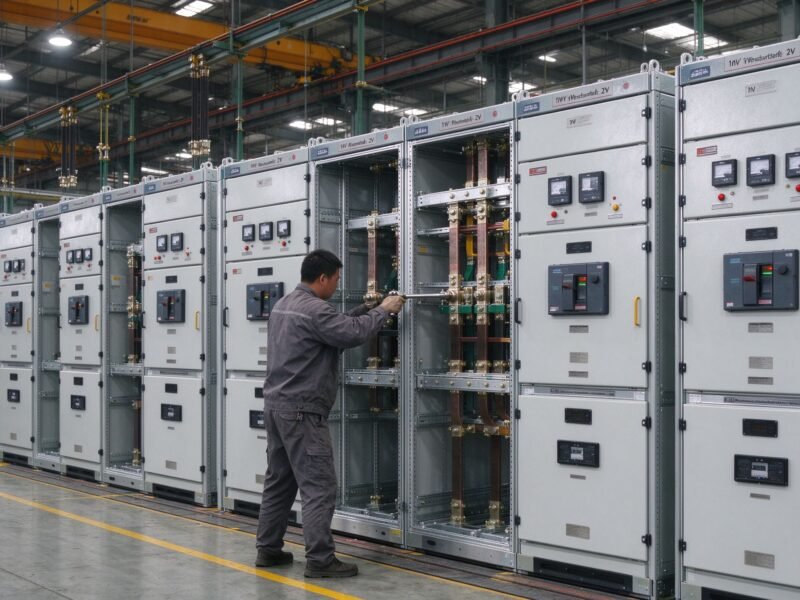
Medium voltage networks around the world are moving to higher ratings. For industrial plants, utility substations and renewable projects, the 24kV class has become a mainstream choice. This guide explains what a 24kV medium voltage switchgear panel is, which specifications matter, and how to select the right unit for your project in 2026.
What Is 24kV Medium Voltage Switchgear?
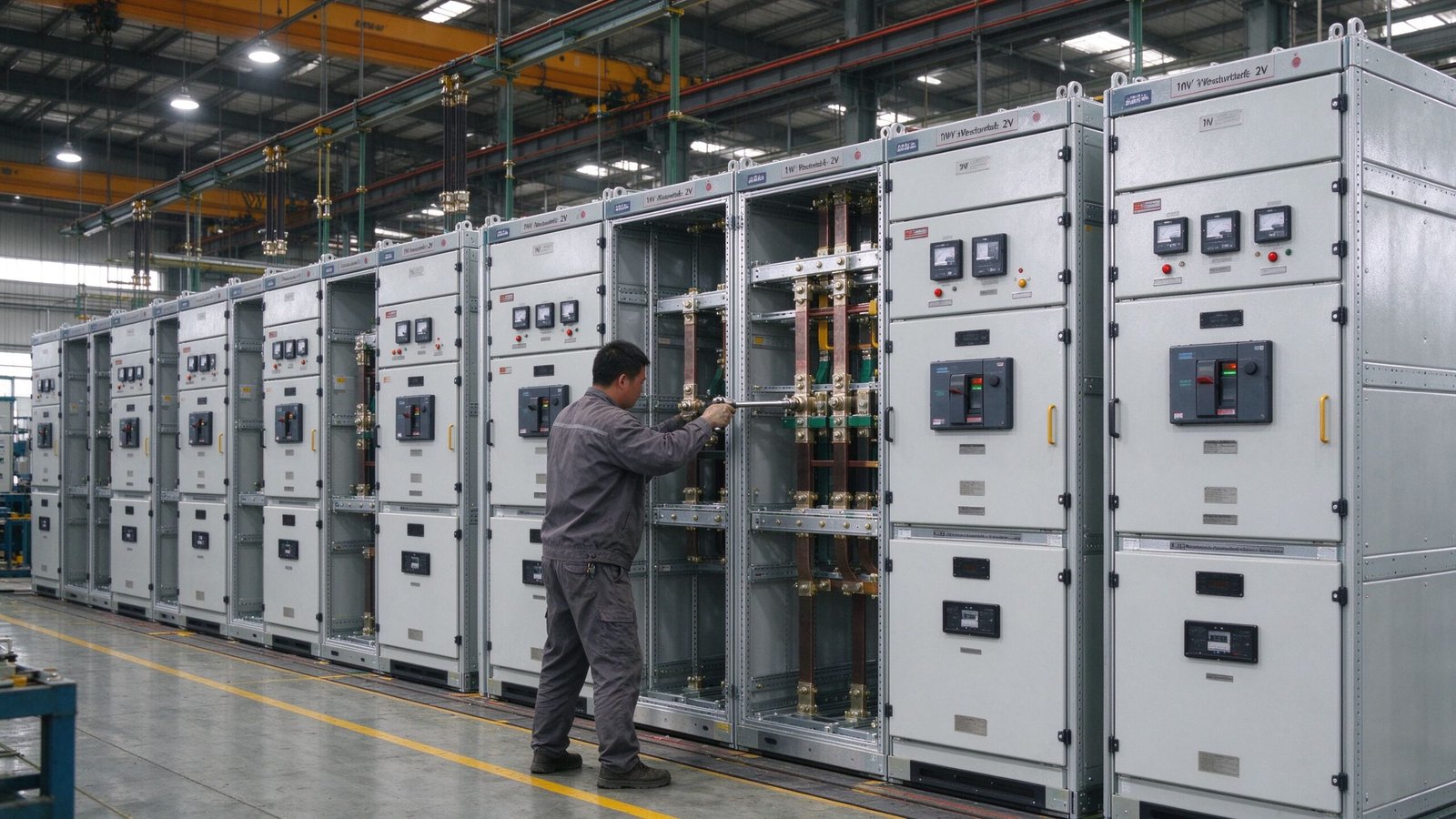
A 24kV medium voltage switchgear panel is a factory-assembled enclosure that controls, protects and isolates electrical equipment operating at 24kV. It is used in distribution substations, power plants, data centers and large industrial facilities. The panel contains a vacuum circuit breaker, busbars, current transformers, protection relays and cable connections.
- Rated voltage: 24kV, suitable for 20kV and 22kV networks
- Rated current: 630A, 1250A, 2000A or 3150A
- Short-circuit rating: up to 31.5kA for 3 seconds
- Arc withstand: up to 31.5kA / 1s, tested to IEC 62271-200
- Form of separation: 3b or 4b for safety and maintenance
Most switchgear suppliers in China, including 24kV ring main units, build these panels to IEC standards. The enclosure is usually metal-clad and fully compartmented.
Key Specifications to Check Before Buying
Not all 24kV panels are the same. These five parameters decide whether the unit fits your network and meets safety rules.
| Parameter | Typical Range | Why It Matters |
|---|---|---|
| Rated voltage | 12kV / 24kV / 33kV | Must match system voltage with margin |
| Rated current | 630A – 3150A | Determines feeder capacity |
| Breaking capacity | 20kA – 31.5kA | Must cover fault level at your site |
| Internal arc class | AFLR 31.5kA / 1s | Protects operators during faults |
| Degree of protection | IP4X / IP54 | Guards against dust and water |
Ask the manufacturer for type tests and routine test certificates. A reliable medium voltage switchgear maintenance checklist starts with the right type-tested panel.
Main Types of 24kV Switchgear Panels
Metal-Clad Switchgear
Metal-clad panels have separate compartments for the breaker, busbar and cable. They offer the highest safety and are the first choice for utility and industrial substations. Each compartment is earthed metal-enclosed.
Fixed-Mount Switchgear
Fixed-mount panels cost less and are simpler. The breaker is fixed in position, which reduces maintenance access. They suit smaller sites with limited fault levels.
Ring Main Units (RMU)
For secondary distribution and compact substations, an RMU with SF6 or solid insulation handles up to 24kV. It combines load break switches and fuses. For more details, see our 11kV medium voltage switchgear complete guide and the RMU comparison article.
How to Choose a 24kV Switchgear Supplier
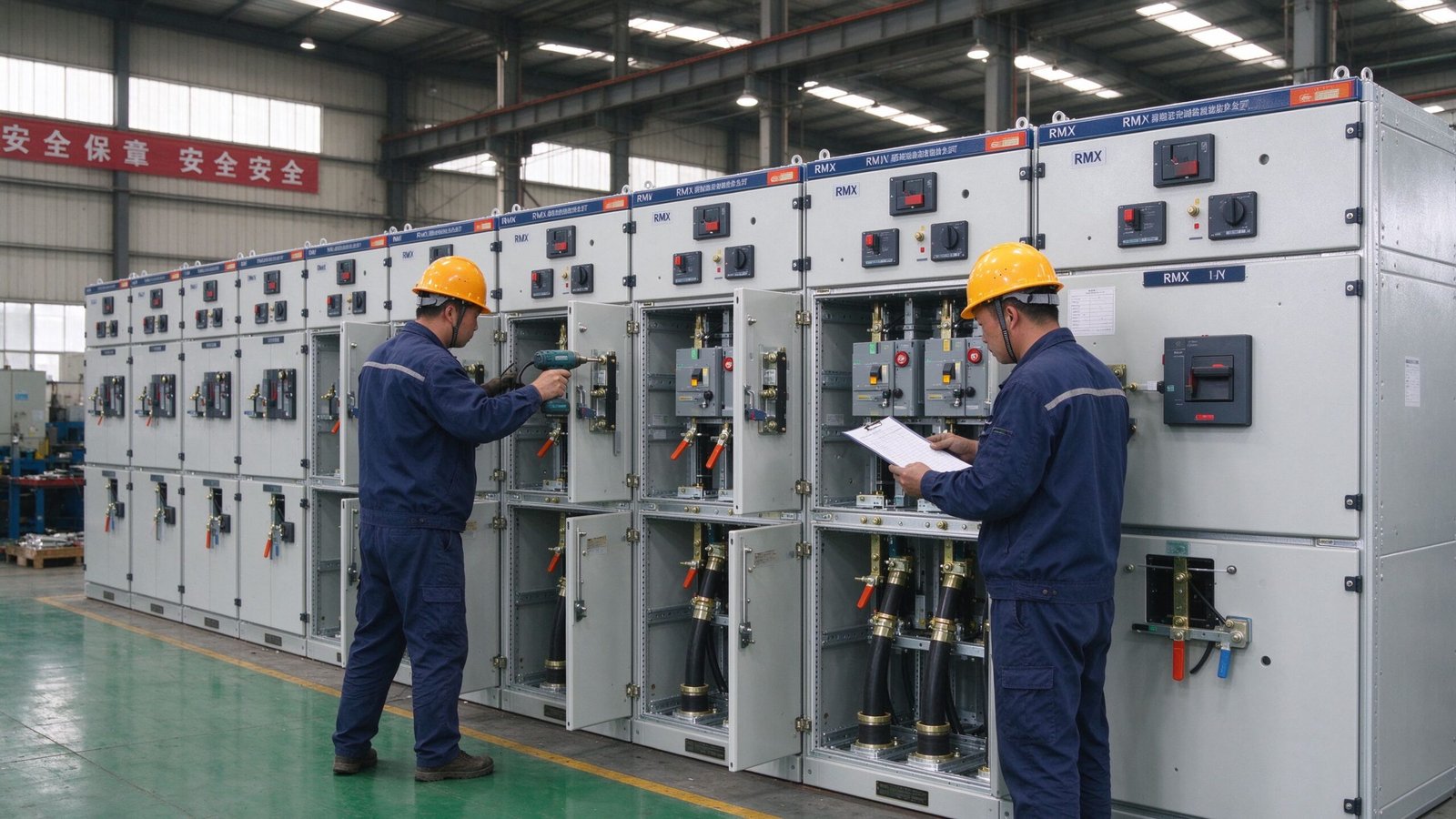
Selection is not only about the panel. The supplier’s factory, testing capability and after-sales service matter just as much.
- Check type test reports from an accredited laboratory
- Confirm the factory runs routine tests on every panel
- Review spare part availability and delivery lead time
- Ask for a single line diagram and cable termination drawings
- Request references from similar 24kV projects
Compare your network with other voltage classes before you decide. Read our panel guide for 12kV systems and the GIS versus AIS comparison to understand trade-offs. A 24kV panel costs more than 12kV, but it saves a second transformation step in many networks.
Installation and Maintenance Tips
Correct installation extends the life of a 24kV switchgear panel and prevents arc faults.
- Keep the room clean, dry and well ventilated
- Check busbar torque values before energizing
- Test protection relays and CT wiring after installation
- Perform thermographic inspection every 12 months
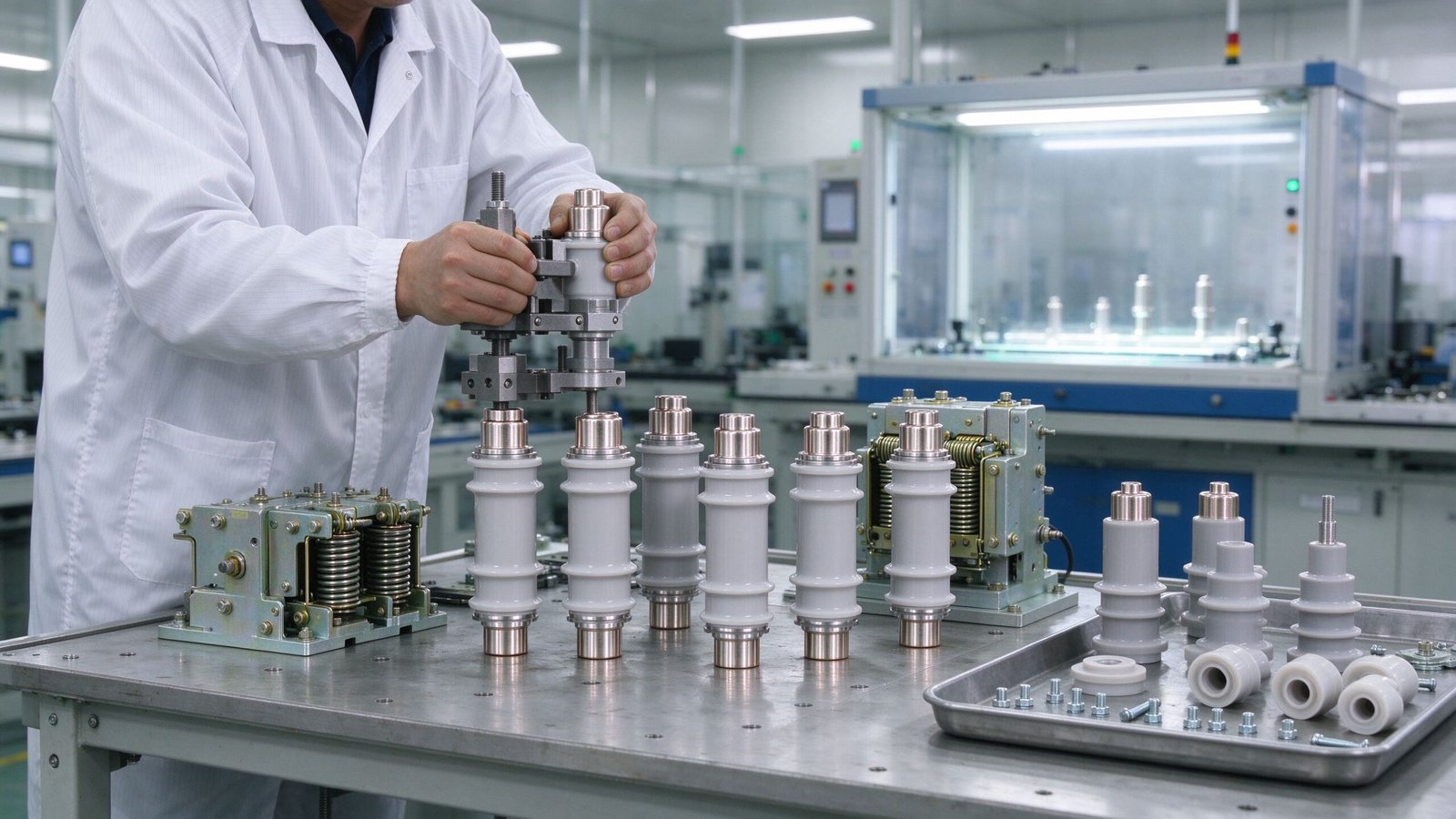
- Replace vacuum interrupters after their rated operations
Follow the manufacturer’s service manual. A disciplined maintenance routine is the cheapest insurance for your substation.
24kV vs 12kV vs 33kV: Quick Comparison
| Item | 12kV | 24kV | 33kV |
|---|---|---|---|
| Typical use | Industrial LV-MV | Distribution, renewables | Transmission-distribution |
| Panel cost | Lowest | Medium | Highest |
| Short-circuit | Up to 25kA | Up to 31.5kA | Up to 40kA |
| Transformer size | Small | Medium | Large |
Choose the class that matches your utility voltage and fault level. Do not oversize without reason; each class adds cost and footprint.
Typical 24kV Switchgear Configurations
Most 24kV projects use one of three arrangements. A single-busbar panel with one incoming and several outgoing feeders suits simple radial networks. It is compact, low cost and easy to operate. A double-busbar arrangement allows transfer between busbar sections without interrupting supply. Urban substations and industrial plants with sensitive loads usually choose it. A bus-coupler panel connects the two sections and enables maintenance on one side while the other stays live.
- Single busbar: smallest footprint, best for simple feeders
- Double busbar: higher availability, used in urban and industrial sites
- Bus coupler: connects sections, supports live maintenance
- Generator panels: include synchronization and reverse power protection for renewables
Each configuration changes the panel count, footprint and cost. Ask your supplier for a single line diagram before ordering. A correct configuration reduces future outages and makes later expansion easier. For medium voltage projects with mixed loads, a 24kV panel with vacuum breakers and digital relays is the most flexible choice.
Frequently Asked Questions
What is the difference between 12kV and 24kV switchgear?
24kV panels have higher insulation levels and larger clearances. They are used where the system voltage is 20kV or 22kV, while 12kV panels suit 10kV and 11kV networks.
Is 24kV switchgear SF6-free?
Yes. Modern vacuum circuit breakers and solid-insulated RMUs are SF6-free options. Gas-insulated panels still exist, but vacuum technology is the eco-friendly default for 24kV.
How long does a 24kV switchgear panel last?
With proper maintenance, 25 to 30 years. Vacuum interrupters typically last 10,000 to 30,000 operations.
Do I need a type test certificate?
Yes. Type tests prove the design meets IEC 62271-200 and other standards. Always request certificates before ordering.
Can Electric-GS supply OEM switchgear with my brand?
Yes. Electric-GS provides OEM and ODM manufacturing for 24kV switchgear panels and related products with private labeling.
What is the lead time for 24kV panels?
Standard lead time is 30 to 45 days after drawings are confirmed. Urgent orders can be scheduled faster for common configurations.
About Electric-GS
Electric-GS is a factory in Yueqing, China, specializing in medium voltage switchgear, ring main units and related power equipment. We offer OEM and ODM services with strict testing. Contact us at info@electric-gs.com or WhatsApp +86 135 8897 8050 for a quotation.
Related reading: electricgs.com and electric-cn.com cover our product range and company news.
5 thoughts