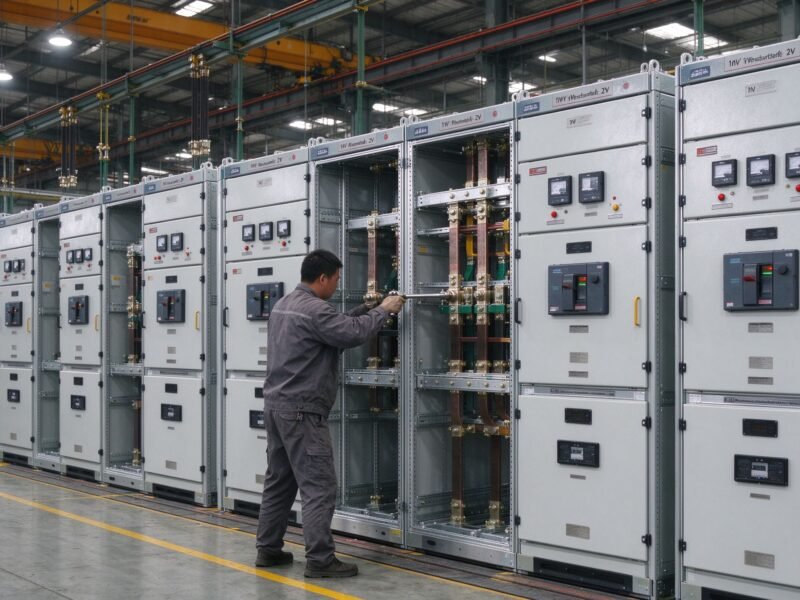
Choosing a vacuum circuit breaker is a high-stakes decision. It protects people, equipment and revenue. One wrong rating can cause nuisance trips or a serious fault. This guide gives you 10 practical selection tips for 2026. Each tip is short and actionable.
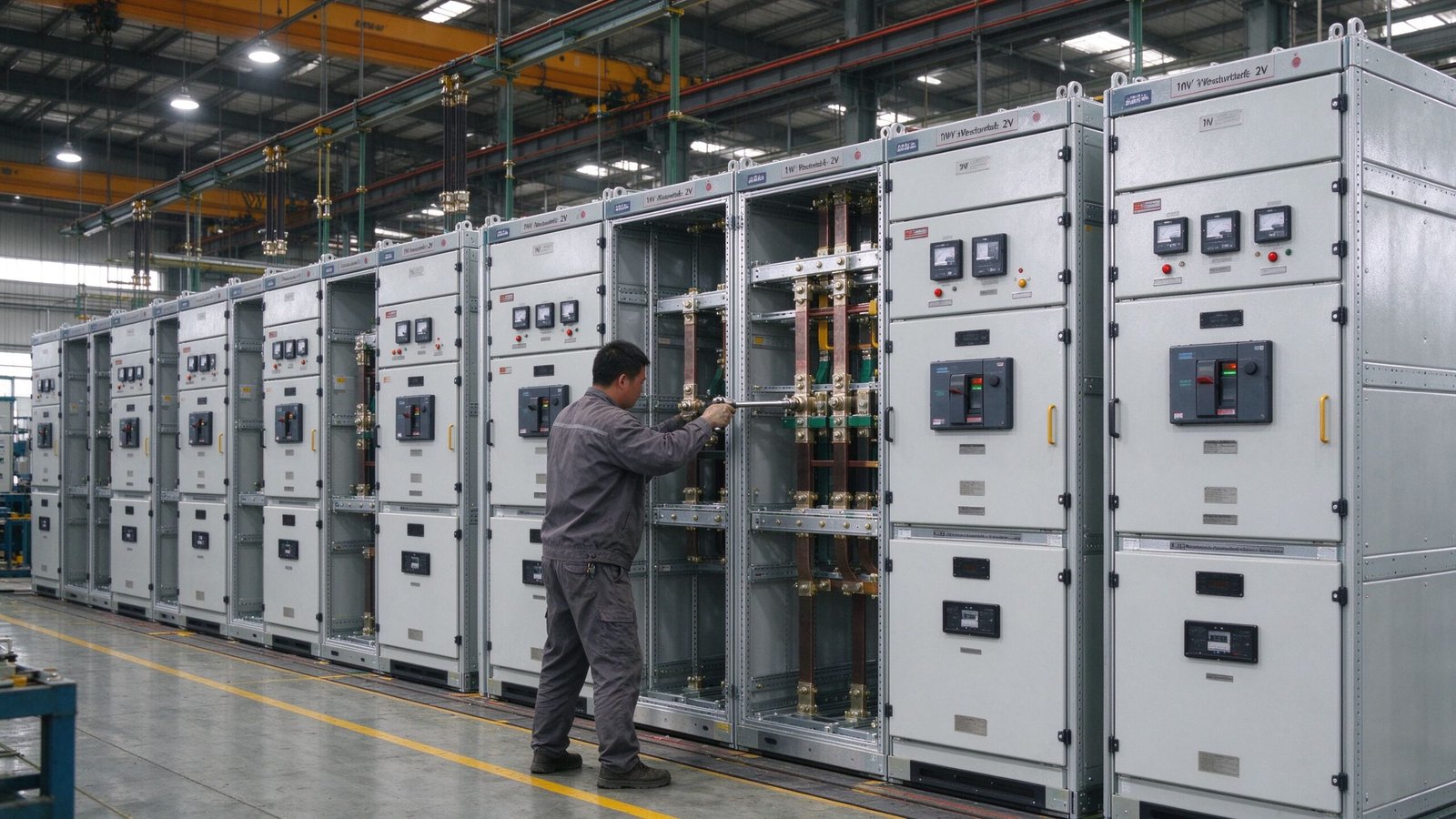
Tip 1: Match the Rated Voltage to Your System
Start with the system voltage. Vacuum circuit breakers are common at 12kV, 24kV, 33kV and 40.5kV. Pick a breaker whose rated voltage is equal to or higher than the system voltage. A 12kV breaker on a 12kV network works well. A 24kV breaker gives extra margin for future changes.
Check the insulation level too. Some regions use different impulse withstand values. Confirm both with your engineer. For example, a breaker for a 12kV system may be rated for 75kV or 95kV impulse voltage, depending on the local standard.
Tip 2: Verify Rated Current and Load Growth
The rated current must cover the highest expected load. Look at transformer ratings, motor starting current and future expansion. Standard values include 630A, 1250A, 2000A and 3150A. Choose one step above your calculated maximum. This avoids early replacement.
Tip 3: Confirm Short-Circuit Breaking Capacity
The breaker must clear the maximum fault current at the installation point. Common ratings are 20kA, 25kA, 31.5kA and 40kA. Ask for the system fault study from the utility or the design consultant. Do not guess this number. The wrong value can be dangerous.
Tip 4: Check the Operating Duty Cycle
Vacuum breakers handle frequent operations well. Check the mechanical and electrical endurance. Standard mechanical life is 10,000 to 30,000 operations. Capacitor switching and motor switching need specific tests. Confirm the duty cycle suits your application.
Tip 5: Review the Control Voltage and Spring Mechanism
Most breakers use a spring-operated mechanism. The closing coil and opening coil need a control voltage, usually 110V DC, 220V DC or 220V AC. Confirm your station battery system. Ask for undervoltage release if your protection scheme requires it.
Tip 6: Select the Right Protection Relay
The breaker is only as smart as its relay. Choose a numeric relay with overcurrent, earth fault and optional directional functions. Many modern relays include metering, event records and waveform capture built in. Check communication ports for SCADA. Confirm coordination with upstream and downstream devices. A good relay reduces trip time and outage cost.
Tip 7: Think About Panel Form and Installation
Decide between fixed and withdrawable designs. Withdrawable breakers allow quick maintenance. Fixed breakers cost less. Check whether you need indoor or outdoor installation. Outdoor units may need a weatherproof enclosure or a dedicated breaker house.
Tip 8: Demand Type Tests and Routine Tests
| Test Type | What It Proves | Documents |
|---|---|---|
| Type test | Design meets the standard | Type test certificate |
| Routine test | Each unit works correctly | Factory test report |
| Site test | Installation is correct | Commissioning report |
Always request IEC 62271-100 type test certificates. Ask for routine test reports for every unit. This protects you from design defects and production variation.
Tip 9: Compare Total Cost, Not Just Price
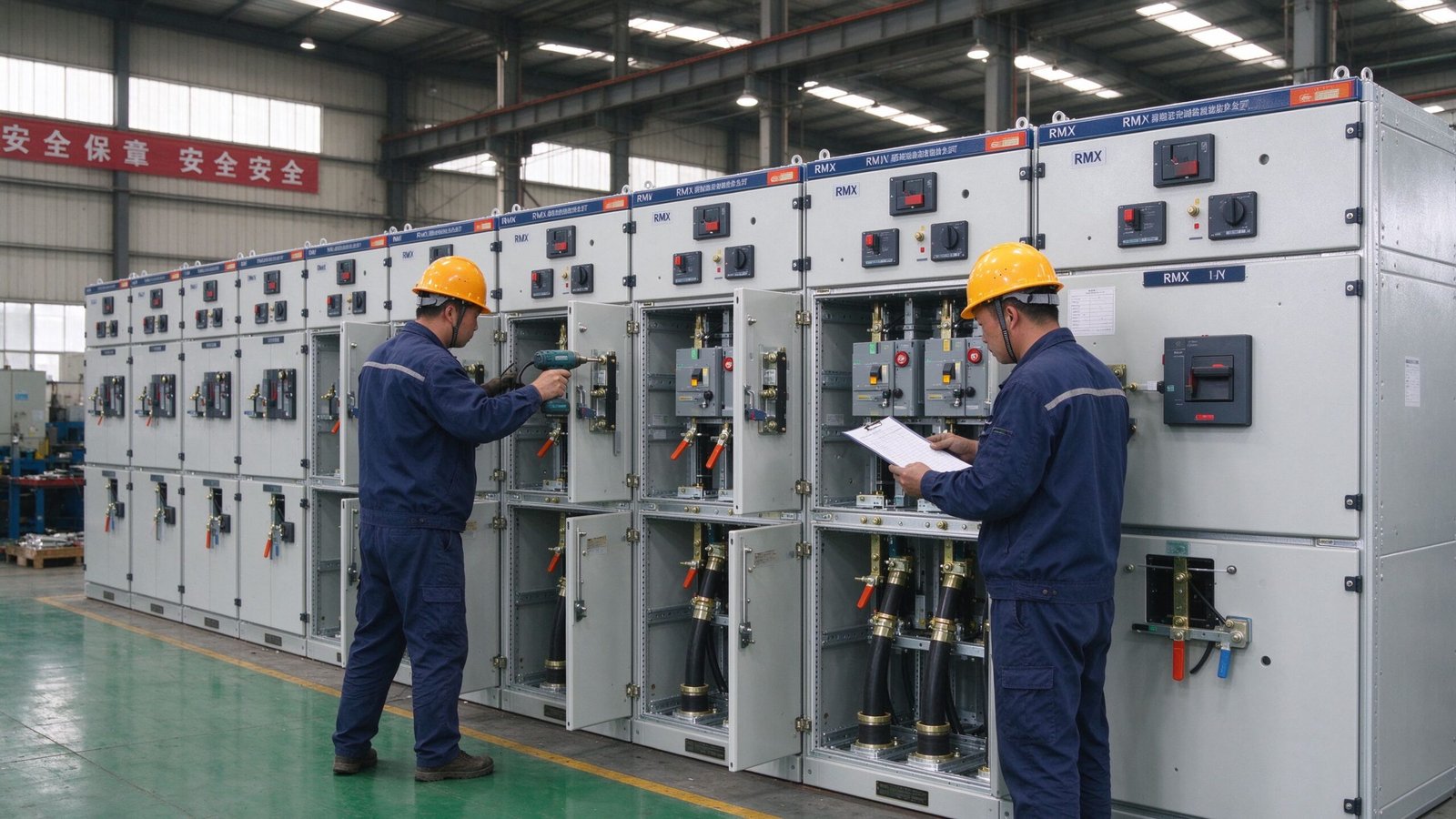
Low price can hide weak testing and poor support. Compare the total cost of ownership. Include the cost of a spare breaker, special tools and possible downtime during repairs. Include relays, spare parts, installation, training and expected life. A quality vacuum circuit breaker from a reliable OEM factory pays back over 20 years of service.
Tip 10: Choose a Supplier with Factory Support
Work with a manufacturer that can deliver on time and support you after delivery. A factory audit and clear delivery milestones reduce project risk. Ask about lead time, spare parts stock and warranty. OEM and ODM services help if you want your own branding. A factory visit or video tour is a strong sign of capability.
Selection Checklist for 2026
- System voltage and insulation level confirmed
- Rated current matches load with margin
- Breaking capacity covers maximum fault current
- Duty cycle matches switching frequency
- Control voltage and mechanism verified
- Protection relay chosen and coordinated
- Panel form and installation site decided
- Type and routine test documents requested
- Total cost of ownership compared
- Supplier capability checked
Keep this checklist with your project folder. Review it before every purchase. It works for single panels and for complete substations.
For related guidance, read our 24kV medium voltage switchgear guide, the 33kV medium voltage switchgear buying guide and the medium voltage switchgear maintenance checklist. For higher classes, see the 40.5kV switchgear guide.
Frequently Asked Questions
What is a vacuum circuit breaker?
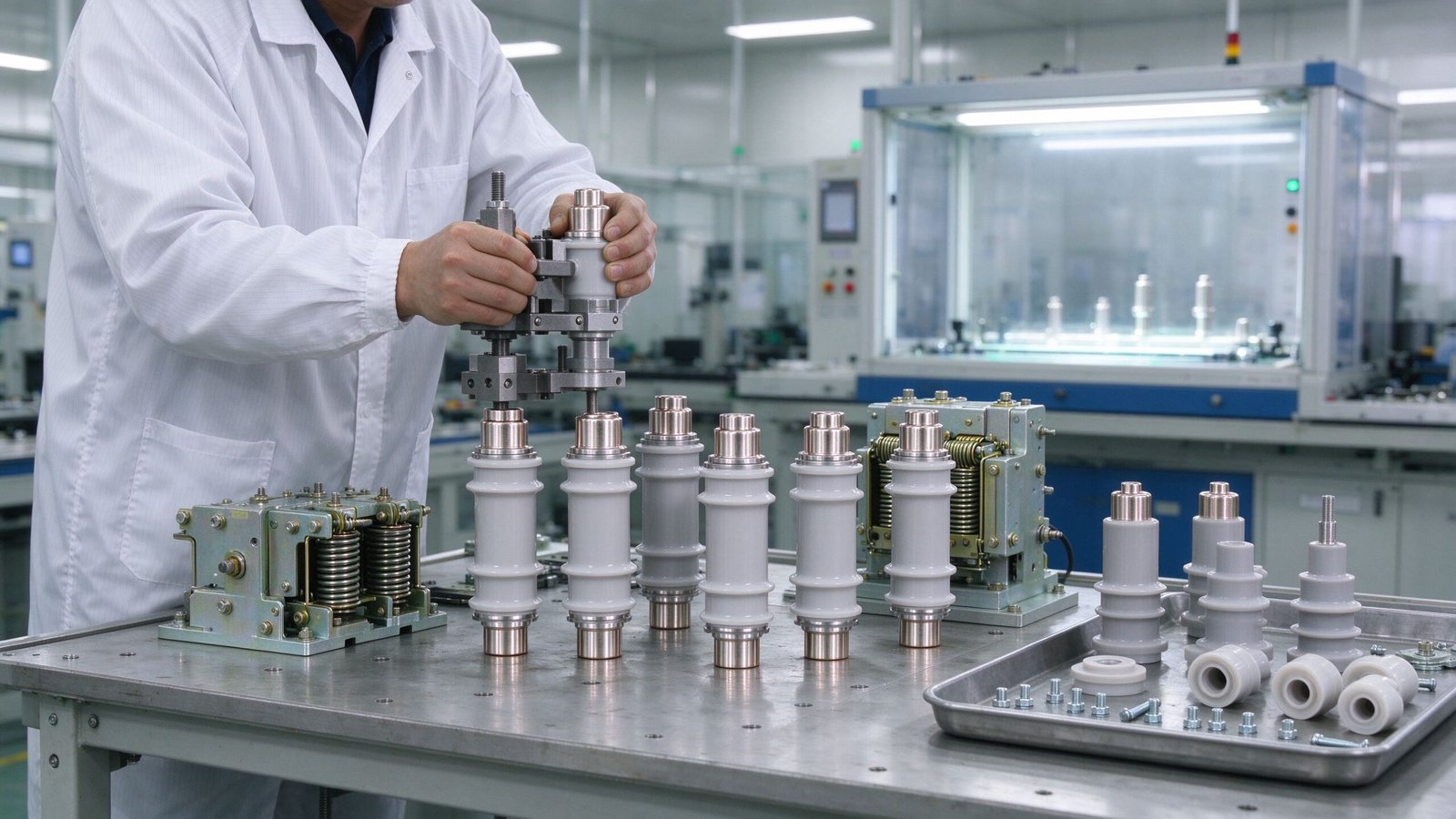
It is a circuit breaker that interrupts current inside a vacuum chamber. The vacuum gives fast arc extinction and long contact life.
Why choose vacuum over SF6?
Vacuum breakers need no gas handling, have lower maintenance and are more environmentally friendly. SF6 is still used where compact GIS designs matter.
How long does a vacuum circuit breaker last?
Mechanical life is typically 10,000 to 30,000 operations. Electrical life depends on the current interrupted.
Can a vacuum circuit breaker switch capacitors?
Yes, with the right duty cycle test. Confirm capacitor bank ratings with the supplier.
How do I test a vacuum circuit breaker before installation?
Run contact resistance, insulation resistance and mechanical operation tests. Confirm closing and opening times with a breaker analyzer. Keep the factory routine test report for reference.
What is the typical lead time?
Standard panels ship in 40 to 60 days after drawings are confirmed. Special designs take longer.
Does Electric-GS offer OEM vacuum circuit breaker panels?
Yes. Electric-GS supplies OEM and ODM medium voltage switchgear with your branding. Contact info@electric-gs.com or WhatsApp +86 135 8897 8050.
About Electric-GS
Electric-GS is a factory in Yueqing, China, specializing in ring main units, vacuum circuit breakers and medium voltage switchgear. We offer OEM and ODM manufacturing with full factory testing. Email info@electric-gs.com or WhatsApp +86 135 8897 8050 for a quotation.
Related: electricgs.com and electric-cn.com cover our products and news.
2 thoughts