Medium-voltage distribution networks often mix the terms ring main unit and switchgear. People use them as if they mean the same thing. They do not. Understanding the difference helps you specify the right equipment. It also helps you avoid overspending and keep your network safe.
1. What Is a Ring Main Unit?
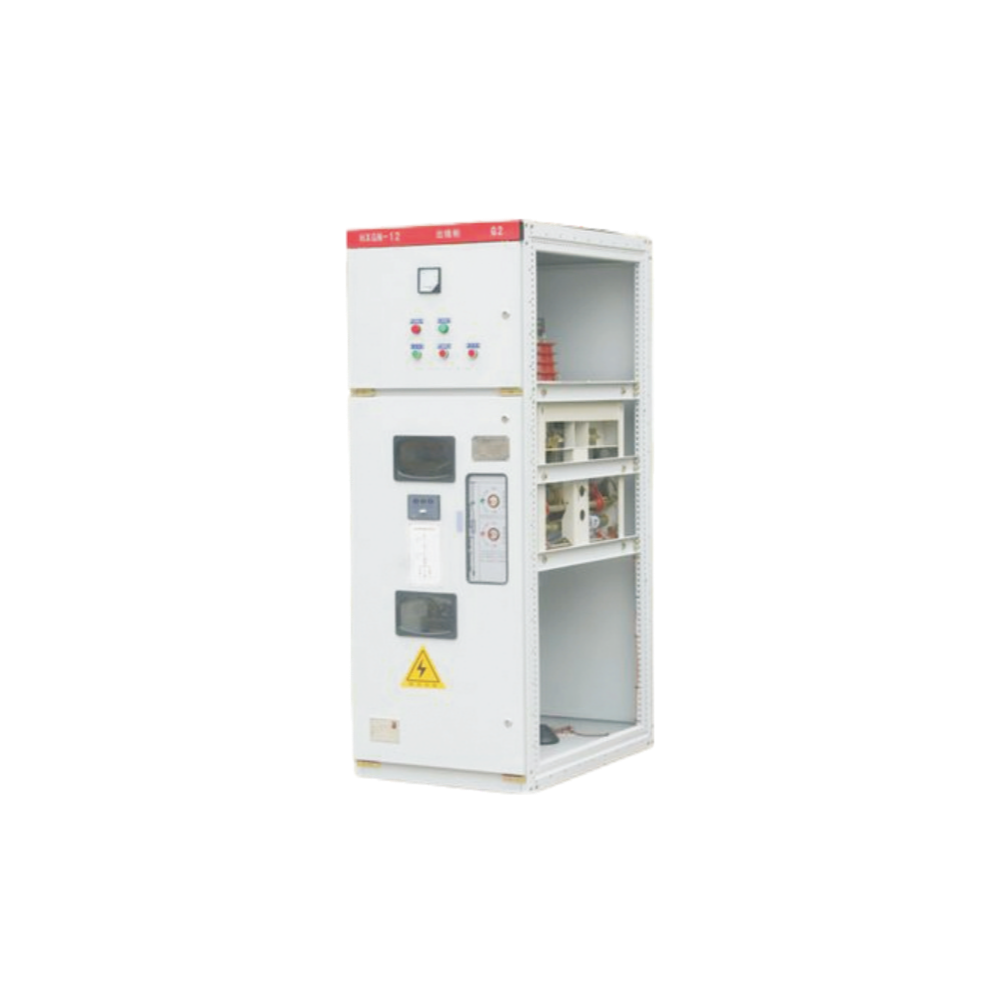
A ring main unit is a factory-assembled, metal-enclosed switchgear unit. It is designed for ring or loop distribution networks. It typically combines load break switches, earthing switches and optional vacuum circuit breakers. All of these sit in one compact enclosure. Its job is to switch and protect medium-voltage feeders. This allows power to be rerouted when one section of the ring fails. A common example is the HXGN15-12 Ring Main Unit Medium Voltage Switchgear.
2. What Is Switchgear?
Switchgear is the broader category of devices. These devices switch, control and protect electrical circuits. They include everything from low-voltage distribution boards to medium-voltage switchgear. For example, the KYN28A-12 switchgear cabinet and low-voltage switchgear belong to this category. Switchgear can be fixed or withdrawable. It can also be air-insulated or gas-insulated. It serves the whole network, not only ring configurations.
3. Key Differences
| Feature | Ring Main Unit | Conventional Switchgear |
|---|---|---|
| Primary role | Ring/loop network switching and protection | General switching, protection and control |
| Typical configuration | Compact, 2-5 ways, LBS-based | Larger panels, many ways, VCB-based |
| Enclosure | Factory-assembled, metal-enclosed | Metal-clad or metal-enclosed, often sectionalized |
| Cost per way | Lower | Higher, with more features |
| Best fit | Secondary substations, feeder rings | Primary substations, large loads, generator connections |
4. When to Use Each
- Use an RMU for secondary distribution, ring feeders, transformer protection and distributed generation connections where space and cost matter
- Use conventional switchgear for primary substations, large industrial loads, applications needing frequent switching and full metering/protection suites
- In many networks the two work together: MV switchgear feeds the ring, and RMUs provide the switching points along it
In practice, many utilities specify RMUs for new secondary substations. They reserve metal-clad switchgear for primary substations and large industrial supplies. This split keeps project costs down while protecting critical loads. For small commercial buildings, a two-way RMU is often enough. It protects the transformer and provides one spare way for future expansion.
5. Which Should You Choose?
Start from the network role, not the product name. If the unit protects a transformer, an RMU is usually the economical choice. The same applies when it forms a switching point in a feeder ring. If you need high fault-breaking capacity, choose conventional switchgear. Extensive protection relays also call for switchgear. Withdrawable components for rapid maintenance are another reason.
A Typical Network Example
Picture a suburban distribution ring fed from a primary substation. At the substation, metal-clad switchgear protects the outgoing feeders. It provides metering and protection relays. Along the ring, secondary substations protect their transformers with RMUs. These RMUs use fuse-switch combinations. When a cable fault occurs, the RMUs at both ends isolate the faulty section. The rest of the ring keeps supplying customers. This is the classic division of labor. Switchgear protects the source. RMUs protect the distribution points. For a small industrial estate, you can build the ring entirely with RMUs. A ring-in ring-out unit sits at each transformer. A tie unit splits the ring when load grows.
6. Conclusion
RMU and switchgear are related but not interchangeable. Start with your network topology and protection needs. Then select a manufacturer that can supply both. For outdoor RMU applications, take a look at the Outdoor ring main unit.
Electric-GS produces both ring main units and medium-voltage switchgear. OEM and ODM support is available for international projects. For a quotation or technical consultation, contact info@electricgs.com or WhatsApp +86 135 8897 8050.
Related Products
HXGN15-12 Ring Main Unit Medium Voltage Switchgear
GSM6-12~24 Air-insulated RMU (Fixed Type)
