GIS vs AIS is the first decision in most medium voltage projects, and it is usually made for the wrong reason. Buyers compare the price of a panel, see that air-insulated switchgear is cheaper, and stop there.
The comparison that matters runs over fifteen years: floor space, civil work, maintenance access and outage risk. These seven checks settle it before a single line diagram is frozen.
What GIS and AIS Actually Are
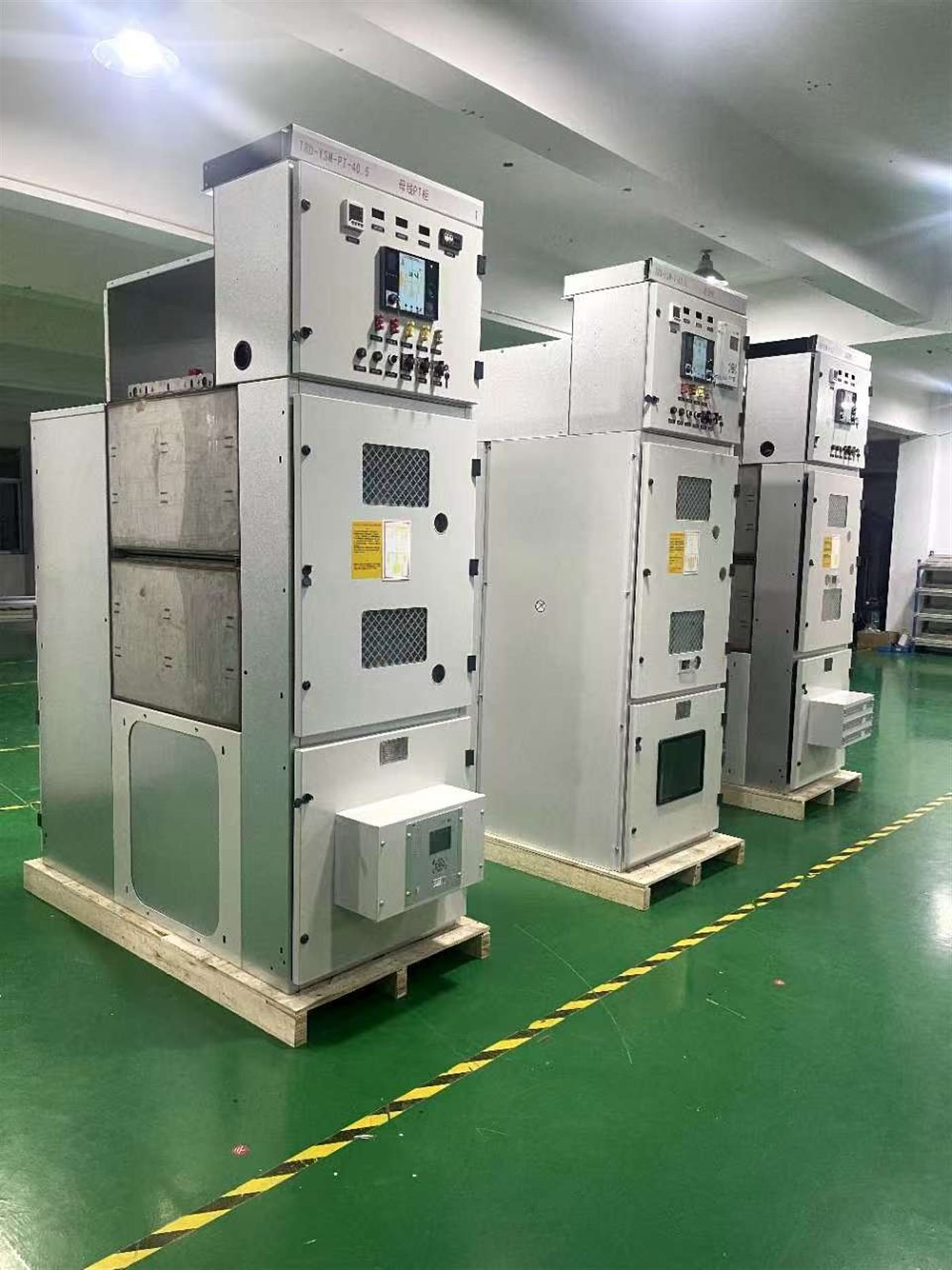
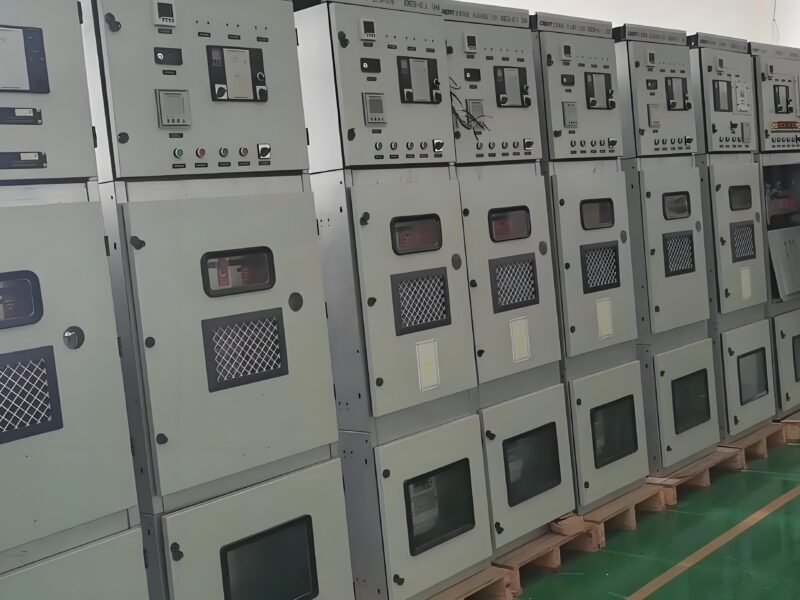
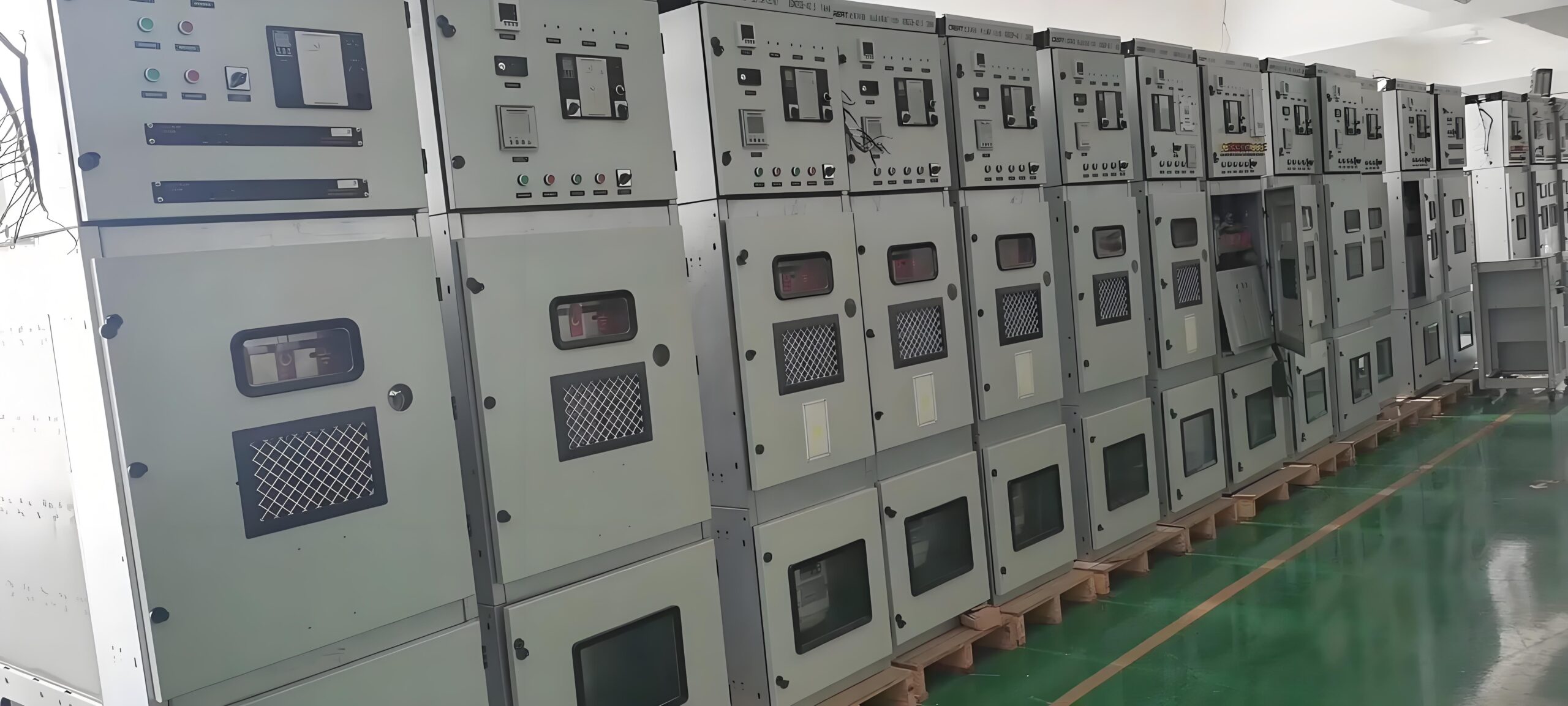
AIS is air-insulated switchgear: live parts sit in air at atmospheric pressure, separated by distance and solid insulation. The busbar, breaker and cable box stay visible and reachable.
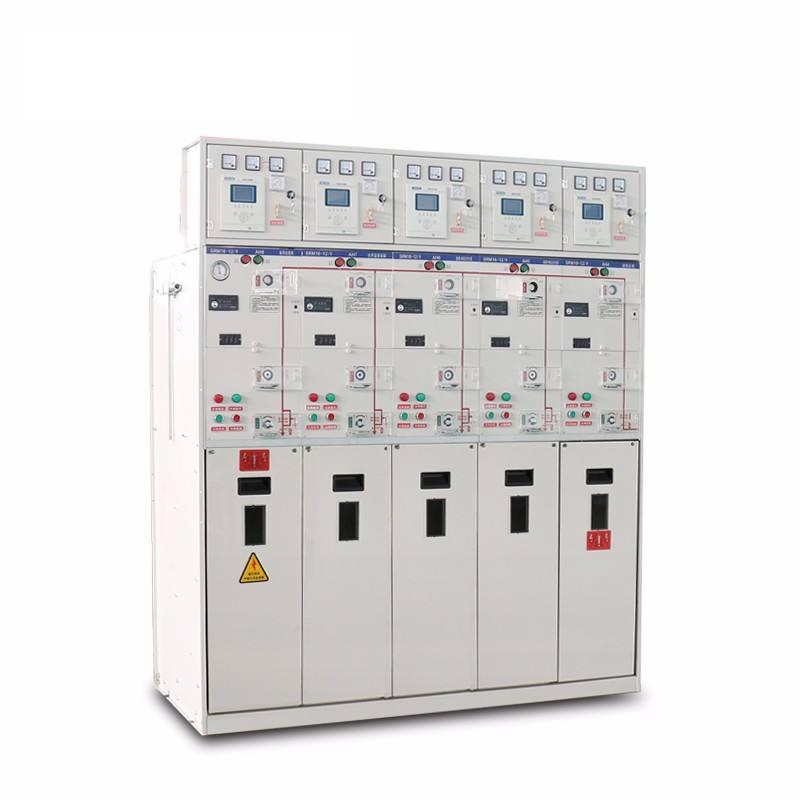
GIS is gas-insulated switchgear: the live parts, breaker and busbar sit in a sealed tank filled with SF6 or a gas mixture. Gas dielectric strength is three to four times that of air, so the same rating fits in a fraction of the volume.
Between the two sits C-GIS, cubicle gas-insulated switchgear, which keeps the busbar and switching elements in gas while the cable compartment stays accessible from the front. Most 11 kV to 33 kV ring main units and distribution substations use this compromise.
7 Checks Before You Choose
- Floor space and building cost. An AIS 12 kV cubicle needs roughly 600 to 900 mm of width plus a cable trench and front clearance. A C-GIS cubicle of the same rating needs 325 to 375 mm, and a sealed GIS tank can be shallower still. Ten cubicles of difference is a whole room, and a room is concrete, steel, ventilation and fire rating.
- Site conditions. Humidity, salt spray, dust, altitude and condensation decide the argument more often than price. Above 1000 m, air insulation has to be derated for the reduced dielectric strength, while a sealed gas tank is far less sensitive. Coastal and chemical plants do better with sealed tanks because no live part is exposed to the atmosphere. The same logic runs through our corrosion protection notes.
- Maintenance model. AIS is inspectable: you can see a hot busbar joint before it fails. GIS is monitored instead: pressure gauges, density relays and partial discharge tests replace the visual check. Without an SF6 cart and a PD tester, a GIS fleet becomes a dependency, and the steps are covered in our SF6 gas handling guide.
- Leak and pressure risk. A sealed tank is only as good as its seals. A sound tank loses under 0.1 percent of its fill per year, a refill interval measured in decades. A badly assembled one loses pressure in a single season and takes the circuit out with it.
- Arc behaviour and personnel safety. In AIS, an arc vents into the room unless the panel is arc-resistant with ducts. In GIS the energy is mostly contained by the tank, but the exhaust still has to be routed away from the operator. Neither is automatically safe: both need IAC classification and a venting plan.
- Extendability. Distribution networks grow. A GIS or C-GIS family that allows a module to be bolted on later, without a shutdown of the whole board, is worth more than a cheaper fixed set that needs a rebuild. Check the module widths and the busbar extension kit before you buy, not after the third feeder appears.
- Total cost, not panel cost. Add civil work, termination space, earthing, ventilation, gas tools, spares and shutdown cost. In dense urban projects the GIS premium is usually recovered by the building; in a rural open yard AIS often stays cheaper.
GIS vs AIS at a Glance
| Item | GIS / C-GIS | AIS |
|---|---|---|
| Insulation medium | SF6 or gas mixture, sealed tank | Air at atmospheric pressure |
| Cubicle width, 12 kV class | 325 to 375 mm per module | 600 to 900 mm per cubicle |
| Visibility of live parts | None, monitored by gauges | Direct visual inspection |
| Typical IP protection | IP65 and above on the tank | IP4X to IP54 on the enclosure |
| Site sensitivity | Low, sealed against humidity and dust | Needs dry, clean, ventilated rooms |
| Maintenance skill | Gas handling and PD testing | Mechanical inspection and torque checks |
| Best fit | Urban, coastal, compact, high-altitude sites | Open yards, low-cost grids, easy access sites |
| Cost profile | Higher panel cost, lower civil cost | Lower panel cost, higher civil cost |
The table is a starting point, not a verdict: a 33 kV GIS in a container yard and a 33 kV AIS board in an open substation can both be right for the same load.
Where Buyers Get the Comparison Wrong
- Comparing one cubicle to one cubicle. The correct unit is the whole substation room, including trench, cable box, ventilation and fire protection.
- Ignoring the cable box. A compact GIS still needs termination space for the cable and its bending radius. A tight tank with no room for the termination is a site problem, not a saving.
- Assuming gas means maintenance-free. Sealed for life is a design claim, not a maintenance plan. Density relay checks and PD surveys still belong in the annual routine.
- Forgetting the standards envelope. Ratings must be quoted against IEC 62271-200 for the assembly and IEC 62271-100 for the breaker, with the type test report to match. A datasheet without the report proves nothing.
For compact distribution boards the practical answer is often a ring main unit built on C-GIS modules; the selection logic for those is set out in our ring main unit selection guide, and the wider family is described in the SF6 gas-insulated switchgear guide. When the busbar has to run between two tanks, the options are covered in the gas insulated busbar guide.
FAQ
Is GIS always more expensive than AIS?
At panel level, yes, usually by a clear margin. At project level it depends on the building: in a compact urban substation the saving on civil work often covers the difference within a few years.
Can GIS be repaired on site?
Most gas compartments can be opened and re-sealed on site with the right cart and a clean area. Arc damage or a failed busbar goes back to the factory.
Does GIS need a separate gas room?
Not usually for sealed-for-life C-GIS. Ventilation and gas detection follow from the gas volume, so check the local code instead of assuming.
Which is better at high altitude?
GIS, in most cases. Air insulation is derated above 1000 m, while a sealed tank keeps its dielectric strength and only the bushings need a correction.
Is C-GIS the same as GIS?
No. C-GIS keeps the busbar and switching elements in gas but leaves the cable compartment accessible, the usual choice for 11 kV to 33 kV cubicles.
What rating data should I ask for first?
The type test report for the assembly, the rated voltage and current, the short-time withstand current with its duration, and the internal arc classification. Without those four, prices are not comparable.
About Electric-GS
Electric-GS is an OEM/ODM switchgear factory in Yueqing, Zhejiang, China. We build MV and LV switchgear, gas-insulated ring main units, C-GIS cubicles, PT cabinets and packaged substations from 11 kV to 33 kV, quoted together with the room it has to fit. Send your single line diagram, site conditions and required standards to info@electric-gs.com or WhatsApp +86 135 8897 8050. English site: electricgs.com. Chinese notes: electric-cn.com.