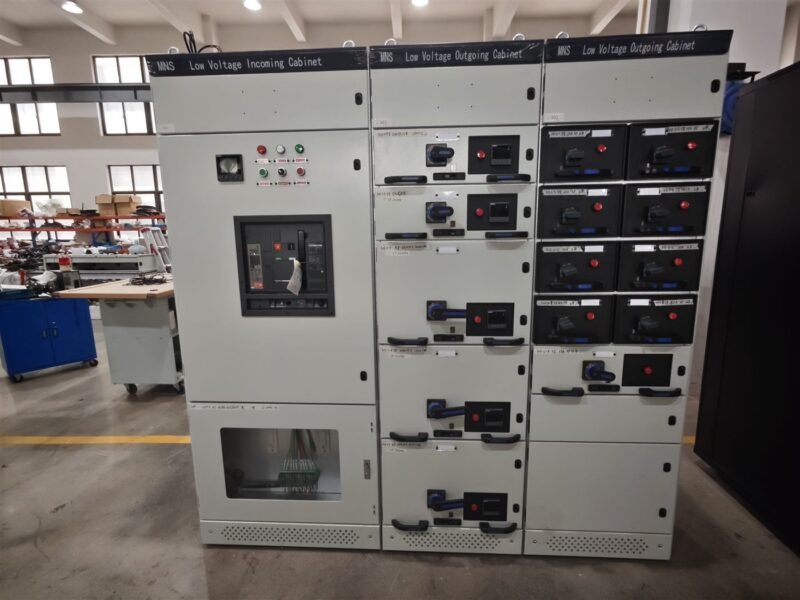
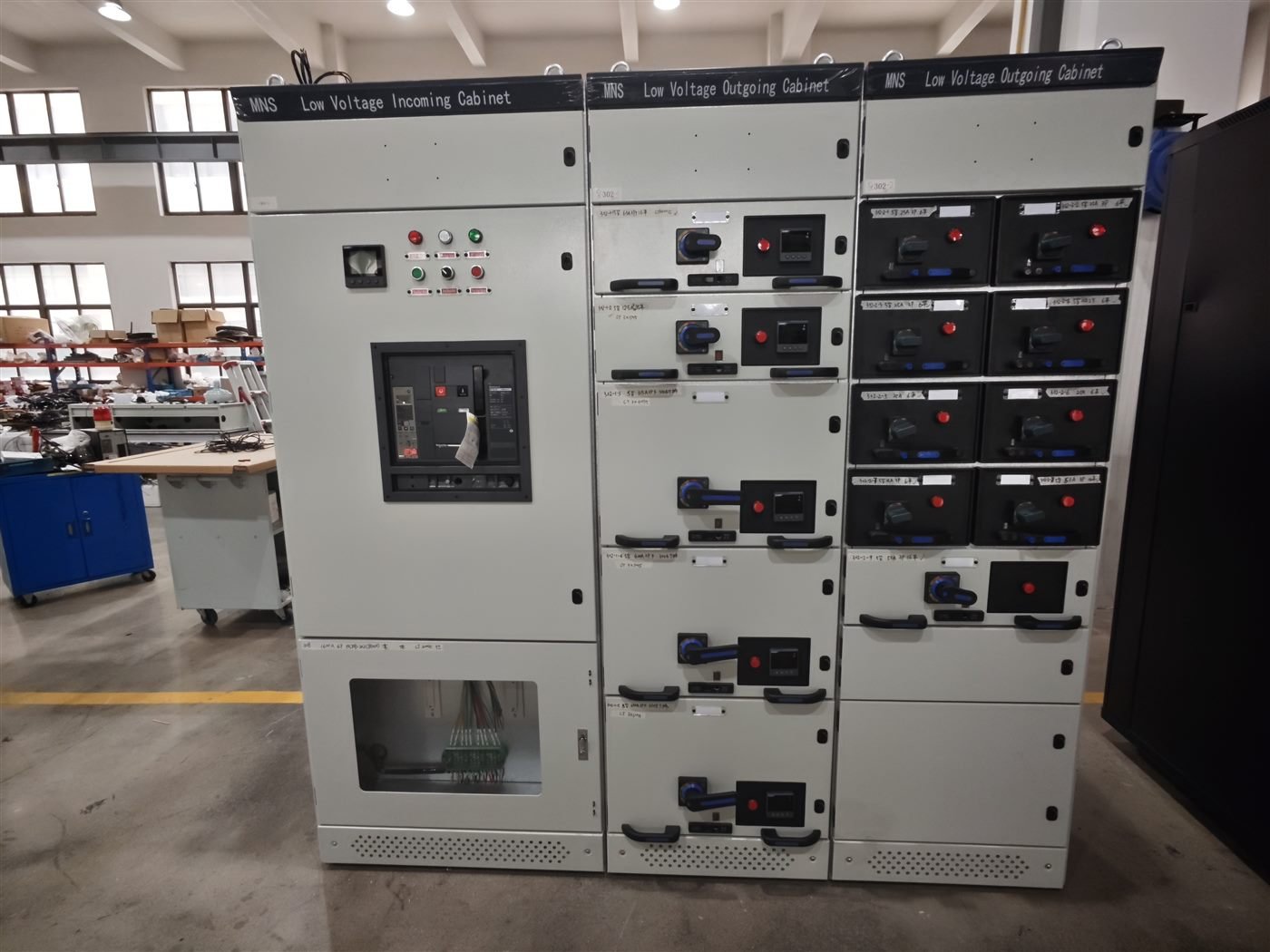
Two low voltage panels can carry the same breaker, the same busbar and the same rating, and still be different products. The difference is how much metal sits between the live parts, and that is what the form of separation describes.
It is a design decision with a price. Every barrier adds sheet steel, assembly time and weight, and it changes how maintenance is done for the next twenty years. Here is what the four forms actually mean and what to check before a drawing is approved.
What Form of Separation Actually Measures
The form of separation describes the internal barriers of an assembly. It says whether the busbar is separated from the functional units, whether the functional units are separated from each other, and whether the terminals are separated from the busbar and from the units.
It does not describe the enclosure. Dust, water and access protection are a separate classification, covered in our IP rating checks for switchgear. A panel can be IP54 and still be Form 1 inside, and that combination is more common than buyers expect.
| Form | Busbar separated from units | Units separated from each other | Terminals separated |
|---|---|---|---|
| Form 1 | No | No | No |
| Form 2 | Yes, by barrier or distance | No | No |
| Form 3 | Yes | Yes | No |
| Form 4 | Yes | Yes | Yes, incoming and outgoing separated |
Forms 2, 3 and 4 are also split into a and b variants. The letter describes whether the separation is a barrier or a simple distance, and that detail matters when the panel is inspected. A Form 4b claim with no metal between the terminals is not Form 4b.
The Four Forms, One Line Each
- Form 1. No internal barriers beyond what the devices need. Cheapest, smallest, and only suitable where the whole panel can be shut down for any work inside.
- Form 2. The busbar is protected, the rest is open. Good compromise for panels where busbar faults are the main risk and devices are rarely disturbed.
- Form 3. Busbar and each functional unit are separated. A single feeder can be worked on while the rest of the board stays live.
- Form 4. Everything is separated, including the terminals of each unit. The highest level of continuity of service, and the most expensive to build.
Each step up the ladder adds steel, joints, cable entry work and often depth. It also adds assembly hours that show up in the price but never on the drawing.
6 Checks Before You Approve the Panel Layout
- Match the form to the maintenance plan, not to the tender text. If the operator will never work on a live board, Form 2 is enough. Paying for Form 4b and then isolating the whole panel for every task wastes the money.
- Confirm the a or b variant in writing. The barrier type changes the internal layout, the depth of the cubicle and the cable entry space. It must be fixed before fabrication.
- Check the terminal space behind the barrier. Form 4 separates the terminals, which costs room. Cables with large lugs often need a deeper enclosure than the sketch allows.
- Verify the interlock logic against the form. Separation lets a unit be isolated while the busbar is live, so the interlock has to match. The logic is set out in our guide to switchgear interlocking.
- Check the arc containment assumption. A barrier is not an arc-rated partition unless it is tested and specified as one. Readers often confuse the two, and the arc flash protection notes explain what the barriers do and do not stop.
- Confirm ventilation and condensation paths. Each barrier blocks airflow, and a fully separated board can run hotter than an open one. Heater and vent placement is handled in our notes on anti-condensation heaters, and the layout must leave room for them.
Where Form 4 Pays and Where It Does Not
Form 4 pays where downtime costs more than steel: data centres, hospitals, continuous process lines and any board feeding a load that cannot be switched off for a cable change. In those cases the extra barriers buy the ability to work on one feeder with the rest live, and the price is recovered in a single avoided outage.
It does not pay on a small distribution board in a workshop, where the whole panel is isolated for maintenance anyway. A Form 1 board with a clear isolation procedure and a proper label is often the better engineering choice there. The mistake is specifying the form by habit instead of by the way the board will actually be used.
One more point on documentation. Whatever form is ordered, the nameplate and the drawings must state it, together with the IP rating and the rated current. A panel delivered as Form 3 with drawings marked Form 1 is a dispute waiting to happen at site acceptance.
FAQ
Is a higher form of separation always safer?
Not for people. It improves continuity of service and limits the spread of a fault inside the panel. Personnel safety still depends on procedures, locks and the arc rating of the assembly.
What is the difference between Form 4a and 4b?
Form 4a uses metal barriers between the terminals of adjacent units. Form 4b uses an individual enclosure around each terminal set. Both separate, but 4b needs more space.
Can I mix forms in one switchboard?
In practice yes, and many boards are built that way: the incoming and main sections as Form 4, the outgoing distribution as Form 2. The drawings must state the form section by section.
Does the form of separation affect the IP rating?
No. They are independent classifications. One concerns internal barriers, the other concerns ingress protection of the enclosure.
How is the form verified at handover?
By inspection against the drawings, and by confirming which barriers are metal, which are distance only, and whether the terminals are enclosed. Ask for the section-by-section statement before acceptance.
About Electric-GS
Electric-GS is an OEM/ODM switchgear factory in Yueqing, Zhejiang, China. We build LV and MV switchgear, PT cabinets, ring main units and packaged substations, and we confirm the form of separation, IP rating and interlock logic before fabrication starts. Send your single line diagram to info@electric-gs.com or WhatsApp +86 135 8897 8050. English site: electricgs.com. Chinese notes: electric-cn.com.
2 thoughts