An SF6 density relay is the only device on the switchgear that tells you the breaker is still safe to operate. It reads pressure at the tank, corrects it for temperature, and closes an alarm contact long before the gas has leaked down to the level where the insulation fails. When that relay is wrong, nothing else in the panel knows.
That is why density relay calibration belongs in the commissioning schedule as a test, not as a formality. A relay that closes 0.05 MPa late is not a small calibration error; it is the difference between a planned refill and a flashover with the arc going out of the tank.
Why the Density Relay Matters More Than the Gauge
A pressure gauge shows the pressure at the moment you look at it. A density relay converts that pressure to an equivalent density at 20 °C, so the same gas mass gives the same reading in January and in August. Without temperature compensation a relay on a cold morning will alarm on healthy gas, and on a hot afternoon it will stay silent while the gas is already leaving.
Three things follow from this. The relay has to be calibrated against a reference pressure, not against the panel’s own gauge. The alarm and lockout setpoints have to be verified by the contact, not by watching the pointer. And the whole test has to be recorded, because the next engineer needs to know what value the relay was set to, and on which date.
5 Field Checks Before You Trust the Reading
- Verify the nameplate setpoints against the switchgear data sheet. Alarm, alarm 2 and lockout are specific to the compartment volume and the rated pressure. A relay carried over from another project carries the wrong setpoints with it.
- Check the temperature compensation curve, not just one point. Test at two or three gas temperatures or simulate them, and confirm the compensated reading tracks the reference. A relay that is correct at 20 °C and drifts at 5 °C will fail in winter.
- Test the contacts, not the dial. Connect a multimeter or a lamp across the alarm contact and raise the pressure until it operates. Record the actual operating pressure and the reset pressure, then compare both with the setpoint.
- Leak-test the relay connection itself. The capillary, the adapter and the O-ring are part of the gas boundary. A relay that is calibrated perfectly but leaking at the thread will alarm within months and be blamed on the tank.
- Calibrate with dry gas and a certified reference. Use the correct test gas, a calibrated reference gauge, and a pressure source that can be held steady. Never use the panel’s own gauge as the reference; that is the instrument under test.
The gas side of this work overlaps with the routines in our SF6 gas handling and leak detection guide, which covers filling, recovery and the leak survey that should follow any relay replacement.
Alarm Stages and Setpoints Compared
Most medium voltage compartments use three stages. The exact values depend on the rated filling pressure, so treat the table as a shape, not a specification.
| Stage | Typical setpoint | What it means | Required action |
|---|---|---|---|
| Alarm 1 (refill) | -10% of rated density | Slow leak, insulation still adequate | Plan a refill and a leak survey within weeks |
| Alarm 2 (pre-lockout) | -20% of rated density | Insulation margin falling | Restrict operation, schedule the repair |
| Lockout | -30% of rated density | Operation no longer safe | Block the breaker, do not operate |
| Contact type | SPDT, 250 V / 5 A | Alarm and lockout signalling | Verify both sides, wire to SCADA |
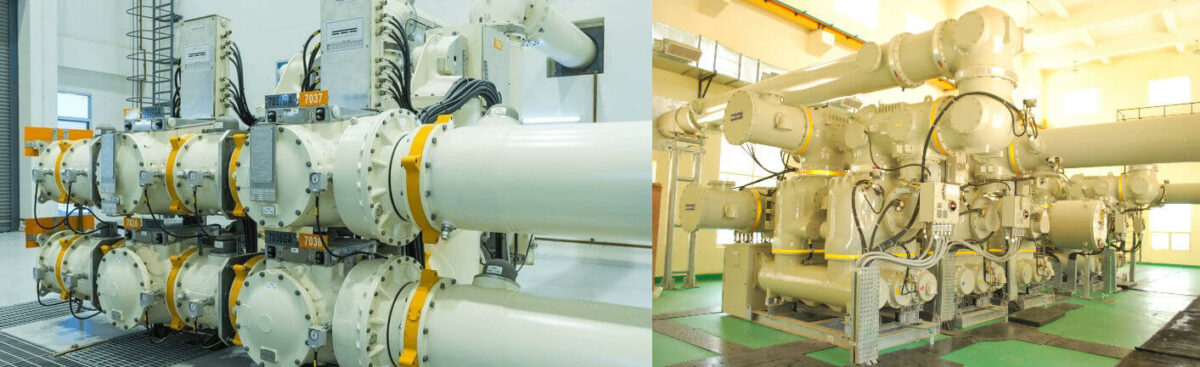
On GIS the density relay sits on each gas zone, so a single wrong setpoint only affects that compartment. In the broader product range described in our SF6 gas insulated switchgear guide, zone count and relay placement are fixed at design stage, which is why the setpoint list has to be issued with the panel.
Tools and Gas Handling on Site
- A calibrated reference gauge with an accuracy better than the relay under test.
- A hand pump or a regulated gas cylinder with a fine needle valve for slow pressure changes.
- A multimeter or contact lamp with a clear indication, so the operating point is visible without watching a dial.
- A leak detector sensitive to at least 10 ppm, used on every joint you touched.
- A calibration record sheet carrying the serial number, the setpoints, the measured values and the date.
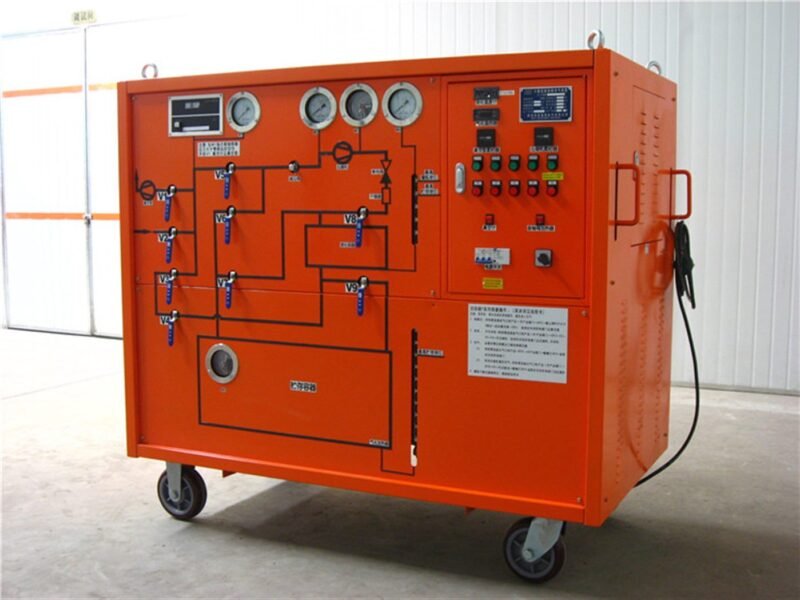
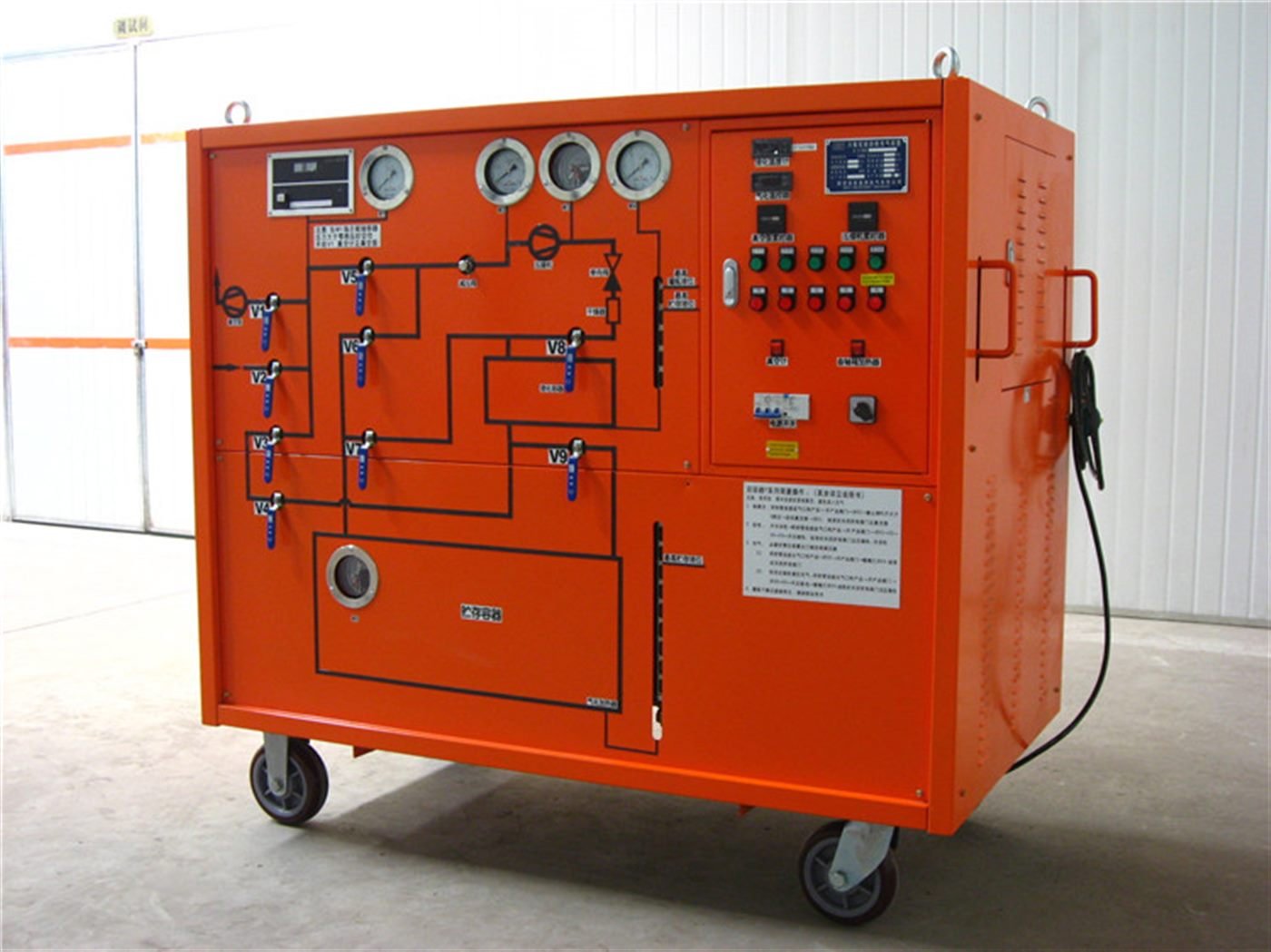
- Personal SF6 handling precautions: no venting to atmosphere, recovery equipment on hand, ventilation in the cable basement.
Once commissioning is closed, the relay joins the routine inspection list; the checks that belong in service are set out in the partial discharge testing guide and the vacuum circuit breaker maintenance guide. A density alarm that repeats after a refill is usually a leak at a joint, not a relay failure.
FAQ
How often should an SF6 density relay be calibrated?
At commissioning, then every three to five years, and immediately after any gas work or relay replacement. If the relay has been exposed to vibration or a transport shock, calibrate before energising.
Can I adjust the setpoint screws myself?
Only with a reference gauge in line and a record of the change. Field adjustment without a reference is how a panel ends up with an alarm that never operates.
Does a slow pressure drop always mean a leak?
No. A cold snap lowers the indicated pressure, but the compensated density stays the same. Compare the density reading, not the bare pressure, before you start looking for leaks.
Why does the lockout contact block closing but not opening?
Opening is always allowed, because a breaker that cannot open is a bigger hazard than low gas. Closing into a compartment below lockout density is what the interlock prevents.
What accuracy should the reference gauge have?
At least four times better than the relay being tested, and in calibration date. A reference gauge with an expired certificate makes the whole calibration meaningless on paper.
About Electric-GS
Electric-GS is an OEM/ODM switchgear factory in Yueqing, Zhejiang, China. We build ring main units, GIS, MV and LV switchgear, cable boxes and packaged substations, and we supply SF6 compartments with density relays set, wired and tested before dispatch. Send your gas diagram and rated pressures to info@electric-gs.com or WhatsApp +86 135 8897 8050. English product pages are on electricgs.com, and Chinese technical notes on electric-cn.com.