Author: info@electric-gs.com

  • 33kV Medium Voltage Switchgear Buying Guide: Panels, Applications and Costs

    33kV Medium Voltage Switchgear Buying Guide: Panels, Applications and Costs

    High voltage networks often step down through 33kV before feeding local distribution. For utility projects, industrial plants and large renewable farms, the 33kV class is a reliable middle ground. This guide explains what 33kV medium voltage switchgear is, how it differs from 12kV and 24kV panels, what it costs, and how to buy it in 2026.
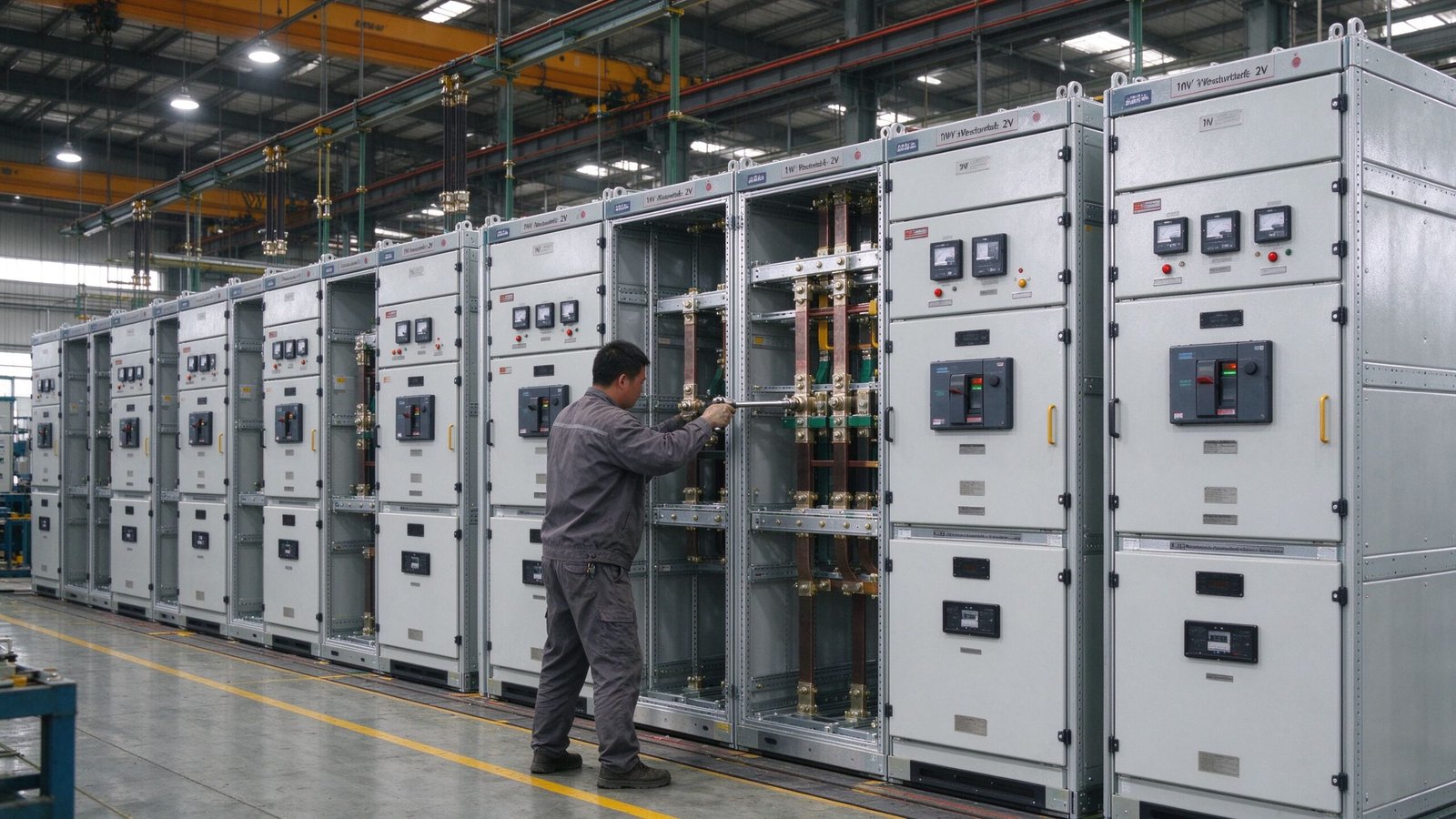
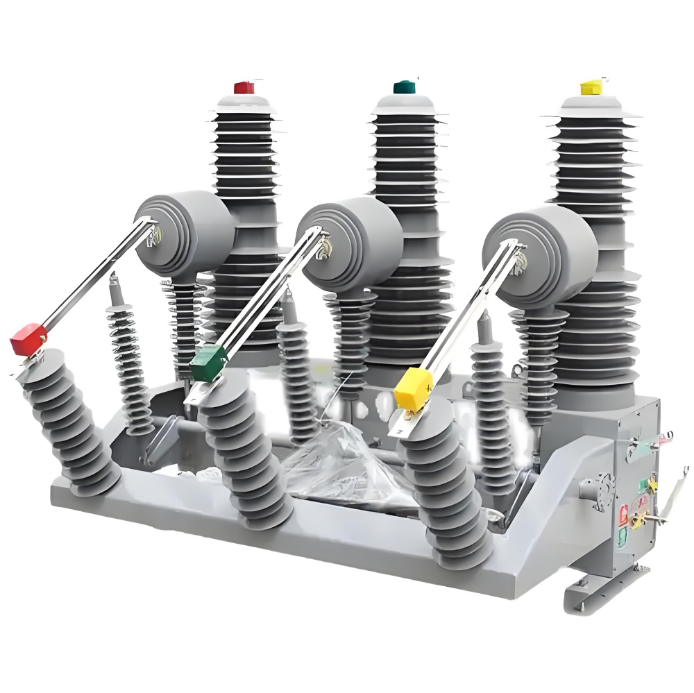
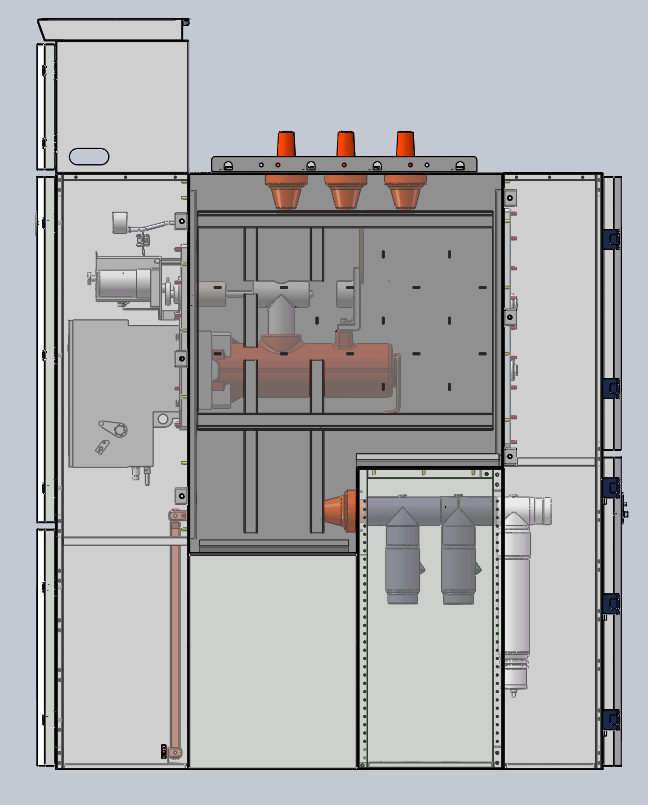
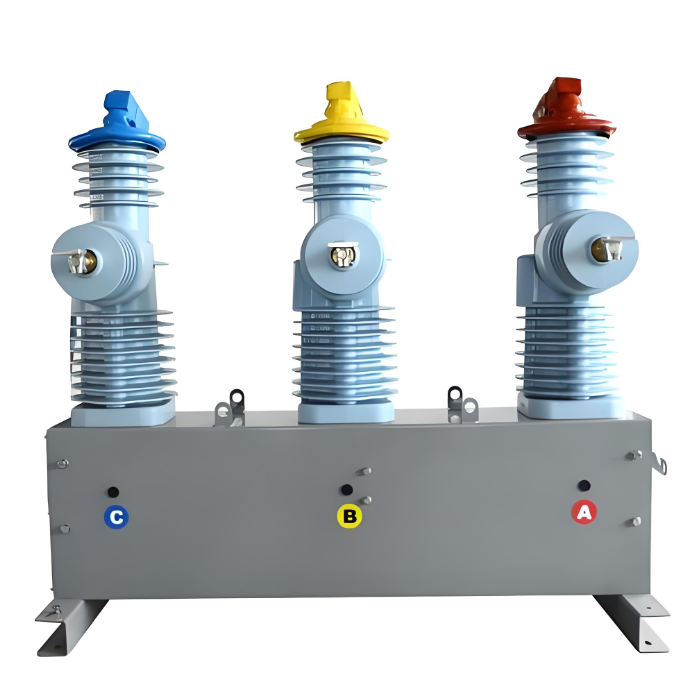
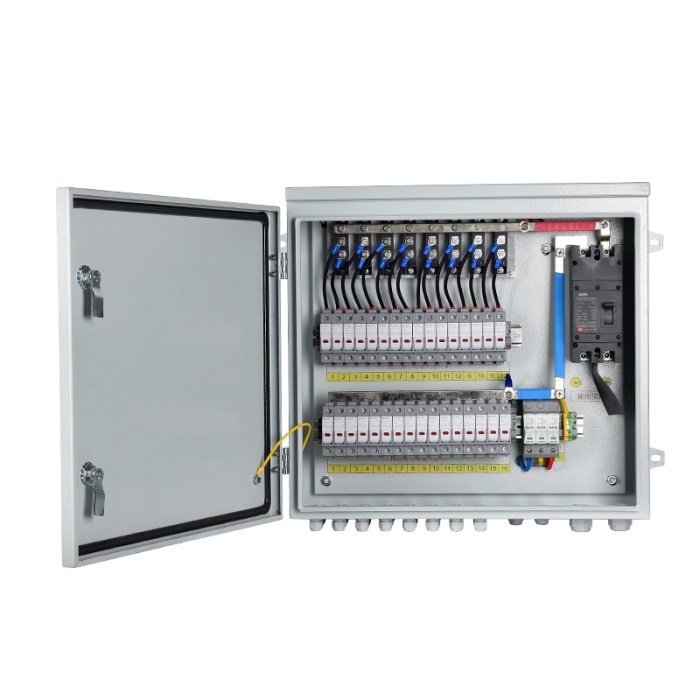
    33kV medium voltage switchgear panel assembly in factory
    33kV medium voltage switchgear panel assembly in factory

    What Is 33kV Medium Voltage Switchgear?

    A 33kV medium voltage switchgear panel controls, protects and isolates circuits operating at 33kV. It is the top end of the medium voltage range and is used where distribution capacity is high. Typical locations include utility substations, wind farms, solar plants, mines and large factories.

    • Rated voltage: 33kV, suitable for 33kV and 36kV systems
    • Rated current: 1250A, 2000A or 3150A
    • Short-circuit rating: up to 40kA for 3 seconds
    • Arc withstand: tested to IEC 62271-200
    • Insulation: air, SF6 or solid insulation options

    Most panels use vacuum circuit breakers. They are compact, safe and maintenance friendly. For a full background, see our 24kV medium voltage switchgear guide and the 12kV panel article.

    Key Specifications to Compare

    These parameters decide whether a 33kV panel fits your network. Check them against your system voltage, fault level and space.

    Parameter 12kV 33kV
    Rated voltage 12kV 33kV
    Rated current 630A – 3150A 1250A – 3150A
    Breaking capacity Up to 25kA Up to 40kA
    Clearance Small Larger
    Panel footprint Compact Wider

    Ask for type test reports before ordering. A reliable 12kV MV switchgear panel guide shows the same process for a lower class.

    Main Applications of 33kV Switchgear

    • Utility distribution substations and zone substations
    • Wind farm collector and substation feeders
    • Large solar PV plants with MV collection networks
    • Mining sites and industrial plants with high loads
    • Water treatment and pumping stations
    • Data centers with dedicated MV distribution
    • Cement plants, steel mills and chemical facilities with large MV drives

    Each application has different protection and metering needs. Discuss the single line diagram with your supplier before you finalize the panel list.
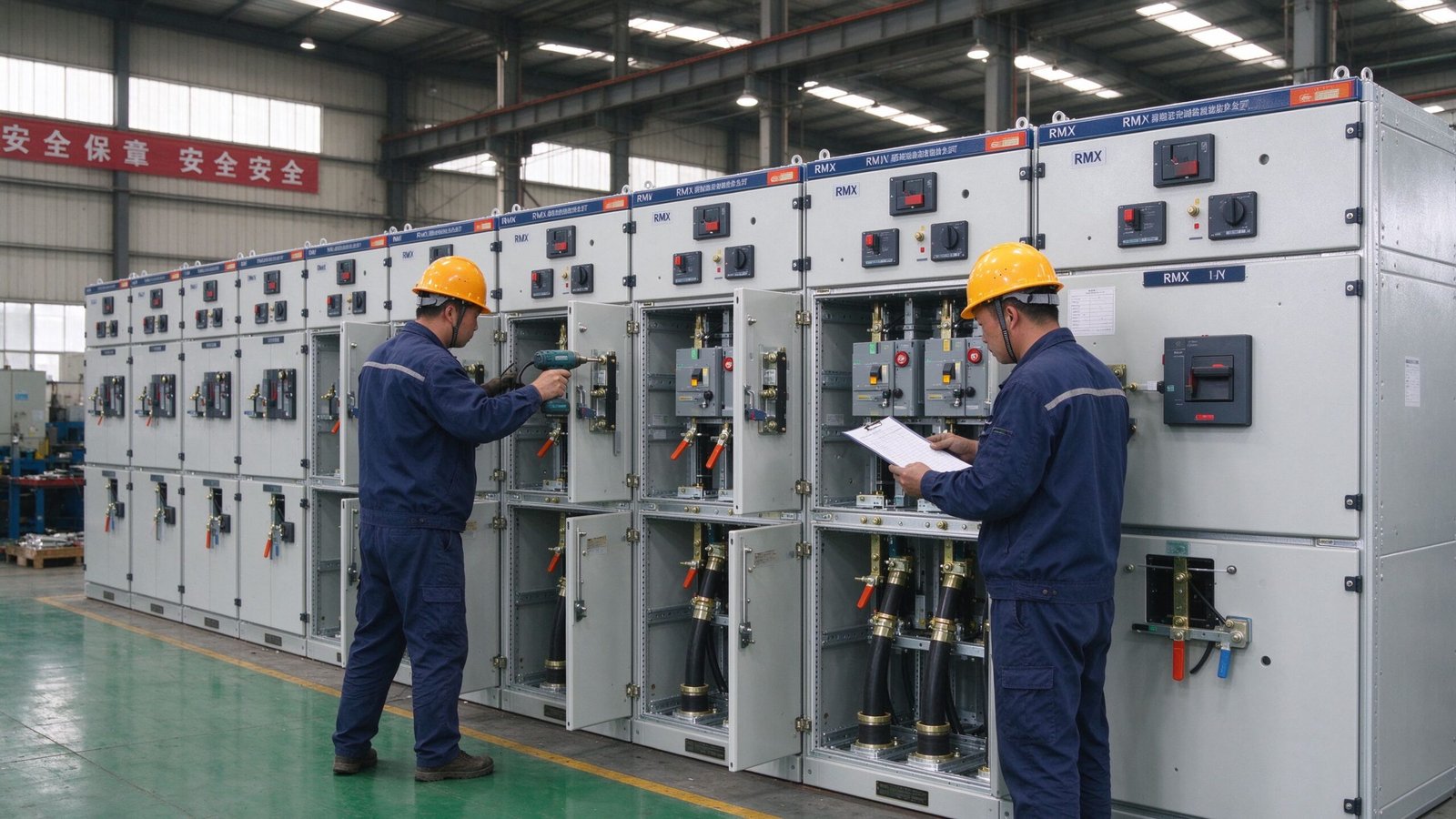
    33kV medium voltage switchgear production workshop
    33kV medium voltage switchgear production workshop

    Types of 33kV Switchgear Panels

    Metal-Clad Air-Insulated Switchgear (AIS)

    Metal-clad AIS is the most common type. It uses air insulation with separate compartments for breaker, busbar and cable. It is cost effective and easy to maintain. It needs more space than gas designs.

    Gas-Insulated Switchgear (GIS)

    GIS uses SF6 or clean gas insulation in a sealed enclosure. It is up to 70 percent smaller than AIS and suits urban sites and offshore platforms. Cost per panel is higher. The 11kV medium voltage switchgear guide explains the AIS versus GIS trade-off in detail.

    Ring Main Units and Compact Solutions

    For feeder automation and compact substations, 33kV ring main units combine switches and fuses. They are simpler and cheaper than full breaker panels. Compare options in our ring main unit versus switchgear article.

    What Does 33kV Switchgear Cost?

    Price depends on design, ratings and quantity. Use this table as a planning benchmark. Final quotes vary by type tests and accessories.

    Configuration Relative Cost Typical Lead Time
    33kV AIS panel, 1250A Baseline 35 – 50 days
    33kV AIS panel, 2000A +10 – 15% 35 – 50 days
    33kV GIS panel +60 – 90% 45 – 60 days
    33kV RMU -30 – 40% 25 – 40 days

    Volume orders reduce unit price. OEM projects with your brand usually add 30 to 60 days for painting and nameplate work.
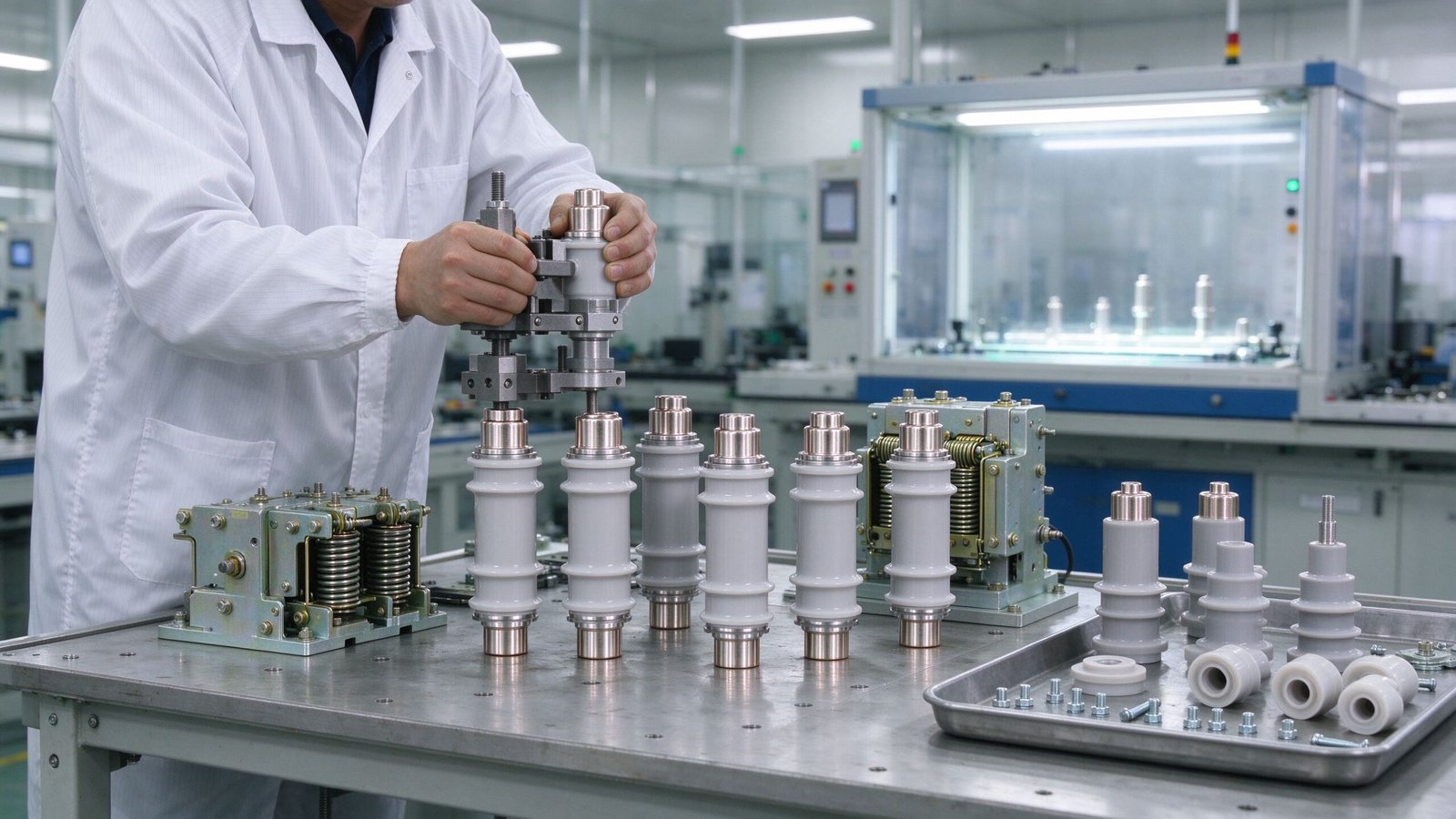
    33kV medium voltage switchgear testing in factory bay
    33kV medium voltage switchgear testing in factory bay

    How to Choose a 33kV Switchgear Supplier

    • Verify factory type test certificates from accredited labs
    • Check routine test coverage on every panel
    • Review after-sales support and spare part stock
    • Ask for references from similar 33kV projects
    • Confirm lead time, payment terms and shipping
    • Request a factory inspection or video tour
    • Confirm panel dimensions, earthing and cable entry positions

    A good supplier explains the trade-offs honestly. Avoid vendors that only push one design for every project.

    33kV Switchgear in Renewable Energy Projects

    Renewable plants rely on 33kV collector networks to bring power to the grid. Wind farms connect groups of turbines through 33kV feeders. Large solar plants use 33kV inverters and pad-mounted transformers. The switchgear must handle reverse power flows, low short-circuit levels and frequent switching.

    • Protection relays must coordinate with inverter fault behavior
    • Metering should support grid code compliance reports
    • Arc-resistant designs improve safety for outdoor and containerized layouts
    • Remote monitoring helps reduce site visits in remote areas

    Ask the supplier whether their relays have been tested with inverter-based sources. Grid codes change often, so choose protection that can be updated in the field. A 33kV medium voltage switchgear solution designed for renewables will include these details in the offer.

    Frequently Asked Questions

    Is 33kV medium or high voltage?

    33kV is the upper end of medium voltage in IEC terms. It is often called high voltage in daily use, but technically it remains MV.

    Can a 33kV panel operate at 24kV?

    Yes, a 33kV panel can run at lower voltage, but it costs more and takes more space. Choose the class that matches your system voltage.

    Are 33kV vacuum circuit breakers reliable?

    Yes. Vacuum breakers are the standard for 33kV today. They offer long life, low maintenance and no gas emissions.

    What is the difference between AIS and GIS at 33kV?

    AIS uses air and needs more space. GIS is sealed, compact and better for urban or offshore sites, but costs more.

    Can Electric-GS make OEM 33kV panels?

    Yes. Electric-GS offers OEM and ODM manufacturing for 33kV switchgear with your branding and drawings.

    How long is the lead time for 33kV panels?

    Standard lead time is 35 to 50 days after drawings are confirmed. GIS and special configurations take longer.

    About Electric-GS

    Electric-GS is a factory in Yueqing, China, specializing in medium voltage switchgear, ring main units and related power equipment. We offer OEM and ODM services with strict testing. Contact us at info@electric-gs.com or WhatsApp +86 135 8897 8050 for a quotation.

    Related reading: electricgs.com and electric-cn.com cover our product range and company news.
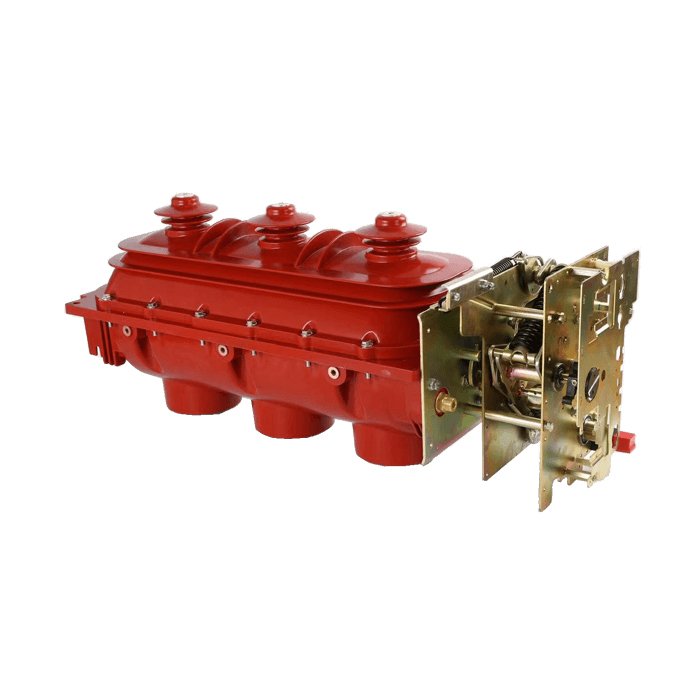
  • 24kV Medium Voltage Switchgear Guide: Specifications and Selection Tips

    24kV Medium Voltage Switchgear Guide: Specifications and Selection Tips

    Medium voltage networks around the world are moving to higher ratings. For industrial plants, utility substations and renewable projects, the 24kV class has become a mainstream choice. This guide explains what a 24kV medium voltage switchgear panel is, which specifications matter, and how to select the right unit for your project in 2026.

    img1
    img1

    What Is 24kV Medium Voltage Switchgear?

    A 24kV medium voltage switchgear panel is a factory-assembled enclosure that controls, protects and isolates electrical equipment operating at 24kV. It is used in distribution substations, power plants, data centers and large industrial facilities. The panel contains a vacuum circuit breaker, busbars, current transformers, protection relays and cable connections.

    • Rated voltage: 24kV, suitable for 20kV and 22kV networks
    • Rated current: 630A, 1250A, 2000A or 3150A
    • Short-circuit rating: up to 31.5kA for 3 seconds
    • Arc withstand: up to 31.5kA / 1s, tested to IEC 62271-200
    • Form of separation: 3b or 4b for safety and maintenance

    Most switchgear suppliers in China, including 24kV ring main units, build these panels to IEC standards. The enclosure is usually metal-clad and fully compartmented.

    Key Specifications to Check Before Buying

    Not all 24kV panels are the same. These five parameters decide whether the unit fits your network and meets safety rules.

    Parameter Typical Range Why It Matters
    Rated voltage 12kV / 24kV / 33kV Must match system voltage with margin
    Rated current 630A – 3150A Determines feeder capacity
    Breaking capacity 20kA – 31.5kA Must cover fault level at your site
    Internal arc class AFLR 31.5kA / 1s Protects operators during faults
    Degree of protection IP4X / IP54 Guards against dust and water

    Ask the manufacturer for type tests and routine test certificates. A reliable medium voltage switchgear maintenance checklist starts with the right type-tested panel.

    Main Types of 24kV Switchgear Panels

    Metal-Clad Switchgear

    Metal-clad panels have separate compartments for the breaker, busbar and cable. They offer the highest safety and are the first choice for utility and industrial substations. Each compartment is earthed metal-enclosed.

    Fixed-Mount Switchgear

    Fixed-mount panels cost less and are simpler. The breaker is fixed in position, which reduces maintenance access. They suit smaller sites with limited fault levels.

    Ring Main Units (RMU)

    For secondary distribution and compact substations, an RMU with SF6 or solid insulation handles up to 24kV. It combines load break switches and fuses. For more details, see our 11kV medium voltage switchgear complete guide and the RMU comparison article.

    img2-2
    img2-2

    How to Choose a 24kV Switchgear Supplier

    Selection is not only about the panel. The supplier’s factory, testing capability and after-sales service matter just as much.

    • Check type test reports from an accredited laboratory
    • Confirm the factory runs routine tests on every panel
    • Review spare part availability and delivery lead time
    • Ask for a single line diagram and cable termination drawings
    • Request references from similar 24kV projects

    Compare your network with other voltage classes before you decide. Read our panel guide for 12kV systems and the GIS versus AIS comparison to understand trade-offs. A 24kV panel costs more than 12kV, but it saves a second transformation step in many networks.

    Installation and Maintenance Tips

    Correct installation extends the life of a 24kV switchgear panel and prevents arc faults.

    • Keep the room clean, dry and well ventilated
    • Check busbar torque values before energizing
    • Test protection relays and CT wiring after installation
    • Perform thermographic inspection every 12 months
    • Replace vacuum interrupters after their rated operations

    Follow the manufacturer’s service manual. A disciplined maintenance routine is the cheapest insurance for your substation.

    24kV vs 12kV vs 33kV: Quick Comparison

    Item 12kV 24kV 33kV
    Typical use Industrial LV-MV Distribution, renewables Transmission-distribution
    Panel cost Lowest Medium Highest
    Short-circuit Up to 25kA Up to 31.5kA Up to 40kA
    Transformer size Small Medium Large

    Choose the class that matches your utility voltage and fault level. Do not oversize without reason; each class adds cost and footprint.

    Typical 24kV Switchgear Configurations

    Most 24kV projects use one of three arrangements. A single-busbar panel with one incoming and several outgoing feeders suits simple radial networks. It is compact, low cost and easy to operate. A double-busbar arrangement allows transfer between busbar sections without interrupting supply. Urban substations and industrial plants with sensitive loads usually choose it. A bus-coupler panel connects the two sections and enables maintenance on one side while the other stays live.

    • Single busbar: smallest footprint, best for simple feeders
    • Double busbar: higher availability, used in urban and industrial sites
    • Bus coupler: connects sections, supports live maintenance
    • Generator panels: include synchronization and reverse power protection for renewables

    Each configuration changes the panel count, footprint and cost. Ask your supplier for a single line diagram before ordering. A correct configuration reduces future outages and makes later expansion easier. For medium voltage projects with mixed loads, a 24kV panel with vacuum breakers and digital relays is the most flexible choice.

    24kV medium voltage switchgear testing in factory bay
    24kV medium voltage switchgear testing in factory bay

    Frequently Asked Questions

    What is the difference between 12kV and 24kV switchgear?

    24kV panels have higher insulation levels and larger clearances. They are used where the system voltage is 20kV or 22kV, while 12kV panels suit 10kV and 11kV networks.

    Is 24kV switchgear SF6-free?

    Yes. Modern vacuum circuit breakers and solid-insulated RMUs are SF6-free options. Gas-insulated panels still exist, but vacuum technology is the eco-friendly default for 24kV.

    How long does a 24kV switchgear panel last?

    With proper maintenance, 25 to 30 years. Vacuum interrupters typically last 10,000 to 30,000 operations.

    Do I need a type test certificate?

    Yes. Type tests prove the design meets IEC 62271-200 and other standards. Always request certificates before ordering.

    Can Electric-GS supply OEM switchgear with my brand?

    Yes. Electric-GS provides OEM and ODM manufacturing for 24kV switchgear panels and related products with private labeling.

    What is the lead time for 24kV panels?

    Standard lead time is 30 to 45 days after drawings are confirmed. Urgent orders can be scheduled faster for common configurations.

    About Electric-GS

    Electric-GS is a factory in Yueqing, China, specializing in medium voltage switchgear, ring main units and related power equipment. We offer OEM and ODM services with strict testing. Contact us at info@electric-gs.com or WhatsApp +86 135 8897 8050 for a quotation.

    Related reading: electricgs.com and electric-cn.com cover our product range and company news.
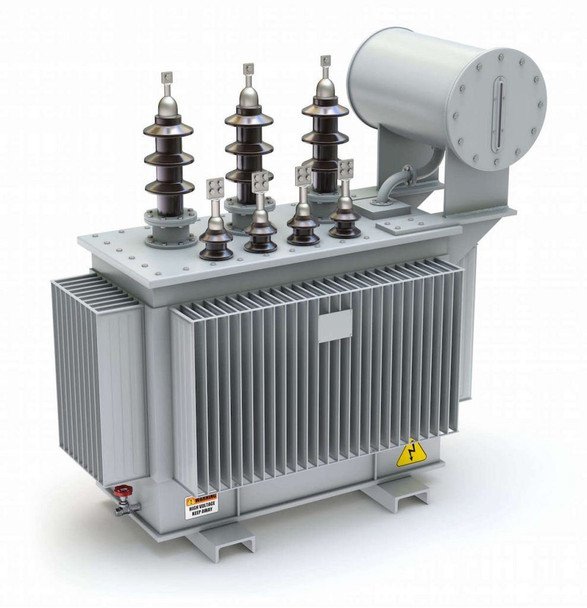
  • 12kV MV Switchgear Panel Guide: Components, Types and Selection

    12kV MV Switchgear Panel Guide: Components, Types and Selection

    12kV metal clad switchgear production line in factory workshop
    img3
    medium voltage switchgear panel assembly in production workshop

    12kV MV Switchgear Panel Guide: Components, Types and Selection

    A 12kV medium voltage switchgear panel is the central protection and switching device in distribution substations, industrial plants and renewable projects. It contains vacuum circuit breakers, busbars, current transformers and protection relays in a safe, earthed enclosure. This guide covers the main types, key components, standard ratings, a 2026 price benchmark and a practical selection checklist.

    What Is a 12kV Medium Voltage Switchgear Panel?

    A 12kV switchgear panel is a metal-enclosed cubicle that switches and protects medium voltage feeders. It connects the incoming transformer, busbar and outgoing circuits, and trips automatically when a fault occurs. The 12kV class is used on networks with a rated voltage of 12kV (typical 11kV system voltage), with breaking capacity from 20kA to 31.5kA.

    Most modern panels use vacuum circuit breakers instead of SF6 or oil breakers, which reduces maintenance and removes greenhouse gas handling. Panels are built and tested to IEC 62271-200.

    Main Types of 12kV MV Switchgear

    The type you need depends on space, safety requirements and cost. The four common options are:

    Type Construction Best For Cost Index
    Metal-clad switchgear Segregated compartments, withdrawable breaker Substations, high safety 1.0 (baseline)
    Fixed / non-withdrawable Breaker fixed in cubicle Simple feeders, budget projects 0.75–0.85
    Ring main unit (RMU) Compact sealed unit, fuse-switch Transformer tee-offs, space-limited 0.55–0.65
    Gas-insulated switchgear (GIS) SF6 or clean-air sealed modules Urban substations, small footprint 1.3–1.6

    For most distribution substations, metal-clad switchgear offers the best balance of safety, service continuity and cost.

    Key Components Inside a 12kV Panel

    • Vacuum circuit breaker: the main switching and fault-clearing device.
    • Busbar: distributes power between incoming and outgoing feeders.
    • Current transformers: feed protection relays and meters with scaled current.
    • Potential transformers: supply voltage signals for protection and metering.
    • Protection relay: detects overcurrent, earth fault and transformer faults.
    • Earth switch: provides a safe, visible earth before maintenance.
    • Control and indication: position indicators, mimic diagram and interlock devices.

    Segregated compartments keep the busbar, breaker, cable and relay areas separate, so a fault in one bay does not spread to the whole switchboard.

    Standard Ratings and Specifications

    Parameter Typical Value
    Rated voltage 12kV
    Rated frequency 50Hz / 60Hz
    Rated current (busbar) 630A / 1250A / 2000A / 3150A
    Short-time withstand 20kA/4s – 31.5kA/4s
    Short-circuit breaking 20kA – 31.5kA
    Impulse withstand 75kV
    Enclosure class IP54 indoor / IP65 outdoor

    Confirm the network short-circuit level before choosing the breaking capacity. A panel rated too low can fail during a fault, while an over-rated panel wastes budget.

    How to Select a 12kV Switchgear Panel

    1. Confirm system data: rated voltage, frequency, short-circuit level and earthing system.
    2. Draw the single-line diagram: count incoming, outgoing, bus-coupler and metering panels.
    3. Choose the construction: metal-clad for safety, fixed for budget, RMU for compact tees.
    4. Select the protection relay: overcurrent, earth-fault, and transformer differential if needed.
    5. Check the enclosure: indoor IP54 or outdoor IP65 with the correct finish colour.
    6. Verify certification: IEC 62271-200 type tests, routine test reports and IAC arc classification.

    2026 Price Benchmark (FOB China)

    The prices below are indicative factory prices for complete 12kV switchgear panels and help you compare supplier quotes:

    Configuration Typical Price (USD) Lead Time
    Incoming feeder, 1250A/25kA $4,200 – $6,500 25–35 days
    Outgoing feeder, 630A/25kA $3,500 – $5,200 25–30 days
    Bus coupler panel $4,800 – $7,500 30–40 days
    PT / metering panel $2,800 – $4,200 20–30 days

    Always request a full type-test report and a single-line diagram with the quotation. A cheap panel without test documentation is a false economy on a live network.

    Common Applications of 12kV Switchgear Panels

    12kV switchgear panels are used across utility and industrial networks. Typical applications include distribution substations feeding housing and commercial loads, industrial plant incomers and motor feeders with high fault levels, renewable energy plants connecting solar and wind transformers to the MV board, and data centres or hospitals requiring dual-fed high-availability supplies. In every case the panel provides a safe isolation point, fast fault clearing and clear status indication for operators.

    12kV Switchgear vs 11kV Switchgear

    Although 12kV and 11kV panels look similar, the voltage class matters. A 12kV panel is type-tested for a rated voltage of 12kV with a higher impulse withstand, so it suits systems where the operating voltage can reach 12kV. Most distribution networks run at 11kV and both classes use the same vacuum breaker technology, but always match the panel rating to the actual system voltage and insulation coordination of your network before ordering.

    Frequently Asked Questions (FAQ)

    1. What is the difference between 12kV and 24kV switchgear?
    A 24kV panel is rated for a higher system voltage with larger clearances and a higher impulse withstand. A 12kV panel cannot be used on a 24kV network. Choose the class that matches your system voltage.

    2. Can a 12kV switchgear panel be used outdoors?
    Yes, with an outdoor weatherproof enclosure rated IP65 and corrosion-protected finish. Otherwise install it in a switchgear room.

    3. What is the standard for 12kV switchgear?
    IEC 62271-200 for metal-enclosed switchgear, including internal arc (IAC) and type tests.

    4. How often does a 12kV panel need maintenance?
    Vacuum circuit breakers need inspection and lubrication every 3–5 years or after a set number of operations. Check relays, earthing and interlock functions during routine tests.

    5. Can I retrofit a numerical relay on an existing panel?
    Yes, most modern numerical relays fit the low-voltage compartment. Check CT accuracy, wiring and available space first.

    6. What is the typical lifespan of a 12kV switchgear panel?
    With correct installation and maintenance, a metal-clad panel lasts 25–30 years.

    Why Choose Electric-GS as Your 12kV Switchgear Factory

    Electric-GS is a professional OEM/ODM manufacturer of medium and low voltage switchgear, based in Yueqing, Zhejiang, China. We produce IEC-compliant 12kV switchgear panels with full type-test reports, fast 25–35 day delivery and flexible customisation for colour, metering and protection. Every panel is routine-tested before dispatch.

    For quotations or drawings, email us at info@electric-gs.com or WhatsApp +86 135 8897 8050.

    Related Reading

  • 11kV Medium Voltage Switchgear Complete Guide: Types and Selection

    11kV Medium Voltage Switchgear Complete Guide: Types and Selection

    11kV Medium Voltage Switchgear Complete Guide: Types and Selection

    11kV medium voltage switchgear is the standard distribution switchgear for industrial plants, commercial buildings, utilities and renewable projects across many countries. Choosing the right panel type directly affects protection, reliability and operating cost. This guide compares the main types and gives a clear selection path.

    11kV medium voltage switchgear SF6 load switch

    1. The Two Main Types

    • Air-insulated switchgear (AIS): economical, visible isolation, needs more room.
    • Gas-insulated switchgear (GIS) / ring main unit (RMU): compact, sealed, for tight spaces.

    2. When to Use Which Type

    Scenario Recommended Type
    Large industrial switchroom Air-insulated metal-clad panels
    Urban vault or kiosk GIS / RMU compact
    Transformer protection Fuse-switch or breaker panel
    Renewable collection GIS with vacuum breaker

    3. Core Ratings to Specify

    For 11kV systems, confirm 12kV-rated switchgear (industry standard rating above 11kV operating), rated current 630A to 2500A, and short-circuit capacity 20kA to 31.5kA. Protection can be fuse-based or relay-based with a vacuum circuit breaker.

    11kV switchgear transformer feeder

    4. Protection and Control

    A vacuum circuit breaker with a numerical relay provides reliable overcurrent and earth fault protection. For transformer feeders up to about 1000kVA, a fuse-switch is a low-cost alternative. Add remote monitoring where the panel is unattended.

    5. Related Guides

    To choose between distribution topologies, compare our SF6 Gas Insulated Switchgear Guide and the GIS Installation and Commissioning Guide. For outdoor solutions, see the SF6 Gas Insulated Switchgear Guide.

    11kV MV switchgear vacuum breaker

    6. Installation Requirements

    • Indoor panels need a dry, ventilated switchroom with cable trenches.
    • Allow front access for breaker racking and rear access for cabling.
    • Ensure adequate earthing and IP2X to IP4X protection levels.

    7. Cost and Lead Time in 2026

    A basic 11kV feeder panel with a vacuum breaker runs $4,500–$8,000 ex-works. High-current incomers and complex protection schemes add cost. Typical lead time is 20–35 days.

    Frequently Asked Questions (FAQ)

    1. Is 11kV switchgear rated at 12kV?
    Yes, standard panels are rated 12kV to provide margin above the 11kV operating voltage.

    2. What is the difference between AIS and GIS?
    AIS uses air insulation and needs more space; GIS is compact and sealed with gas insulation.

    3. Can I retrofit a numerical relay on an old panel?
    Yes, most manufacturers offer relay replacement and retrofits.

    4. What protection do transformer feeders need?
    Fuses up to about 1000kVA; above that use a breaker with overcurrent and earth fault protection.

    5. Which standard applies?
    IEC 62271-200 for switchgear assemblies.

    6. What is the usual delivery time?
    20–35 days ex-works for standard configurations.

    Why Choose Electric-GS

    Electric-GS is a leading OEM/ODM manufacturer of medium voltage switchgear in Yueqing, China. We supply IEC-compliant 11kV medium voltage switchgear with full test reports and custom control schemes. Email info@electric-gs.com or WhatsApp +86 135 8897 8050. See Electric-GS solutions and Electric-CN products.

  • 40.5kV GIS Switchgear Complete Guide: Benefits, Components and Selection

    40.5kV GIS Switchgear Complete Guide: Benefits, Components and Selection

    40.5kV GIS Switchgear Complete Guide: Benefits, Components and Selection

    40.5kV gas insulated switchgear (GIS) packs an entire HV bay into a fraction of the space of an air-insulated substation. It is the preferred choice for urban substations, industrial plants and renewable projects where land is expensive. This guide covers benefits, components and how to select a reliable unit.

    40.5kV GIS switchgear assembly

    1. Why Choose 40.5kV GIS

    • Up to 70–80% smaller footprint than AIS.
    • Sealed-for-life SF6 or gas-insulated bays.
    • High reliability with minimal maintenance.
    • Indoor and compact substation installation.

    2. Key Components of a GIS Bay

    Component Function
    Circuit breaker Interrupts load and fault current
    Disconnector Provides visible isolation
    Earthing switch Safely earths the circuit
    CT / VT Measurement and protection
    Busbar Connects incoming and outgoing feeders
    Control panel Relays, metering and interlocks

    3. Rated Data to Specify

    Confirm rated voltage 40.5kV, rated current (usually 630A to 1250A), short-circuit capacity (typically 25kA or 31.5kA) and the number of bays. Match the arrangement to your network, whether single busbar, double busbar or ring.

    40.5kV GIS SF6 circuit breaker

    4. Indoor or Compact Substation Installation

    GIS can be installed in a compact substation or a purpose-built GIS room. For an overview of enclosure options, read our SF6 Gas Insulated Switchgear Guide and the GIS Installation and Commissioning Guide. Also compare with the SF6 Gas Insulated Switchgear Guide.

    5. What Drives the Cost in 2026

    40.5kV GIS is priced per bay. A typical feeder bay runs $12,000–$20,000 ex-works depending on breaker type, CT ratio and control scheme. Double busbar arrangements cost more than single busbar.

    40.5kV GIS vacuum breaker module

    6. Maintenance and Safety

    • Monitor gas density on SF6 units; a drop indicates a leak.
    • Perform a full inspection every 6–8 years.
    • Keep interlocks tested to prevent operator error.
    • For eco compliance, consider vacuum + gas-insulated hybrid designs with lower SF6 volume.

    7. Factory Qualification Checklist

    • IEC 62271-100 breaker type tests.
    • IEC 62271-203 GIS assembly tests.
    • Routine test reports and single-line diagrams.
    • On-site commissioning support.

    Frequently Asked Questions (FAQ)

    1. What is the main advantage of 40.5kV GIS?
    A much smaller footprint, high reliability and sealed-for-life operation.

    2. How much space does GIS save compared to AIS?
    Typically 70–80% less land area.

    3. Is SF6 gas safe?
    Yes, it is non-toxic and non-flammable under normal conditions, but it is a strong greenhouse gas.

    4. Can GIS be installed outdoors?
    Yes, in an outdoor kiosk or compact substation enclosure.

    5. What is the standard rated short-circuit?
    Typically 25kA or 31.5kA at 40.5kV.

    6. What is the normal lead time?
    30–45 days ex-works for a standard bay configuration.

    Why Choose Electric-GS

    Electric-GS is an OEM/ODM manufacturer of HV/MV switchgear in Yueqing, China, offering IEC-compliant 40.5kV GIS with full test documentation and custom configurations. Contact info@electric-gs.com or WhatsApp +86 135 8897 8050. Explore Electric-GS solutions and Electric-CN products.

  • 33kV Ring Main Unit Buying Guide: Features, Applications and Selection Tips

    33kV Ring Main Unit Buying Guide: Features, Applications and Selection Tips

    33kV Ring Main Unit Buying Guide: Features, Applications and Selection Tips

    The 33kV ring main unit is a critical piece of equipment for utilities and large industrial sites that distribute at 33kV, common in the UK, the Middle East, parts of Asia and Africa. At this voltage, careful selection protects assets, avoids outages and keeps maintenance costs low. This buying guide walks through features, applications and practical selection tips.

    33kV ring main unit vacuum circuit breaker

    1. Typical Applications of a 33kV RMU

    • Urban and rural ring distribution networks.
    • Renewable energy collection substations (wind, solar).
    • Industrial estates and campus power distribution.
    • Compact substations for utilities.

    2. Rated Parameters You Must Confirm

    Parameter Typical Value
    Rated voltage 33kV, 3-phase, 50Hz
    Rated current 630A busbar, 200/630A feeders
    Short-circuit 20kA/1s or 25kA/1s
    Transformer feeder Fuse-switch up to ~2000kVA
    Standards IEC 62271-200

    3. SF6, Solid or Air Insulated?

    At 33kV, SF6 gas-insulated RMUs dominate because of their compact footprint and proven reliability. Solid-insulated units are gaining share in eco-sensitive markets. Air-insulated RMUs are rare at 33kV and usually limited to indoor substations.

    33kV RMU outdoor breaker

    4. Protection Strategy

    For transformers up to about 2000kVA at 33kV, a fuse-switch is economical and reliable. For larger transformers or ring-critical feeders, use a vacuum circuit breaker with overcurrent protection and optional remote control. This is where a full SF6 Gas Insulated Switchgear Guide matters.

    5. Outdoor versus Indoor

    Outdoor 33kV RMUs need an IP65 enclosure, UV-resistant paint and proper earthing. Indoor units can use IP54 and a simple ventilated room. For outdoor distribution, compare with the GIS Installation and Commissioning Guide and the SF6 Gas Insulated Switchgear Guide.

    33kV RMU transformer feeder

    6. Certification and Factory Evidence

    • IEC 62271-200 type test reports.
    • Routine test reports per unit.
    • Single-line diagrams and GA drawings.
    • Certificate of conformity from the factory.

    7. 2026 Price Benchmark

    A standard 3-way 33kV SF6 RMU typically costs $5,500–$8,500 ex-works. Outdoor enclosures and breaker-based feeders add cost. Budget 10–15% extra for spares and commissioning.

    Frequently Asked Questions (FAQ)

    1. What transformer size does a 33kV fuse-switch protect?
    Typically up to about 2000kVA at 33kV; larger loads need a breaker-based feeder.

    2. Are 33kV RMUs available as outdoor units?
    Yes, with IP65 enclosures and weatherproofed components.

    3. What is the typical service life?
    25–30 years for a sealed-for-life unit with routine maintenance.

    4. Do I need a protection relay on every feeder?
    Transformer feeders usually use fuses; only large or ring-critical feeders need relays.

    5. Which standard applies?
    IEC 62271-200 for switchgear and controlgear assemblies.

    6. Can you customise the metering and CT ratio?
    Yes, OEM factories offer custom CTs, meters and paint colours.

    Why Choose Electric-GS

    Electric-GS is a professional OEM/ODM factory in Yueqing, China, specialising in medium and low voltage switchgear. We deliver IEC-compliant 33kV ring main units with full test evidence and 15–30 day lead times. Email info@electric-gs.com or WhatsApp +86 135 8897 8050. Discover more at Electric-GS solutions and Electric-CN products.

  • 24kV Ring Main Unit Complete Guide: Types, Selection and 2026 Cost Benchmarks

    24kV Ring Main Unit Complete Guide: Types, Selection and 2026 Cost Benchmarks

    24kV Ring Main Unit Complete Guide: Types, Selection and 2026 Cost Benchmarks

    A 24kV ring main unit (RMU) is the backbone of modern medium voltage distribution networks in countries that run 20kV or 24kV systems, such as China, Brazil, parts of the Middle East and Africa. It combines load break switches, earth switches and transformer protection in one compact, sealed cabinet. This guide explains the types, how to select one, and realistic 2026 price levels.

    24kV ring main unit GIS switchgear

    1. Why a Dedicated 24kV RMU Makes Sense

    At 24kV the insulation stress is higher than at 12kV. A purpose-built 24kV ring main unit uses higher-rated bushings, longer creepage distances and tested earthing, so it stays reliable in high humidity and pollution. Buying a 24kV unit is cheaper in the long run than over-derating a 12kV design.

    2. Main Types of 24kV RMU

    • SF6 gas-insulated RMU: sealed-for-life, smallest footprint, proven worldwide.
    • Solid-insulated RMU: no greenhouse gas, ideal for eco compliance and cold climates.
    • Air-insulated RMU: lowest cost, needs more space, used indoors.

    3. Key Ratings to Specify

    Parameter Typical Value
    Rated voltage 24kV, 3-phase, 50Hz
    Rated current 630A busbar, 200/630A feeders
    Short-circuit 20kA/1s or 25kA/1s
    Protection Fuse-switch up to ~1250kVA, breaker above
    Enclosure IP54 indoor / IP65 outdoor
    24kV RMU SF6 load break switch

    4. How Much Does a 24kV RMU Cost in 2026?

    Ex-works prices for a standard 3-way 24kV SF6 RMU are roughly $4,000–$6,500 depending on feeder count and protection. Solid-insulated units run about 15–20% higher. Add freight, customs and local commissioning to build your landed budget.

    5. Selection Checklist for Distribution Engineers

    • Match rated voltage and short-circuit to the network study.
    • Choose feeder count with at least one spare for growth.
    • Decide fuse-switch versus breaker based on transformer size.
    • Confirm IEC 62271-200 type tests and routine reports.
    • Check IP rating and installation room ventilation.

    6. Compare with Related Solutions

    For a wider view of switchgear choices, see our SF6 Gas Insulated Switchgear Guide and the GIS Installation and Commissioning Guide. If you are planning outdoor distribution, also check the SF6 Gas Insulated Switchgear Guide.

    24kV RMU transformer feeder

    7. Maintenance and Lifecycle

    SF6 units need a yearly pressure check and a full inspection every 6 years. Solid-insulated units only need visual checks and torque verification on connections. Either way, keep spare fuse links and the operating handle in the door.

    Frequently Asked Questions (FAQ)

    1. What is the difference between a 24kV RMU and a 24kV switchgear panel?
    An RMU uses load break switches for transformer feeders; a switchgear panel has a vacuum circuit breaker and relays for protected feeders.

    2. What transformer can a 24kV fuse-switch protect?
    Typically up to about 1250kVA at 24kV; above that use a breaker-based unit.

    3. Can a 24kV RMU run outdoors?
    Yes, with an IP65 enclosure; otherwise install it in a kiosk or compact substation.

    4. Is the SF6 version still legal in Europe?
    SF6 is being phased out under EU Regulation 2024/573; solid-insulated is now preferred there.

    5. What type tests should I require?
    IEC 62271-200 plus routine test reports and a certificate of conformity.

    6. What is the typical lead time?
    15–30 days ex-works from a full OEM factory.

    Why Choose Electric-GS

    Electric-GS is an OEM/ODM manufacturer of medium and low voltage switchgear in Yueqing, China. We supply IEC-compliant 24kV ring main units with full test documentation, custom metering and fast lead times. Contact info@electric-gs.com or WhatsApp +86 135 8897 8050. See also Electric-GS solutions and Electric-CN products.

  • Top 10 11kV Ring Main Unit Selection Criteria: Complete Guide for Distribution Engineers

    Top 10 11kV Ring Main Unit Selection Criteria: Complete Guide for Distribution Engineers

    Top 10 11kV Ring Main Unit Selection Criteria for Distribution Engineers

    Choosing the right 11kV ring main unit (RMU) is one of the most important decisions in a medium voltage distribution project. It protects transformers, isolates faults and keeps ring networks energised. This guide gives you a practical, 10-point checklist plus a cost benchmark for 2026, so you can specify the right unit on the first quote.

    11kV ring main unit switchgear

    1. What Is an 11kV Ring Main Unit?

    An 11kV ring main unit is a compact, sealed switchgear assembly with two ring feeders and one or more transformer feeders. It uses load break switches and earth switches to switch load current and provide a safe earth. Unlike a full switchgear panel, an RMU is designed for simple, sealed-for-life operation on ring distribution networks.

    2. Confirm Your System Data First

    • Rated voltage: 11kV, three-phase, 50Hz (or 60Hz for some markets)
    • Short-circuit rating: typically 20kA/1s or 25kA/1s
    • Rated current: 630A busbar, 200A or 630A feeders
    • Ambient and altitude: standard to 2000m, derate above

    3. Choose the Right Insulation Technology

    Feature SF6 Gas Solid Insulated Air Insulated
    Footprint Smallest Small Largest
    Sealed-for-life Yes Yes No
    SF6 gas needed Yes No No
    Cost index 1.0 1.15–1.25 0.85–0.95
    Best for Urban vaults Eco / cold climate Indoor, budget

    With the EU phasing out SF6 under Regulation 2024/573, many buyers now prefer solid-insulated RMUs to avoid future carbon costs and re-gas work.

    11kV RMU SF6 load break switch

    4. Count Your Feeders and Plan for Spares

    Choose a 2-way, 3-way, 4-way or 6-way configuration based on your ring layout. Always add at least one spare feeder for future load growth. A 4-way SF6 RMU typically costs $3,200–$5,000 ex-works.

    5. Protection: Fuse-Switch or Breaker?

    • Fuse-switch: protects transformers up to about 630kVA at 11kV. Simple, low cost.
    • Breaker-based: for larger transformers or ring-critical feeders, with an overcurrent relay and remote control.

    6. Check Enclosure and Installation

    Indoor units use IP54; outdoor units need IP65 with UV-resistant paint. Install in a dry, ventilated room or vault with 800mm front clearance for operation.

    7. Verify Certification and Type Tests

    Insist on IEC 62271-200 type tests, routine test reports and a certificate of conformity from the factory. Never accept a unit without documented test evidence.

    8. Consider Lifecycle Cost, Not Just Price

    Over 25 years, SF6 re-gas and carbon compliance can add 5–10% to total cost of ownership in Europe. Compare SF6 versus solid insulated on full lifecycle, not first price.

    9. Maintenance Best Practices

    • Check SF6 pressure yearly on gas units; a slow drop indicates a leak.
    • Solid-insulated units need only visual checks and torque checks on connections.
    • Keep spare fuse links and an operating handle inside the door.
    • Never operate the load break switch under load unless it is rated to break current.

    10. Choose a Factory with Full Test Support

    A reliable OEM factory should provide single-line diagrams, routine test reports, custom metering and fast lead times. For a deeper comparison of switchgear options, read our guide on PV Grid-Connected Cabinet Design and Sel and the related Transformer Efficiency Classes Explained.

    11kV RMU transformer feeder

    Frequently Asked Questions (FAQ)

    1. What is the difference between an 11kV RMU and an 11kV switchgear panel?
    An RMU is a compact ring unit with load break switches for transformer feeders. A switchgear panel contains a vacuum circuit breaker and relays for protected, relayed feeders.

    2. Can an 11kV RMU be used outdoors?
    Yes, if it has an IP65 outdoor enclosure. Otherwise install it indoors or in a compact substation.

    3. What is the largest transformer an 11kV fuse-switch protects?
    Typically up to 630kVA at 11kV. Above that, use a breaker-based RMU.

    4. Is SF6 gas dangerous?
    SF6 is non-toxic and non-flammable under normal conditions, but it is a strong greenhouse gas. Solid-insulated RMUs avoid it entirely.

    5. What certifications should an 11kV RMU have?
    IEC 62271-200 type tests, routine test reports and a certificate of conformity.

    6. How long does an 11kV ring main unit last?
    A sealed-for-life RMU is designed for 25–30 years with minimal maintenance.

    Why Choose Electric-GS as Your 11kV RMU Factory

    Electric-GS is a professional OEM/ODM manufacturer of medium and low voltage switchgear, based in Yueqing, Zhejiang, China. We deliver IEC-compliant 11kV ring main units with full type-test reports, 15–30 day lead times and flexible customisation. For quotations, email info@electric-gs.com or WhatsApp +86 135 8897 8050. Explore more at Electric-GS solutions and Electric-CN products.

  • PV Grid-Connected Cabinet Design and Selection: Protection, Metering and Anti-Islanding Requirements for 2026

    PV Grid-Connected Cabinet Design and Selection: Protection, Metering and Anti-Islanding Requirements for 2026

    Every commercial solar plant ends at the same point: the grid-connected cabinet where the inverter AC output meets the utility network. Getting this cabinet wrong can mean failed grid inspection, nuisance tripping, expensive rework or, worst case, an islanding event that injures line workers. This guide walks through the protection, metering and anti-islanding requirements for a 2026 PV grid-connected cabinet, with real sizing examples and a selection checklist you can hand to any switchgear supplier.

    TL;DR: The Short Answer for Solar EPCs

    • The grid-connected cabinet is the AC interface between inverters and the utility point of common coupling (PCC); it must handle protection, metering, isolation and surge protection.
    • Size the main breaker by full inverter output current plus margin, not by array DC power alone; use the formula I = P / (1.732 x U x pf).
    • Bidirectional metering with 0.5S CTs is mandatory for net metering or feed-in tariff projects in most countries.
    • Anti-islanding is primarily an inverter function (IEEE 1547 / IEC 62116), but the cabinet must provide an external isolation and lockable disconnect point for utility safety rules.
    • Order the cabinet with surge protection at both AC and DC sides, proper cable glanding, and a nameplate showing the grid code it complies with.

    What the Grid-Connected Cabinet Actually Does

    The PV grid-connected cabinet (sometimes called the AC combiner or metering cabinet) sits between the inverter AC terminals and the utility meter or PCC. It performs five jobs:

    1. Protection: a main AC circuit breaker (MCCB/ACB) with adequate short-circuit breaking capacity and a residual current device where required.
    2. Isolation: a lockable disconnect so utility workers can guarantee a dead circuit during maintenance.
    3. Metering: current transformers and terminal space for the utility’s bidirectional energy meter.
    4. Surge protection: type 2 SPDs on the AC side, and coordination with the DC-side SPDs in the combiner boxes.
    5. Monitoring: optional CT inputs for a gateway that reports generation and curtailment status.

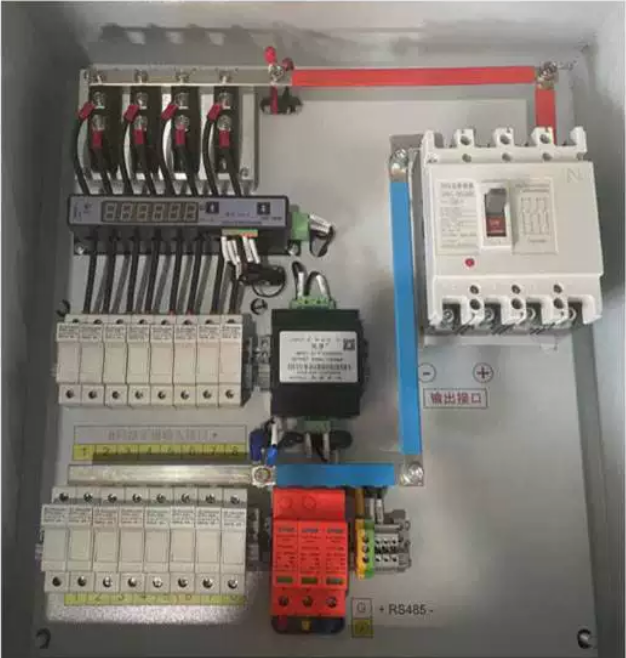
    pv grid connected cabinet AC protection and metering compartment

    Real Sizing Example: An 800kW Commercial Rooftop

    Take an 800kW system on a 400V three-phase grid with four 200kW string inverters. Each inverter delivers roughly 200kW at unity power factor:

    I = 200,000 W / (1.732 x 400 V x 1.0) = 289 A per inverter.

    Four inverters feed the cabinet, so the common bus current is about 1,155 A. The main breaker should be rated at least 1,250 A frame, and because the inverter current is continuous, the breaker must be selected with the 80% continuous-load rule in mind: a 1,600 A breaker is the correct choice for a 1,155 A continuous load. The busbar should be rated 1,600 A with a temperature rise below the IEC 61439 limit. If the inverters operate at 0.8 power factor (some projects do), add 25% to the current: 1,155 A becomes 1,440 A and the 1,600 A selection is confirmed.

    System size (400V) Approx. full-load current Recommended main breaker CT ratio
    100 kW 144 A 200 A MCCB 200/5
    250 kW 361 A 500 A MCCB 500/5
    500 kW 722 A 800 A MCCB / 1000 A ACB 1000/5
    800 kW 1,155 A 1600 A ACB 1600/5
    1,000 kW 1,444 A 1600 A ACB 2000/5

    Always confirm the short-circuit level at the PCC with the utility. A cabinet with 10kA Icu is common, but if the utility fault level is 25kA or higher you must specify a higher breaking capacity breaker or add a limiting impedance. Failing to match Icu is one of the most common reasons for grid inspection failure.

    solar inverter AC output connection inside pv cabinet

    Metering and Anti-Islanding Requirements

    Bidirectional Metering

    For net metering, feed-in tariff or export-limited projects, the utility installs a bidirectional meter. The cabinet must provide the CTs (accuracy class 0.5S or 0.2S for large systems), a sealed meter compartment, and terminal blocks with adequate space. Ask the utility for their metering scheme drawing before ordering the cabinet – every utility has a preferred layout, and re-drilling a cabinet after delivery is expensive.

    Anti-Islanding Coordination

    Anti-islanding detection is performed by the inverter according to IEEE 1547 or IEC 62116 (passive and active methods). The cabinet supports this with a clearly marked, lockable disconnect that the utility can open to prove isolation. Some grid codes require an external relay or a breaker tripped by the inverter’s fail-safe contact. Confirm with your inverter manufacturer and the local utility which arrangement they accept before you order.

    Surge Coordination

    Type 2 SPDs in the AC cabinet protect downstream metering and inverter electronics from switching and lightning transients. They must coordinate with the Type 1/Type 2 SPDs in the DC combiner boxes: the energy let-through of the upstream SPD must not exceed the downstream withstand. Ask the supplier for the SPD coordination study or a statement of compliance with IEC 61643-11/12.

    Seven-Point Selection Checklist for 2026

    1. Full-load current at minimum power factor – size busbar and breaker with margin.
    2. Short-circuit breaking capacity Icu at the PCC – ask the utility for the fault level.
    3. Metering CT accuracy and utility scheme – 0.5S CTs, sealed meter compartment.
    4. SPD type and coordination – Type 2 AC side, coordinated with DC side.
    5. Grid code compliance – IEEE 1547, IEC 61727 or local grid code on the nameplate.
    6. Enclosure rating – IP54 minimum for outdoor, IP31 for indoor; consider tropical ventilation.
    7. Serviceability – hinged doors, cable entry with glands, spare terminals, cable schedule drawing.

    For the DC side of the same system, read our solar combiner box installation guide and the combiner box vs junction box comparison, and size the inverters correctly with our solar inverter sizing guide.

    FAQ About PV Grid-Connected Cabinets

    What is the difference between a PV combiner box and a grid-connected cabinet?

    A combiner box works on the DC side, combining strings before the inverter. The grid-connected cabinet works on the AC side, between the inverter and the utility. Most plants need both.

    Do I need a separate anti-islanding relay in the cabinet?

    Only if your grid code or utility requires it. Modern inverters perform anti-islanding internally; the cabinet’s role is to provide lockable isolation and, where required, a fail-safe trip path.

    What CT accuracy do I need for metering?

    Class 0.5S is standard for commercial net metering. Large utility-scale plants may require 0.2S. Check the utility’s metering scheme.

    Can the cabinet include the utility meter?

    Usually the utility installs and seals their own meter. The cabinet provides the CTs, terminal space and a sealed compartment. Never pre-install a meter without utility approval.

    What IP rating should the cabinet have?

    Indoor installations: IP31. Outdoor installations: IP54 or higher, with adequate ventilation to keep internal temperature below the component ratings.

    Does Electric-GS make PV grid-connected cabinets?

    Yes. Electric-GS supplies PV grid-connected cabinets from 100A to 3200A with MCCB/ACB options, 0.5S CTs, Type 1/2 SPDs and IP54 enclosures, fully wired and tested before delivery. Contact info@electric-gs.com or WhatsApp +86 135 8897 8050 with your inverter list and we will size the cabinet for you. More solar products are listed on electricgs.com and electric-cn.com.

  • Transformer Efficiency Classes Explained: IE2/IE3/IE4, EU Eco-design 548/2014 and a Real 30-Year Loss Cost Calculation

    Transformer Efficiency Classes Explained: IE2/IE3/IE4, EU Eco-design 548/2014 and a Real 30-Year Loss Cost Calculation

    Most transformer buyers compare purchase prices and stop there. That is the most expensive mistake in distribution engineering. A 630kVA distribution transformer costs roughly USD 8,000-12,000, but its electrical losses cost three to ten times that amount over a 30-year service life. This guide explains the efficiency class systems you will meet in tenders – IE2/IE3/IE4, EU Eco-design 548/2014 and China GB 20052-2020 – and gives you a calculation you can run in five minutes to justify paying more for a more efficient unit.

    TL;DR: The Short Answer for Buyers

    • Efficiency class is defined by maximum no-load loss (Po) and maximum load loss (Pk), not by the nameplate percentage alone.
    • EU Regulation 548/2014 Tier 2 has been mandatory for new transformers since 14 July 2021; it sets absolute loss caps, roughly equivalent to IE3 for oil-immersed distribution transformers.
    • China GB 20052-2020 (effective 2021) defines three grades; Grade 1 with amorphous cores is the lowest-loss option widely available today.
    • A 30-year loss cost model almost always proves that the higher-priced efficient transformer is cheaper in total: losses often cost more than the transformer itself.

    Why Losses Matter More Than the Price Tag

    Every transformer loses energy whenever it is energised. No-load loss (Po) comes from the core magnetisation and runs 24/7 for the entire life of the unit. Load loss (Pk) comes from the winding resistance and grows with the square of the current. For a typical 630kVA oil-immersed transformer with Po = 810W and Pk = 7,500W at 60% average loading, the yearly energy lost is:

    (Po + 0.36 x Pk) x 8760 h = (0.81 kW + 2.70 kW) x 8760 h = 30,750 kWh per year.

    At an industrial tariff of USD 0.12/kWh that is about USD 3,690 every year. Over 30 years the same transformer burns approximately USD 110,000 of electricity – roughly twelve times its purchase price. This is why utilities and EPC contractors specify loss caps instead of “best price”: they are buying 30 years of running cost, not one invoice.

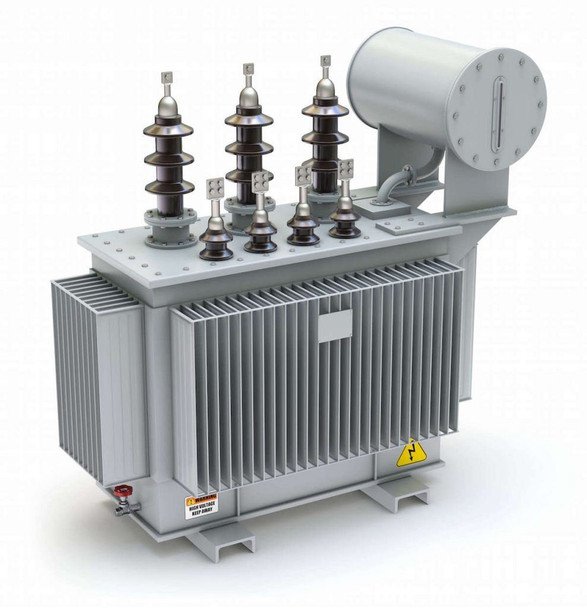
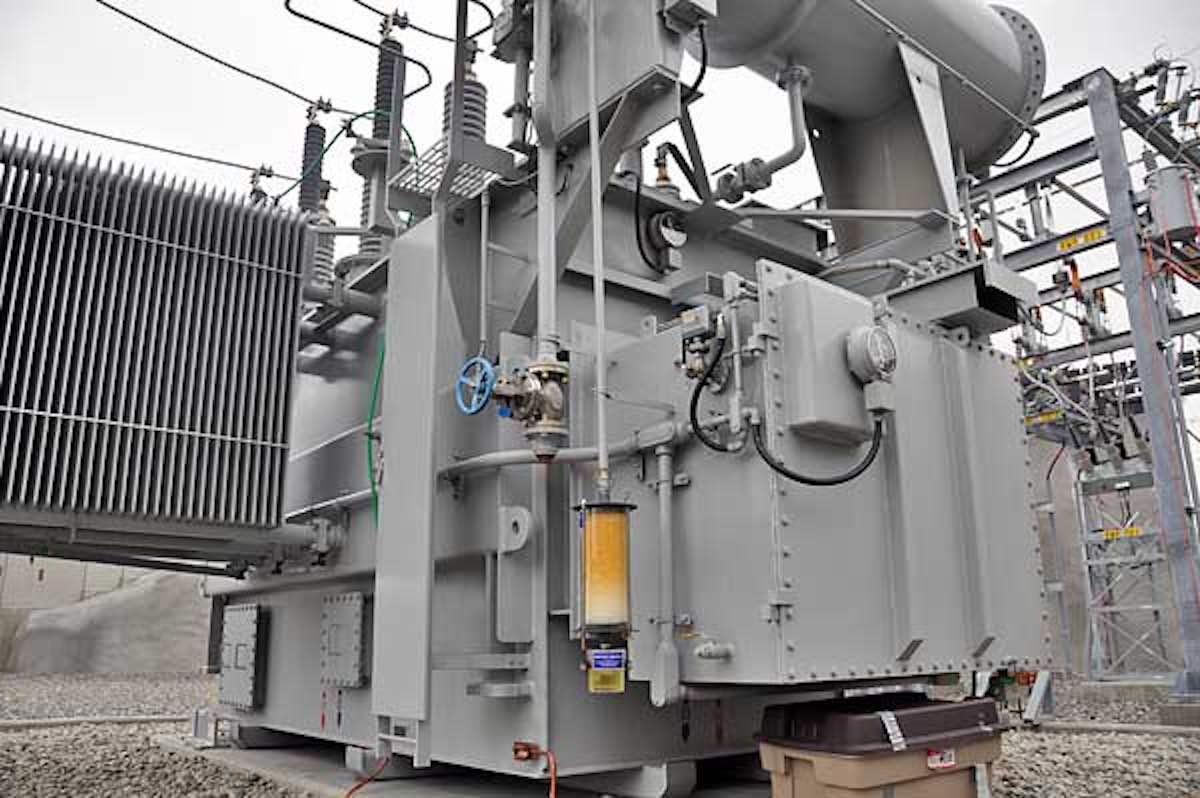
    oil immersed distribution transformer 630kVA with efficiency test

    The Three Efficiency Systems You Will See in Tenders

    EU Eco-design Regulation 548/2014 (Tier 2 since 2021)

    The EU regulation sets absolute maximum Po and Pk for each rated power. For a 630kVA oil-immersed transformer, Tier 2 permits roughly Po = 900W and Pk = 7,800W (exact values depend on the transformer type and annex; always check the current consolidated text). Any new transformer sold or commissioned in the EU must meet these caps. The same limits now appear in tenders in the Gulf, Africa and Southeast Asia because many EPC contractors standardise on EU-compliant equipment.

    China GB 20052-2020

    China replaced its old GB 20052-2013 with GB 20052-2020 (effective 1 June 2021), which defines three efficiency grades for oil-immersed and dry-type transformers. Grade 3 is the minimum legal level, Grade 2 is the recommended premium level for new installations, and Grade 1 is achieved mainly with amorphous metal cores (the Chinese “S20” series). For a 10kV 630kVA oil-immersed unit, typical values are roughly: Grade 3 Po 810W / Pk 7,500W, Grade 2 Po 720W / Pk 7,000W, Grade 1 (amorphous) Po 280-350W with the same Pk. These are indicative figures – the standard table is authoritative.

    IE Classes (IEC 60076-20)

    IEC 60076-20 defines IE1 to IE4 efficiency classes for distribution transformers. IE4 is the strictest and is normally only reachable with amorphous cores. Many international tenders now state “minimum IE3” or “IE4 preferred”, which maps directly onto the Chinese Grade 2 / Grade 1 units.

    630kVA 10kV oil-immersed No-load loss Po Load loss Pk Core type Approx. price premium
    Old S9 / IE1 ~1,160W ~8,100W CRGO silicon steel baseline
    S11 / IE2 / GB Grade 3 ~810W ~7,500W CRGO silicon steel +5-10%
    S13 / IE3 / GB Grade 2 ~720W ~7,000W High-permeability steel +15-25%
    S20 amorphous / IE4 / GB Grade 1 ~300W ~7,000W Amorphous metal +25-40%

    Note how the biggest saving sits in no-load loss: the core runs constantly, so cutting Po from 810W to 300W removes 510W of continuous waste – about 4,470 kWh per year, or USD 536 per year at USD 0.12/kWh.

    The Five-Minute Payback Calculation

    Compare an S11 unit (Po 810W, USD 8,500) with an S20 amorphous unit (Po 300W, USD 11,000) at 60% loading:

    • Yearly loss saving: (0.81 – 0.30) kW x 8760 h = 4,468 kWh
    • Yearly money saving at USD 0.12/kWh: USD 536
    • Price premium: USD 2,500
    • Simple payback: 4.7 years
    • Net saving over 30 years: USD 16,100 – USD 2,500 = USD 13,600

    Even if the tariff is only USD 0.08/kWh, payback is still about 7 years – well inside the transformer’s 25-30 year life. If your load factor is higher, the premium pays back even faster. Load growth matters too: a transformer that is lightly loaded today can become heavily loaded in ten years, so buying the efficient core now is cheap insurance.

    oil immersed transformer production line in factory

    amorphous core transformer energy saving s20 series

    Practical Selection Framework

    1. Is the tender EU-funded or EU-spec? – Must meet 548/2014 Tier 2 (roughly IE3).
    2. Is the load factor above 40% and expected to grow? – Buy IE4 / Grade 1 amorphous; payback is typically under 6 years.
    3. Is the site in a hot climate with high cooling cost? – Lower losses also reduce ventilation and AC load in the transformer room.
    4. Do you have space and weight limits? – Amorphous cores are heavier; check floor loading.
    5. Do you need low noise? – Amorphous cores are quieter than grain-oriented steel.
    6. Do you need on-load tap changing or special impedance? – Confirm the efficiency class is available with those options; some combinations force a larger core.

    For protection engineering around the same asset, see our transformer differential protection guide, and for cooling types that affect achievable loading, our transformer cooling methods guide.

    FAQ About Transformer Efficiency Classes

    What is the difference between IE3 and IE4 transformers?

    IE4 permits lower no-load loss, normally achieved with amorphous metal cores. The load loss limits are similar to IE3. IE4 units cost more up front but save money whenever they are energised.

    Is a higher efficiency class always worth the extra cost?

    Not always. If the transformer runs only a few hundred hours per year (rare emergency supply), the premium may never pay back. Run the calculation above with your real load factor and tariff.

    Does GB 20052-2020 Grade 1 equal IE4?

    Practically yes for no-load loss levels; the two standards use different test and tolerance rules, so compare the actual Po and Pk numbers in the test report rather than the class name.

    Can I retrofit an old transformer to a higher class?

    You can replace the core and rewind, but the cost is usually 70-90% of a new transformer. Replacement with an amorphous unit is almost always the better decision.

    How do I verify the declared losses?

    Ask for the type test report from an accredited laboratory and the routine test certificate of the delivered unit. No-load and load loss are measured on every unit in routine testing at our factory.

    Does Electric-GS supply high-efficiency transformers?

    Yes. Electric-GS manufactures S11, S13 and amorphous S20 series oil-immersed distribution transformers from 30kVA to 2500kVA, 11kV/33kV, with EU 548/2014 compliant test reports available. Email info@electric-gs.com or WhatsApp +86 135 8897 8050 for a loss comparison quotation.

    For the protection and switchgear that connect this transformer to the network, see our RMU vs switchgear guide, and for outdoor mounting see our compact substation guide. Our partner sites electricgs.com and electric-cn.com list the full transformer range.