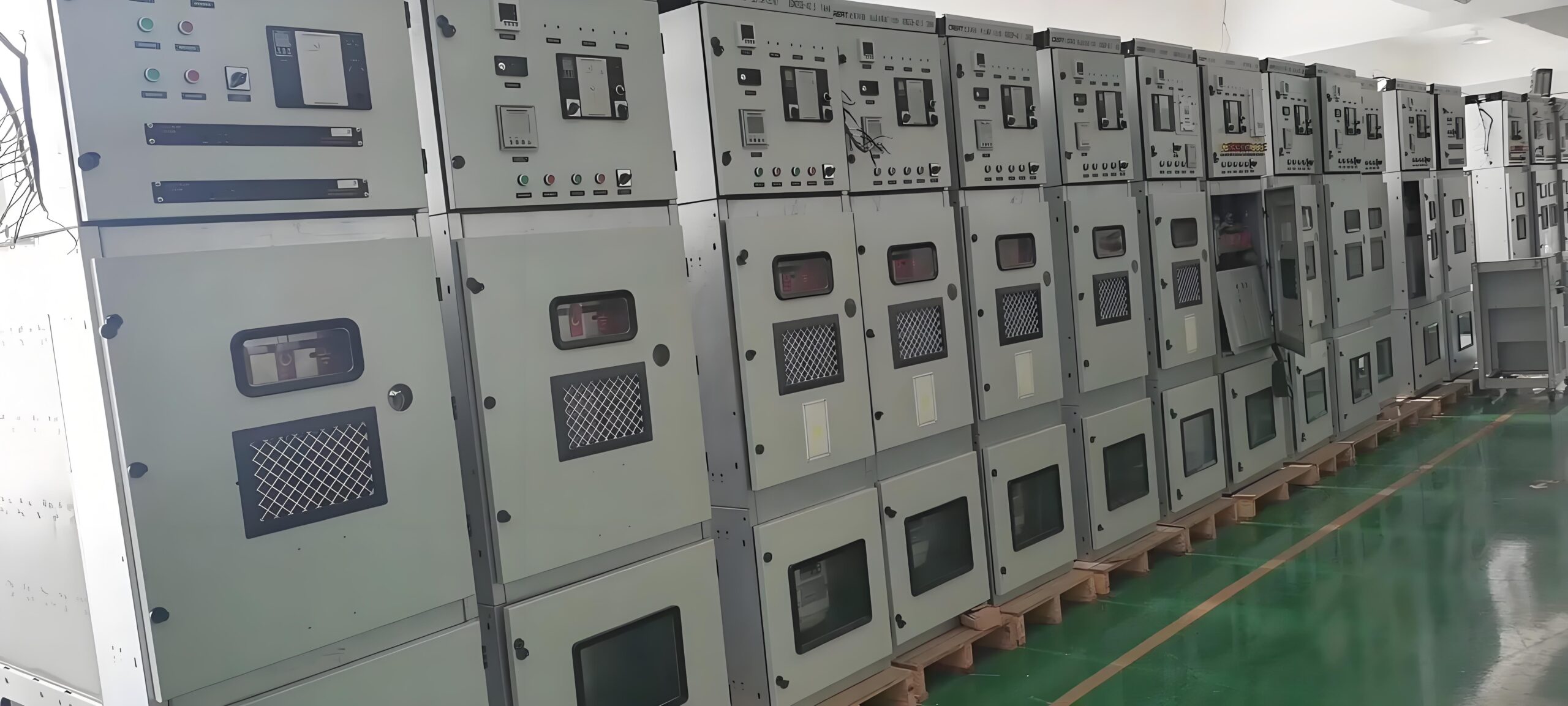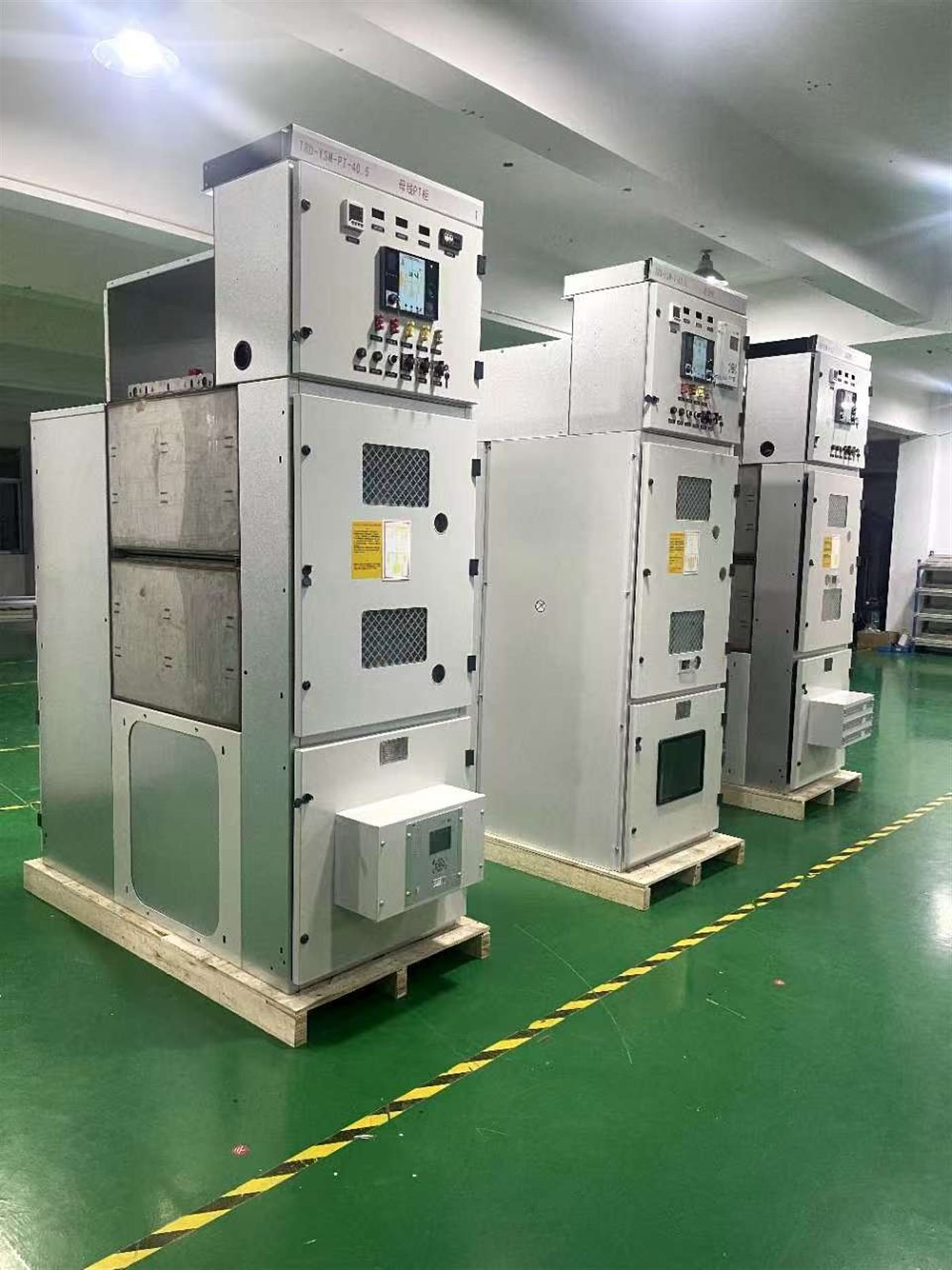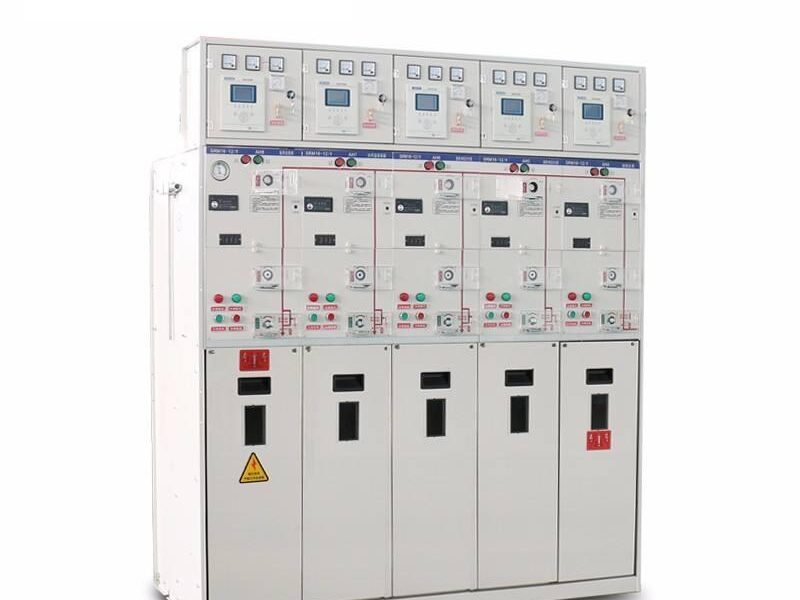
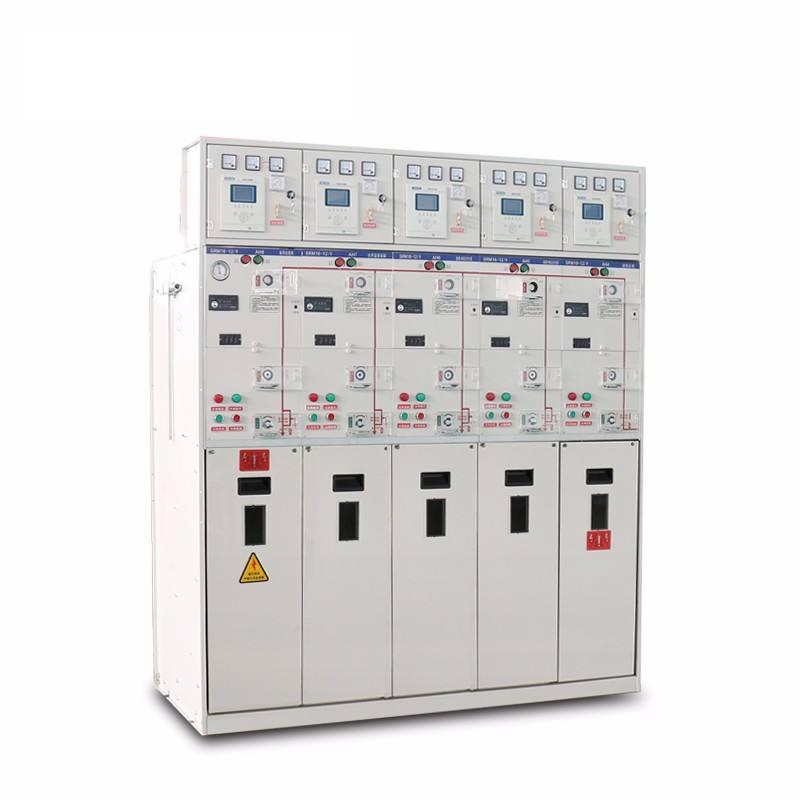
A switchgear room is a box that has to reject heat, hold a humidity band and keep dust out. Get that wrong and the panels are blamed for faults they did not cause.
Most site problems we are called about, condensation inside cubicles, tripping heaters, fogged sight windows and corroded contacts, come from room conditions rather than from the switchgear itself.
What the Room Has to Handle
Three loads act on the room at once. Copper and iron losses from busbars, breakers and cables add heat whenever current flows. Moisture arrives through doors, cable entry openings and outdoor air. Altitude thins the air, which reduces cooling and derates insulation.
The targets below are the ones we use when reviewing a room layout with a customer. They come from IEC 62271-1 service conditions with engineering margin added.
| Parameter | Target band | Why it matters |
|---|---|---|
| Ambient air temperature | −5 to +40 °C, 24 h average ≤35 °C | Relay accuracy, cable rating, insulation ageing |
| Relative humidity | ≤95% daily, ≤90% monthly average | Condensation on cold metal and insulators |
| Air changes per hour | 6–10 for closed rooms | Removes heat and keeps the air mixed |
| Dust and ingress | Room filtered, panel IP2X to IP4X internal | Creepage and contact wear |
| Altitude correction | Derate above 1,000 m; 1.0–1.13 factor | Insulation and heat transfer margins |
| Floor level and drainage | Raised 100 mm, cable trench drained | Water entry from flooding and cleaning |
Six Design Rules That Solve Most Problems
1. Pull air from low level and exhaust high
Cold air enters at the bottom of the room, warms as it passes the panels, and leaves at the top. Feeding air in at ceiling level just short-circuits the flow across the top of the room.
2. Size the fan for the heat, not for the volume
Calculate losses first: roughly 1 to 2% of the panel rating as heat, plus cable losses. A 630 A feeder at nominal load is only a few hundred watts, but a full board of them is several kilowatts. Air flow follows the heat load, and the volume rule is only a sanity check.
3. Keep windows closed and use filtered inlets
Open windows in a humid coastal climate are the fastest route to condensation. Use a filtered inlet with a washable prefilter and a pressure switch that alarms when the filter clogs.
4. Control humidity, not just temperature
A room at 30 °C and 90% RH holds more water than one at 40 °C and 60% RH. Dehumidifiers pay for themselves in rooms with cold night air and warm daytime air, which is exactly the pattern that fogs insulators.
5. Treat cable entries as part of the envelope
Cable trenches and entry sleeves are the biggest hidden leak. Seal them with fire-rated putty or a proper gland plate, and keep the trench drained so water never stands under the panel.
6. Leave room around heat sources
Breakers, cable boxes and CTs generate local hot spots. Keep 200 mm above the panel and 800 mm working clearance in front, and never stack a second row of panels against a wall with no air path behind it.
Free Cooling, Forced Ventilation or Air Conditioning
- Free cooling suits moderate climates and low-load rooms: inlet louvre, outlet louvre and a differential pressure path, no fans at all.
- Forced ventilation suits rooms with real heat load: axial or centrifugal fans with a thermostat, typically starting at 35 °C and stopping at 30 °C.
- Air conditioning suits sealed rooms in hot, dusty or coastal sites: split units sized for internal losses, with a dehumidification function, never a comfort-only unit.
Whatever you choose, add a high temperature alarm and a filter blockage alarm. Both are cheap, and both tell you the room is drifting before a relay starts misreading.
If the room is already built, fix the cheap items first. Sealing cable entries and adding a small dehumidifier costs far less than a fan retrofit, and in coastal or tropical sites those two steps solve most of the condensation complaints we see. Only then look at air flow, because a sealed room with poor air movement still needs both.
Room conditions also change how you maintain the panels. Our maintenance plan and testing guide assume the room is within spec, and the IP rating checks explain what the panel can and cannot protect against. For the hardware side see the components guide and the nameplate ratings list.
FAQ
Do I need ventilation for a room with only ring main units?
Usually free cooling is enough. RMU losses are low and the cubicle is sealed, so an inlet and outlet louvre plus a humidity check is sufficient in most climates.
What air change rate should I specify?
Six to ten air changes per hour for a closed room, then verify with the heat calculation. The heat figure decides the fan; the change rate only confirms the room is not dead air.
Is a dehumidifier enough without exhaust fans?
In a sealed room, yes, if it is sized for the moisture ingress and drains continuously. In a leaky room it will run constantly and still lose the fight.
How does altitude change the panel rating?
Above 1,000 m the air insulates and cools less. Manufacturers apply a voltage derating factor and often a current derating, and the room needs more air flow for the same heat load.
Can I put the switchgear room next to a diesel generator?
Only with separation. Radiated heat and exhaust gases raise room temperature and dust load. Keep 3 m or a fire-rated wall, and never share the ventilation path.
What temperature should trigger an alarm?
Set the first alarm at 40 °C inside the room and a second at 45 °C, which is when relay accuracy and cable ratings start to drift. Below 0 °C, add anti-condensation heaters instead.
About Electric-GS
Electric-GS is an OEM/ODM switchgear factory in Yueqing, Zhejiang, China. We supply fixed and withdrawable MV switchgear, gas-insulated ring main units and C-GIS cubicles from 11 kV to 33 kV, and we review room layouts with buyers before the panels are built, because ventilation and humidity decisions are cheaper at that stage than after commissioning. Send your site conditions and ratings to info@electric-gs.com or WhatsApp +86 135 8897 8050. English site: electricgs.com. Chinese notes: electric-cn.com.