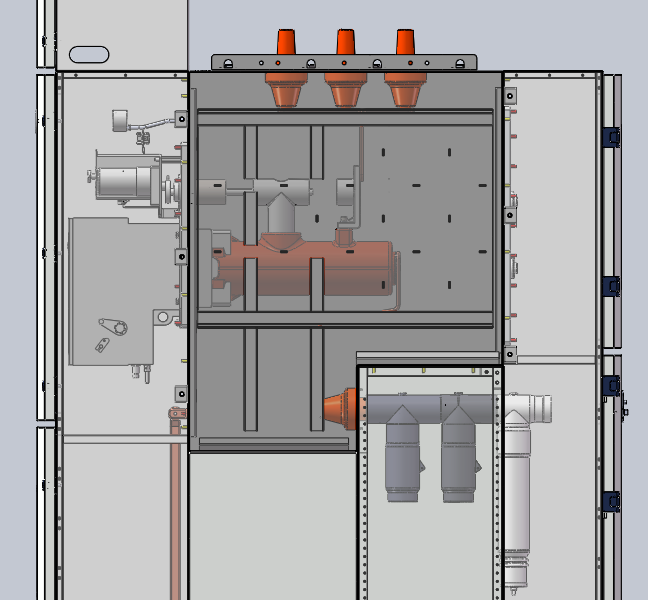
Why SF6 Gas Insulated Switchgear Matters
Substations in cities, data centres and industrial plants need compact, reliable and safe switching equipment. SF6 gas insulated switchgear (GIS) delivers all three in a footprint much smaller than traditional air-insulated designs. A gas insulated substation packs busbars, breakers, disconnectors and transformers into sealed modules filled with SF6 gas. This guide explains how it works, lists its main components and reviews the top benefits so you can decide whether SF6 gas insulated switchgear is right for your project.
What Is SF6 Gas Insulated Switchgear
SF6 gas insulated switchgear is a type of medium and high voltage switchgear where all live parts sit inside a sealed metal enclosure filled with sulphur hexafluoride (SF6) gas. The gas has very high dielectric strength, so clearances shrink and the whole assembly becomes far smaller than an air-insulated panel of the same rating.
Typical ratings run from 12 kV up to 145 kV and higher. Most substations choose GIS when land is scarce, when the site is indoors, or when the environment is dusty, humid or corrosive. Common voltage classes are 24 kV, 33 kV, 40.5 kV, 66 kV and 110 kV.
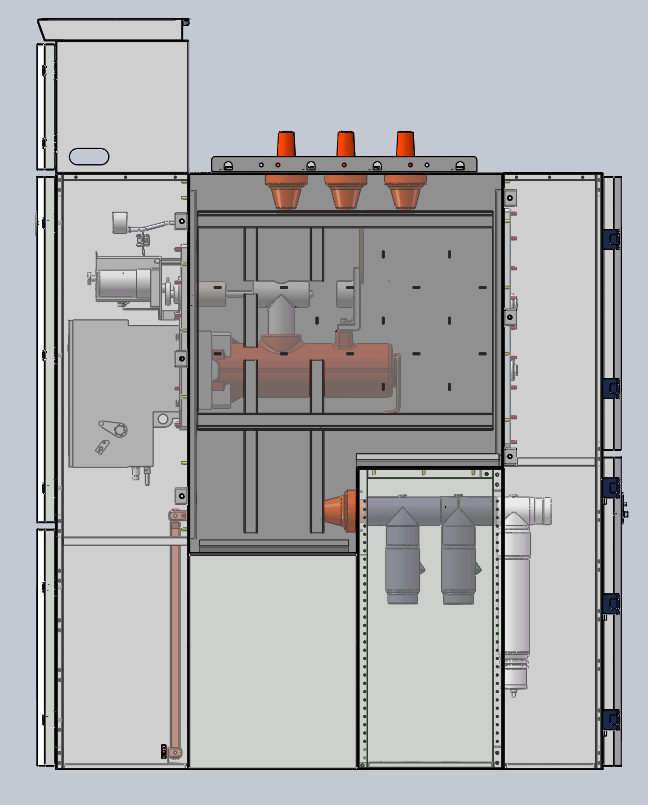
10 Key Benefits of SF6 Gas Insulated Substations
Benefit 1: Small footprint. A gas insulated substation needs a fraction of the floor space of an air-insulated station. In dense urban areas, this often decides whether a project is viable at all.
Benefit 2: High dielectric strength. SF6 gas withstands high voltage with short clearances. The same rating fits in a much smaller enclosure, which also reduces civil works and building size.
Benefit 3: Reliable under harsh environments. Because all live parts are sealed, dust, salt, humidity and pollution do not affect the insulation. GIS performs well in coastal and desert sites.
Benefit 4: Low maintenance. With no exposed contacts or creepage paths, a gas insulated substation needs fewer inspections than air-insulated switchgear. Maintenance intervals are longer, so operating costs fall.
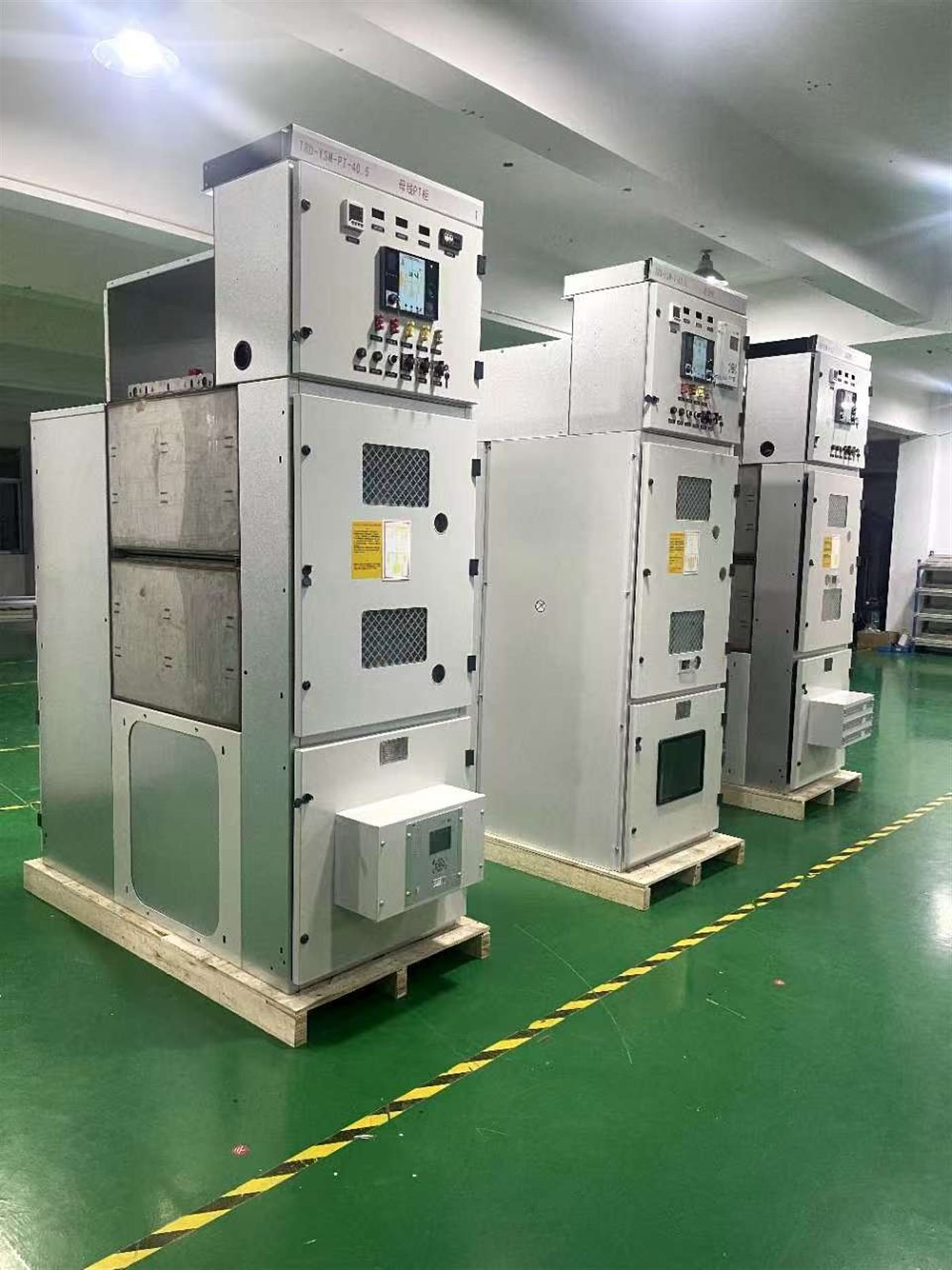
Benefit 5: Enhanced safety. The sealed enclosure contains arcs and prevents contact with live parts. Internal arc withstand and pressure relief designs protect operators and nearby equipment.
Benefit 6: Fast installation. GIS arrives factory-tested and ships as compact modules. On-site assembly and testing are quicker, which shortens the commissioning schedule.
Benefit 7: Long service life. A well-designed gas insulated substation lasts 30 years or more. Sealed modules keep components free from corrosion and contamination.
Benefit 8: Flexible layouts. GIS modules can be arranged indoors, underground or in a small building. This flexibility suits retrofit projects and constrained sites.
Benefit 9: Good dielectric recovery. After a fault, the SF6 gas recovers its insulation quickly, so breakers and disconnectors are ready for the next operation sooner.
Benefit 10: Lower overall lifecycle cost. The initial price of SF6 gas insulated switchgear is higher than air-insulated gear, but smaller footprint, less maintenance and longer life often reduce total cost over the project lifetime.
SF6 GIS vs Air-Insulated Switchgear
| Feature | SF6 Gas Insulated Switchgear | Air-Insulated Switchgear |
|---|---|---|
| Footprint | Very compact, sealed modules | Large open bay spacing |
| Dielectric medium | SF6 gas | Air at atmospheric pressure |
| Environmental sensitivity | Low, sealed from dust and moisture | High, affected by pollution and humidity |
| Maintenance | Less frequent | Regular cleaning and inspection |
| Installation time | Fast, factory-tested modules | Slower, more on-site assembly |
| Initial cost | Higher | Lower |
| Lifecycle cost | Often lower | Often higher over time |
For a detailed comparison of the two technologies, read our GIS vs AIS switchgear comparison for 33 kV and 66 kV substations.
Key Components of an SF6 Gas Insulated Substation
A complete gas insulated substation includes these sealed modules and systems:
- Gas insulated busbar that connects incoming and outgoing feeders.
- SF6 circuit breaker for fast fault interruption.
- Disconnectors and earthing switches for safe isolation and grounding.
- Current and voltage transformers for metering and protection.
- SF6 gas monitoring with density relays and pressure alarms.
- Control and protection cubicle with relays and SCADA interface.
See how these parts fit together in our 40.5kV GIS switchgear guide covering benefits and component selection.
Installation and Commissioning Checklist
Getting a gas insulated substation live is a controlled process:
- Unpack modules and check for shipping damage and gas pressure loss.
- Clean the sealing faces and torque flanges to the specified values.
- Fill or top up SF6 gas and perform a leak test on every joint.
- Test insulation resistance and dielectric integrity of the assembly.
- Run secondary injection tests on protection relays.
- Verify interlock sequences and breaker operation before energising.
Maintenance and Safety Considerations
SF6 gas insulated switchgear still needs a disciplined maintenance plan:
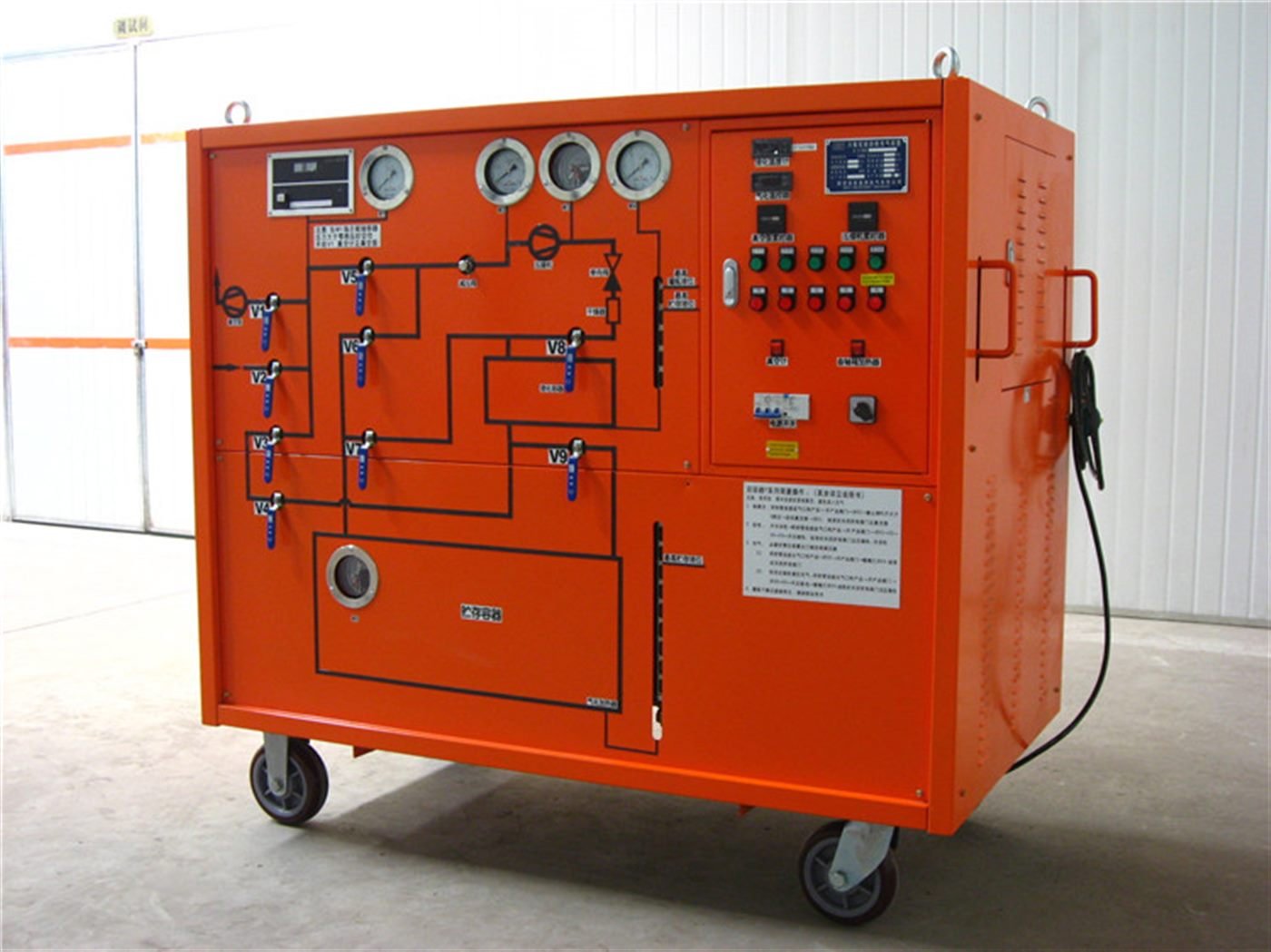
- Monitor SF6 density and pressure weekly; investigate any drop.
- Check gas compartments for leaks with a calibrated detector.
- Follow local regulations on SF6 handling, recovery and recycling.
- Test breakers and mechanisms annually and do a full overhaul on schedule.
- Keep spare gas and trained staff ready for emergency top-ups.
Choose a breaker technology that matches your site. Compare the SF6 vs vacuum circuit breaker selection to confirm the best option for your network.
Frequently Asked Questions
What is SF6 gas insulated switchgear?
SF6 gas insulated switchgear is medium or high voltage switchgear in which all live parts are sealed inside enclosures filled with SF6 gas, giving a compact and reliable substation design.
Why use SF6 gas in GIS?
SF6 has very high dielectric strength and excellent arc-quenching properties, so clearances shrink and the switchgear becomes much smaller and safer than air-insulated types.
Where is SF6 GIS most suitable?
GIS is ideal for urban substations, indoor sites, coastal and desert areas, data centres, industrial plants and any project where space or environmental reliability matters.
Is SF6 gas harmful to the environment?
SF6 is a potent greenhouse gas, so plants must control leaks, use recovery equipment and follow regulations on handling, recycling and disposal to minimise emissions.
How does SF6 GIS compare with air-insulated switchgear?
GIS is far more compact, more reliable in harsh environments and needs less maintenance, but it has a higher initial cost and requires careful gas management.
How long does an SF6 gas insulated substation last?
With proper maintenance, a gas insulated substation typically lasts 30 years or more because sealed modules protect components from dust, moisture and corrosion.
About Electric-GS
Electric-GS is an OEM and ODM manufacturer based in Yueqing, China, specialising in medium voltage switchgear, SF6 GIS, ring main units and vacuum circuit breakers. We build SF6 gas insulated switchgear panels for projects worldwide and support custom designs, factory testing and after-sales service. Contact us at info@electric-gs.com or WhatsApp +86 135 8897 8050. For our product range, visit the Electric-GS global site or the Electric-GS China site.
3 thoughts