
Choosing between an SF6 circuit breaker and a vacuum circuit breaker is one of the most important decisions in any medium voltage switchgear project. Both technologies interrupt fault currents reliably, but they differ in working principle, maintenance needs, life cycle cost and environmental impact. This vacuum circuit breaker vs SF6 guide compares the two technologies side by side and gives you a clear selection framework for 2026.
SF6 Circuit Breaker vs Vacuum Circuit Breaker: Key Differences at a Glance
The table below summarises the main differences. Use it as a quick reference, then read the detailed sections to make the right choice.
| Parameter | SF6 Circuit Breaker | Vacuum Circuit Breaker |
|---|---|---|
| Arc quenching medium | Sulphur hexafluoride (SF6) gas | Vacuum |
| Typical voltage range | Medium and high voltage, 12kV to 800kV | Medium voltage, mainly 3.6kV to 40.5kV |
| Contact travel | Short | Very short, about 8 to 12 mm |
| Mechanical life | Up to 10,000 operations | Up to 30,000 operations |
| Maintenance interval | Gas handling required | Virtually maintenance free |
| Environmental concern | Greenhouse gas, GWP 23,500 | None |
| Typical cost | Higher | Lower |
How an SF6 Circuit Breaker Works
An SF6 circuit breaker uses sulphur hexafluoride gas as the arc extinguishing medium. The gas has excellent dielectric strength, roughly three times that of air, and excellent arc quenching properties.
Arc interruption in SF6. When the contacts separate, the fault current creates an arc inside a sealed chamber filled with SF6. The gas absorbs the arc energy, dissociates and recombines quickly, cooling and extinguishing the arc within a few milliseconds. Because SF6 recovers its dielectric strength fast, SF6 breakers handle very high short circuit currents and are widely used at high voltage levels.
Sealed pressure system. The gas is kept in a sealed chamber at low pressure. This requires a tight sealing system and, on some designs, gas density monitoring to detect slow leaks. A good earthing switch complements the breaker for safe isolation during maintenance.
How a Vacuum Circuit Breaker Works
A vacuum circuit breaker extinguishes the arc inside a vacuum interrupter, a sealed ceramic or glass envelope with a very high internal vacuum, usually below 10-4 Pa.
Fast arc extinction in vacuum. When the contacts part, the arc vaporises a small amount of contact material into the vacuum gap. Because the vacuum has almost no particles to sustain ionisation, the arc extinguishes at the first natural current zero, typically within 10 to 20 milliseconds. The vacuum circuit breaker therefore interrupts current very fast and cleanly, with a long electrical life.
No gas, no pressure. Vacuum interrupters need no gas handling, no refilling and no gas monitoring. They are compact, silent and safe in operation, which makes them the first choice for medium voltage panels, RMU cabinets and medium voltage switchgear.
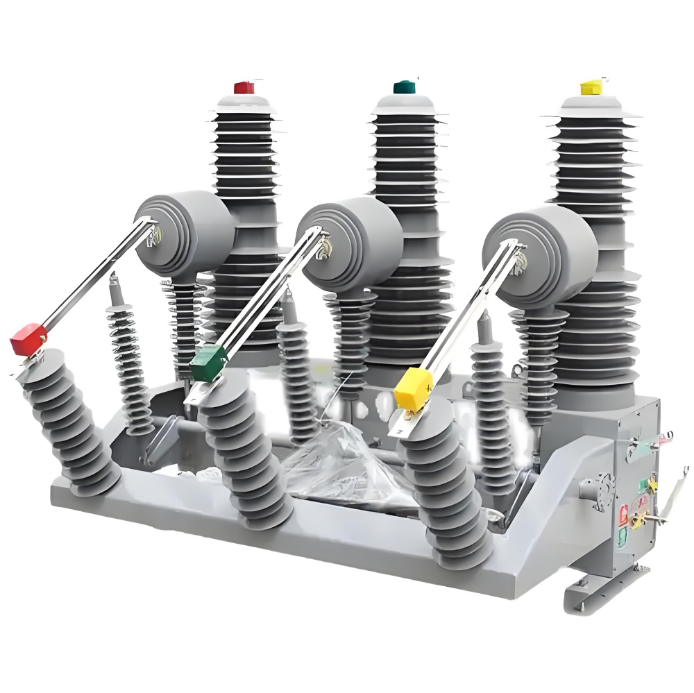
SF6 vs Vacuum Circuit Breaker: Detailed Comparison
Both breakers extinguish the arc at current zero, but vacuum does it faster and with far less contact travel. SF6 relies on gas pressure and dielectric recovery, while vacuum relies on the absence of an ionising medium.
Voltage and application range. Vacuum dominates the medium voltage range up to 40.5kV. SF6 is still preferred above 72.5kV and for high voltage transmission, where vacuum interrupters become harder to build economically.
Maintenance and lifecycle. Vacuum breakers are practically maintenance free, with up to 30,000 mechanical operations. SF6 breakers need periodic gas checks and careful handling of the greenhouse gas. This difference drives the total cost of ownership.
Environmental and regulatory factors. SF6 is a potent greenhouse gas with a global warming potential of about 23,500. Many utilities now reduce SF6 usage under stricter emission rules. Vacuum technology has no such concern and is the trend for 2026 and beyond. For medium voltage panels, a reliable vacuum circuit breaker with proper ratings is usually the most compliant choice.
Selection Criteria: SF6 or Vacuum Circuit Breaker?
Follow these steps to choose the right breaker for your project.
- Determine the nominal voltage and insulation level of your network.
- Calculate the rated short circuit breaking current your fault level requires.
- Check the number of operations expected, especially for frequent switching duty.
- Review maintenance resources and whether your site can manage SF6 gas handling.
- Consider environmental regulations and future SF6 restrictions.
- Compare the total cost of ownership, not just the purchase price.
For most medium voltage applications, a vacuum circuit breaker offers the best balance of cost, life and safety. For transmission level projects, SF6 remains a proven option. Also review our top 10 vacuum circuit breaker selection tips and the MV switchgear maintenance plan to keep your breaker in peak condition. For full product documentation, visit our global portal at electricgs.com or the Chinese portal at electric-cn.com.
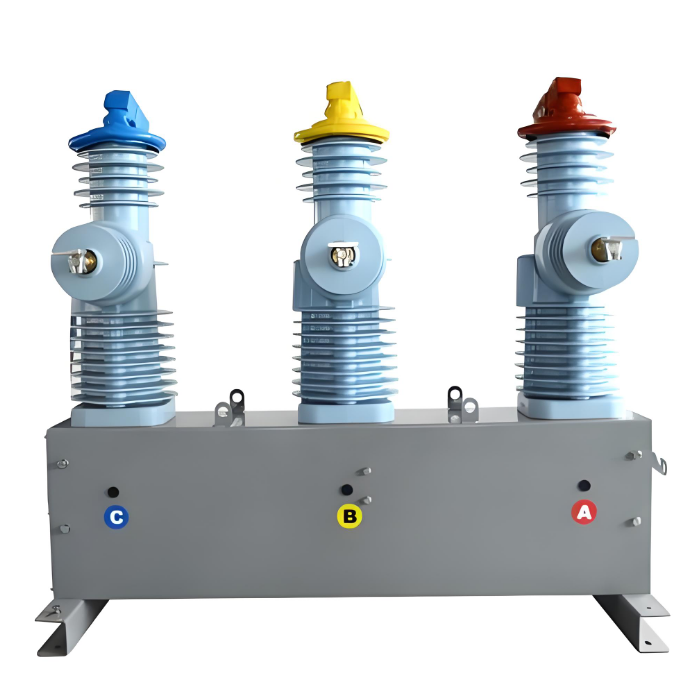
Maintenance and Lifecycle Cost Comparison
Vacuum interrupters are sealed for life. Routine work is limited to mechanism lubrication and contact wear checks after many operations. SF6 breakers require gas density monitoring, leak checks and, over time, gas reconditioning, which adds cost and logistics.
Over a 20 year life, the lower maintenance of the vacuum circuit breaker usually produces a lower total cost of ownership in the medium voltage range, even when purchase prices are similar.
Frequently Asked Questions
Which is better, SF6 or vacuum circuit breaker?
For medium voltage up to 40.5kV, the vacuum circuit breaker is generally the better choice due to lower maintenance, longer life and no greenhouse gas. SF6 is preferred for high voltage above 72.5kV.
Can a vacuum circuit breaker replace an SF6 circuit breaker?
Yes, in most medium voltage applications a vacuum interrupter can replace SF6 if the rated voltage, current and breaking capacity are matched. Check the panel dimensions and fixing layout before replacement.
What is the typical life of a vacuum circuit breaker?
A quality vacuum interrupter can handle 20,000 to 30,000 mechanical operations and up to 10,000 to 30,000 electrical operations at rated current, often giving 20 years or more of service.
Why is SF6 being phased out?
SF6 has a global warming potential about 23,500 times that of CO2. Growing environmental regulation is pushing utilities to replace SF6 with vacuum or solid insulated technology.
Is the vacuum circuit breaker maintenance free?
Not fully, but it is close. The sealed interrupter needs no maintenance, but the operating mechanism, springs and contacts should still be inspected periodically as part of a switchgear maintenance plan.
What voltage range is vacuum technology most suitable for?
Vacuum circuit breakers are most common from 3.6kV to 40.5kV. For higher voltages, SF6 or a combination of SF6 and vacuum remains the industry standard.
About Electric-GS
Electric-GS is a professional switchgear and vacuum circuit breaker manufacturer based in Yueqing, China. We offer OEM and ODM services for ring main units, medium voltage switchgear, vacuum circuit breakers, transformers and box substations, with strict quality control and global export experience. Contact us at info@electric-gs.com or WhatsApp +86 135 8897 8050 for a fast quotation.