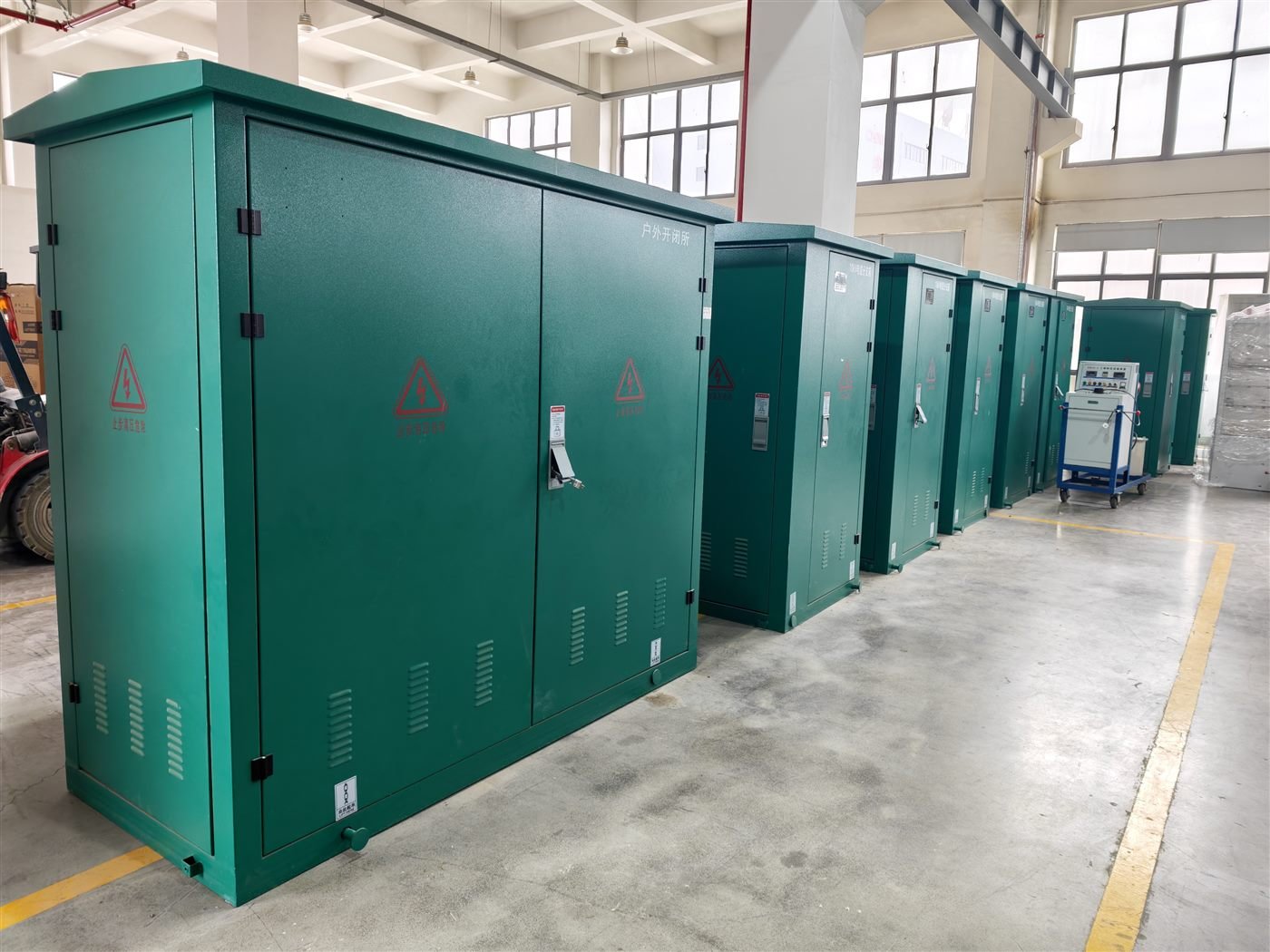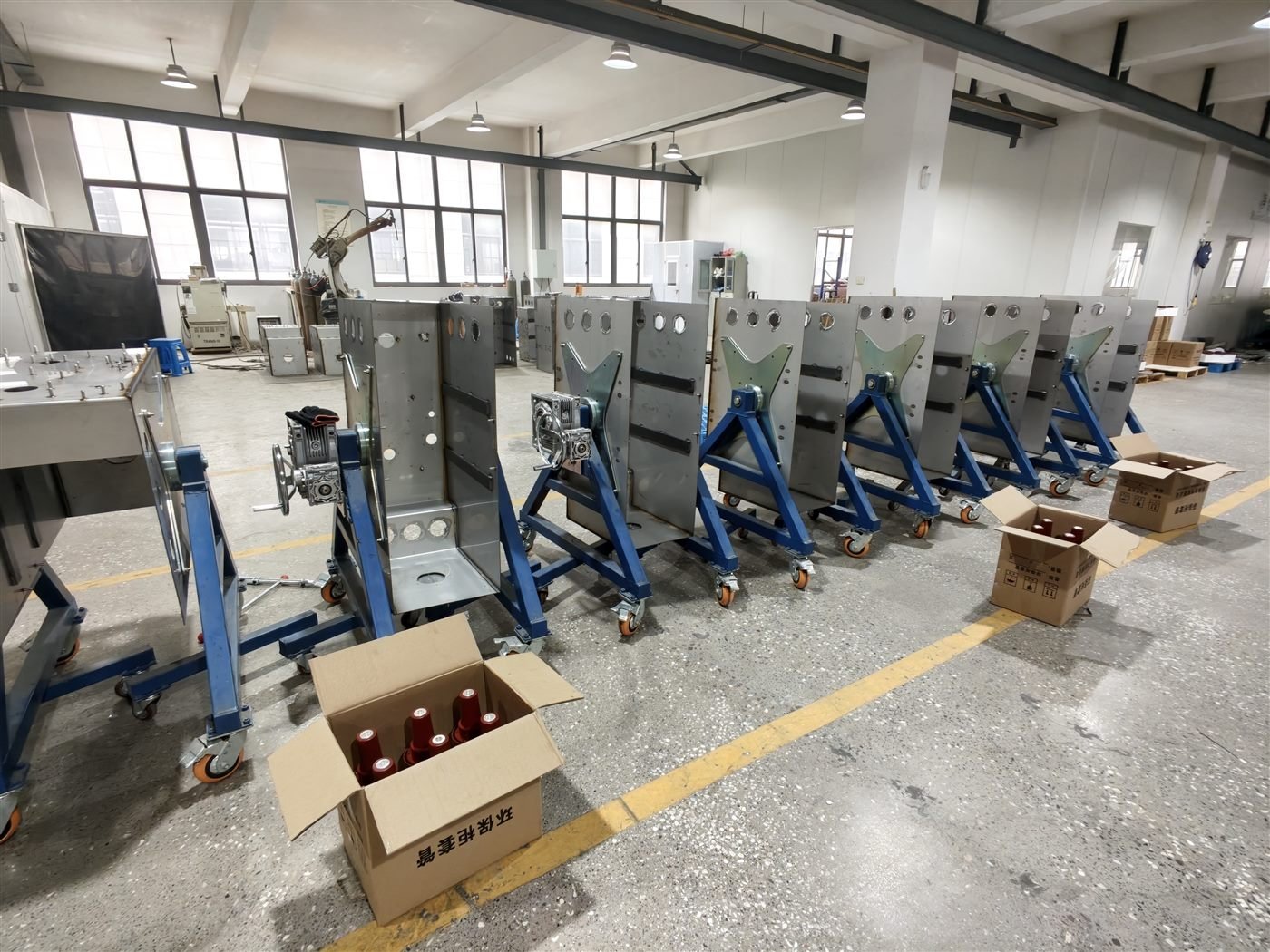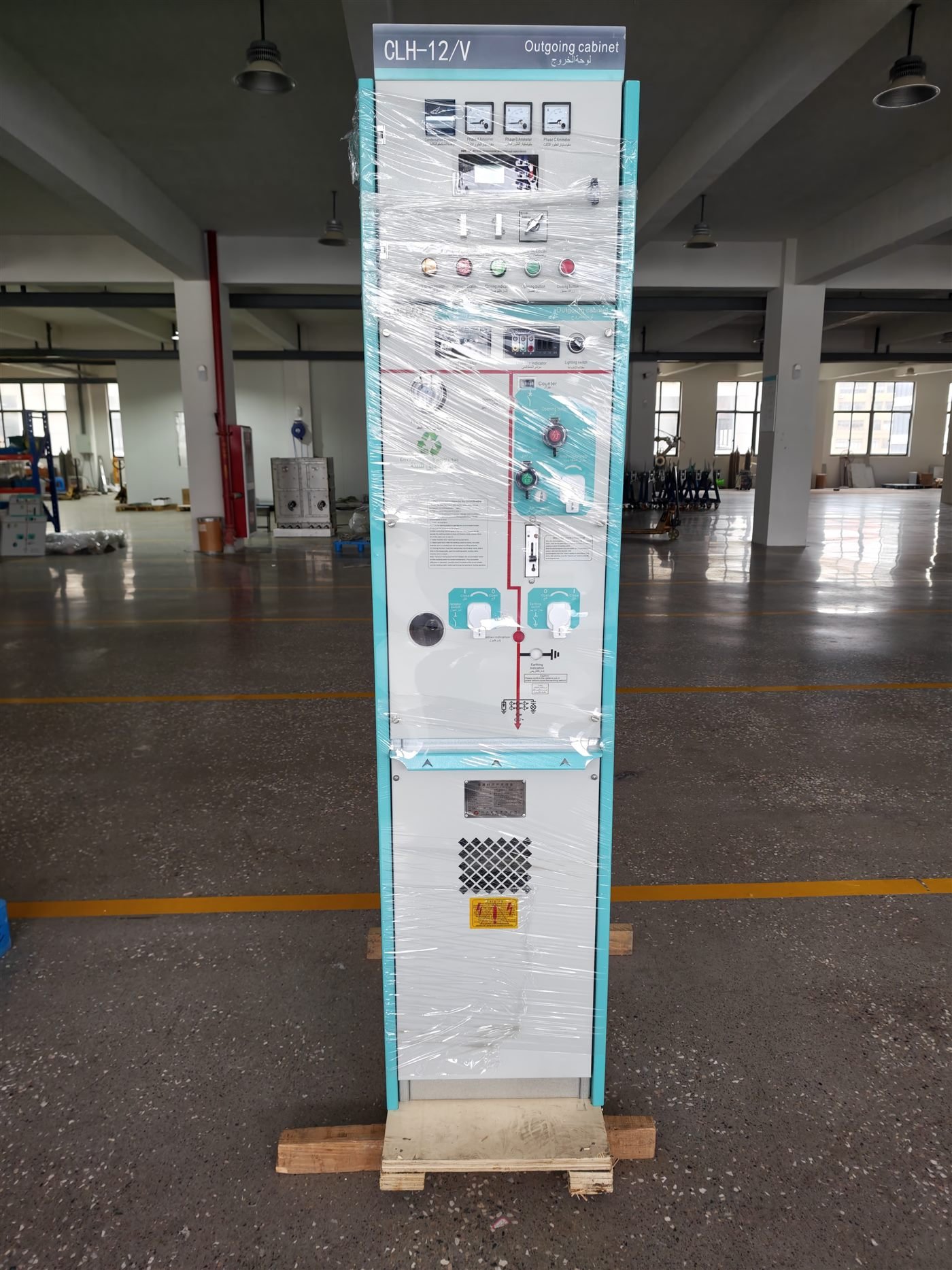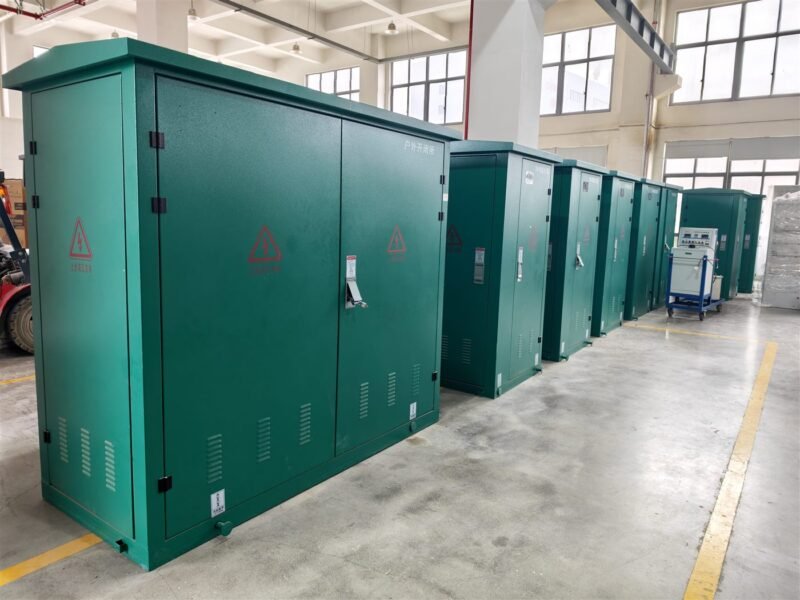
Outdoor switchgear faces rain, dust, UV radiation and temperature swings. A cable distribution box installed outdoors must protect live parts for decades. This article shows how outdoor cable distribution boxes and enclosures are produced at Electric-GS, from enclosure design to final weatherproof testing.
Design Requirements for Outdoor Enclosures
Outdoor enclosures must meet IP54 or higher ingress protection, resist corrosion, and handle solar radiation without degrading. The design also considers cable entry from the bottom, drainage for condensation, and lockable doors for security.
- IP54 minimum for outdoor cable boxes.
- Powder coating with UV-stable polyester paint.
- Galvanized steel or stainless hardware.
- Roof slope and drainage holes to shed water.
Enclosure Fabrication and Surface Treatment
Enclosures start as galvanized sheet metal, cut and bent on CNC machines, then welded in jigs. After welding, the surface goes through degreasing, phosphating and powder coating. The coating thickness is checked at 60 to 120 microns for corrosion protection.
Busbar and Connection Assembly
Inside the box, busbars carry the current between incoming cables and outgoing branches. Busbars are drilled, bent, and silver-plated at the joints. Each joint is torqued to specification and marked. The contact resistance is measured to confirm a low-resistance connection.
Cable Entry and Sealing
Cables enter from the bottom through IP-rated glands or a sealed cable plate. Each gland is tightened with a torque wrench and sealed with compound where required. This step is critical: a poorly sealed gland is the most common cause of water ingress in outdoor boxes.
Assembly Line Steps
| Step | Operation | Check |
|---|---|---|
| 1 | Mount enclosure on fixture | Level and square |
| 2 | Install busbar supports | Creepage distances |
| 3 | Assemble busbar and branches | Torque + resistance |
| 4 | Install switches and protection | Function test |
| 5 | Wire secondary circuits | Wire check against diagram |
| 6 | Seal and close enclosure | IP test, earth continuity |
Testing Outdoor Boxes Before Shipping
Every box is tested before dispatch: earth continuity, insulation resistance, power frequency withstand, and a water spray test where required by the specification. The test report is included with the delivery. Our switchgear factory testing guide explains the full test scope.
FAQ
1. What IP rating do outdoor cable distribution boxes need?
IP54 is the minimum for most outdoor installations; IP65 is used for harsh or washdown environments.
2. What material is used for outdoor boxes?
Galvanized steel with polyester powder coating, or stainless steel for coastal areas.
3. How do you prevent condensation inside the box?
With breather valves, anti-condensation heaters, or desiccant, depending on the site humidity.
4. Can outdoor boxes be customized?
Yes. Electric-GS offers OEM/ODM customization of dimensions, cable entries, door layouts and colors.
5. What tests are performed on outdoor boxes?
Earth continuity, insulation resistance, power frequency withstand and water spray (IP) tests.
6. How long do outdoor enclosures last?
With proper galvanizing and coating, 15 to 25 years depending on the environment.
Material Selection for Outdoor Enclosures
The enclosure material decides the service life of an outdoor cable distribution box. Galvanized steel with a polyester powder coating is the most common choice: the zinc layer protects the base metal and the powder coating resists UV and mechanical damage. Stainless steel is specified for coastal areas and food processing plants where corrosion resistance must be maximum. For underground installations, GRP or SMC composite enclosures offer excellent insulation and corrosion resistance with lighter weight.
Pay attention to the details that are easy to miss: the door hinges should be stainless steel, the gaskets should be EPDM or silicone rather than simple foam, and the cable entry plates should accept the gland sizes you actually use. A well-chosen enclosure keeps its IP rating for years; a poorly chosen one rusts at the hinges and leaks at the gaskets.
Ingress Protection and Ventilation
Outdoor boxes are specified by their IP rating. IP54 is typical for boxes with ventilation that must shed heat; IP65 or IP66 is used where dust and water ingress must be prevented completely. If the box contains live terminations that generate heat, a ventilated design with filtered louvers is better than a sealed box that overheats. Balance between ingress protection and thermal management is a key design decision.
Installation Best Practices
- Mount the box on a stable base above ground level so that water cannot enter from below.
- Use weatherproof glands with the correct IP rating for every cable entry; leave unused entries blanked.
- Allow cable bending radius at the entries to avoid stress on terminations.
- Connect the earthing terminal correctly and test the earth continuity.
- Seal the base with cable compound or foam where rodents and insects can enter.
- Position the box so that the door opens fully for maintenance access.
Following these practices prevents the most common field failures: water ingress, cable damage at the entry and poor earthing.
Safety Features for Live-Termination Boxes
Outdoor distribution boxes that contain live terminations must include safety features that protect the operator. Doors should have mechanical interlocks where the box is a switch-disconnector combination, and clear warning labels must show the voltage and the required PPE. A padlockable door handle prevents unauthorized access, and a viewing window lets inspectors check the condition of terminations without opening the box. For boxes that supply public areas, consider a lock with a standard key so the utility and the customer can both access it safely while unauthorized persons cannot.
Safety Features for Live-Termination Boxes
Outdoor distribution boxes that contain live terminations must include safety features that protect the operator. Doors should have mechanical interlocks where the box is a switch-disconnector combination, and clear warning labels must show the voltage and the required PPE. A padlockable door handle prevents unauthorized access, and a viewing window lets inspectors check the condition of terminations without opening the box. For boxes that supply public areas, consider a lock with a standard key so the utility and the customer can both access it safely while unauthorized persons cannot.
About Electric-GS
Electric-GS is a professional medium and low voltage switchgear manufacturer based in Yueqing, China. We supply ring main units, GIS, vacuum circuit breakers, LV and MV switchgear, transformers, compact substations and solar distribution products as an OEM/ODM factory. For a quotation or technical support, email info@electric-gs.com or contact us on WhatsApp at +86 135 8897 8050. Visit our partner sites electricgs.com and electric-cn.com for more product information.
Related Reading
- Inside Electric-GS: How Switchgear Is Manufactured and Tested
- How Switchgear Enclosures Are Built
- Switchgear Factory Testing and Certification Guide
- Inside the Factory: Medium Voltage Switchgear Assembly