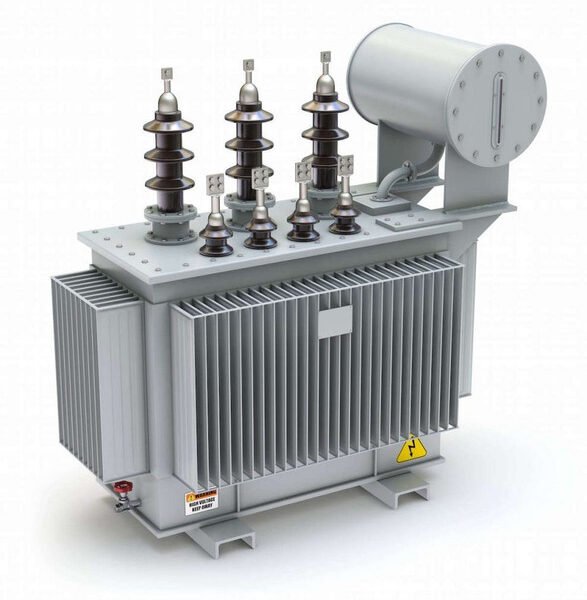
A compact substation packs a transformer, a medium-voltage compartment, low-voltage feeders and a metering panel into one factory-built enclosure. It is the fastest way to electrify a site, and the easiest way to buy the wrong thing. These six checks decide whether the unit arrives ready to energise or needs a second round of engineering on site.
Check 1: Voltage Class and Insulation Level
Start with the system voltage, not the transformer rating. A compact substation for an 11 kV network needs Um 12 kV equipment rated 28 kV for lightning impulse, while a 33 kV unit needs Um 36 kV and a 170 kV impulse level. Mixing these up is the most common specification error we see in enquiries.
Confirm three numbers with your utility before you order:
- System voltage and maximum operating voltage (Um)
- Lightning impulse withstand level, line to earth and line to line
- Minimum creepage distance, normally 20 mm per kV for outdoor sites
In ANSI markets a 13.8 kV unit usually carries 15 kV class equipment at 95 kV BIL. State both standards on the data sheet when your site straddles them, and name the test report that applies.
Check 2: Transformer Rating, Cooling and Losses
Size the transformer on measured demand, not on installed load. Ask for the load study, then add 20 to 30 percent for growth and motor starting. A 630 kVA unit pushed to 700 kVA ages fast; a 1000 kVA unit on a 500 kVA load wastes no-load losses for twenty years.
Ratings that belong on the purchase order: rated power in kVA, primary and secondary voltage, vector group such as Dyn11, impedance around 4 to 6 percent, tapping range plus or minus 2 x 2.5 percent, and the permitted temperature rise. Oil-immersed units are normally limited to 65 K top oil rise; dry-type units to 100 K by insulation class.
Oil-immersed or dry-type? Oil units cost less per kVA and handle overload well, but need bunding, fire separation and periodic oil tests. Dry-type units suit shopping centres, hospitals and tunnels where a spill is unacceptable. For a sealed enclosure on a remote site, oil-immersed with a sealed tank is usually the practical choice.
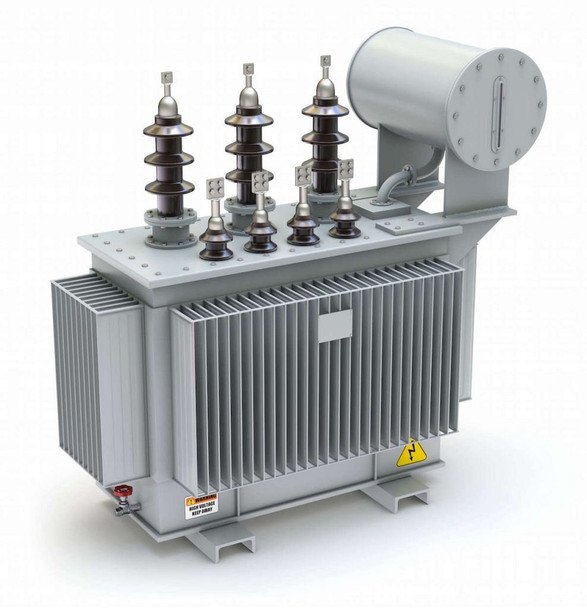
Check 3: MV Compartment — RMU, VCB or GIS
The medium-voltage side can be a ring main unit, a vacuum circuit breaker panel or a GIS module. An RMU suits two incoming ring ways and one transformer way. A VCB panel adds fault breaking and relay protection where the transformer is large or the supply is weak. GIS fits where floor space or pollution rules out air insulation; the trade-off is set out in our GIS versus AIS switchgear comparison.
State the short-circuit rating explicitly. A 630 kVA unit on a stiff 11 kV network may see 25 kA, which rules out a 16 kA RMU. Ask the utility for the fault level, then require type tests at that value for one second.
Check 4: Enclosure, IP Rating and Site Conditions
The enclosure is what makes the unit survive outside. IP 54 keeps dust and splashing water out and is the usual choice for coastal or industrial sites; IP 33 is acceptable only under a canopy or in a clean yard. For seaside installations, specify hot-dip galvanised steel with a C5-M paint system or GRP panels, otherwise the first corrosion appears within two summers.
Give the supplier the real ambient conditions: maximum summer temperature, altitude, wind load, snow load and seismic zone. A 40 °C design derates quickly at 50 °C, and coastal slabs need documented corrosion protection.
Check 5: Cables, Foundation and Clearances
Cable entry decides the layout. Bottom entry needs a cable trench or a raised plinth; side entry needs wall clearances that many compact designs do not offer. Confirm the cable size and the number of cores per way, then check that the termination space inside the MV compartment can actually take that cable. Our guide to medium voltage cable sizing covers the current and voltage drop side of this decision.
Foundations are quoted separately more often than buyers expect. A precast slab with lifting points, a cable pit and an earth mat costs less than rebuilding a base later, and the sequence is covered in these outdoor RMU foundation steps.
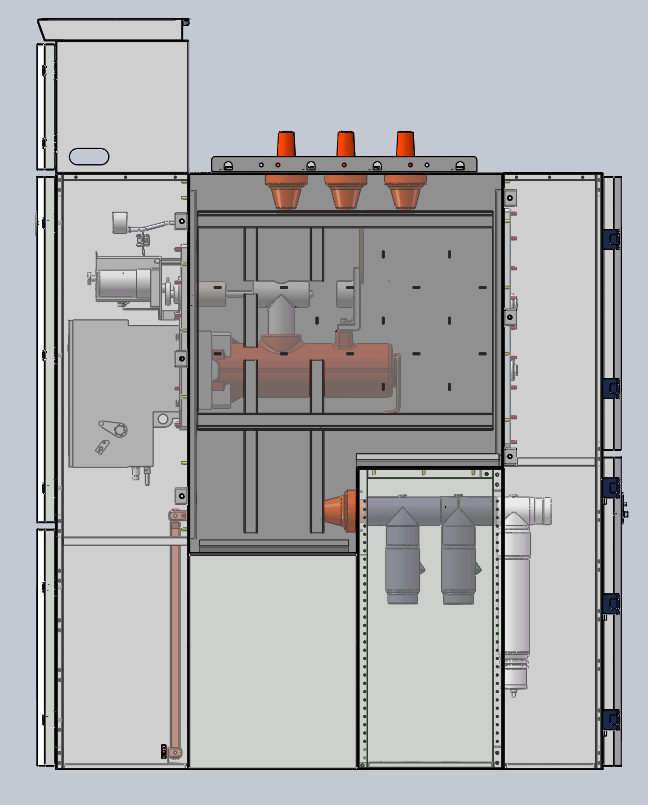
Check 6: Protection and Remote Monitoring
A compact substation without protection is a box with a transformer inside. For a transformer way, ask for an overcurrent and earth fault relay with definite time or inverse time curves, plus a trip coil on the MV switch. For larger units add winding temperature trips, a Buchholz relay on oil-immersed designs, and a pressure relief device.
If the site is unmanned, add a small RTU or gateway speaking Modbus TCP or IEC 61850, with digital inputs for switch position, fuse failure and door alarms. Metering should log kWh, maximum demand and power factor; class 1 suits internal reconciliation, class 0.5S for utility billing.
Before you sign off, check the ratings against the metal plate that arrives with the unit — the checks in our article on reading a switchgear nameplate take ten minutes.
Specification Table to Send to Suppliers
| Item | What to specify | Typical value |
|---|---|---|
| System voltage | Um and impulse level | 12 kV / 28 kV or 36 kV / 170 kV |
| Transformer | Rating, vector group, impedance | 630 kVA, Dyn11, 4.5% |
| MV switchgear | Type and fault rating | RMU, 20 kA / 1 s |
| LV side | Outgoing ways and busbar rating | 4 x 400 A, 630 A busbar |
| Enclosure | IP rating and finish | IP 54, C5-M paint, 2 mm steel |
| Ambient | Temperature, altitude, seismic | 45 °C, 1000 m, zone 2 |
| Protection | Relay functions and RTU protocol | 50/51, 51N, Modbus TCP |
| Documents | Type test reports and drawings | IEC 62271-202, GA and SLD |
Frequently Asked Questions
How long does delivery take?
A standard 630 kVA unit with an RMU compartment takes four to six weeks from approved drawings. Custom enclosures or SCADA integration add two to three weeks.
Can a compact substation be installed indoors?
Yes, provided the enclosure is rated for the room and ventilation is designed for the transformer losses. Dry-type transformers are usually required in basements and public buildings.
Is a compact substation the same as a package substation?
Essentially yes. Package substation, compact substation and box substation describe the same factory-assembled combination of transformer, MV and LV equipment.
What is the usual lead time for type test reports?
Reports for standard designs are supplied with the unit. If your fault level or enclosure differs from the tested configuration, expect a separate type test programme of six to ten weeks.
How much space does a 630 kVA unit need?
Allow roughly 3.5 by 2.2 metres for the enclosure plus one metre working clearance on each side. Cable entry and transformer removal space often set the real footprint.
Electric-GS builds compact substations, ring main units, GIS modules and LV panels in Yueqing, Zhejiang, as an OEM and ODM supplier for projects across Asia, Africa and Latin America. Send your single-line diagram and the six checks above, and we return a marked-up drawing, a rating table and a quotation. Email info@electric-gs.com or reach us on WhatsApp at +86 135 8897 8050. More ranges are on our product site and export catalogue.