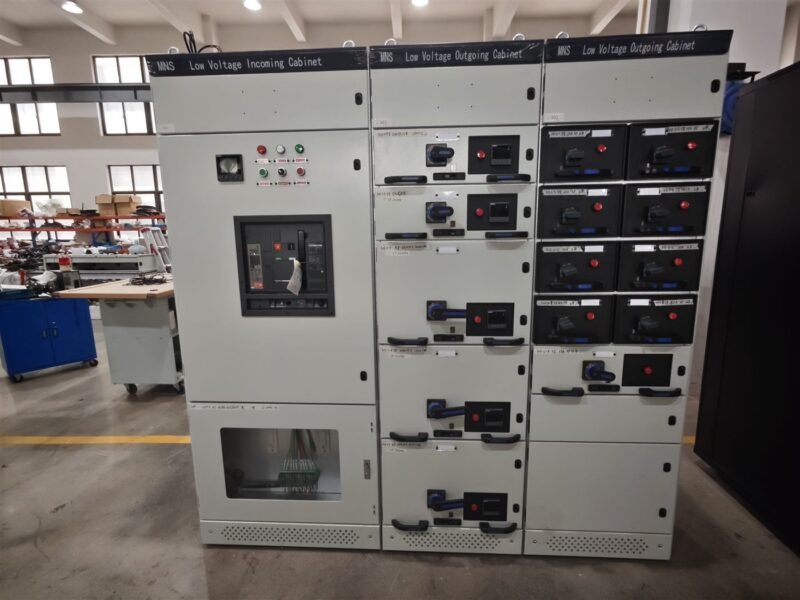
A switchgear nameplate is the only document that travels with the panel for the next twenty years. Cable schedules get lost, drawings get revised, and the engineer who specified the board leaves the company. The plate stays on the enclosure. If it is wrong or simply not understood, every future maintenance decision starts from bad data.
What a Switchgear Nameplate Actually Tells You
A nameplate is a legal summary, not a marketing label. It records the ratings the manufacturer declares and the standard those ratings were verified against. Under IEC 62271-200 for metal-enclosed switchgear, the plate must carry the manufacturer, type designation, serial number, rated voltage, rated current, rated short-time withstand current and its duration, rated peak withstand current, IP code, and the standard reference.
Two things follow from that. First, the plate is a contract: a 630 A panel that arrives with a 400 A plate is a non-conformance, whatever the invoice says. Second, the plate is a maintenance tool: a technician reading the short-time withstand rating knows immediately how much fault current the busbar can survive while the upstream protection clears.
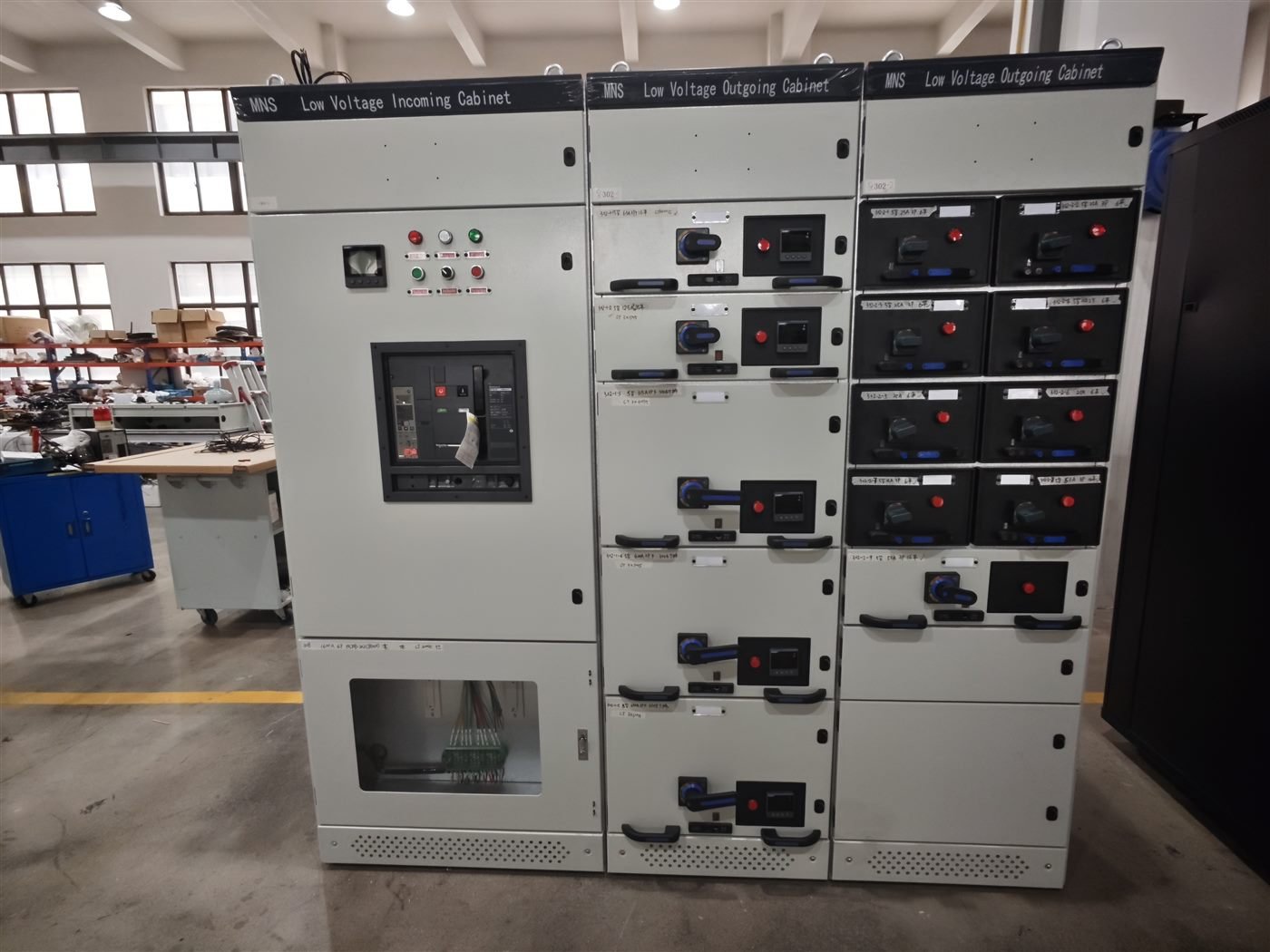
The 7 Ratings That Matter Most
- Rated voltage (Ur) — the highest line-to-line voltage the assembly is designed for, such as 12 kV or 24 kV.
- Rated insulation level — the power-frequency and lightning impulse withstand values, written as 28 kV / 75 kV for a 12 kV board.
- Rated current (Ir) — the continuous current the main busbar and each functional unit can carry.
- Rated short-time withstand current (Ik) — the fault current the assembly survives for a stated duration, typically 1 s or 3 s.
- Rated peak withstand current — the asymmetric peak, usually 2.5 times the short-time value for 50 Hz systems.
- IP code — ingress protection for the enclosure, commonly IP41 indoors and IP54 outdoors.
- Standard and loss class — the IEC reference plus the internal arc classification, such as IAC A FLR 20 kA 1 s.
Rated Current Versus Short-Time Withstand
These two are constantly confused. Rated current is a thermal limit under continuous load. Short-time withstand current is a mechanical and thermal limit under fault. A board rated 630 A / 25 kA 1 s can carry 630 A forever and survive 25 kA for one second. It cannot carry 25 kA, and it cannot survive 25 kA for three seconds. When the plate states 20 kA 3 s, the energy absorbed is roughly three times higher than for 20 kA 1 s, so the busbar section and its supports belong to a different product.
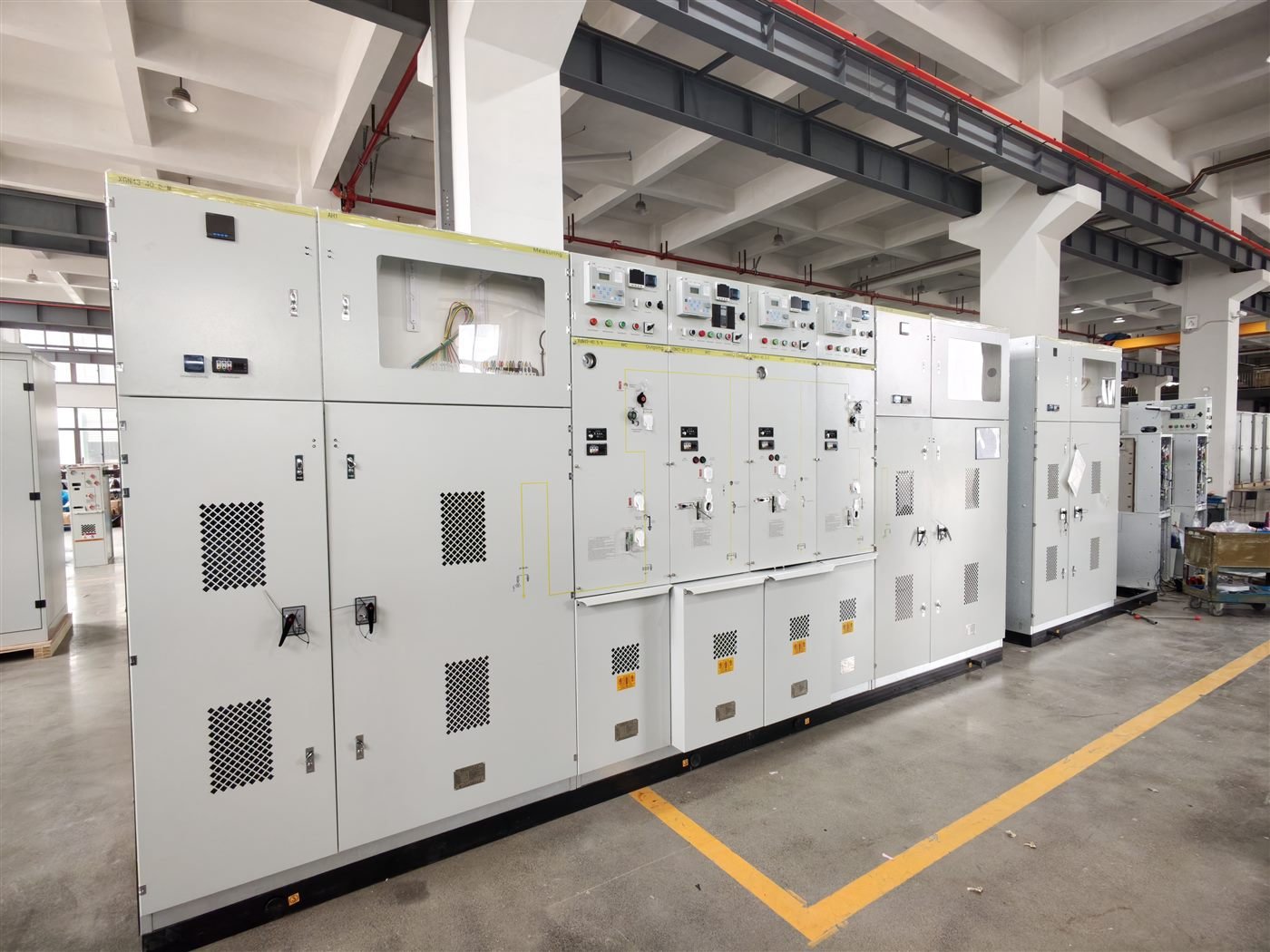
Nameplate Versus Test Report: Where They Must Match
| Nameplate field | Test report field | If they disagree |
|---|---|---|
| Rated voltage and insulation level | Dielectric test voltages | Different insulation design, or a copy-paste plate |
| Rated short-time withstand current | Short-time test current and duration | The panel may not survive the declared fault level |
| Rated peak withstand current | Peak current in the same test | Busbar supports or clamping may be undersized |
| IP code | IP verification clause and result | Enclosure sealing not actually tested to that degree |
| Internal arc class | IAC test arrangement and current | Arc containment may be claimed but not proven |
| Serial number and year | Report reference and date | The report belongs to a different unit |
Ask for the report page that carries the same serial number range as the panel. A generic type report is acceptable for a standard product, but the plate must reference the tested configuration. Where the plate claims more than the report proves, treat the report as the truth.
Five Mistakes Buyers Make When Reading a Nameplate
- Reading only the current rating. The fault level is what fails installations, not the load current.
- Ignoring the duration after Ik. A 25 kA 1 s board and a 25 kA 3 s board look identical on site and cost differently.
- Mixing up IP ratings. IP41 and IP54 differ by a gasket and a door design; the number must match the room, not the quotation.
- Accepting a plate without a standard reference. Without the IEC clause there is no defined test basis for any number.
- Never photographing the plate on arrival. The most common loss in a warranty dispute is the missing photo of the plate as delivered.
Two related checks belong on the same inspection sheet: the IP rating checks that decide whether the enclosure suits the room, and the clearance and creepage distances that decide whether the insulation design has real margin.
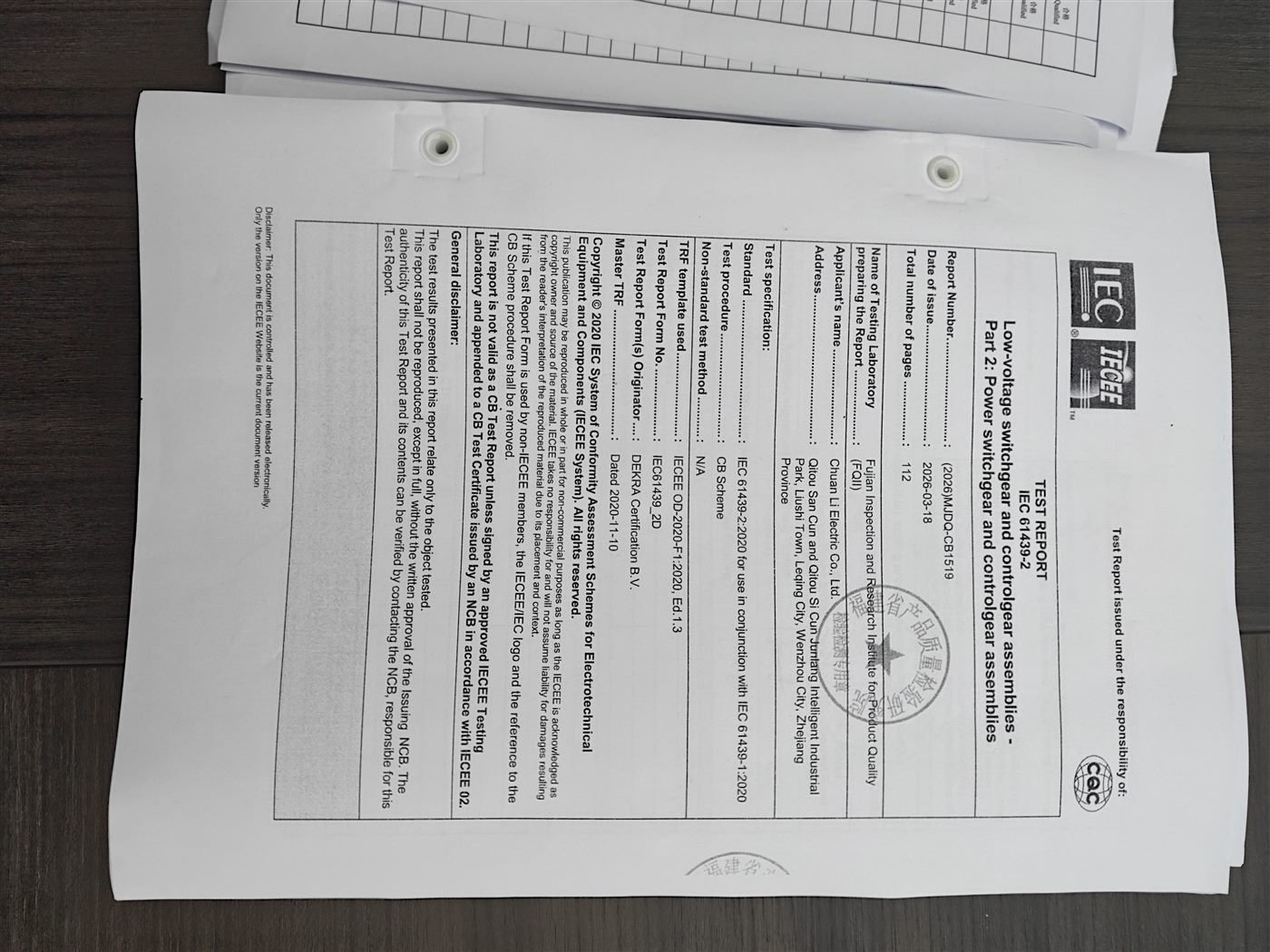
How to Verify a Plate Before Shipment
- Photograph the plate straight on, serial number legible, with a scale reference in frame.
- Copy the seven ratings into the inspection sheet and compare each one to the approved datasheet.
- Request the type test report and confirm insulation level, Ik, peak current and IP result line by line.
- Confirm the internal arc class matches the room layout, since IAC A and IAC B vent gas in different directions.
- Check the plate is fixed permanently, not a sticker that will peel off in a humid basement.
On LV boards the plate should also state the form of separation, because form 2b and form 4b behave very differently during maintenance with the busbar live. On MV installations, compare the ratings against the RMU product range you standardised on, so spare units stay interchangeable.
Frequently Asked Questions
Is the nameplate rating legally binding? Yes. It is the manufacturer’s declaration of conformity and part of the delivered specification. A panel that does not match its plate can be rejected on that basis alone.
Can a nameplate be upgraded later? No. Ratings are proven by type tests on a specific construction. Changing the plate without re-testing turns a certified product into an uncertified one.
Why does the plate show 2.5 times the short-time current? That is the peak factor for 50 Hz systems. The first asymmetrical peak is higher than the symmetrical fault current, and the busbar must survive it.
What does IAC A FLR 20 kA 1 s mean? Internal arc classification, accessibility type A, fluid limit rating, tested at 20 kA for one second. It states where hot gas exits, which decides the room clearance.
Should the plate show the relay settings? No. Protection settings belong to the relay file and the commissioning record. The plate covers primary equipment ratings only.
How long should a nameplate last? As long as the panel. Use etched or laser-marked stainless plates for coastal and outdoor sites, because printed stickers degrade within a few humid seasons.
About Electric-GS
Electric-GS is an OEM/ODM switchgear factory in Yueqing, China. We build ring main units, MV and LV switchgear, compact substations, and solar combiner cabinets, with nameplates printed to your language, standard edition and serial number convention. Every shipment is matched against its type test report before it leaves the bay.
Send your datasheet and single-line diagram to our main site or by email at info@electric-gs.com. For drawings review, WhatsApp +86 135 8897 8050. Export cases are also listed at electric-cn.com.
Recent Comments