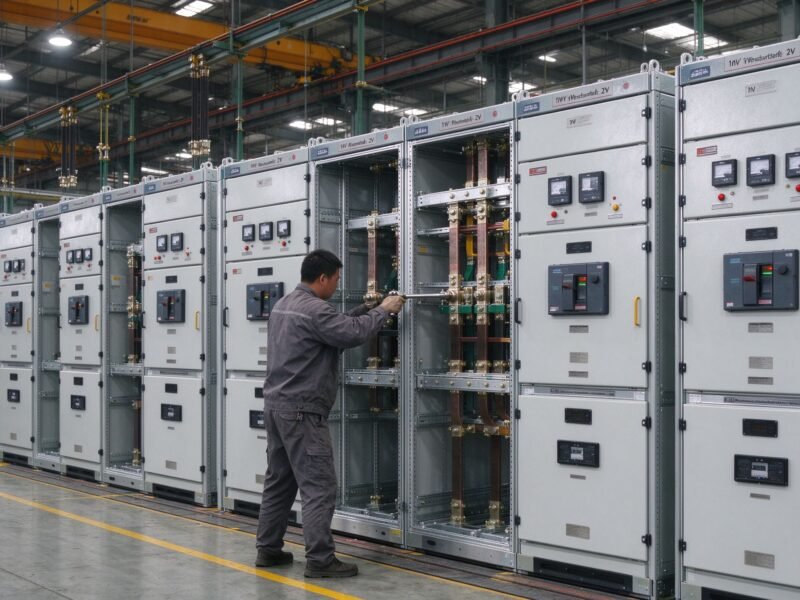
The SF6 load break switch is a simple and reliable device for medium voltage networks. It switches load current and isolates circuits, but it does not break fault current. This guide explains the working principle, the main types, and the typical applications. You will also find selection tips for 2026.
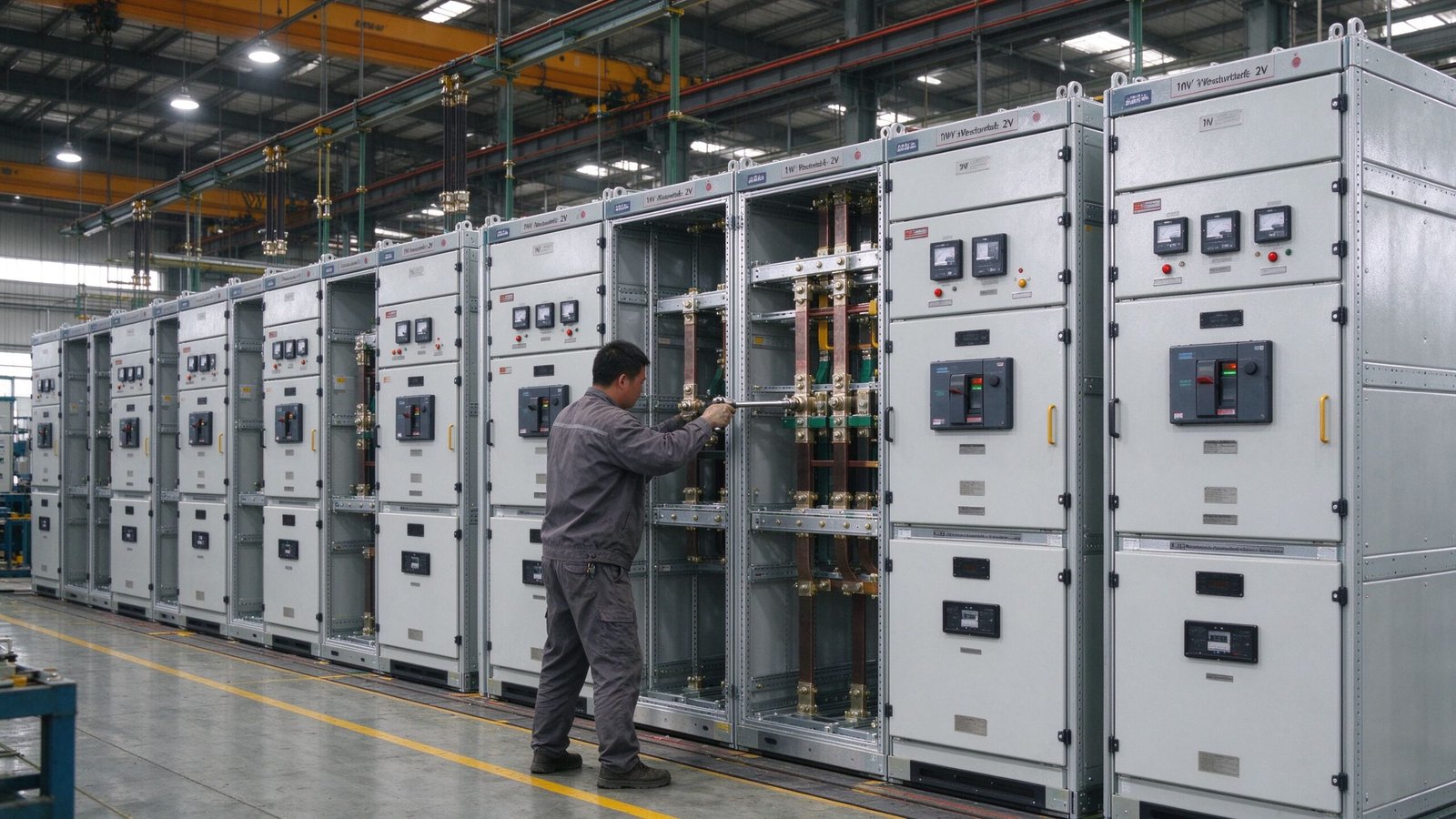
What Is an SF6 Load Break Switch?
An SF6 load break switch is a medium voltage switching device that uses sulfur hexafluoride gas for insulation and arc extinction. It is designed for load current switching, not fault interruption. In an RMU or a compact substation, it is often combined with a fuse or a circuit breaker for protection.
- Voltage class: 12kV, 24kV, 33kV and 40.5kV
- Test voltage: 28kV to 95kV power frequency
- Gas pressure: sealed for life, no refill needed
- Short-time current: 16kA or 20kA for 3 seconds
- Operating mechanism: manual, motor or spring
- Standards: IEC 62271-105 for load switches
For a higher class of equipment, see our 24kV medium voltage switchgear guide.
How Does an SF6 Load Break Switch Work?
The switch has three main parts: the moving contact, the fixed contact and the SF6 chamber. When the operator opens the switch, an arc forms between the contacts. The high-pressure SF6 gas extinguishes the arc quickly. The gas also provides strong insulation in the open position.
The mechanism uses a puffer or a rotating arc design. A puffer design compresses the gas during opening. A rotating arc design moves the arc so it cools faster. Both designs keep the switch compact and maintenance free for many years.
An SF6 load break switch can also make or break small capacitive and inductive currents. This makes it useful for switching underground cables and transformer excitation currents, which is common in urban distribution networks.
Earthing and indication functions are built into most RMU panels.
Types of SF6 Load Break Switches
| Type | Typical Use | Key Feature |
|---|---|---|
| Three-position switch | Ring main units | Closed, open and earthed positions |
| Load break switch with fuse | Transformer protection | Fuse clears faults |
| Switch disconnector | Distribution networks | Visible isolation gap |
| Motorized switch | Remote controlled substations | SCADA ready |
Most suppliers offer a common housing that fits different mechanisms. This simplifies spares and training.
Main Applications
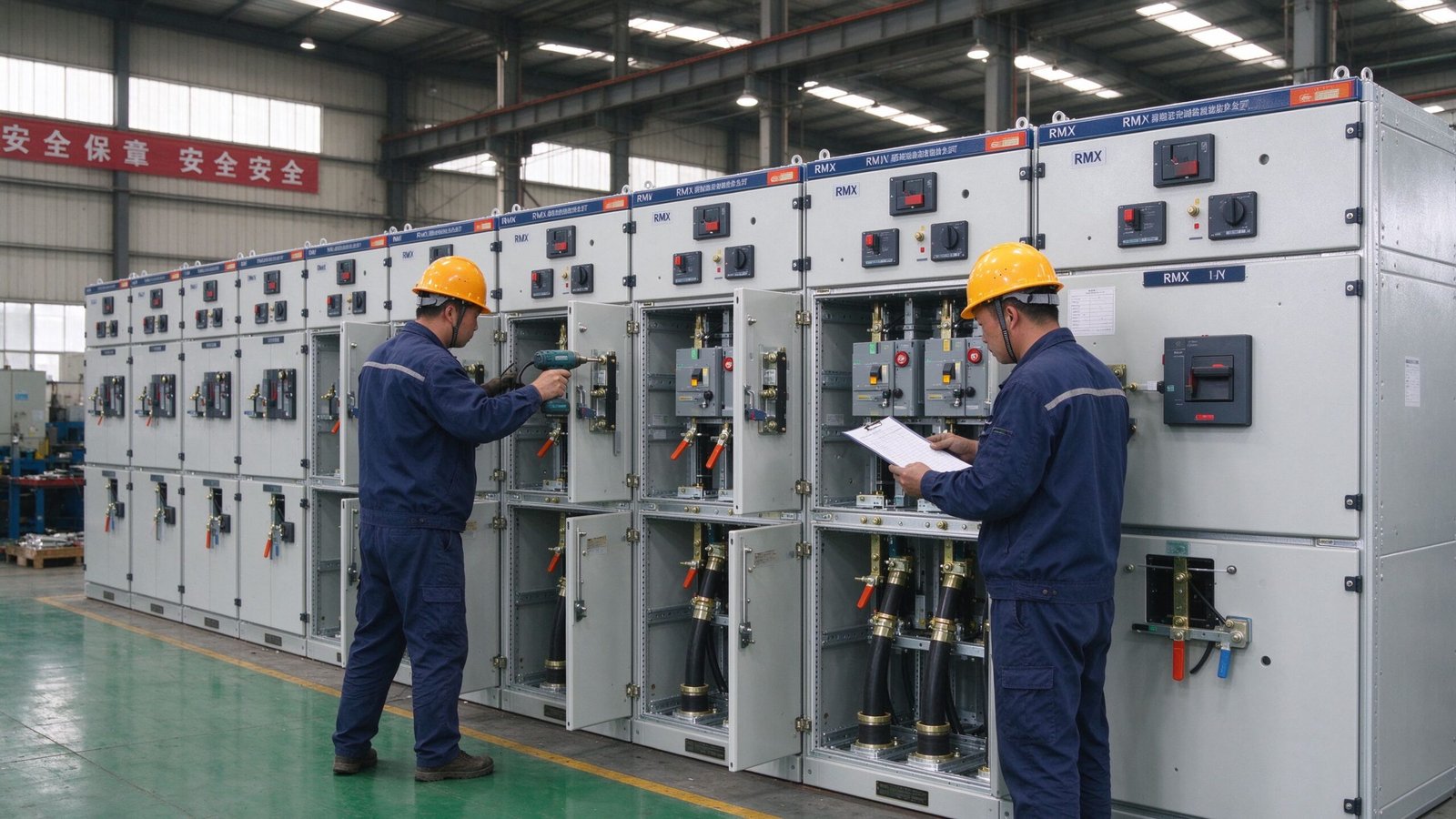
- Ring main units for urban distribution
- Compact substations for industry and buildings
- Transformer incoming feeders with fuse protection
- Solar plant collection and switching points
- Secondary distribution in rural networks
In every application, the switch must match the system voltage, the maximum load and the fault level. Talk to the utility engineer before choosing the panel layout and the operating mechanism.
An SF6 load break switch is the core switching element in many RMUs. Utilities install it at every ring node so that any section can be isolated for maintenance. This keeps most customers online while one feeder is out of service.
The differences between RMU and switchgear are explained in our ring main unit versus switchgear article.
Advantages and Limitations
Advantages
- Sealed and maintenance free for life
- Compact size saves space in the panel
- Safe operation with visible position indication
- Long mechanical life, often 10,000 operations
Limitations
- Cannot break short-circuit current alone
- SF6 gas has a high global warming potential
- Gas handling is needed at end of life
- Higher cost than air-insulated alternatives
Because SF6 has high environmental impact, many buyers now compare it with solid insulated designs. New regulations in several countries restrict SF6 use in new medium voltage equipment after 2028. Plan ahead and confirm the leakage rate and end-of-life gas handling with your supplier.
, many buyers now compare it with solid insulated designs. See our SF6 RMU versus solid insulated RMU comparison before deciding.
How to Select an SF6 Load Break Switch
- Confirm rated voltage and current for the feeder
- Check short-time withstand with the protection fuse
- Choose manual or motor operation
- Verify earthing and indication functions
- Ask for IEC 62271-105 type test certificates
- Check the gas monitoring and pressure gauge option
- Review the leakage rate and gas filling instructions
Selecting a good switch depends on the same logic as choosing a breaker. Our top 10 vacuum circuit breaker selection tips can help you compare options.
Frequently Asked Questions
Can an SF6 load break switch break fault current?
No. It only switches load current. A fuse, a circuit breaker or a relayed upstream device must clear faults.
What is the difference between a load break switch and a circuit breaker?
A load break switch switches normal load current. A circuit breaker also breaks short-circuit current. Breakers are more complex and cost more.
Is SF6 gas dangerous?
SF6 is safe in normal use and it is non-toxic. It is heavier than air and can displace oxygen in confined spaces, so follow the manufacturer gas safety rules.
How long does an SF6 load break switch last?
Sealed switches typically last 30 years with no maintenance. Mechanical life is usually 10,000 operations.
Does an SF6 load break switch need a separate earthing switch?
Most three-position switches include an integrated earthing position. This saves panel space and removes the risk of operating a separate switch in the wrong sequence. Confirm the earthing rating matches the fault level of your network.
Can Electric-GS supply OEM SF6 load break switch panels?
Yes. Electric-GS offers OEM and ODM manufacturing for ring main units and medium voltage panels with your branding. Contact info@electric-gs.com or WhatsApp +86 135 8897 8050.
SF6 load break switches remain a trusted choice for medium voltage switching. They are simple, proven and compact, and they work well with the right protection device.
About Electric-GS
Electric-GS is a factory in Yueqing, China, producing ring main units, load break switches, vacuum circuit breakers and medium voltage switchgear. We support OEM and ODM projects with full testing and on-time delivery. Email info@electric-gs.com or WhatsApp +86 135 8897 8050 for details.
Related: electricgs.com and electric-cn.com cover our products and news.