From Busbar to Shipping: The Second Half of 33kV GIS Assembly
After the busbar and insulation work, a 33kV GIS panel moves to final assembly. In this second part of our 33kV gis assembly series, we look at panel assembly, eco switchgear bushing installation, and the packaging that protects the unit until it reaches the site.
This stage turns the internal components into a complete, testable switchgear panel. It also decides how safely the unit travels to the customer. Good assembly and good packaging prevent damage that no factory test can predict.
Step 4: Panel Assembly and Interconnection
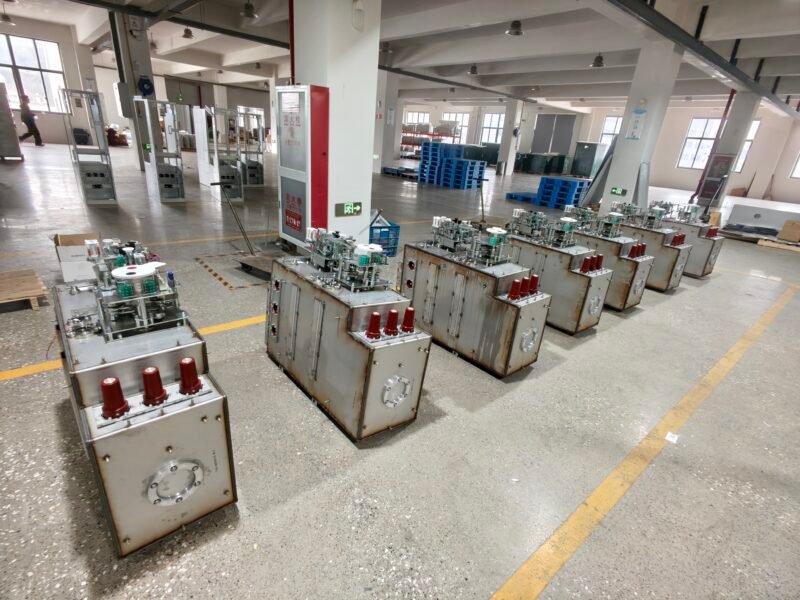
The panel below shows several 33kV GIS enclosures assembled in a row in the factory. Each enclosure holds a functional section, such as a circuit breaker bay, a busbar section, or an incoming feeder.
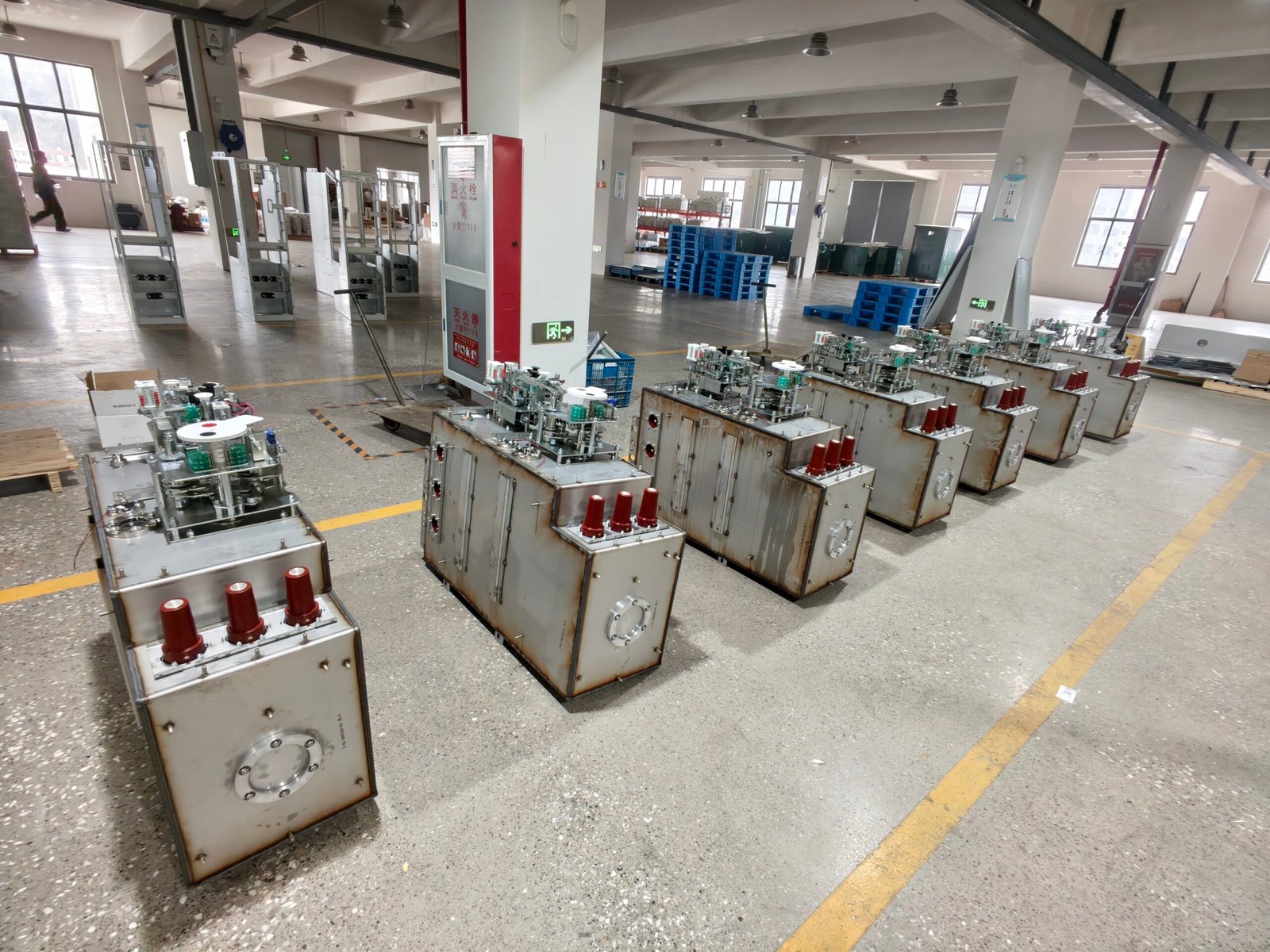
At this step, the enclosures are aligned, bolted together, and the internal conductors are connected bay to bay. Gas compartments are separated by partitions so that one section can be serviced without losing gas in the whole panel. Each joint is sealed and prepared for the gas filling stage.
Alignment is done on a level floor with the correct tools. Workers check that the flanges line up before tightening, so the seals are not pinched. This prevents gas leakage later. The interconnection between bays is also tested to confirm that the mechanical drive links move together correctly.
- Align and bolt the enclosures together.
- Connect the internal conductors between bays.
- Fit gas partitions between compartments.
- Check the mechanical interlocking between units.
- Prepare all seals for gas filling.
Step 5: Eco Switchgear Bushing Installation
Bushings carry the high voltage in and out of the gas enclosure. The photo below shows eco switchgear bushings packed in protective cartons in the workshop, with the red cylindrical insulators clearly visible.
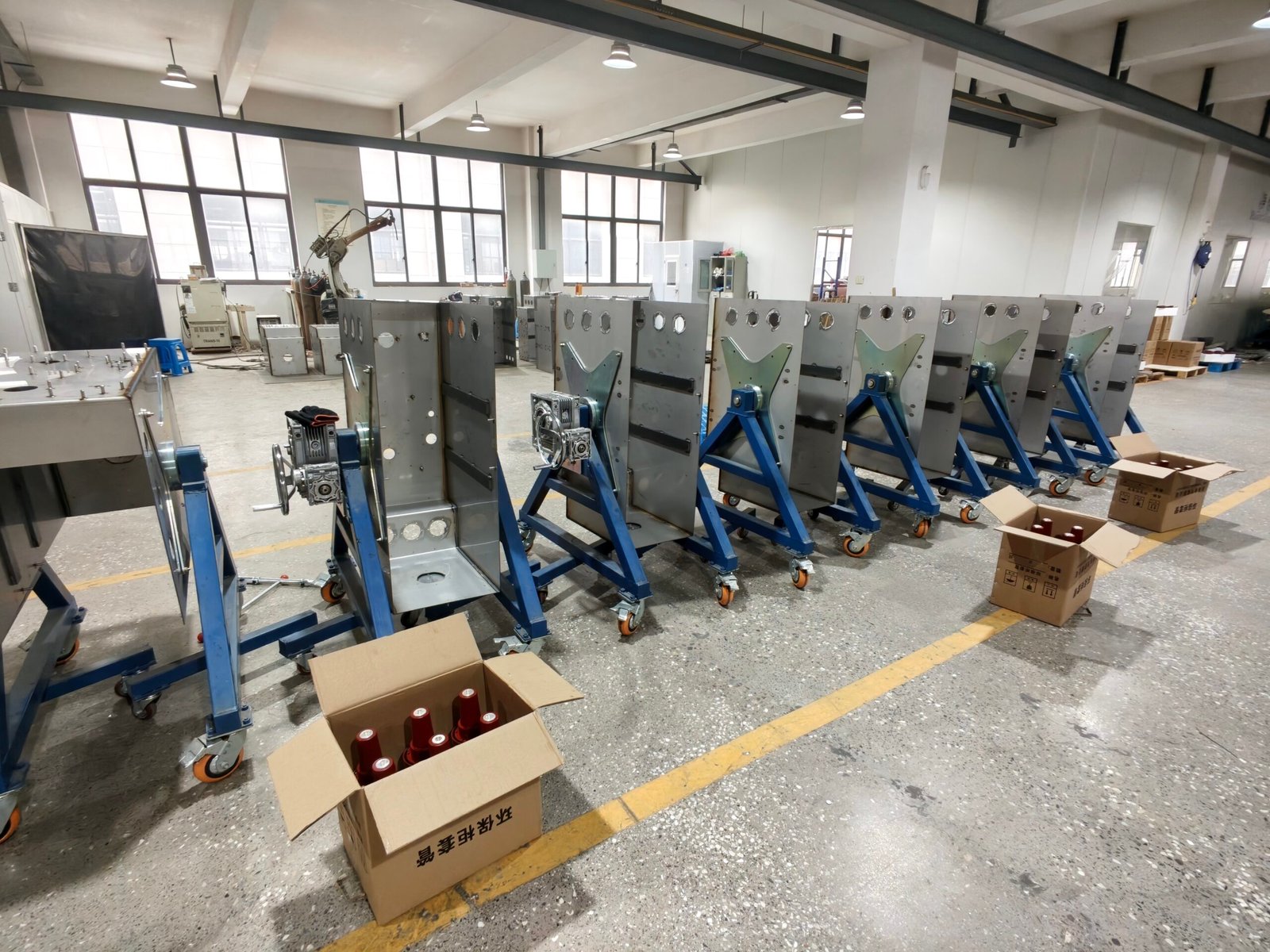
Modern 33kV GIS increasingly uses eco-friendly insulating gas instead of SF6. The bushing design supports the chosen gas system and keeps the correct creepage distance. Bushing installation is done with clean, dry conditions because any moisture in the seal can reduce insulation strength over time. This step directly affects the long-term reliability of the complete switchgear.
| Check | Purpose |
|---|---|
| Bushing surface inspection | Find cracks or contamination |
| Seal condition | Prevent gas leakage |
| Torque on fixing | Secure the bushing correctly |
| Gas tightness test | Confirm no leakage |
| High voltage test | Verify insulation strength |
Step 6: Final Inspection and Gas Filling
Before packaging, the panel is filled with insulating gas and tested. The gas pressure is set to the rated value, and the panel is checked for leakage. The operating mechanism is exercised, and the main circuit is confirmed to open and close correctly.
This is also where the high voltage withstand test is done. The panel must hold the rated voltage without flashover. Passing this test is the final proof that the whole gis assembly is correct.
Every switchgear panel keeps a test record during this stage. The record includes the gas pressure, the leakage result, the operating times of the mechanism, and the withstand test voltage. These records are included in the documents handed to the customer, so every unit can be traced back to its own test data.
Step 7: Packaging and Shipping Preparation
The picture below shows multiple panels with blue stands and castors, and cartons holding red bushings, ready for dispatch.
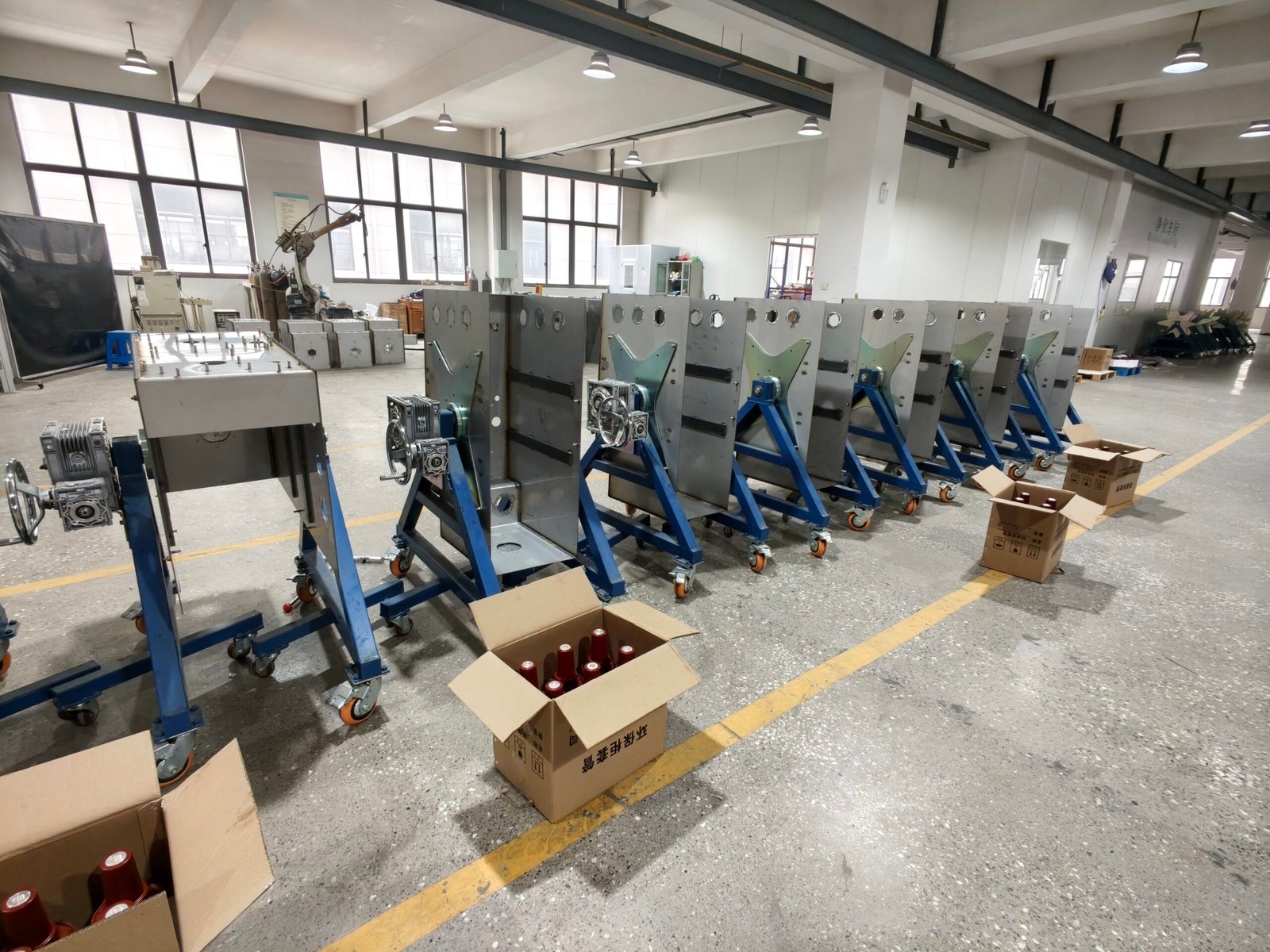
Each panel is protected for transport. Keyboards, instruments, and bushings are wrapped and boxed separately. The gas is kept at transport pressure, and each unit is labelled with its ratings, serial number, and handling instructions. A complete document pack, including test reports and drawings, is prepared for the customer.
For sea freight, the packaging must also resist humidity and vibration during a long voyage. Wooden frames or reinforced steel frames hold the panel steady. Moisture-absorbing bags are placed inside the packing to protect the electrical parts. The outer case clearly shows the lifting points and the “this side up” marks so the handling crew moves the panel correctly.
- Wrap sensitive components for transport.
- Box bushings and small parts separately.
- Set gas to transport pressure.
- Label ratings and serial numbers.
- Prepare test reports and drawings.
Why Final Assembly and Packaging Matter
Final assembly joins all sections into one reliable unit, and packaging gets it to site intact. A panel that is well assembled but poorly packed can be damaged in transit. A well packed but poorly assembled panel will fail in service. Both steps are essential.
A responsible gis manufacturer treats shipping as part of the product quality, not as an afterthought.
For buyers, this stage is the moment to confirm that the supplier follows a documented process. Ask for the final test report, the gas pressure record, and the packaging specification before shipment. This protects your project from receiving a panel that was damaged or not fully tested on the production line.
FAQ
What is 33kV GIS assembly?
It is the process of connecting the internal sections, installing bushings, filling gas, testing, and packaging a complete 33kV GIS panel.
Why use eco switchgear bushings?
Eco bushings support eco-friendly insulating gas and reduce the environmental impact compared with conventional designs.
How is a GIS panel protected for shipping?
Panels are wrapped, sensitive parts boxed separately, gas set to transport pressure, and ratings labelled.
What tests are done before shipping 33kV GIS?
Gas tightness, operating mechanism, high voltage withstand, and main circuit resistance tests.
Can Electric-GS supply 33kV GIS with OEM support?
Yes, Electric-GS manufactures 33kV GIS and supports OEM projects with full test documentation.
How does Electric-GS pack switchgear for export?
Each panel is professionally wrapped and boxed for sea freight, with bushings and instruments protected separately.
Electric-GS — 33kV GIS and Switchgear Manufacturer. Electric-GS is a switchgear manufacturer in Yueqing, China, building 33kV GIS, ring main units, and medium voltage switchgear with strict quality control and OEM/ODM support.
Contact us: email info@electric-gs.com or WhatsApp +86 135 8897 8050.
medium voltage switchgear buying guide
33kV GIS busbar assembly guide