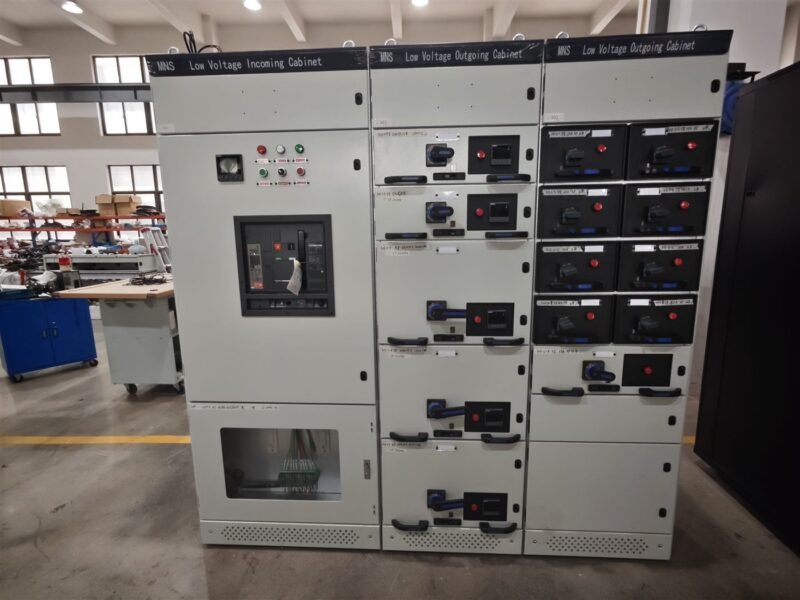
A neutral grounding resistor (NGR) limits the earth-fault current in a medium voltage network. It connects between the transformer neutral and earth. It converts a solid earth fault into a controlled current. This protects equipment, improves safety, and keeps the network in service. This guide explains how to select an NGR for 3.6 kV to 40.5 kV systems.
When a phase-to-earth fault occurs, the NGR restricts the fault current to a safe value. Protection relays detect the small current and trip the faulty feeder. The rest of the network keeps running. This approach is common in 11 kV and 33 kV industrial and utility networks.
What Is a Neutral Grounding Resistor?
An NGR is a wire-wound resistor rated for a specific current and duration. It is mounted in a ventilated enclosure, often near the power transformer. It provides a low-impedance path to earth that still limits current to a defined level.
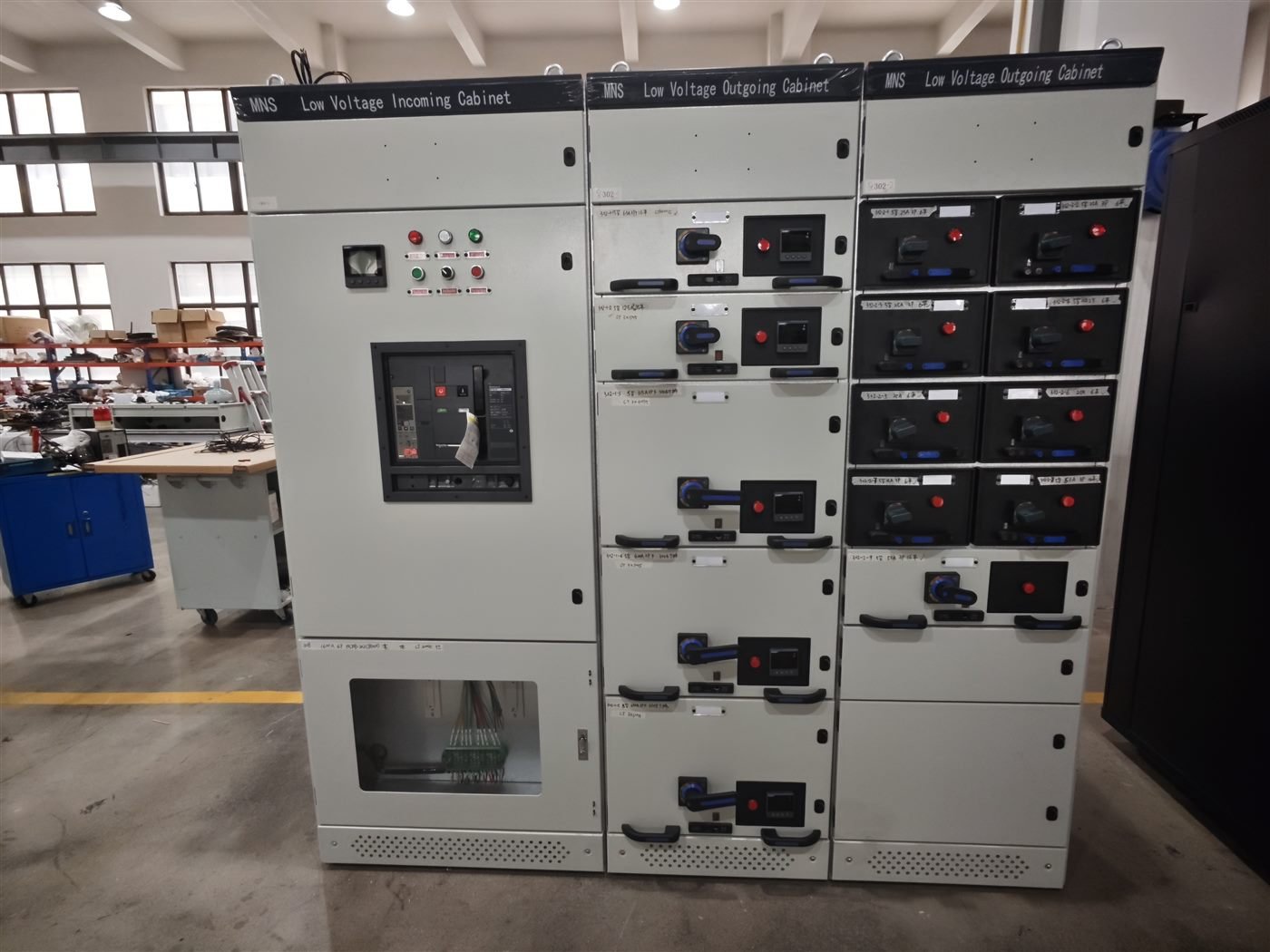
The resistor connects to the neutral point of the transformer winding. A medium voltage switchgear selection includes the breaker that protects the NGR feeder and clears the faulted circuit.
Why Use Resistance Earthing?
Solid earthing produces large fault currents that damage machines and equipment. Ungrounded systems create dangerous overvoltages and make faults hard to find. Resistance earthing balances these problems.
- Limits fault current. A controlled current avoids thermal and mechanical damage.
- Reduces transient overvoltage. The network voltage stays near the phase value.
- Simplifies fault location. A measurable current triggers the relay and identifies the feeder.
- Improves safety. Touch voltage and step voltage stay within limits.
The substation earthing design must work with the NGR to return fault current to the station earth grid.
Choosing the earthing method depends on the network size, the protection scheme, and the need for continuity. A low-resistance NGR limits the current to a value that the equipment can withstand for a short time. The protection then clears the faulted feeder quickly. This keeps most of the network in service and reduces arc damage at the fault point.
An NGR also lowers the risk of arcing ground faults. In an ungrounded system, an arcing fault can raise the healthy-phase voltage to several times the normal value. Resistance earthing clamps this transient, so the insulation is not overstressed. Confirm the chosen current is low enough to avoid thermal damage but high enough for the relays to see.
7 Key Ratings and Selection Factors
Check these seven factors when you choose an NGR.
- System voltage. Match the rated line-to-line voltage of the network, including 33 kV.
- Neutral connection. Confirm the transformer neutral is accessible and earthed.
- Resistance value. Set the resistance to limit fault current to the chosen value.
- Fault current rating. Define the continuous and short-time current, often 400 A for 10 s.
- Time rating. Check the duration the resistor can carry the current, typically 10 or 30 seconds.
- Insulation level. Match the BIL and power-frequency withstand to the system.
- Enclosure and cooling. Choose the enclosure for the site, with proper ventilation.
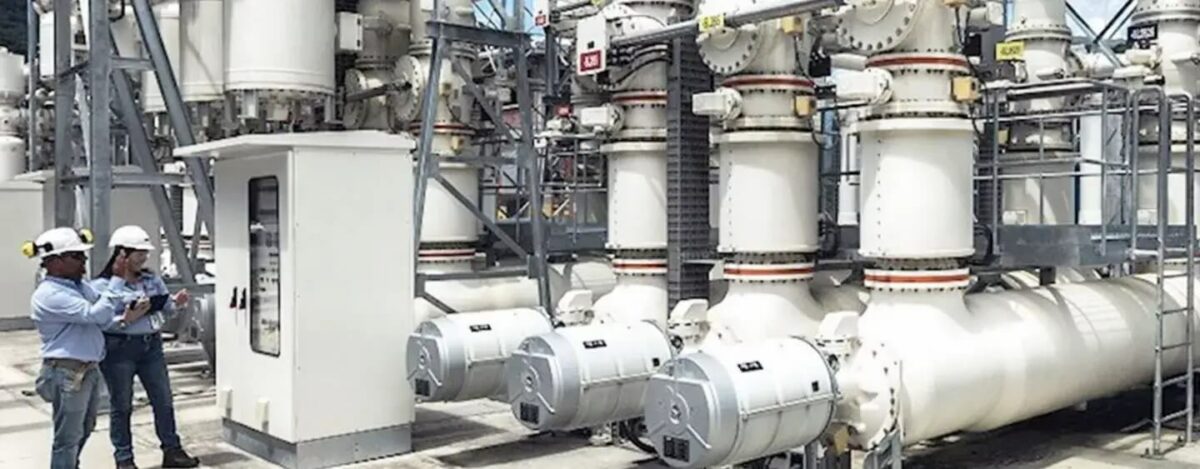
The resistance is calculated from the system voltage and the target fault current. For a line-to-neutral voltage V and a current I, R = V / I. Confirm the value with the network engineer before ordering.
Resistance Earthing Methods
| Method | Fault current | Typical use |
|---|---|---|
| Solid earthing | High | Distribution networks |
| Low-resistance NGR | Medium (e.g. 400 A) | Industrial and utility MV |
| High-resistance NGR | Low (e.g. 5 A) | Continuous process plants |
| Ungrounded | None | Special systems |
Low-resistance NGRs are the most common for MV networks. They allow fast fault clearing while limiting damage. High-resistance units suit systems where continuity of supply matters more than fast tripping.
Protection, Location and Testing
Protect the NGR with overcurrent and earth-fault relays. The relay trips the feeder breaker when the fault current flows. A current transformer in the neutral connection measures the current. Surge protection at the NGR terminal is also recommended. A surge arrester clamps overvoltages during faults and switching.
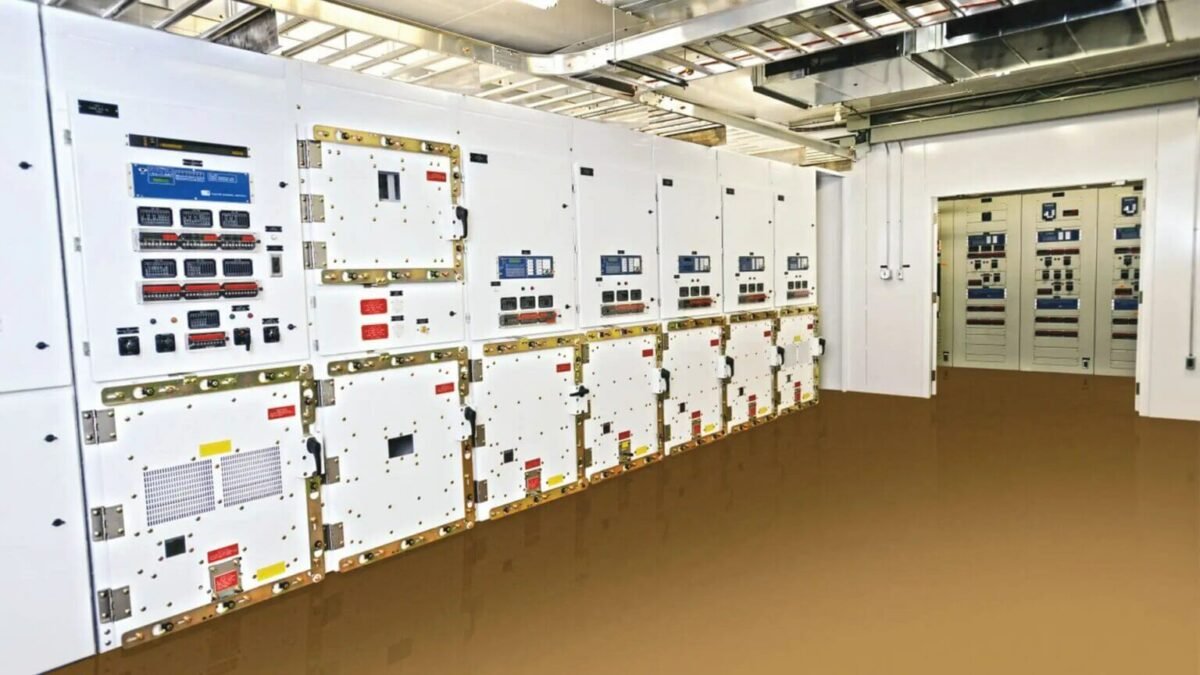
Locate the NGR near the transformer neutral and the station earth grid. Keep the earth lead short and well bonded to the grid. The medium voltage busbar selection should account for the neutral feeder connections.
Testing and Maintenance
Test the NGR for resistance value, insulation, and thermal performance. Verify the current rating with a low-current injection test. In service, inspect for hot spots, contamination, and broken connections with a thermal camera.
Check the enclosure ventilation regularly. A blocked vent raises the temperature and shortens the resistor life. Record the resistance and test results for each unit. Confirm the protection settings match the NGR data.
Keep a spare NGR element and the torque settings for the terminations. Review the neutral connection and the earth grid bonds during routine inspection. A loose earth bond increases touch voltage and can go unnoticed until a fault occurs.
For new projects, order the NGR with the type-test report and the routine test sheet. Confirm the enclosure IP rating suits the site pollution level and humidity.
FAQ About Neutral Grounding Resistor
Q1. What does an NGR do?
It limits the earth-fault current in a medium voltage network to a controlled, safe value.
Q2. How do I calculate the resistance?
Divide the line-to-neutral voltage by the target fault current, R = V / I.
Q3. What is the difference between low and high resistance earthing?
Low-resistance NGRs allow a few hundred amps for fast tripping; high-resistance units allow a few amps for continuous operation.
Q4. How long can an NGR carry fault current?
Typical ratings are 10 or 30 seconds, as stated on the nameplate.
Q5. Where is the NGR installed?
Between the transformer neutral and the station earth grid, usually in a ventilated enclosure.
Q6. Does the NGR need surge protection?
Yes, a surge arrester clamps overvoltages during faults and switching to protect the resistor and insulation.
About Electric-GS
Electric-GS is a Chinese OEM and ODM manufacturer based in Yueqing, Zhejiang. We build neutral grounding resistors, shunt reactors, transformers, and medium voltage switchgear with type-test reports. For pricing and drawings, email info@electric-gs.com or reach us on WhatsApp at +86 135 8897 8050. See our main site at electricgs.com and our domestic catalog at electric-cn.com.
Recent Comments