Distribution Transformer Complete Guide: Types, Sizing and 2026 Costs
A distribution transformer steps down medium voltage to the low voltage that homes, offices and small factories use. It is the final link between the grid and the consumer. This guide explains the main types, how to size one correctly, and what you can expect to pay in 2026. It is written for project engineers, utility buyers and EPC contractors who need clear, practical answers. For detailed calculations, see our distribution transformer sizing guide.
A distribution transformer is an oil-filled or dry-type transformer that operates below 36kV and steps voltage down to 400V three-phase or 230V single-phase. Typical ratings range from 25kVA to 2500kVA. Distribution transformers run continuously, often outdoors, and must withstand weather, overloads and switching surges for 20 to 30 years. Because they feed revenue meters and critical loads, reliability and correct sizing matter more than first cost alone.
Main Types of Distribution Transformers
- Pole-mounted transformers: small units from 10kVA to 200kVA installed on utility poles for rural and suburban networks.
- Pad-mounted transformers: ground-level units with tamper-proof enclosures for urban distribution and commercial sites.
- Substation transformers: larger units from 300kVA to 2500kVA installed inside compact or conventional substations.
- Dry-type transformers: cast-resin or ventilated types used indoors where fire safety and low maintenance matter.
Each type serves a different installation condition, so the choice depends on location, load profile and site constraints. A utility serving a remote village needs pole-mounted units, while a commercial building project usually selects pad-mounted or dry-type units. The kVA range and voltage class should match the network standard of your country, so check local utility rules before you finalise the specification. Keep the unit healthy with our transformer maintenance checklist.
Oil-Filled vs Dry-Type Transformers
| Feature | Oil-Filled | Dry-Type (Cast Resin) |
|---|---|---|
| Cooling medium | Mineral oil | Air / cast resin |
| Fire risk | Higher, needs containment | Very low |
| Typical range | 25kVA – 2500kVA | 50kVA – 3150kVA |
| Outdoor use | Excellent | Limited, indoor preferred |
| Maintenance | Oil testing, conservator checks | Very low |
| First cost | Lower | Higher |
Oil-filled units dominate outdoor distribution because they are cheaper and cool well. Dry-type units are the standard choice inside buildings where fire regulations are strict. For environments with high ambient temperature or strong dust, the oil-filled design with a sealed tank is usually more forgiving. Compare the total life-cycle cost, not just the purchase price, when you decide between the two technologies.
How to Size a Distribution Transformer
Sizing is about total load, not nameplate only. Follow this practical process:
- Add the connected load of all circuits in kVA.
- Apply a diversity factor: most sites never run every circuit at full load at the same time.
- Multiply by 1.25 to 1.5 for future expansion and motor starting.
- Check voltage drop over the secondary feeder.
- Select the next standard kVA rating above your calculated value.
For example, a workshop with 180kVA of connected load at 80% diversity needs roughly 144kVA actual demand. With 25% headroom that becomes 180kVA, so a 200kVA unit is the right choice. Do not forget motors, welding machines and air conditioners, because their starting current is several times the running current. A short-term overload of 1.2 times rated output is acceptable for oil-filled units, but a permanent overload shortens the insulation life quickly. Avoid common errors with our Top 10 transformer sizing mistakes.
Standard kVA Ratings and Typical 2026 Prices
| Rating (kVA) | Voltage Class | Typical Price (USD) |
|---|---|---|
| 100 kVA | 11kV/0.4kV | $1,800 – $2,800 |
| 200 kVA | 11kV/0.4kV | $2,600 – $4,000 |
| 400 kVA | 11kV/0.4kV | $4,200 – $6,500 |
| 630 kVA | 11kV/0.4kV | $5,800 – $9,000 |
| 1000 kVA | 11kV/0.4kV | $8,500 – $13,000 |
| 1600 kVA | 11kV/0.4kV | $12,000 – $18,000 |
Prices are FOB China estimates for standard oil-filled units with accessories, and they vary with copper price, losses class and accessories such as conservator, tap changer and protective devices. Higher-efficiency amorphous-core units can cost 15-25% more but pay back through lower no-load losses over the service life. When you compare quotes, ask every supplier to quote against the same specification sheet so the prices are comparable.
Specifications, Installation and Maintenance
- Vector group: Dyn11 is the most common for distribution duty.
- Losses class: choose low-loss (amorphous core) designs for better life-cycle cost.
- Tap changer: off-circuit taps give ±5% voltage adjustment.
- Impedance: typical 4% for distribution units.
- Enclosure: ask about the degree of protection, finish and oil containment.
Write these into the datasheet so the supplier quotes comparable units, and ask for the IEC 60076 test report with your order. During installation, place the unit on a solid plinth with proper earthing and oil containment for outdoor designs. Check oil level, colour and dielectric strength at least once a year, keep bushings clean, and look for signs of leakage or corrosion. Test insulation resistance and winding ratio during commissioning, and re-check the protection settings of the upstream switchgear so the transformer trips before it is damaged.
For related electrical solutions, visit Electric-GS switchgear solutions and Electric-CN electrical products.
Frequently Asked Questions (FAQ)
1. What kVA distribution transformer do I need?
Add your connected load in kVA, apply a diversity factor of 0.7-0.8, add 25% headroom, then choose the next standard rating.
2. What is the life of a distribution transformer?
With proper maintenance and reasonable loading, an oil-filled unit can last 25-30 years.
3. Can I use a dry-type transformer outdoors?
Yes, with a weatherproof enclosure, but oil-filled units are usually more economical outdoors.
4. What is the standard vector group for distribution transformers?
Dyn11 is the most common, giving both three-phase and single-phase supplies from one unit.
5. How much does a distribution transformer cost in 2026?
A 100kVA unit is around $1,800-2,800 and a 1000kVA unit $8,500-13,000 FOB China, depending on losses class and accessories.
6. What tests are required before dispatch?
Standard routine tests include ratio, winding resistance, insulation resistance, no-load loss, load loss and induced voltage tests per IEC 60076.
Why Choose Electric-GS as Your Factory
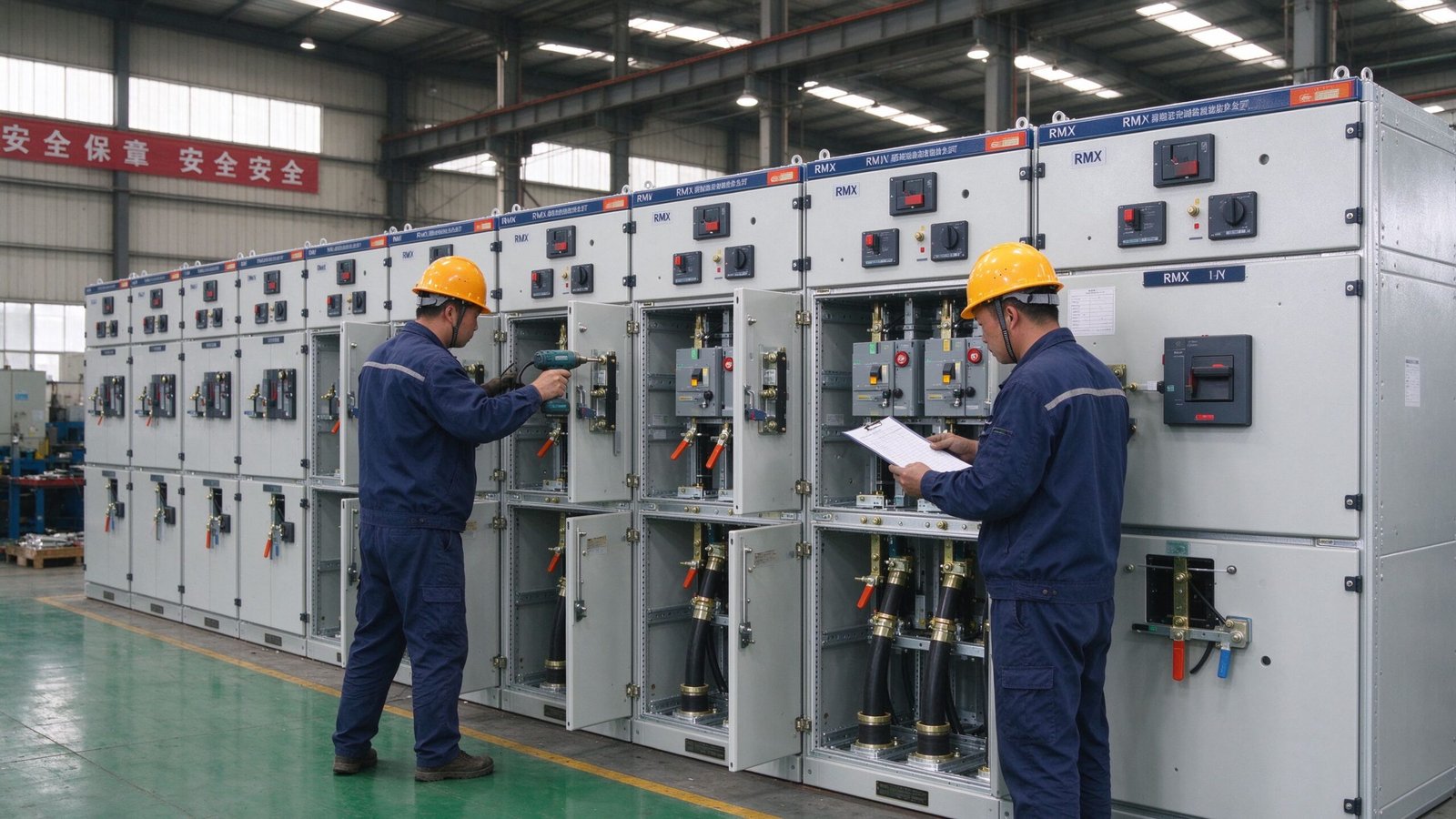
Electric-GS is a professional OEM/ODM manufacturer of medium and low voltage electrical equipment, based in Yueqing, Zhejiang, China. Our production workshops are equipped with CNC sheet-metal lines, automated assembly benches, and full routine-test stations. Every unit is quality-tested before dispatch, with IEC type-test reports available on request.
For quotations or drawings, email us at info@electric-gs.com or WhatsApp +86 135 8897 8050.