
Every medium voltage switchgear panel is built from a small set of key parts. Understanding switchgear components helps you choose a reliable panel, read a single line diagram, and plan maintenance. Each part has a clear job: the busbar distributes power, the circuit breaker protects the circuit, and the protection relay decides when to trip. This guide explains the six key parts of a medium voltage panel and how to select reliable components for your project. It also helps you talk with your supplier, read a specification, and check that the panel you receive is built to the approved design.
The table below gives a quick overview of the main parts.
| Component | Function | Failure risk if wrong |
|---|---|---|
| Busbar | Distributes power between feeders | Overheating and insulation damage |
| Circuit breaker | Opens and closes the main circuit | Fails to clear a fault |
| Disconnector | Provides visible isolation | Unsafe access to live parts |
| CT and VT | Measure current and voltage | Wrong protection settings |
| Protection relay | Detects faults and trips the breaker | Delayed or missed tripping |
| Enclosure | Protects people and parts | Arc and moisture hazards |
Main Circuit: Busbar and Vacuum Circuit Breaker
The busbar is the common conductor that feeds all outgoing circuits. It must carry the rated current continuously and withstand short circuit forces. Busbar joints are critical; a poor joint heats up and can fail under load.
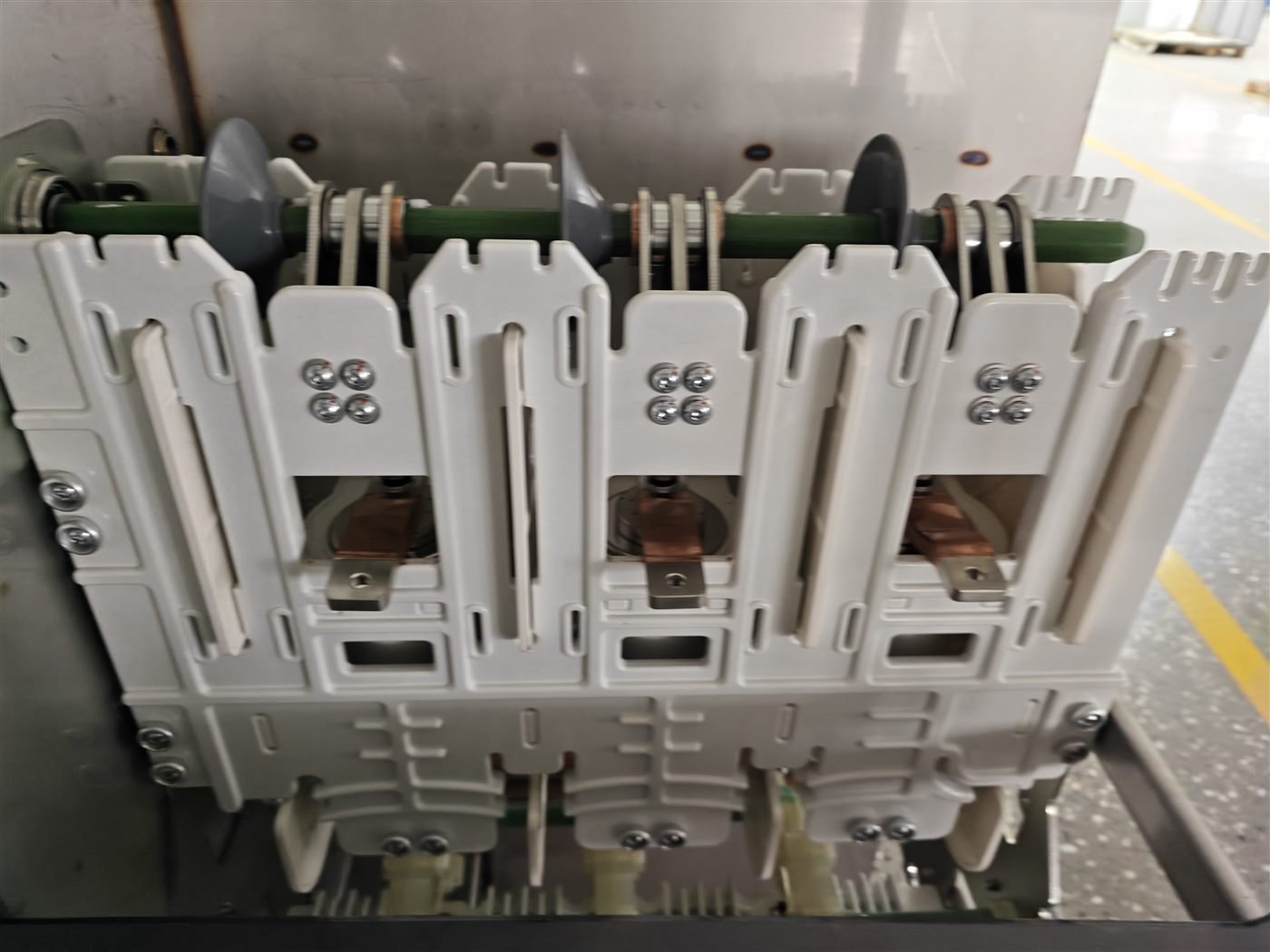
The circuit breaker is the main switching device. A vacuum circuit breaker is common in medium voltage panels because it is compact, needs little maintenance, and interrupts faults reliably. Its operating mechanism must be accurate, because the trip time decides how fast the fault is cleared. The mechanism also controls the closing sequence, so a worn or misadjusted mechanism can cause slow operation and contact damage. Learn more about vacuum circuit breaker ratings before you specify the panel.
Switching and Isolation Devices
A disconnector, or isolator, provides a visible gap so the circuit is safely isolated before maintenance. It is not designed to break load current; the breaker must open first.
An earthing switch connects the circuit to earth when the panel is isolated, protecting workers from residual charge or accidental energizing. Both devices need correct interlocking with the breaker to prevent a wrong switching sequence. Interlocks stop the operator from opening a disconnector under load or closing the earthing switch when the circuit is live. These simple mechanical rules prevent most operator errors. See our medium voltage disconnector switch guide for selection details.
Instrument Transformers: CT and VT
Current transformers step down the high primary current to a safe level for the relay and meters. Voltage transformers step down the voltage so the relay can measure it. Both must be sized for the correct ratio, accuracy class and burden.
Wrong CT selection causes incorrect protection operation and metering errors. Always check the ratio and the accuracy class against the relay requirements. Our current and voltage transformer guide explains the selection steps in detail.
Protection and Control System
The protection relay monitors the signals from the CT and VT and trips the breaker when a fault is detected. It provides overcurrent, earth fault and other protective functions. A modern relay also records events for analysis.
The control system includes the closing and tripping circuits, auxiliary relays, indication lamps and the power supply. All of them must work together reliably. A clean and logical wiring layout makes commissioning and troubleshooting much faster, because each signal can be traced back to its terminal. Read the medium voltage protection relay guide to understand the common functions and settings.
Enclosure, Frame and Busbar Chamber
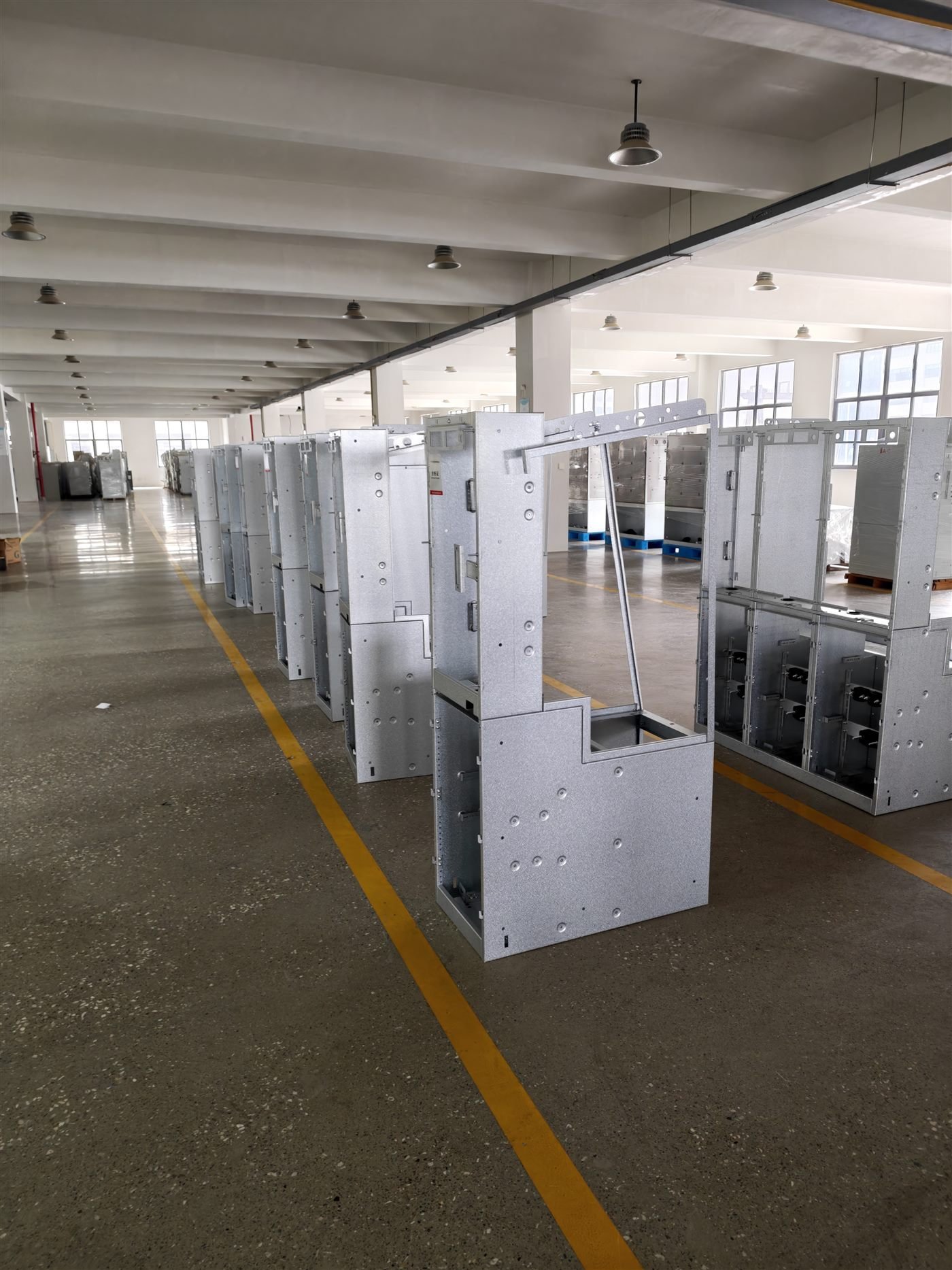
The sheet metal frame supports all parts and protects the operator. Compartmentalized panels separate the busbar, breaker and cable chambers to limit the effect of an internal arc. The degree of protection, such as IP54, tells you how well the enclosure resists dust and moisture.
Good welding, painting and earthing of the frame are important for long life. The frame must also be strong enough to carry the breaker during racking. A well-sealed enclosure also keeps moisture and dust away from the live parts, which protects the insulation over many years.
How to Choose Reliable Switchgear Components
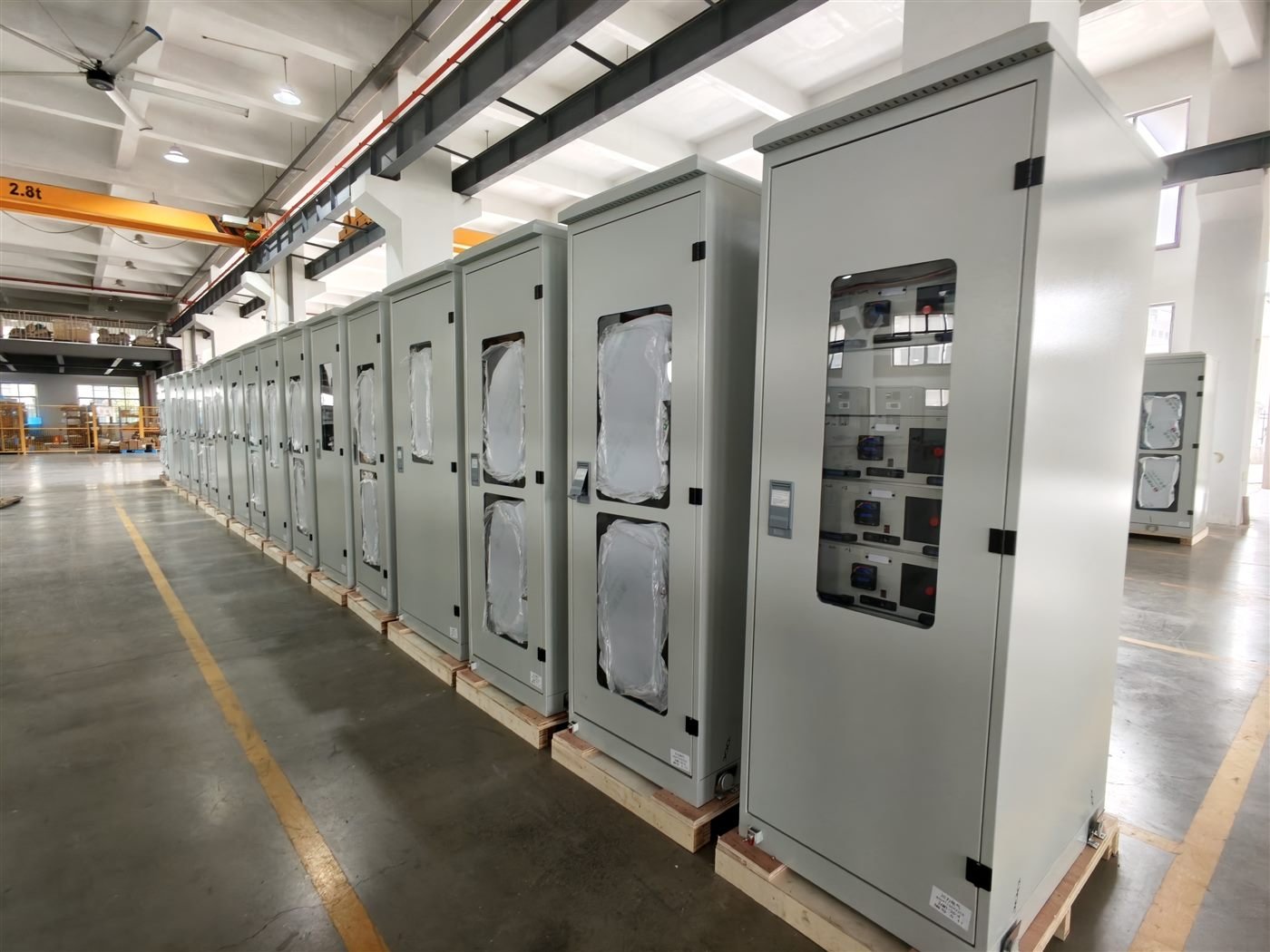
Start with a trusted manufacturer that tests every panel. Verify that each component matches the approved design and that the panel passes routine tests before dispatch. Ask for test records and the type test certificate.
Check the materials, the brand of the breaker, the relay and the instrument transformers. A slightly cheaper part can cause a much bigger loss later. Ask the supplier to confirm the origin of the key components and to show the type test certificate before you place the order. Follow the medium voltage switchgear maintenance plan to keep the components in good condition over their service life.
Frequently Asked Questions
What is the most important switchgear component?
The circuit breaker is often called the heart of the panel, but the protection relay is equally important because it decides when to trip.
Why is a busbar important in switchgear?
The busbar distributes power to all outgoing feeders, so it must carry the rated current and withstand short circuit forces without overheating.
What does a disconnector do?
A disconnector provides a visible isolation gap so a circuit can be worked on safely, but it does not break load current.
How do CT and VT differ?
A current transformer measures current, while a voltage transformer measures voltage. Both feed the protection relay and the meters.
What is a compartmentalized enclosure?
It is a panel with separate chambers for the busbar, breaker and cables, so an internal fault affects only one compartment.
How can I check component quality?
Ask the manufacturer for routine and type test records, and verify the brand and ratings of the breaker, relay and transformers.
About Electric-GS
Electric-GS is a professional switchgear manufacturer based in Yueqing, China. We offer OEM and ODM services for medium voltage switchgear, ring main units, vacuum circuit breakers, transformers and protection equipment, with full testing and global export experience. Contact us at info@electric-gs.com or WhatsApp +86 135 8897 8050 for a fast quotation. Visit electricgs.com or the Chinese portal at electric-cn.com.
5 thoughts