What Is a High Voltage Insulator and How It Works
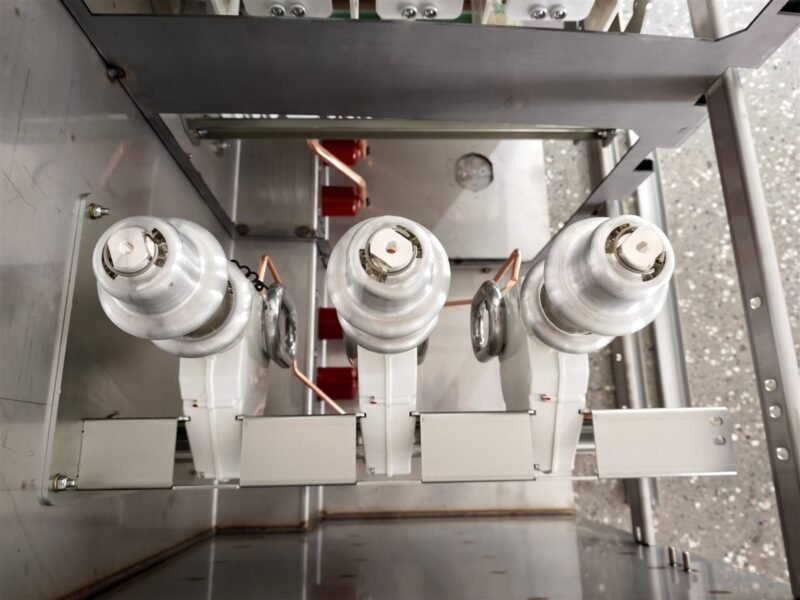
Insulators are the parts that keep live conductors away from earth and from each other. Without them, a 33kV or 11kV switchgear panel cannot work safely. They carry the mechanical load of the busbar and hold the correct clearance under all operating conditions.
In medium voltage switchgear and GIS, insulators are used to support busbars, mount circuit breakers, and bring cables into the panel. They must resist electrical stress, heat, moisture, and mechanical force at the same time. This makes insulator selection one of the most important decisions in switchgear design.
An insulator blocks the flow of current through its body. Its surface, however, can carry leakage current when dirty or wet. The design of the surface, especially its shape and creepage distance, decides how well it resists flashover.
Flashover happens when a surface path becomes conductive. To prevent it, insulators are shaped with ribs and sheds that lengthen the surface path and shed water. The deeper the sheds and the longer the creepage distance, the better the insulator performs in polluted areas. This working principle applies to every high voltage insulator in the panel.
Choosing the correct insulator is not just an electrical decision. It also affects the physical layout of the panel, the spacing between components, and the long-term maintenance schedule of the switchgear.
Main Insulator Types
| Type | Material | Typical Use | Strength |
|---|---|---|---|
| Pin insulator | Porcelain | Distribution lines, 11kV-33kV | Low cost, strong compression |
| Post insulator | Porcelain or composite | Busbar support in switchgear | High mechanical rigidity |
| Suspension insulator | Toughened glass | Overhead lines, HV networks | Easy inspection, high strength |
| Composite insulator | Silicone rubber | Polluted or coastal areas, GIS | Light, hydrophobic, anti-pollution |
| Bushing insulator | Porcelain or resin | Cable termination, transformer, GIS | Sealed, supports conductor entry |
Ceramic (Porcelain) Insulators
Porcelain insulators are the traditional choice. They are made from fired clay materials and offer high compressive strength, good dielectric performance, and low cost.
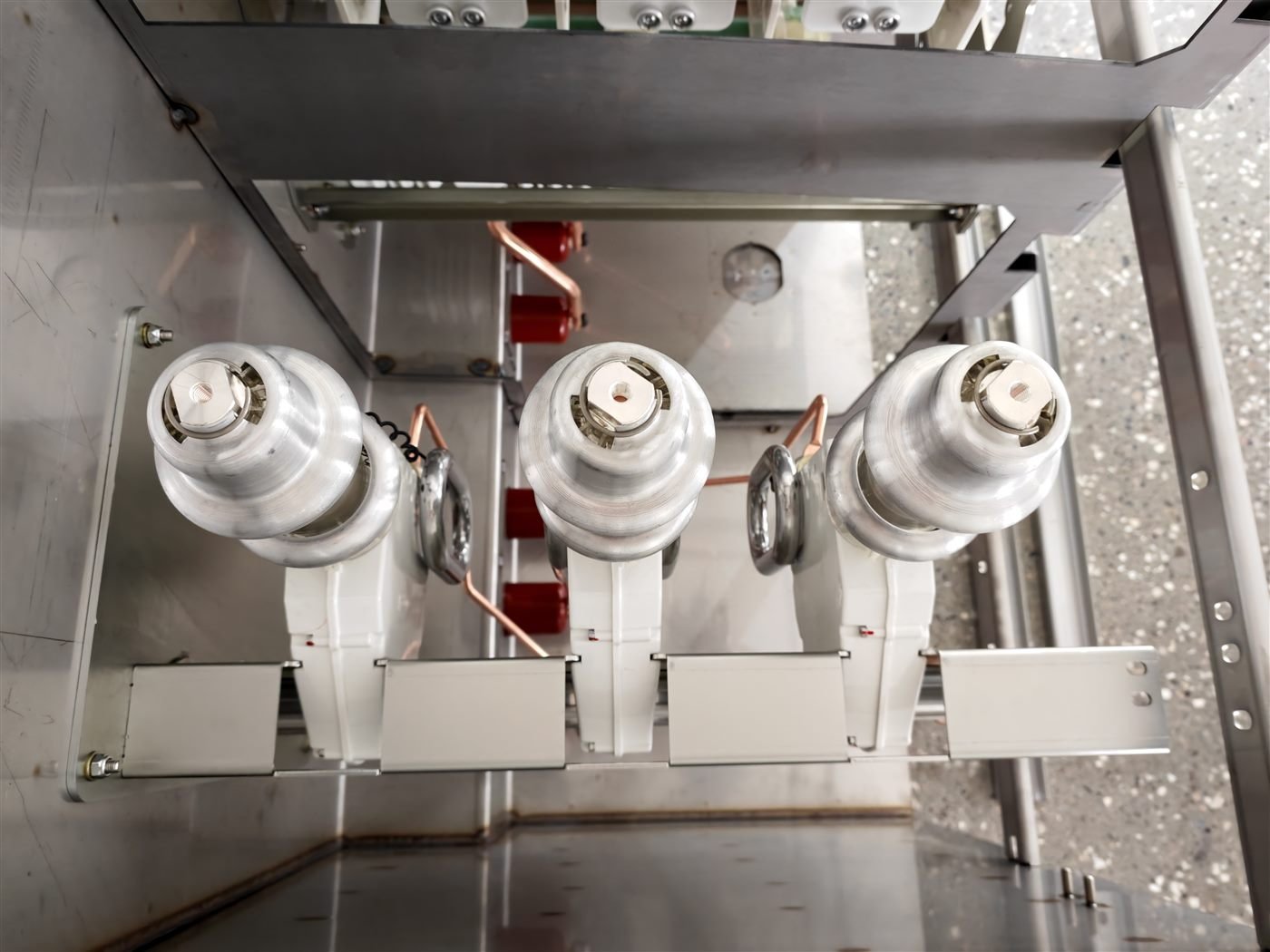
They resist weathering well and are widely used in indoor and outdoor medium voltage switchgear. Their main weakness is that they are heavy and can crack under strong mechanical impact or thermal shock.
Porcelain insulators also need a clean surface. In industrial areas with dust, they must be cleaned regularly. Their rigid body makes them easy to damage if the mounting is not aligned correctly, so proper installation is important.
Composite Insulators
Composite insulators use a fiberglass core covered by a silicone rubber housing. The housing repels water, so the surface stays dry even in rain or fog.
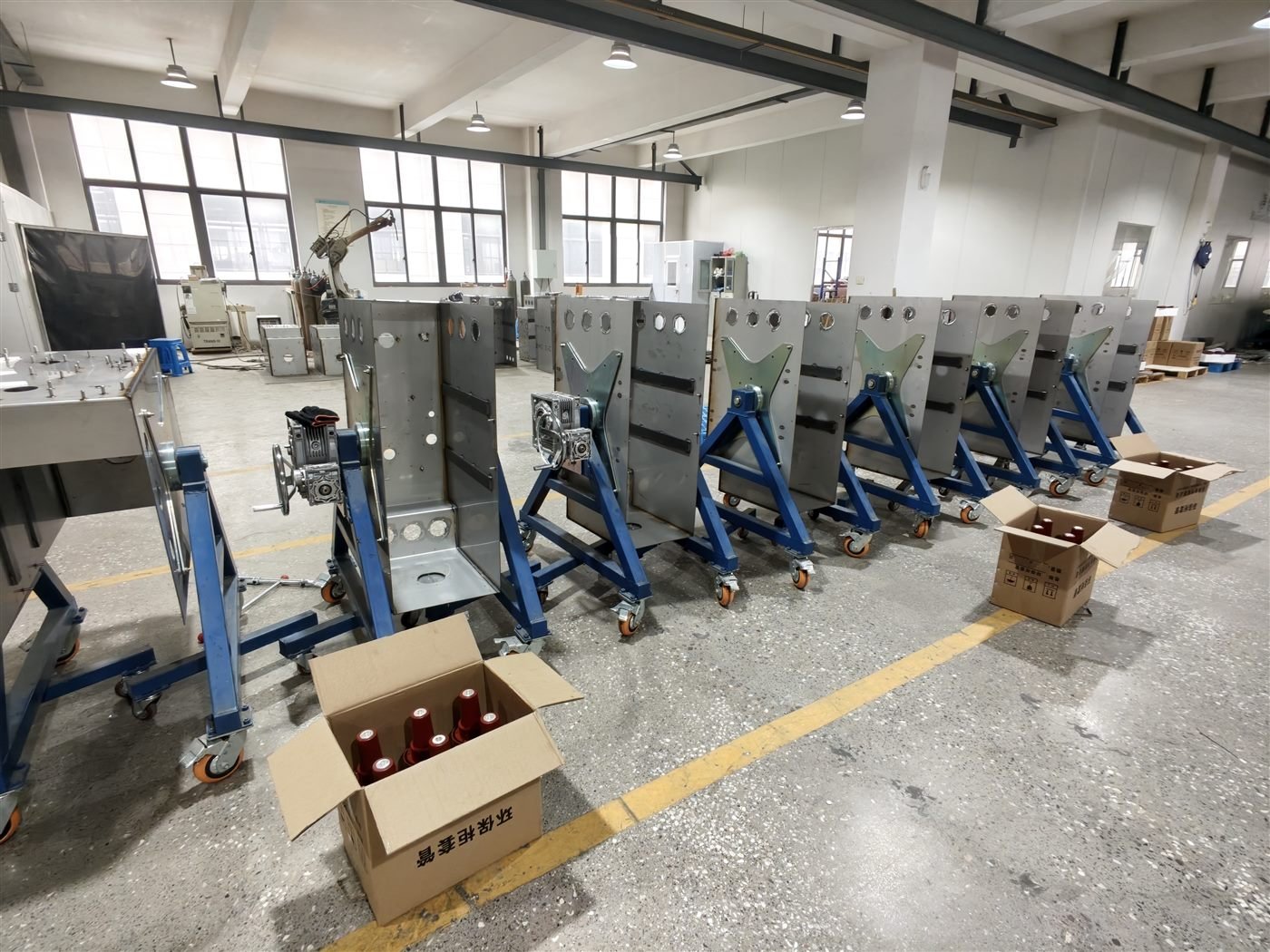
They are much lighter than porcelain and are preferred in polluted and coastal environments. Composite insulators are also used in eco-friendly GIS where reduced weight and higher tracking resistance are needed.
Their polymer housing is hydrophobic, which means water forms into droplets instead of a continuous film. This breaks the leakage current path and raises the flashover voltage. As a result, composite insulators need less maintenance in dirty sites.
Glass and Special Insulators
Toughened glass insulators are strong and transparent, which makes internal defects easy to see during inspection. They are common on overhead lines and in some substations.
For special cases, resin and epoxy insulators are used inside switchgear and GIS where compact size and precise shape are needed. Bushing insulators allow a conductor to pass through a grounded wall or tank, and are essential in cable boxes and transformer connections.
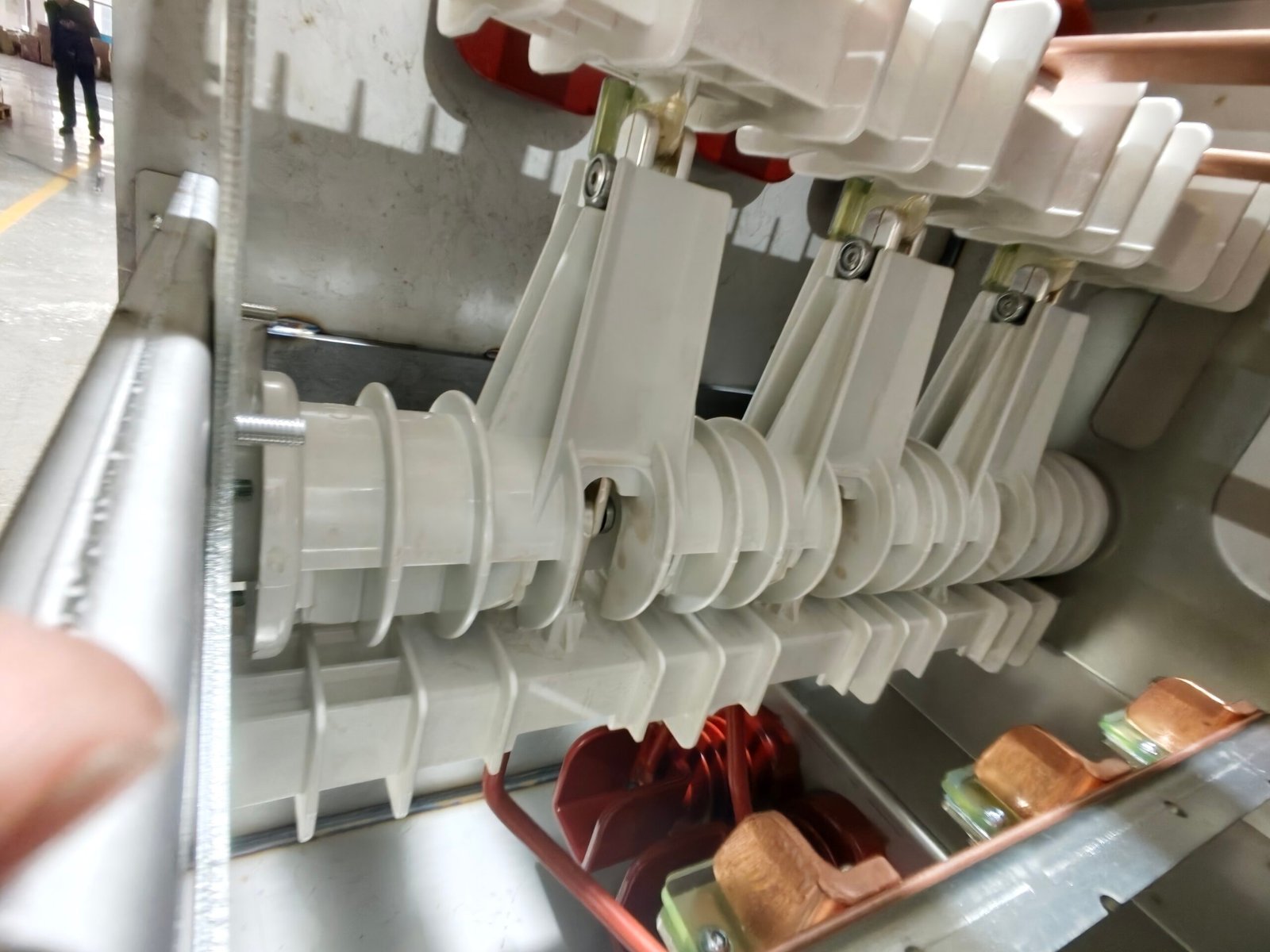
GIS uses cast epoxy insulators to support conductors inside the gas enclosure. These parts must hold both electrical and gas pressure loads, so their quality is critical to the reliability of the complete switchgear. Epoxy insulators are cast with an embedded conductor and a molded shape that follows the electric field, which keeps the stress uniform and prevents partial discharge.
How to Select the Right High Voltage Insulator
- Match the rated voltage and BIL to the system level.
- Choose creepage distance for the pollution class of the site.
- Check the mechanical load of the busbar and conductor.
- Use composite insulators in coastal or dusty areas.
- Verify the insulator meets the required tracking and erosion class.
For outdoor applications, pollution class determines the needed creepage distance. A coastal substation needs more creepage than a clean inland site. Getting this wrong can cause flashover during wet or foggy weather.
Mechanical strength must also cover the busbar weight plus the short circuit force. During a fault, the busbar can experience large electrodynamic forces. The insulator and its mounting must survive that force without damage.
Insulator Maintenance and Testing
Insulators are checked visually for cracks, chipping, and contamination. In important substations, they are tested for partial discharge and leakage current on a schedule.
Regular cleaning prevents pollution flashover in industrial areas. Thermal imaging can detect hot spots caused by a damaged insulator. Following the maintenance plan of the switchgear manufacturer keeps insulators in good condition over their full service life.
FAQ
What is a high voltage insulator?
An insulator that supports live conductors at high voltage and prevents current from flowing to earth or between phases.
What is the best material for insulators?
It depends on the site. Porcelain is cheap and strong, while composite insulators resist pollution and are lighter.
Why is creepage distance important?
Longer creepage distance raises the flashover voltage and reduces leakage current in wet or polluted conditions.
Where are insulators used in switchgear?
They support busbars, mount circuit breakers, and terminate cables and bushings inside the panel.
What is the difference between ceramic and composite insulators?
Ceramic is rigid and cheap but heavy; composite is light, hydrophobic, and better in polluted or coastal areas.
How often should insulators be inspected?
Follow the switchgear maintenance plan, typically with visual checks and periodic electrical testing.
Electric-GS — Switchgear Manufacturer. Electric-GS is a switchgear manufacturer in Yueqing, China, building 33kV GIS, ring main units, and medium voltage switchgear with strict quality control and OEM/ODM support.
Contact us: email info@electric-gs.com or WhatsApp +86 135 8897 8050.
33kV medium voltage switchgear buying guide
33kV GIS busbar assembly guide
disconnector switch complete guide