Ring main units come in several insulation technologies. Choosing between them is one of the most common questions engineers face. Buyers also ask this question when planning a medium-voltage project. In this guide, we compare air-insulated and SF6 gas-insulated units side by side. We look at their strengths and limitations. Finally, we give you a practical decision path for your application.
1. What Both Designs Share
Both designs perform the same core function. They switch and protect medium-voltage feeders in ring networks. They work at voltages from 6 kV to 40.5 kV. Both are factory-assembled and metal-enclosed. In addition, both are tested to IEC 62271-200 for metal-enclosed switchgear. The real difference lies in the insulation and arc-quenching medium.
2. Air-Insulated Ring Main Unit
Air-insulated ring main units use atmospheric air for insulation and arc extinction. The design is simple and proven. In fact, there is no gas to monitor or handle.
- Advantages: no gas handling, lower first cost, simple and low-cost maintenance, fully environmentally friendly
- Limitations: larger footprint, more sensitive to pollution, humidity and high altitude
- Best for: rural and suburban networks, indoor substations with available space, projects that prioritize low maintenance and sustainability
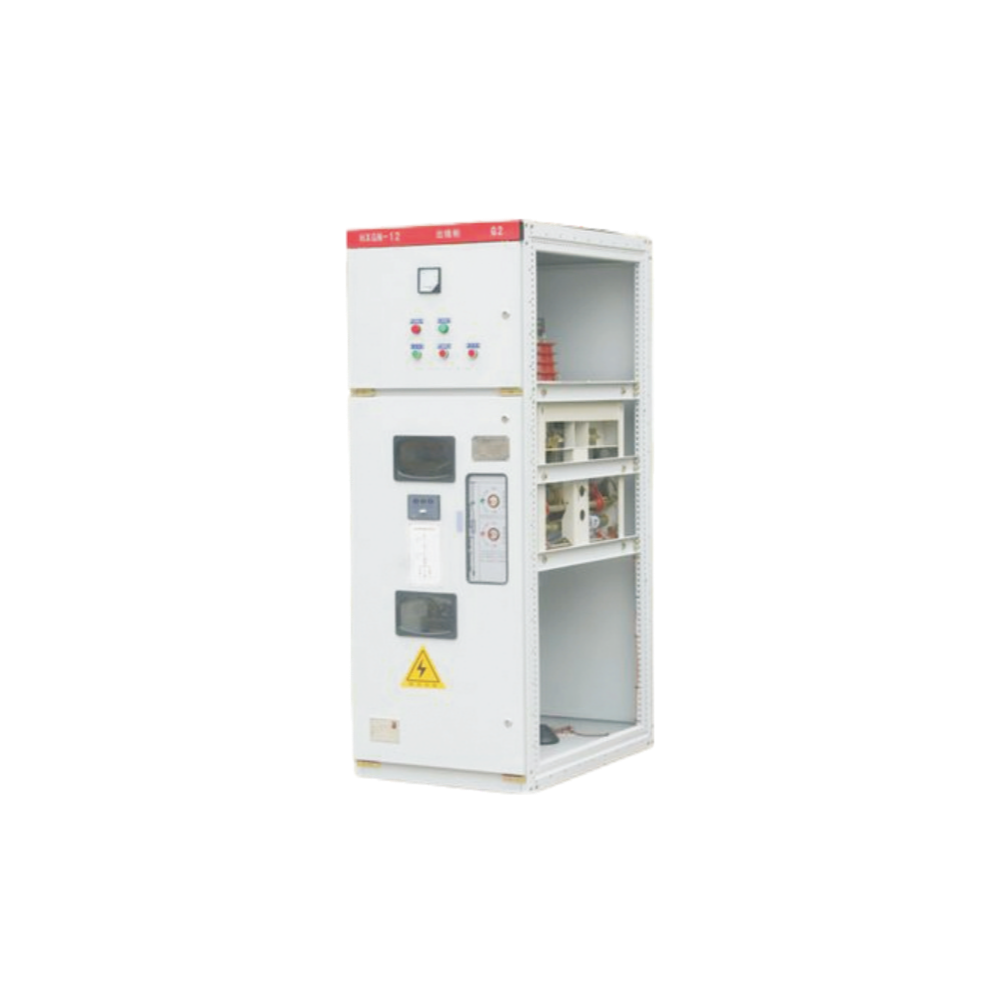
A typical fixed-type example is the GSM6-12~24 Air-insulated RMU (Fixed Type).

3. SF6 Gas-Insulated Ring Main Unit
SF6 gas-insulated ring main units house switching devices in sealed compartments. These compartments are filled with sulfur hexafluoride. SF6 offers very high dielectric strength. It also gives excellent arc-extinguishing performance. In addition, it needs a fraction of the space that air requires.
- Advantages: compact footprint, sealed against dust and moisture, stable performance in coastal, industrial and polluted environments
- Limitations: SF6 has a very high global warming potential (about 23,500 times that of CO2), requires gas pressure monitoring and careful end-of-life handling; many new designs use reduced or alternative gas mixtures
- Best for: dense urban networks, space-constrained substations, coastal and harsh industrial sites
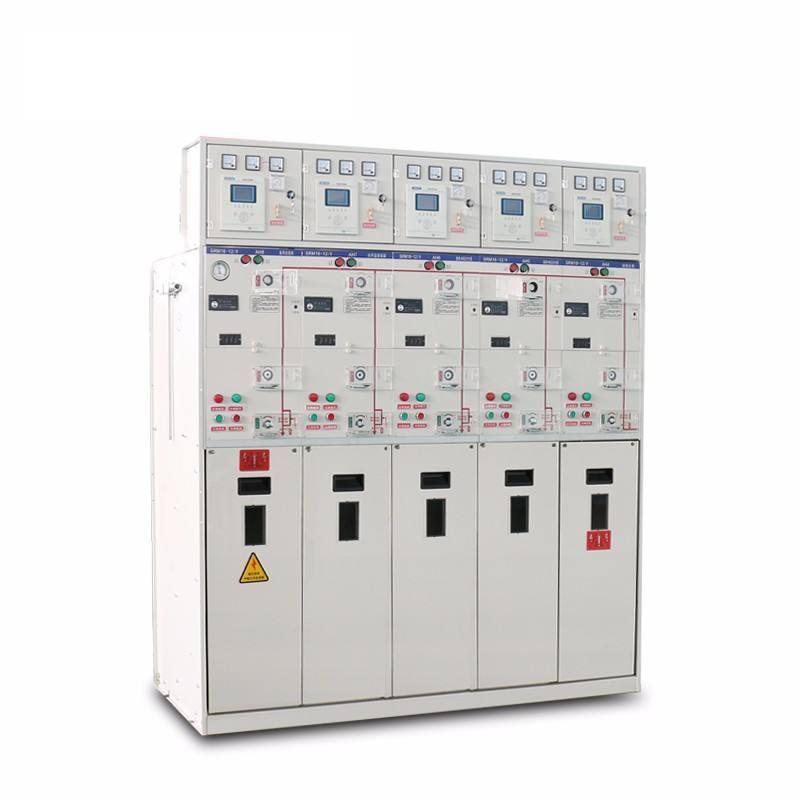
A representative product is the GSRM6 Gas Insulated Ring Main Unit.
4. A Third Option: Solid-Insulated RMU
Solid-insulated units replace gas with epoxy-based solid insulation. They combine compact dimensions with a low environmental impact. They are increasingly specified for sustainability-driven projects. They also suit operators who want to avoid gas handling entirely. An example is the GSG2-12 Solid Insulated Ring Main Unit (RMU).

5. Comparison at a Glance
| Feature | Air-Insulated RMU | SF6 Gas-Insulated RMU |
|---|---|---|
| Insulation medium | Air | SF6 gas (sealed) |
| Footprint | Larger | Compact |
| Maintenance | Simple, no gas checks | Gas pressure monitoring |
| Environmental impact | None | High GWP; alternatives available |
| Harsh environment suitability | Moderate | Excellent (sealed) |
| Typical cost | Lower | Higher |
6. How to Choose
- Check available space: a compact site favors gas or solid insulation; if space is available, air-insulated units are cost-effective
- Assess the environment: coastal, dusty or industrial sites favor sealed gas-insulated units
- Consider maintenance capability: teams with limited resources prefer air-insulated or maintenance-free designs
- Review sustainability policy: if SF6-free equipment is required, choose air-insulated or solid-insulated units
- Confirm electrical ratings first: rated voltage (12, 24 or 40.5 kV), current and short-circuit capacity must match your network for any technology
7. Frequently Asked Questions
Is an SF6 RMU dangerous?
No. SF6 is non-toxic and non-flammable under normal operating conditions. The main concern is environmental. For this reason, sealed low-leakage designs are now preferred. SF6-free alternatives are also common in many markets.
Can the two types be mixed in one network?
Yes. RMUs are modular and standards-based. Air-insulated and gas-insulated units can operate in the same ring. Just make sure the ratings match.
Which is cheaper over the long term?
Typically, air-insulated units have a lower first cost. Gas-insulated units can win on total cost when space is expensive. Then compare both figures before deciding. Include maintenance and end-of-life handling in the calculation.
8. Conclusion
There is no single best RMU technology. The right choice depends on your space, environment, maintenance resources and sustainability targets. For this reason, work with a manufacturer that offers all three options. This lets you standardize on the best fit for each project. For outdoor RMU applications, take a look at the Outdoor ring main unit.
Electric-GS is a professional power and electrical equipment manufacturer based in Yueqing, Zhejiang, China. The company produces air-insulated, SF6 gas-insulated and solid-insulated ring main units. It also makes SF6 load break switches, vacuum circuit breakers and related distribution equipment. OEM and ODM support is available for international projects. For a quotation or technical consultation, contact info@electricgs.com or WhatsApp +86 135 8897 8050.
Related Products
GSM6-12~24 Air-insulated RMU (Fixed Type)
GSRM6 Gas Insulated Ring Main Unit
GSG2-12 Solid Insulated Ring Main Unit (RMU)
HXGN15-12 Ring Main Unit Medium Voltage Switchgear