A transformer tap changer is the only part of a distribution transformer that lets you correct voltage without touching the winding. Yet it is also the part most often left in the wrong position at commissioning — and the first suspect when a new unit “runs hot” or trips upstream protection in parallel.
This guide covers what each tap position actually does to the secondary voltage, five checks to complete before energizing, and what happens when two transformers with different tap settings are paralleled. The numbers below use a common 11 kV / 433 V unit with a five-position off-circuit tap changer, ±2 × 2.5%.
Tap Position Is a Voltage Decision, Not a Spare Part
Every off-circuit tap changer (DETC) moves the effective turns ratio in steps. On a ±2 × 2.5% unit there are five positions: +5%, +2.5%, 0, −2.5%, −5%. Position 1 gives the highest secondary voltage; position 5 gives the lowest.
The step is easy to calculate. A 2.5% change on a 433 V secondary shifts no-load output by about 10.8 V. On the primary side, the same 2.5% step on 11 kV equals 275 V. Small numbers — but they decide whether downstream equipment sees 418 V or 440 V at the terminals.
| Tap position | Ratio setting | No-load secondary (433 V base) | Typical use |
|---|---|---|---|
| 1 | +5% | ≈ 455 V | Long feeder, heavy volt drop at far end |
| 2 | +2.5% | ≈ 444 V | Weak grid, voltage sag at peak load |
| 3 | 0 (neutral) | 433 V | Default commissioning position |
| 4 | −2.5% | ≈ 422 V | Short feeder, high incoming voltage |
| 5 | −5% | ≈ 411 V | Grid consistently above nominal |
Rule of thumb: pick the tap that puts the measured secondary voltage within ±2.5% of nominal at average load, not at no load. Setting the tap from an open-circuit reading almost always leaves the unit one step too high. For the wider selection logic behind these numbers, see our distribution transformer sizing guide.
Before you move the handle, do the arithmetic for the actual site. A feeder with 4% volt drop at full load needs roughly one step up (2.5%) plus a margin; a site where the incoming MV runs 3% above nominal needs one step down. If the load flow study says the required correction is larger than ±5%, a tap changer will not fix it — the feeder or the transformer rating is the real issue.

Five Checks Before You Energize
Checks 1–3: Mechanical and Electrical
- Confirm the tap position on the nameplate and on the handle. The tap changer handle position and the nameplate tap table must agree. A handle that reads “3” while the internal tapping links sit on position 4 is a common assembly error after transport.
- Measure the ratio on every tap, not just the neutral. A turns-ratio test (TTR) should match the nameplate ratio within 0.5% on each position. A single position off by more than 1% usually means a wrong tapping link, not a measurement error.
- Check winding resistance across the tap range. Resistance imbalance between phases above 2% on any tap points to a loose tapping connection — it will heat under load even if the ratio looks correct.
Checks 4–5: Records and Safety
- Lock the handle and record the position. After setting, the tap changer must be mechanically locked and the final position written into the commissioning sheet, the SCADA point list, and the panel label. Untraceable tap positions are the first thing an auditor asks for.
- Verify the DETC is truly off-circuit. Off-circuit tap changers must never be operated with the transformer energized. Confirm the LV and HV breakers are open and the unit is earthed before any handle movement, and mark the handle with a “do not operate live” tag.
For oil-immersed units, complete these checks together with oil testing and a vector group check, so one outage covers the full pre-energization set.
Paralleling a Transformer With a Different Tap
Two transformers in parallel must share load according to their impedances — but only if their ratios match. A one-step difference (2.5%) between two identical 1000 kVA units produces a circulating current that can reach several percent of rated current before any load is applied, and it grows with lower impedance.
- Match tap positions exactly before closing the paralleling switch.
- Verify vector group and impedance first — a tap match alone will not prevent circulating current if the impedances or vector groups differ.
- After paralleling, measure circulating current with a clamp meter at no load; anything above about 5% of rated current means a ratio or impedance mismatch.
- Never adjust one unit’s tap while both are paralleled and loaded.
Where the grid voltage drifts seasonally, an on-load tap changer (OLTC) is the correct choice; a DETC is a set-and-forget device and should not be used as a voltage regulator.
FAQ
Q: Can I change the tap position with the transformer energized?
A: No. An off-circuit tap changer must be operated only with the unit de-energized and earthed. Only an OLTC may be operated under load.
Q: Which tap position should a new transformer ship in?
A: Position 3 (neutral, 0%) unless the project specifies otherwise. It keeps the secondary at nominal and leaves adjustment room in both directions.
Q: How much does one tap step change the secondary voltage?
A: 2.5% of nominal — about 10.8 V on a 433 V secondary, or 275 V on an 11 kV primary.
Q: Does a tap change affect the short-circuit current?
A: It changes it slightly, because the ratio changes. On the +5% position the secondary short-circuit current rises by roughly 5% for the same source impedance — usually within design margin, but worth checking on large units.
Q: What if the ratio test fails on only one tap?
A: Stop. A single failed position almost always means a mis-connected tapping link inside the tank. Energizing will produce circulating current, abnormal heating, and possible protection trips.
Q: How often should the tap position be re-checked after commissioning?
A: Once a year during routine maintenance, and after any relocation or repair. Record the position and the measured secondary voltage together – the pair proves the setting is still right.
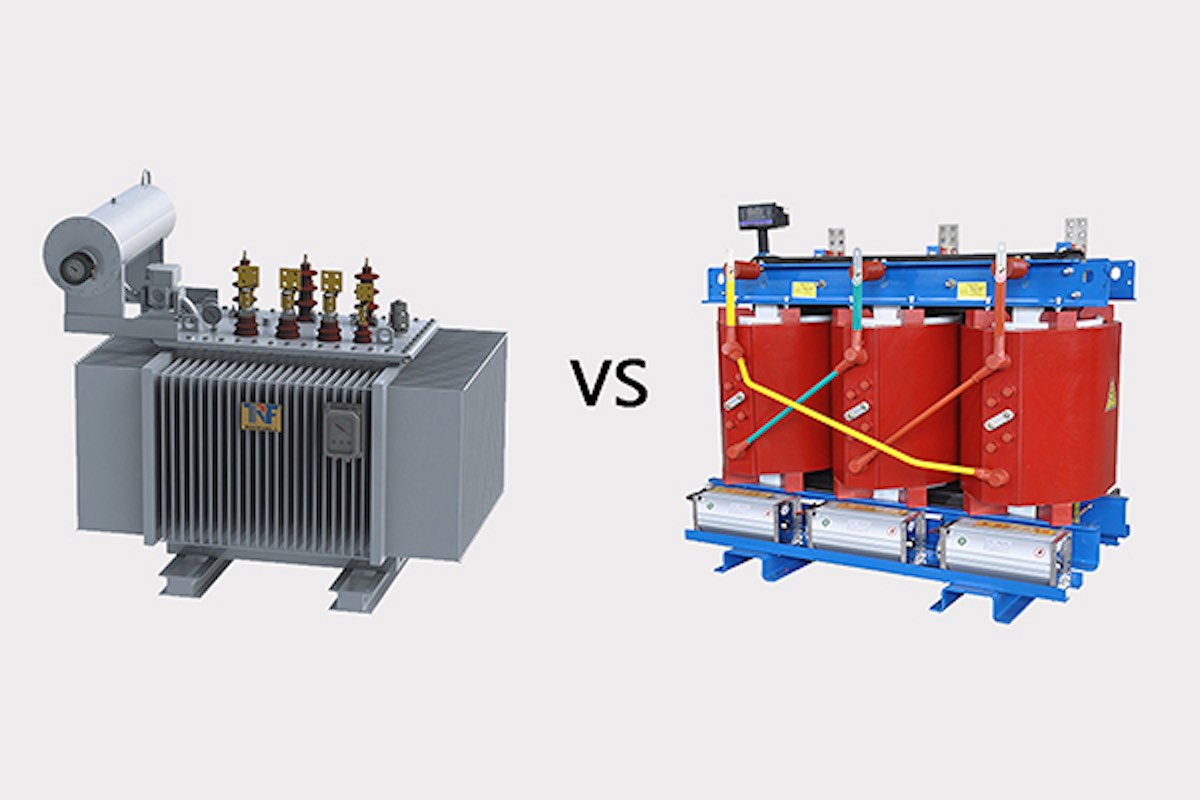
Dry-type units use the same tap logic with different hardware; our sister site covers LV and MV switchgear assemblies that pair with these transformers.
About Electric-GS
Electric-GS is an OEM/ODM switchgear and transformer manufacturer based in Yueqing, Zhejiang, China. We build oil-immersed and dry-type distribution transformers, RMUs, MV and LV switchgear, and compact substations to IEC and GB standards, with routine and type test reports supplied per project.
For datasheets, tap range options, or a quotation, contact us at info@electric-gs.com or WhatsApp +86 135 8897 8050.
Leave a Reply