The bushing is the smallest insulated part on a transformer and the one that fails most visibly. It has to hold the winding potential off the tank, carry the cable or busbar current, and survive pollution, switching overvoltage and thermal cycling for twenty years. Choosing it on “the same as last time” is how rework starts.
These are the six checks we run before a bushing is released for a transformer order, in the order that matters.
Why bushing choice is not a detail. A transformer can pass every factory test and still fail at the bushing: cracked porcelain after transport, a partial discharge source at the gasket, or a creepage distance that is too short for the site’s pollution level. All three are visible before shipment if the specification names the right parameters.
The bushing also sets the connection interface — cable lug, busbar clamp or epoxy cone — and that interface decides how the transformer is installed on site. Getting it wrong costs more than the part.
Check 1: Rated Voltage and Basic Insulation Level
The bushing’s rated voltage must be at least the transformer’s highest system voltage, and its lightning impulse level must match the transformer insulation level. For an 11 kV transformer, that usually means a 12 kV or 17.5 kV bushing with a 75 kV BIL. For 33 kV, a 36 kV bushing with 170 kV BIL.
Two mistakes appear here: using a bushing rated for the nominal voltage but not the system’s highest voltage (a 33 kV system is a 36 kV system in IEC terms), and assuming the BIL of the bushing can be lower than the transformer because it is “outside”. It cannot — the bushing is part of the insulation coordination.
Check 2: Creepage Distance for the Site
Creepage is the surface distance between the live conductor and earth. It must be long enough for the pollution level where the transformer will live.
| Pollution Level | Typical Specific Creepage | Where It Applies |
|---|---|---|
| Light | 16 mm/kV | Clean inland, low dust |
| Medium | 20 mm/kV | Industrial estates, moderate dust |
| Heavy | 25 mm/kV | Coastal, cement, chemical plants |
| Very heavy | 31 mm/kV | Salt fog, desert dust, severe industry |
For a 36 kV bushing at heavy pollution, the required creepage is about 900 mm. A standard 36 kV bushing often provides 720 mm. The difference is bought as an “anti-pollution” or “creepage-extended” type, and it costs maybe 10% more than the standard part — far less than the first flashover.
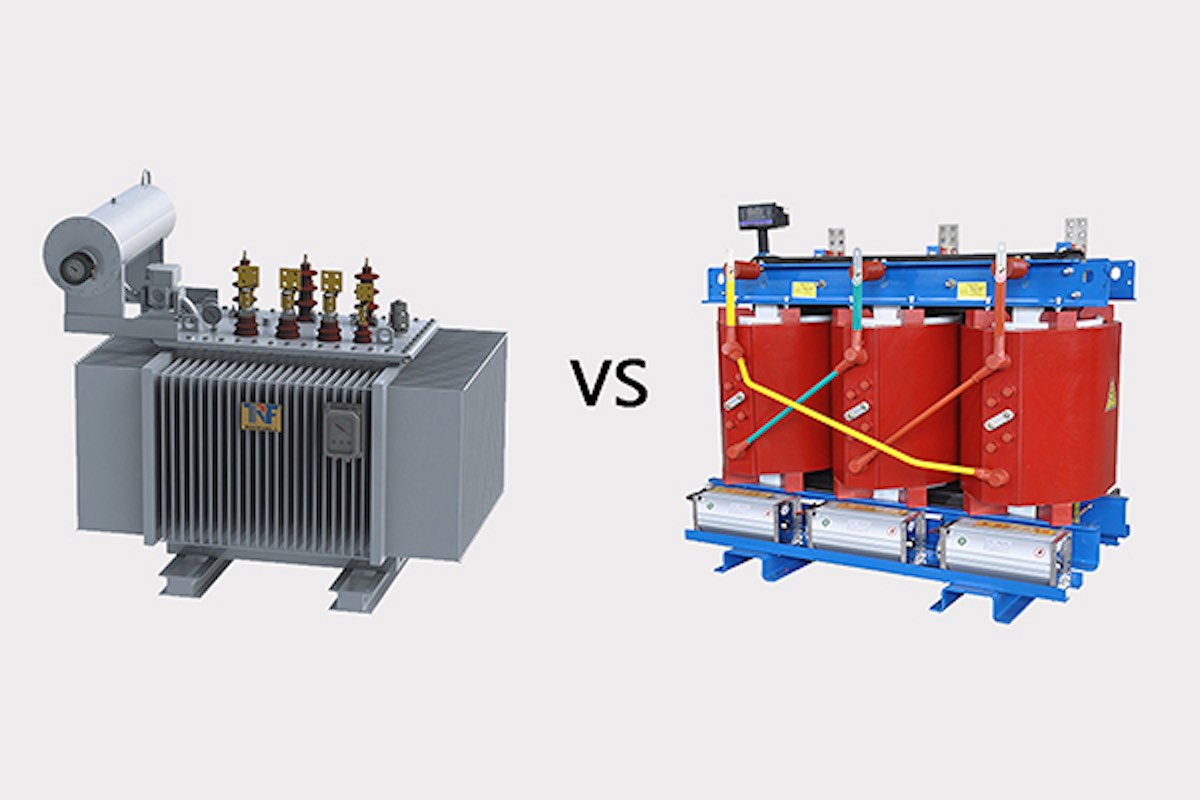
A distribution transformer with its HV bushings fitted. Creepage and BIL are set at this interface, not on the tank.
Check 3: Current Rating and Connection Type
The bushing must carry the winding current with margin, and its conductor must accept the cable or busbar actually used on site. Check three numbers:
Continuous current. Rate the bushing at or above the winding current, and remember that a bushing inside an enclosure runs hotter than in free air.
Terminal type. A cable lug needs a threaded stud of the right size; a busbar needs a flat pad with the right hole pattern; a plug-in type needs the matching epoxy interface. Mismatches are the most common reason for site rework.
Material of the conductor. Copper studs are standard; aluminium bodies need care with bimetallic contact, especially on the LV side.
Check 4: Partial Discharge and Gasket Design
A bushing that passes a power-frequency test can still have a partial discharge source at a gasket or a poorly bonded shield. Ask for the PD test result, not just “passed”.
On oil-immersed units, the lower part of the bushing sits in oil and the gasket must be compatible with transformer oil at operating temperature. On dry-type units, the bushing is usually epoxy-cast into the winding and the interface is the manufacturing step that decides long-term behaviour — see our oil testing checks if the unit is oil-filled.
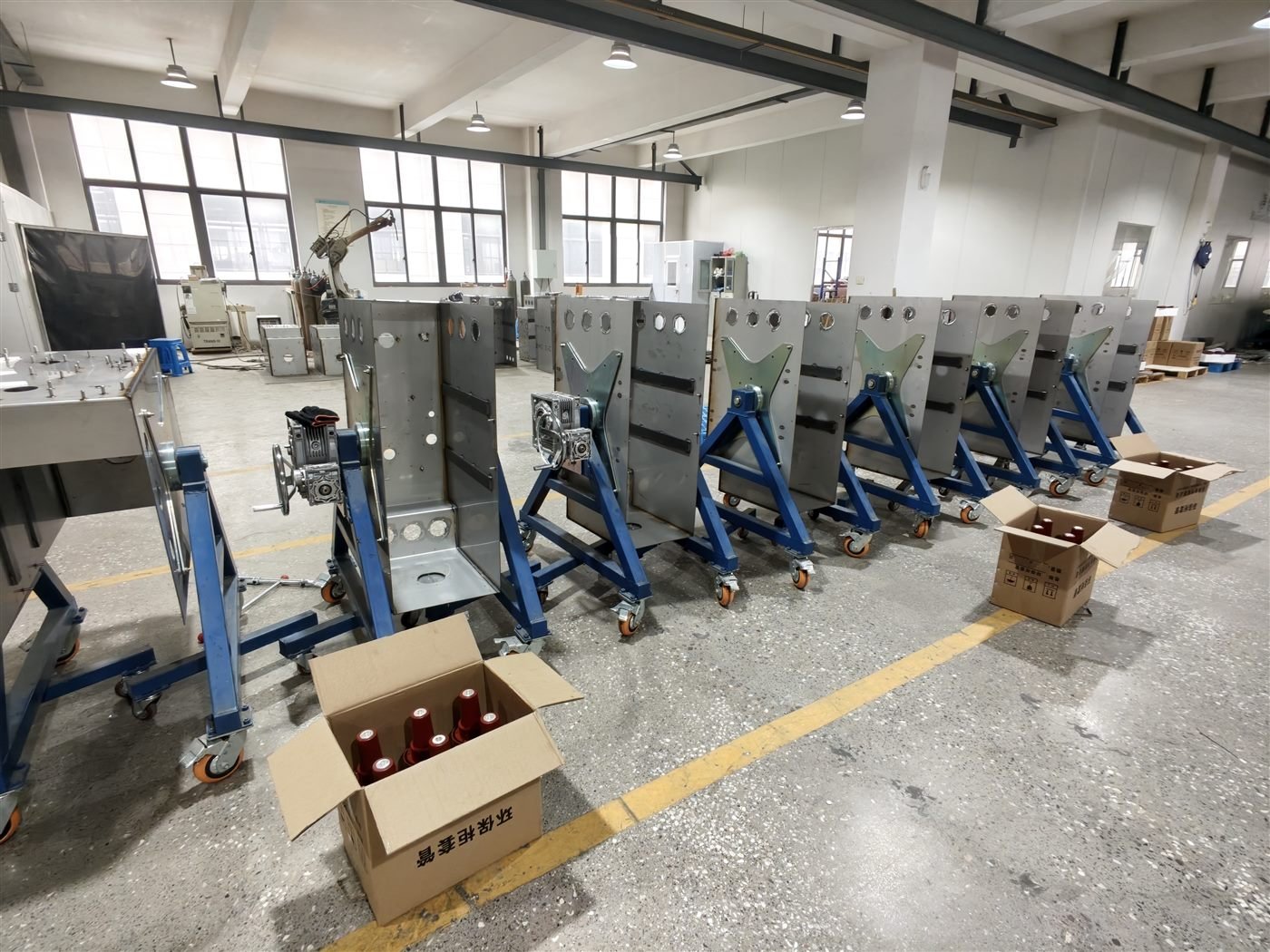
Bushings fitted and torqued in the workshop. The connection interface is fixed at this stage and cannot be changed on site without new parts.
Check 5: Clearance to Other Phases and to Earth
Phase-to-phase and phase-to-earth clearance must satisfy the standard for the voltage level, with the bushing sitting at the worst position — usually the middle phase, where both neighbours are close.
For 36 kV, phase-to-earth clearance is typically 300 mm minimum in air, and phase-to-phase 420 mm. Adding cable lugs and shrouds eats into that, so check the assembly, not the bushing alone. Our clearance and creepage guide covers the same rule set for switchgear assemblies.
Check 6: Nameplate and Test Report Match
Before the transformer is released, confirm that the bushing nameplate matches what was ordered: rated voltage, BIL, creepage, current. Then confirm the test report covers that specific bushing type.
The transformer nameplate should carry the HV and LV ratings that the bushings are built for — the two documents must agree, as described in our nameplate verification guide. A mismatch here is invisible until the utility inspects the unit.
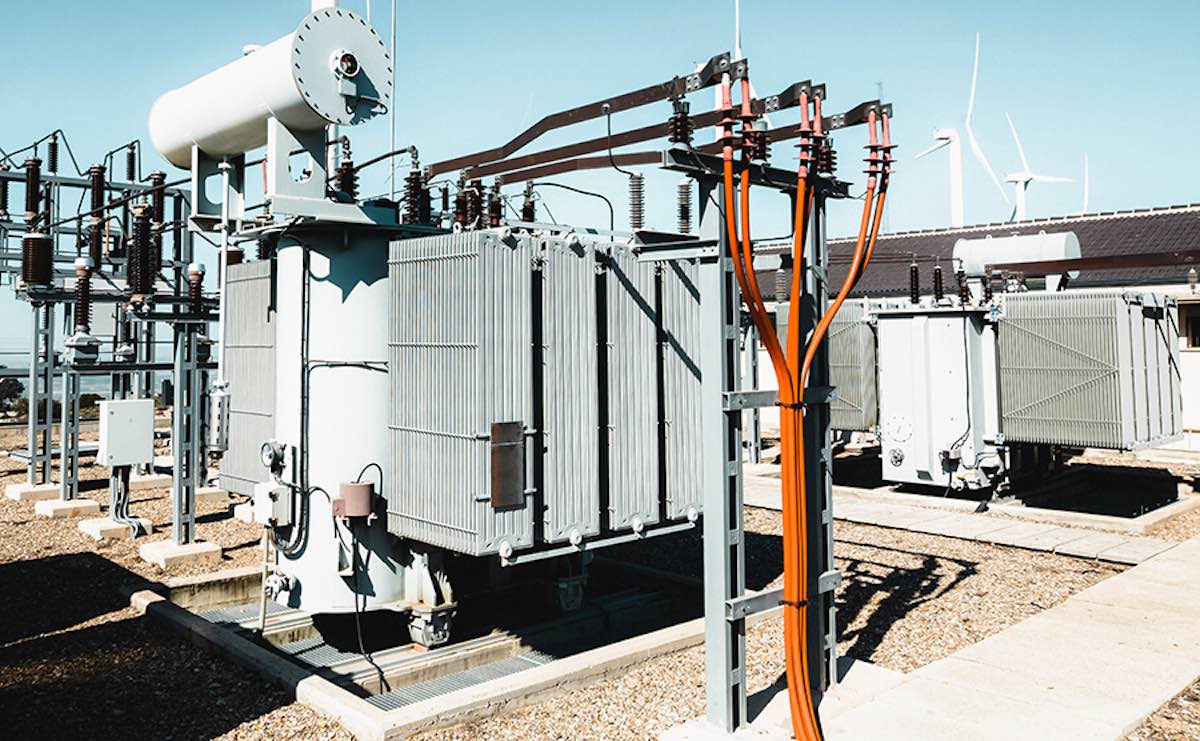
Terminal spacing on the tank lid fixes the phase clearance. It is decided when the tank is designed, not when the bushings arrive.
FAQ
Can I replace a bushing with a higher creepage type on site?
Usually yes if the tank interface and stud pattern match, but the clearance between phases does not increase. Check the middle phase before ordering.
Is a porcelain bushing always better than epoxy?
Porcelain handles pollution and UV better outdoors; epoxy is common on dry-type units and inside enclosures. Match the material to the environment.
What BIL should an 11 kV transformer bushing have?
Typically 75 kV lightning impulse for a 12 kV class unit. Confirm against the transformer insulation level, not the nominal system voltage.
How do I know the site pollution level?
IEC 60815 gives the categories. Coastal, cement and chemical sites are heavy or very heavy; if unknown, specify one level higher than your first guess.
Does bushing length affect the tank design?
Yes. Longer creepage means a taller bushing and often a taller tank or a different lid layout. Decide before the tank drawing is released.
What is checked at routine test?
Power-frequency withstand, PD where specified, and a visual and dimensional check of creepage and terminal pattern. See our tap changer checks for the same pre-dispatch discipline.
About Electric-GS
Electric-GS builds oil-immersed and dry-type transformers, compact substations and MV switchgear in Yueqing, China. Bushing type, creepage class and terminal pattern are confirmed against your site conditions before the tank is designed. Contact info@electric-gs.com or WhatsApp +86 135 8897 8050. Related: MCCB breaking capacity selection on our LV site, and custom electrical equipment for project enquiries.
Leave a Reply