What is a Ring Main Unit (RMU)?
A Ring Main Unit (RMU) is a compact, factory-assembled medium voltage switchgear used in secondary distribution networks to connect, protect, and control electrical circuits. RMUs are widely used in ring main systems where power is supplied from both ends of a loop, providing enhanced reliability. They are typically rated from 6kV to 24kV, with current ratings of 630A to 1250A and short circuit ratings of 16kA to 25kA.
The ring main configuration is a standard design in urban distribution networks, where reliability is critical. By connecting distribution transformers in a ring formation, a fault on one section of the line can be isolated while power continues to be supplied from the other end. RMUs serve as the switching nodes in this network, providing load break switching, fault protection, and cable earthing functions in a single compact enclosure.
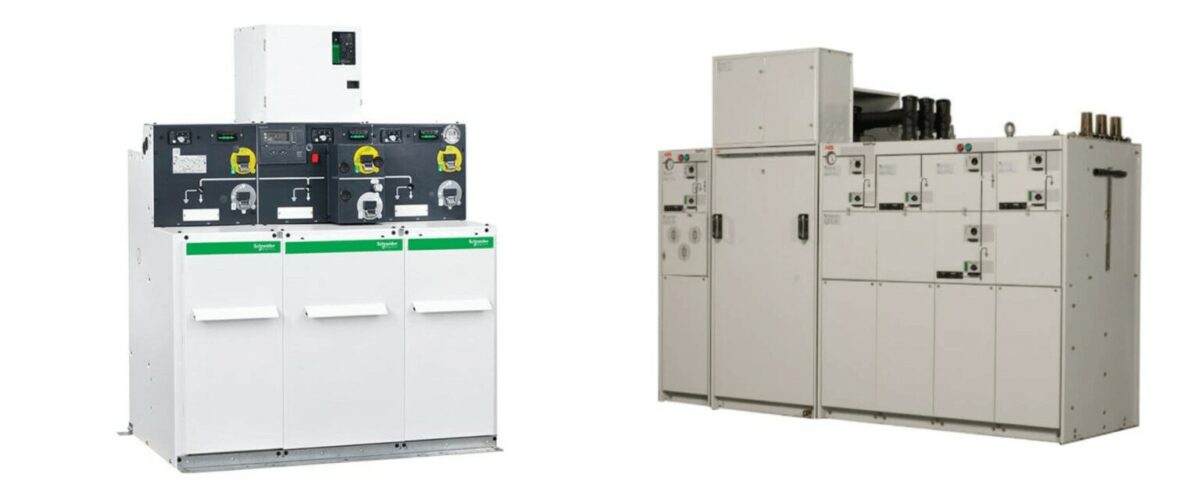
Types of Ring Main Units
RMUs are classified based on their insulation medium and switching technology. Each type has specific advantages and is suited for different applications:
1. Gas Insulated RMU (SF6 or Eco-Gas)
Gas insulated RMUs use SF6 gas or alternative eco-friendly gases (such as dry air or vacuum) as the insulating medium. They are completely sealed, maintenance-free, and highly compact. Gas insulated RMUs are ideal for underground substations, urban areas with limited space, and harsh environmental conditions. The sealed design eliminates the need for regular maintenance and ensures reliable operation for decades.
2. Air Insulated RMU
Air insulated RMUs use ambient air as the insulating medium. They are more cost-effective, easier to inspect, and provide better visibility of internal components. Air insulated RMUs are suitable for indoor installations with controlled environments and adequate ventilation. They are commonly used in conventional distribution substations and industrial plants.
3. Solid Insulated RMU
Solid insulated RMUs use epoxy resin or similar materials to encapsulate live parts. They offer excellent dielectric strength and are insensitive to environmental conditions. Solid insulation technology provides a middle ground between gas and air insulated solutions, with no gas leakage concerns and compact dimensions.
| Type | Insulation | Maintenance | Size | Best For |
|---|---|---|---|---|
| Gas Insulated | SF6 / Eco-Gas | Zero maintenance | Very compact | Urban, underground sites |
| Air Insulated | Air | Periodic inspection | Larger | Indoor substations |
| Solid Insulated | Epoxy resin | Low maintenance | Compact | Harsh environments |
Key Components of an RMU
A typical RMU consists of several functional modules that can be configured to meet specific distribution requirements:
- Load Break Switches (LBS) – The core switching elements that open and close under normal load conditions. Most modern RMUs use vacuum interrupters or SF6 interrupters for reliable load switching.
- Circuit Breaker Module – Optional module with a vacuum circuit breaker for transformer protection, typically equipped with overcurrent and earth fault protection relays.
- Fuse Combination Units – A common configuration where a high-voltage fuse is combined with a load break switch to protect distribution transformers. The fuse provides fault current interruption while the switch provides load switching.
- Busbars – Copper conductors that interconnect the switch modules within the RMU, rated for 630A or 1250A continuous current.
- Cable Terminations – Standardized cable connection points suitable for both XLPE and paper insulated cables.
- Earthing Switches – Built-in earthing switches for safe maintenance of cable circuits.
- Mechanical Interlocks – Interlocking mechanisms that prevent incorrect operation sequences, ensuring safe switching operations.
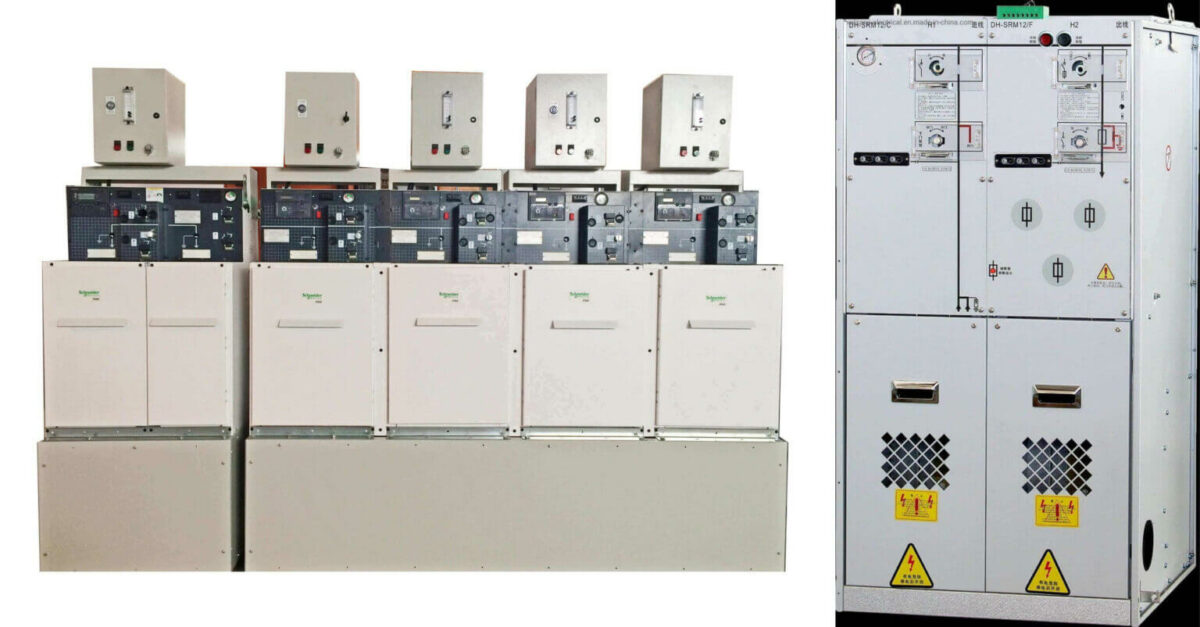
RMU Configurations
Ring Main Units are available in various standard configurations to suit different network layouts. The most common configurations include:
Two Switch + One Fuse (2L + F)
This is the most standard RMU configuration: two load break switches for the ring circuit and one fuse combination unit for transformer protection. It is ideal for connecting one distribution transformer to a ring main system. This configuration is widely used in residential and commercial distribution networks.
Three Switch (3L)
Three load break switches provide additional flexibility for network configurations without transformer protection. This configuration is used for loop feeders and network sectionalizing.
Switch + Breaker + Switch (LBS + CB + LBS)
This configuration includes a vacuum circuit breaker module between two load break switches, providing full protection capabilities. It is used where the downstream transformer requires more comprehensive protection or where the RMU serves as a primary distribution point.
Custom Configurations
RMUs can be customized with additional modules such as metering units, communication modules, and remote control interfaces to meet specific project requirements.
For more information on related products, please visit our Vacuum Circuit Breakers and Distribution Transformers pages.
Advantages of Using RMUs
Ring Main Units offer numerous benefits compared to conventional open-type switchgear:
- Space Savings – RMUs are significantly more compact than conventional switchgear, requiring up to 70% less floor space. This is particularly valuable in urban substations and underground installations.
- Enhanced Safety – Sealed design and mechanical interlocks provide a high level of safety for operating personnel. Live parts are completely enclosed, preventing accidental contact.
- Low Maintenance – Gas insulated RMUs are virtually maintenance-free for their entire service life. There is no need for regular inspection or adjustment of internal components.
- High Reliability – The sealed design protects internal components from dust, moisture, and corrosion, ensuring reliable operation in harsh environments.
- Easy Installation – RMUs are factory-assembled and tested, reducing on-site installation time and commissioning costs. Pre-wired options further simplify installation.
- Scalability – Modular design allows easy expansion or modification of the RMU configuration as network requirements change.
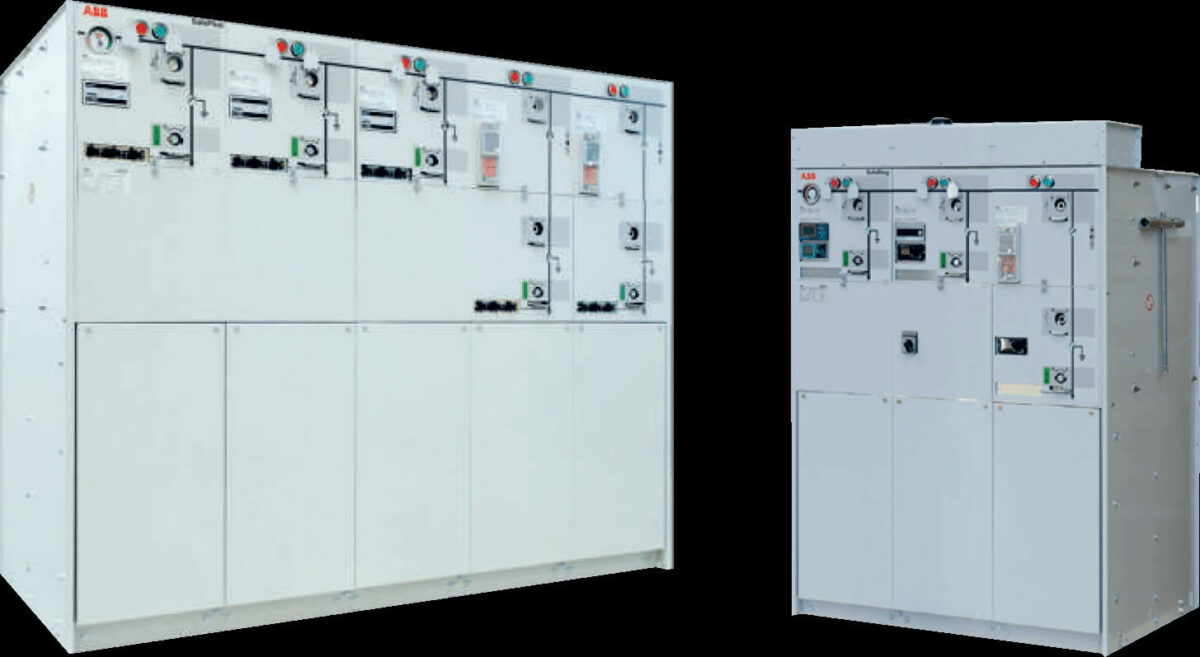
For international standards comparison and technical specifications, visit our partner site: electricgs.com.
RMU Selection Guide
Selecting the right RMU requires careful consideration of several technical factors:
1. Voltage Rating
Choose the rated voltage based on the distribution system voltage. Common ratings include 12kV (for 10kV systems), 24kV (for 20kV systems), and 40.5kV (for 35kV systems). The rated voltage should exceed the maximum system voltage.
2. Current Rating
The busbar rating is typically 630A for standard distribution networks. Higher ratings (1250A) are available for heavy load feeders. The transformer protection module rating depends on the connected transformer capacity.
3. Short Circuit Rating
Select the short circuit withstand rating based on the available fault current at the installation point. Standard ratings are 16kA, 20kA, and 25kA for 3-second duration.
4. Insulation Type
Choose between gas insulated, air insulated, or solid insulated based on installation environment, space constraints, and maintenance preferences. Gas insulated is preferred for outdoor and underground applications.
5. Control and Communication
Decide whether local manual operation is sufficient or if remote control and monitoring are required. Modern smart RMUs can be equipped with motorized mechanisms, remote terminal units (RTUs), and communication interfaces for SCADA integration.
Common Applications of RMUs
Ring Main Units are used in a wide range of distribution applications:
- Urban Distribution Networks – RMUs are the standard switching equipment in urban ring main systems, supplying power to residential and commercial areas.
- Industrial Plants – Used for in-plant distribution networks, providing reliable power to production equipment.
- Commercial Buildings – High-rise buildings, shopping malls, and hospitals use RMUs for main medium voltage distribution.
- Renewable Energy – RMUs are used in solar and wind power plants for collection network switching and protection.
- Infrastructure Projects – Tunnels, airports, railway stations, and metro systems use RMUs for traction power and auxiliary distribution.
- Data Centers – Critical data centers use redundant RMU configurations for highly reliable power distribution.
Frequently Asked Questions (FAQ)
What does “ring main” mean?
A ring main is a distribution network configuration where cables form a closed loop (ring). Power can be supplied to any point in the ring from either end. If one section develops a fault, it can be isolated while power continues to flow from the other direction, significantly improving reliability.
What is the typical lifespan of an RMU?
Gas insulated RMUs have a design life of 30-40 years. With proper installation and minimal maintenance, they can operate reliably for decades. Air insulated RMUs require periodic inspection and typically have a similar service life with regular maintenance.
Can RMUs be used outdoors?
Standard RMUs are designed for indoor installation. For outdoor use, they must be installed in a suitable kiosk or outdoor enclosure with proper ventilation and weather protection. Outdoor RMU enclosures are available in various designs including concrete, steel, and GRP materials.
What is the difference between an RMU and switchgear?
RMU is a specific type of compact switchgear designed for secondary distribution networks. While all RMUs are switchgear, not all switchgear is an RMU. RMUs are characterized by their compact size, modular design, and typical application in ring main distribution systems.
How are RMUs maintained?
Gas insulated RMUs are essentially maintenance-free. Routine visual inspection every 1-2 years is sufficient. Air insulated RMUs require periodic cleaning, contact lubrication, and mechanical operation testing every 3-5 years. Fuses in transformer protection modules should be checked periodically.
Can RMUs be monitored remotely?
Yes, modern RMUs can be equipped with remote monitoring and control capabilities. Options include motorized operating mechanisms, position indication sensors, fault detectors, and communication interfaces (RS485, Ethernet, 4G) for integration with distribution management systems (DMS).
About Electric-GS
Electric-GS is a professional manufacturer of medium voltage switchgear based in Yueqing, Zhejiang, China. We design and produce a comprehensive range of Ring Main Units, including SF6 gas insulated RMUs, air insulated RMUs, and solid insulated RMUs. Our products are rated from 6kV to 24kV with current ratings up to 1250A.
Our RMUs are manufactured to IEC 62271 and GB 3906 standards, with complete type test reports from accredited laboratories. We provide OEM and ODM services for global clients, with full customization options for configurations, voltage ratings, and communication interfaces. Our engineering team supports customers from project design through commissioning.
Contact us today for a free quotation: info@electric-gs.com | WhatsApp: +86 135 8897 8050