A PV grid-connected cabinet is the bridge between a solar power plant and the utility grid. It collects power from inverters, protects the connection with switchgear and surge protection, measures energy, and safely disconnects the plant when required. Choosing the right cabinet is essential for compliance, safety, and long-term performance. This guide explains what it is, what goes inside, how to select one, and what to look for when buying from a manufacturer.
What Is a PV Grid-Connected Cabinet?
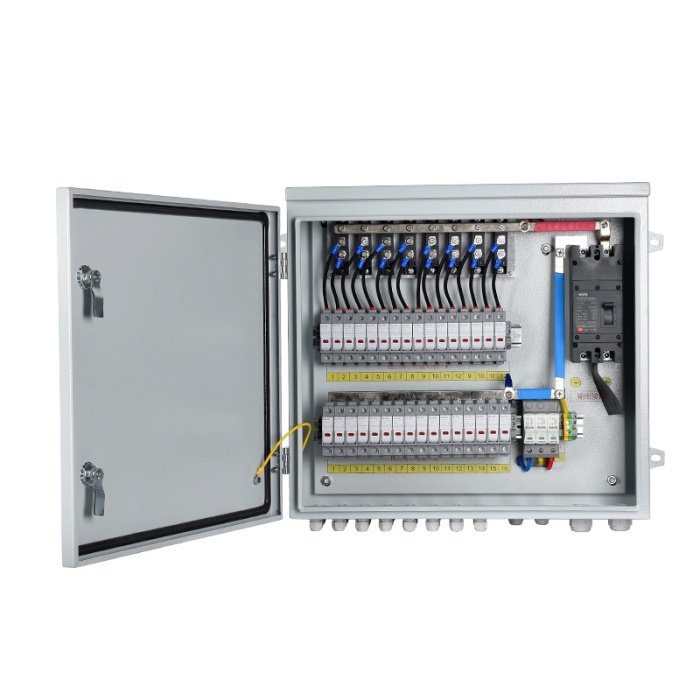
A photovoltaic grid-connected cabinet, also called a PV distribution cabinet or metering cabinet, is a low voltage or medium voltage enclosure installed between the inverter output and the point of common coupling. It contains protection devices, metering, and switching equipment that allow a solar plant to feed power into the grid safely and legally.
For commercial and utility scale plants, the cabinet is the last line of defense before the grid. It isolates faults, limits fault current, provides anti-islanding disconnection, and houses the revenue metering that the utility reads.
Key Components Inside a PV Grid-Connected Cabinet
- Incoming breaker or load break switch for inverter circuits
- Main outgoing breaker at the point of common coupling
- Surge protective devices (SPD) for DC and AC sides
- AC energy meter (kWh) for revenue metering
- CTs (current transformers) and VTs for measurement
- Isolation switches and earthing system
- Monitoring and communication units (RS485, Modbus, 4G)
- Busbar system with proper short-circuit rating
Why the Grid-Connected Cabinet Matters
Grid codes around the world require solar plants to disconnect automatically during grid faults. The cabinet hosts the protection relays and disconnection devices that make this possible. Without it, a plant can feed power into a dead line, creating a safety hazard for line workers and damaging inverters.
In addition, utilities only accept energy measured through certified meters inside the cabinet. This is why most projects specify a dedicated metering cabinet rather than connecting inverters directly to a standard distribution board.
How to Choose a PV Grid-Connected Cabinet
| Factor | What to Check |
|---|---|
| Rated power | Match the total inverter capacity (100kW to 2000kW and above) |
| Voltage and frequency | 400V/50Hz for most commercial projects; 480V/60Hz for export markets |
| Short-circuit rating | Busbar and breakers must handle the system fault level |
| Protection | AC breaker, SPD, over/under voltage relay, anti-islanding relay |
| Metering | Certified AC meter with CT ratio matched to plant capacity |
| Enclosure | Indoor or outdoor, IP rating, ventilation, and cable entry |
| Communication | Remote monitoring and data export for compliance reporting |
Electric-GS offers a 100-2000kW three phase PV grid-connected metering cabinet that covers most commercial and industrial installations.

Single Line Configuration of a Typical Grid-Connected Plant
- PV modules and strings
- DC combiner boxes that consolidate string outputs
- Inverters that convert DC to AC
- PV grid-connected cabinet with protection and metering
- Transformer (if the plant connects at MV level)
- Utility point of common coupling
For larger plants, the AC output passes through a solar transformer before reaching the medium voltage network.
Indoor vs Outdoor Cabinet
| Feature | Indoor Cabinet | Outdoor Cabinet |
|---|---|---|
| Location | Inside a container or building | Standalone, weatherproof enclosure |
| IP rating | IP54 typical | IP65 or higher with sun shield |
| Cooling | Natural or forced ventilation | Ventilation plus weather protection |
| Best for | Rooftop and containerized plants | Ground-mounted utility plants |
Frequently Asked Questions
What is the difference between a PV combiner box and a grid-connected cabinet?
A PV combiner box consolidates DC strings before the inverter. A grid-connected cabinet sits after the inverter and handles AC protection, metering, and grid connection.
Does the grid-connected cabinet include the energy meter?
Usually yes. The cabinet houses the AC revenue meter and CTs. Utilities often require the meter to be installed in a lockable, dedicated compartment.
Can one cabinet serve multiple inverters?
Yes. Cabinets are sized with multiple incoming breaker slots so several inverter outputs can be combined before the single grid connection point.
What protection is mandatory for grid connection?
Overcurrent, over/under voltage, over/under frequency, anti-islanding, surge protection, and a visible isolation point. Requirements vary by country and utility.
How long does delivery take for a custom cabinet?
For OEM/ODM orders from China, typical lead time is 2-4 weeks depending on capacity, enclosure type, and metering configuration.
Can the cabinet be monitored remotely?
Yes. Most modern cabinets include RS485/Modbus communication or a 4G module that reports energy data and breaker status to a monitoring platform.
About the Manufacturer
Electric-GS is a professional power equipment manufacturer in Yueqing, Zhejiang, China. We supply PV grid-connected cabinets from 100kW to 2000kW, DC combiner boxes, solar transformers, and medium voltage switchgear for solar projects worldwide. OEM and ODM services are available with full factory testing. Contact us at info@electricgs.com or WhatsApp +86 135 8897 8050. For transformer options, see our solar transformer at our partner site.
2 thoughts