Vacuum Circuit Breaker for Medium Voltage Substations: The Complete 2026 Guide
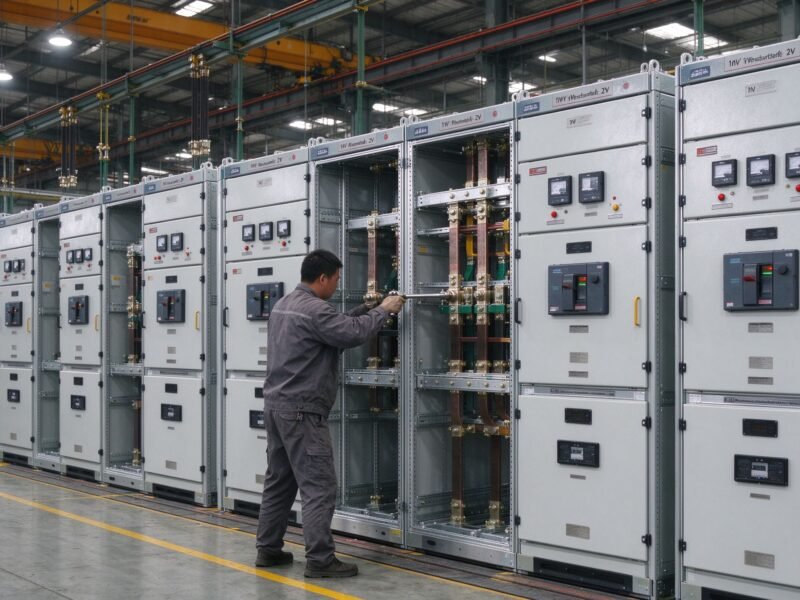
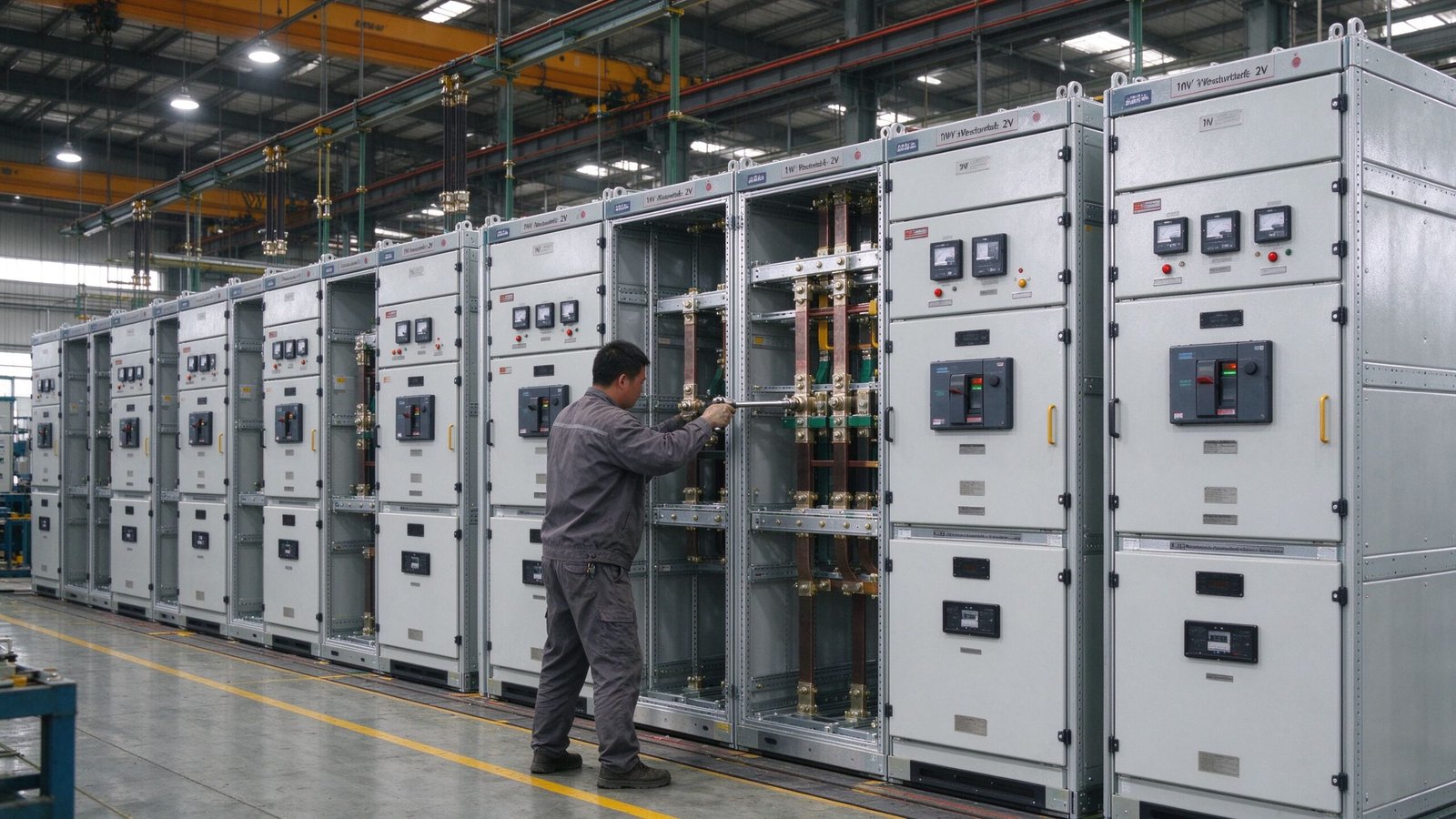
A vacuum circuit breaker (VCB) is the most widely used protective device for medium voltage circuits from 3.6kV to 40.5kV. It interrupts fault current inside a sealed vacuum interrupter and is the core of modern substation switchgear. For a complete overview of panel construction, see our 11kV medium voltage switchgear guide. This guide covers how it works, key ratings, comparison with SF6 breakers, a 2026 price benchmark and a maintenance plan for substation engineers, utility buyers and EPC contractors.
How Does a Vacuum Circuit Breaker Work?
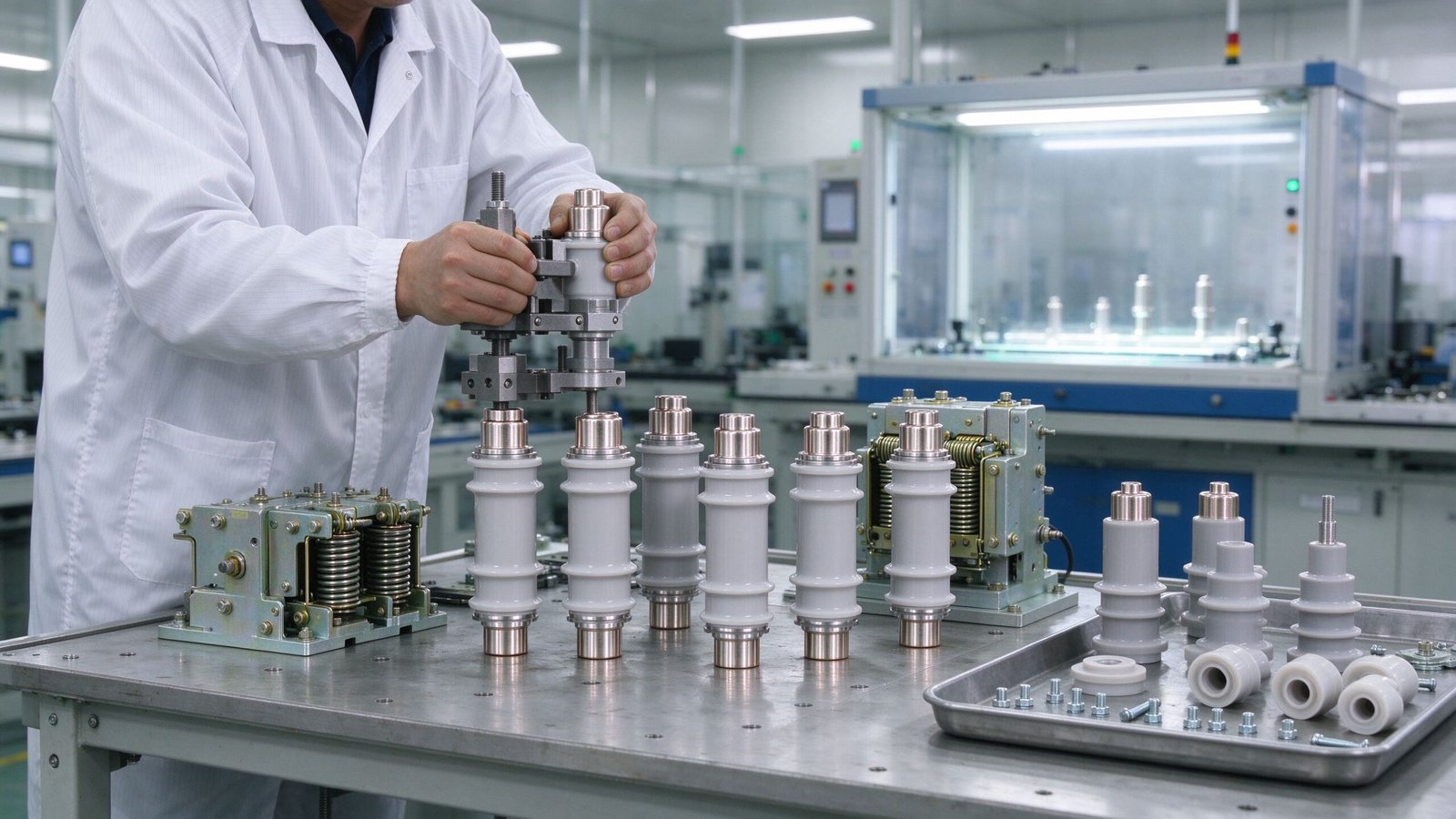
Inside the interrupter, a pair of contacts sits in a high-vacuum chamber. When the contacts part under fault, an arc forms between them. The vacuum quickly extinguishes the arc because there is almost no gas to sustain ionisation, and the dielectric strength recovers within a few milliseconds. This allows fast, reliable interruption of both load and short-circuit current.
Because the arc is contained in a sealed vacuum chamber, there is no gas leakage, no oil and almost no contact wear, which makes VCBs low-maintenance and long-lived.
Key Ratings for MV Substations
| Parameter | Typical MV VCB Value |
|---|---|
| Rated voltage | 12kV / 24kV / 40.5kV |
| Rated current | 630A – 3150A |
| Short-circuit breaking current | 20kA – 40kA |
| Short-time withstand | 20kA/4s – 40kA/4s |
| Mechanical life | 10,000 – 30,000 operations |
| Electrical life (rated current) | 10,000 – 20,000 operations |
| Operation mechanism | Spring or magnetic actuator |
For a 12kV system, a 630A/25kA breaker is common for feeders; 1250A–2000A for incoming and bus-tie positions; 3150A for large transformer incomers in industrial plants. Always match the breaking capacity to the actual short-circuit level of the substation busbar, never below it.
Vacuum vs SF6 Circuit Breakers
| Feature | Vacuum (VCB) | SF6 (GCB) |
|---|---|---|
| Arc medium | Vacuum interrupter | SF6 gas |
| Maintenance | Very low | Gas handling, re-fill risk |
| Environment | No greenhouse gas | SF6 is a strong greenhouse gas |
| Mechanical life | Long (10k–30k ops) | Long |
| Best for MV | Dominant choice | Special high-current / generator breakers |
For medium voltage substations, vacuum is now the default because it avoids SF6, needs almost no maintenance and offers excellent reliability. SF6 breakers remain for specific high-capacity applications such as generator protection. Learn more in our 40.5kV switchgear guide.
Where VCBs Are Used in a Substation
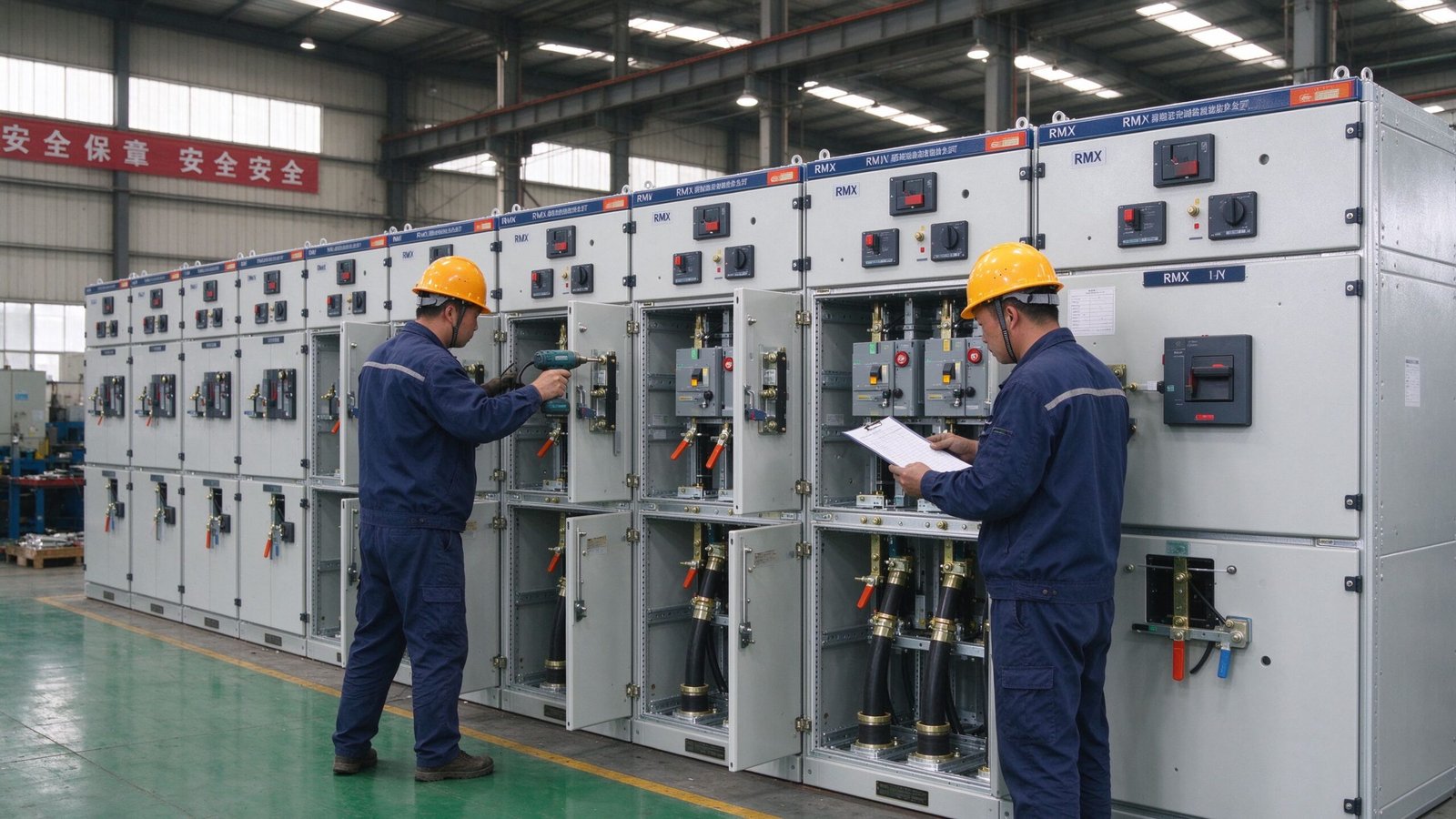
- Incoming and outgoing feeders inside metal clad switchgear panels.
- Transformer protection with overcurrent, earth-fault and differential relays.
- Bus coupler and tie positions to manage busbar configuration.
- Motor and capacitor bank switching in industrial plants.
2026 Price Benchmark (FOB China)
Indicative factory prices for complete MV vacuum circuit breakers (with mechanism and interrupter) help you benchmark quotes from different suppliers:
| Type | Typical Price (USD) | Lead Time |
|---|---|---|
| 12kV, 630A/25kA | $500 – $900 | 15–20 days |
| 12kV, 1250A/31.5kA | $700 – $1,300 | 20–25 days |
| 24kV, 1250A/25kA | $900 – $1,600 | 20–30 days |
| 40.5kV, 2000A/31.5kA | $2,000 – $3,500 | 30–40 days |
These are breaker prices; a full metal clad panel adds the enclosure, CTs, relay and busbar. Request a type-test report for the interrupting capacity before purchase. For bulk projects, negotiating across multiple feeders usually secures better per-unit pricing and a shorter combined lead time.
Applications of Vacuum Circuit Breakers
VCBs protect almost every medium voltage circuit that needs reliable fault interruption. Common applications include:
- Substation incoming and outgoing feeders in metal clad switchgear panels.
- Transformer protection with overcurrent, earth-fault and differential relays.
- Bus coupler and tie positions to reconfigure the busbar safely.
- Motor feeders in industrial plants with frequent starting duty.
- Capacitor bank and reactive power switching where restrike-free operation matters.
- Generator and renewable connections protecting synchronised sources.
In each case the VCB provides fast, low-maintenance interruption and a clear, safe isolation point for maintenance crews. Combined with a modern numerical relay, a vacuum breaker gives a substation feeder both protection and remote supervision.
How to Select a Vacuum Circuit Breaker
Use this checklist when you specify a VCB for a substation:
- Confirm the system voltage (12kV, 24kV or 40.5kV) and the short-circuit level of the network.
- Choose the rated current from the feeder load plus margin (630A–3150A).
- Select the breaking capacity to exceed the maximum fault current at the installation point.
- Decide the operation mechanism: spring-operated is standard; magnetic actuator for high-frequency operation.
- Define the auxiliary voltage for the closing and tripping coils (e.g. 110V DC or 220V DC).
- Verify the interrupter electrical life and the type-test report for the specified breaking capacity.
- Confirm the panel cut-out and busbar arrangement so the breaker fits your switchgear board without modification.
Maintenance and Operation
- Inspect the mechanism, lubricate moving parts and check the contact travel indicator periodically.
- Operate the breaker manually (open/close) at least once every 6–12 months to keep mechanisms free.
- Check contact erosion after a high number of short-circuit operations; vacuum interrupters have a finite electrical life.
- Verify the undervoltage and shunt trip coils function during routine tests.
For related electrical solutions, visit Electric-GS switchgear solutions and Electric-CN electrical products.
Frequently Asked Questions (FAQ)
1. How many operations can a vacuum circuit breaker handle?
Typically 10,000 to 30,000 mechanical operations and 10,000 to 20,000 electrical operations at rated current, depending on the design.
2. Do vacuum circuit breakers need much maintenance?
No. The vacuum interrupter is sealed for life; maintenance is mainly periodic inspection, lubrication of the mechanism and checking contact travel.
3. What is the maximum voltage of a vacuum circuit breaker?
Vacuum interrupters are widely used up to 40.5kV; higher voltages typically use gas-insulated or other technology.
4. Can a VCB be used for transformer switching?
Yes, VCBs are the standard choice for MV transformer protection, provided the switching surge is managed with proper relay settings and, where needed, surge protection.
5. What is the difference between a VCB and a contactor?
A VCB breaks fault current and is used for protection; a contactor is for frequent switching of loads and relies on upstream protection for faults.
6. Can a vacuum circuit breaker be racked out of a panel?
Yes, in withdrawable (metal clad) designs the breaker truck can be racked to the isolated position, letting crews work safely on the feeder while the busbar stays live. Compare pole-mounted options in our outdoor vacuum circuit breaker guide.
Why Choose Electric-GS as Your Factory
Electric-GS is a professional OEM/ODM manufacturer of medium and low voltage electrical equipment, based in Yueqing, Zhejiang, China. Our production workshops are equipped with CNC sheet-metal lines, automated assembly benches, and full routine-test stations. Every unit is quality-tested before dispatch, with IEC type-test reports available on request.
For quotations or drawings, email us at info@electric-gs.com or WhatsApp +86 135 8897 8050.